
Trump Asks U.S. Ambassador to Greece Kimberly Guilfoyle to Resign After Reports of Cash-for-Access Misconduct

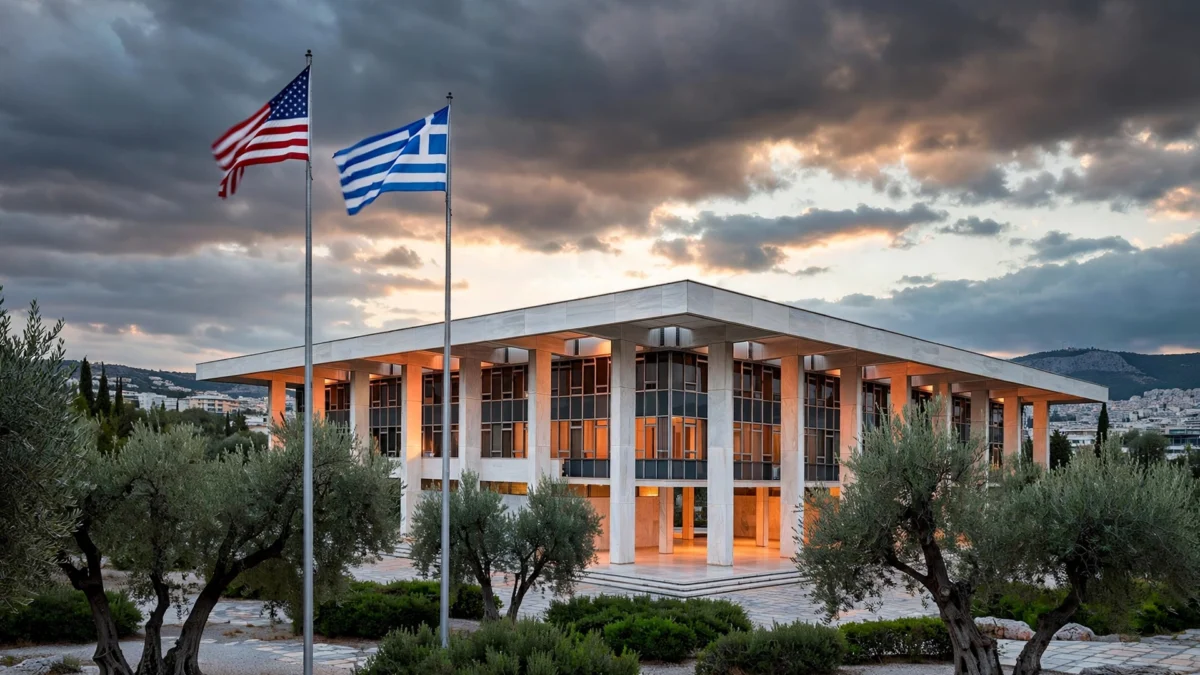
WASHINGTON — The White House said on Tuesday that President Donald Trump had asked Kimberly Guilfoyle, the United States ambassador to Greece, to resign — ending a turbulent tenure that unraveled over weeks of investigative reporting accusing the former television personality of selling access to senior administration officials in exchange for money, gifts and favors.
The announcement came from Katie Zacharia, the newly installed White House press secretary, who revealed the decision during her first briefing on Tuesday morning, according to the New York Post. Trump had foreshadowed the move a day earlier, telling reporters on Monday that he was considering removing Guilfoyle from the post. "We're not happy," he said at the time, according to the Post. On Tuesday, the president offered a more measured verdict: "She was doing a good job, but we didn't like what we were reading."
The ouster caps a cascade of disclosures that began last month, when the Wall Street Journal started publishing a series of investigative reports detailing Guilfoyle's conduct in Athens. Lawmakers from both parties raised alarms after the stories appeared, and the reporting ultimately proved impossible for the White House to ride out.
According to Reuters, the Journal's reporting raised concerns that Guilfoyle sought to trade on her proximity to the president for personal gain. One report described her close relationship with a lobbyist for a Greek energy company and her efforts to promote that firm, while another cited audio recordings of Guilfoyle boasting about her connections to wealthy Greek businessmen as she angled for an invitation to a dinner in Davos honoring Eric Trump, another of the president's sons.
The most damaging allegation concerned an American businessman. U.S. businessman and former Republican congressional candidate Eric Deters told the Journal that Guilfoyle had asked him to pay a $100,000 credit card bill — which the New York Post described as an American Express bill presented ahead of her Senate confirmation hearing last year — in exchange for her advocacy on his behalf, according to Reuters and the Post. Her lawyer has disputed the authenticity of certain messages connected to the payment, according to reporting from the Romanian outlet Informat.
The Journal's weekend reporting added color that made the denials harder to sustain. The paper reported that Guilfoyle had traveled to January's World Economic Forum in Davos on the private jet of Alexandros Exarchou, the chief executive of the Greek construction firm Aktor Group, whose lobbyist, Maryland-born Christos Marafatsos, had become such a fixture at the Athens embassy that he was frequently mistaken for the ambassador's chief of staff, according to the Post. Guilfoyle had routinely promoted Aktor as a potential supplier of American-produced natural gas to southeastern Europe. Audio recordings captured her telling a businessman on the Davos guest list, "I can deliver the world to you," and promising to make him wealthy, the Post reported, along with profane tirades against the dinner's organizer for initially excluding her. She also boasted in the recordings about her friendship with the shipping tycoon Nikolas Tsakos, who has been reported as bankrolling parts of her jet-setting lifestyle.
Separate reporting added to the pressure. Britain's Daily Mail reported last week that the State Department's internal watchdog was examining complaints from Athens embassy staff about inappropriate behavior, according to Reuters. Earlier Journal reporting had included claims that Guilfoyle threatened to use American influence to undermine the Greek government — an allegation that drew particular alarm from U.S. legislators, according to Reuters.
Guilfoyle issued a lengthy statement on X confirming she would step down and professing her innocence. "While my time as Ambassador may be coming to an end, my commitment to President Trump, the America First movement, and the country I love will never end," she wrote. "These allegations are false, and I intend to vigorously defend my name, my reputation, and my integrity." She added that her gratitude and respect for Trump and Secretary of State Marco Rubio remained "unwavering," according to Reuters.
Zacharia, for her part, struck a courteous tone even as she delivered the news. "She has been a wonderful asset to the team, and we wish her well," the press secretary said at the briefing.
The ambassador's profile made the episode politically combustible. Guilfoyle, a former Fox News personality and former San Francisco prosecutor, was once engaged to Donald Trump Jr., and she is the ex-wife of California Governor Gavin Newsom, a Democrat. She became a fixture of Trump-world after a fiery performance at the 2020 Republican convention, which prompted the president to compare her to Evita Perón, the former first lady of Argentina. Earlier this year, Trump publicly revealed his ribald nickname for her, calling her "Kim-ber-lay" during a White House visit, according to the Post.
Her time in Athens was high-profile from the start. She appeared on the cover of Vogue Greece and moved through the capital's late-night social scene with Greek celebrities, according to Reuters. She aggressively promoted American commercial interests, signing deals for imports of U.S. liquefied natural gas and drilling agreements involving companies including Exxon Mobil. But she also generated diplomatic friction. In her first interview with local media after arriving last November, she said China should sell its 67 percent stake in the port of Piraeus, which has become a cornerstone of Beijing's Belt and Road Initiative. China's ambassador to Greece, Fang Qiu, responded by accusing the United States of harboring "an outdated and a harmful mentality" and "a hegemonic mindset," according to Reuters.
The strategic stakes of the Athens post are considerable. Greece has been an important NATO ally of the United States, offering key military facilities that safeguard security in the Eastern Mediterranean, and it leads a European Union maritime mission protecting commercial shipping in the Red Sea, according to Reuters. During a visit to Athens last week, Rubio said Greece and the United States were launching new counterterrorism information-sharing arrangements between their law enforcement agencies.
Reaction in Athens was pointed. Dimitris Mantzos, the foreign affairs spokesperson for Greece's opposition PASOK party, said the firing raised serious issues and unanswered questions, asking whether Greek officials would demand an explanation or "content themselves with watching the country serve as a 'theater'" for outside interests, according to Reuters. The Greek government itself has not commented on the allegations involving her tenure. Neither the State Department nor the U.S. Embassy in Athens responded to requests for comment, according to Reuters.
Analysis: Why It Matters
The Guilfoyle affair is the purest Washington scandal of the second Trump term: not a policy fight, not a culture-war skirmish, but the oldest temptation in the capital — converting proximity to power into personal enrichment. What makes it remarkable is not that it happened; it is how far up the ladder of presidential loyalty it reached before the White House acted.
Consider who Guilfoyle was. She was not some obscure donor rewarded with a ceremonial posting. She was, until recently, engaged to the president's son. She was a fixture of the family's political operation, a convention star, a woman the president publicly fussed over with an affectionate nickname. In the economy of Trump-world, that kind of personal bond has historically been the strongest armor a subordinate can wear. That it did not save her suggests the administration has drawn — or been forced to draw — a line where the reporting becomes specific, documented and, crucially, recorded. An accusation can be denied; an audio tape cannot be un-heard. The Davos recordings appear to have done what months of innuendo could not: they made the story impossible to wave away.
There is a second, institutional lesson here about the modern ambassadorship. Senior diplomatic posts have long doubled as patronage for loyalists and donors, but the job still carries real authority over real relationships — in this case, with a NATO ally hosting critical American military infrastructure and leading a Red Sea maritime mission while Houthi attacks on shipping continue to roil the region. An ambassador who treats the post as a personal brand-building exercise, promoting favored firms and berating event organizers, does not merely embarrass Washington; she hands leverage to every rival watching. Beijing's swift, public rebuke over the Piraeus remarks showed how quickly adversaries convert an envoy's indiscipline into propaganda.
The timing sharpens the politics. Zacharia delivered the news at the tail end of her very first briefing — a fourteen-minute affair in which she called on only three reporters, according to the New York Post — just three weeks before the November 3 midterm elections. That the administration chose to spend its new press secretary's debut disposing of a Trump-family intimate rather than burying the story suggests a calculation: with control of Congress on the line, a festering cash-for-access scandal centered on the president's former future daughter-in-law was judged more dangerous than the one-day story of a firing. Democrats, who had already been hammering Guilfoyle over the Aktor lobbying links, will now ask why the vetting failed — and whether the $100,000 bill allegation, which predated her Senate confirmation, should have disqualified her before she ever boarded a plane to Athens.
Finally, there is the question the White House would prefer not to answer: what took so long? The Journal's reporting began last month. Lawmakers raised alarms. Embassy staff reportedly complained to the watchdog. The resignation request came only after the weekend's Davos tapes made the story a spectacle. For an administration that prides itself on swift personnel action, the delay invites the obvious inference — that loyalty bought time, and that the tapes, not the ethics, forced the ending.
What to Watch Next
- The successor. Trump must now name a new envoy to a strategically sensitive NATO ally. Watch whether the pick is a career diplomat or another political loyalist — and whether the Senate confirmation process becomes a proxy fight over vetting standards.
- The watchdog probe. Britain's Daily Mail reported that the State Department's internal watchdog is examining staff complaints from the Athens embassy. If that inquiry produces findings, they could extend the story well beyond the resignation.
- The Deters allegation. The claim that Guilfoyle sought $100,000 in exchange for advocacy with the Justice Department and the IRS is the most legally serious of the reports. There is no public indication of a federal investigation, but the allegation's specificity makes it the one most likely to resurface.
- Athens' response. The Greek government has stayed silent, but the opposition is demanding answers. Whether Athens formally asks Washington for an explanation — or quietly moves on to protect the bilateral relationship — will signal how much damage was done.
- Guilfoyle's promised defense. She has vowed to "vigorously defend" her name and integrity. Whether that means lawsuits against the Journal, a media rehabilitation tour, or a continued role in Trump-world politics will determine whether this resignation is an ending or an intermission.
Sources
- Reuters: White House says US ambassador to Greece Guilfoyle asked to resign — wixx.com
- New York Post: Trump humiliatingly forces Kimberly Guilfoyle to resign as ambassador to Greece, Katie Zacharia reveals in first briefing — nypost.com
- Reuters via Business Day: White House asks ambassador to Greece to resign — businessday.co.za
- Informat: The White House asked Ambassador Kimberly Guilfoyle to resign amid allegations of misconduct — informat.ro

About the Author — Abdul Mannan
Related Articles
Judge Blocks Trump’s White House Ban on CNN, MS NOW and Politico, Finding Likely First Amendment Violation
A federal judge has granted a preliminary injunction preserving White House access for CNN, MS NOW and Politico,…
Six Flags Shuts Nine Roller Coasters Nationwide After Fatal Fall at Georgia Park
One man died and four others were injured at Six Flags Over Georgia, prompting the company to close…
Trump Rallies in Youngstown to Shore Up Ohio Senate Race as Polls Show Husted Trailing Brown
President Donald Trump headlined a raucous 90-minute rally in Youngstown, Ohio, on Monday night to shore up Senator…