
Judge Blocks Trump’s White House Ban on CNN, MS NOW and Politico, Finding Likely First Amendment Violation

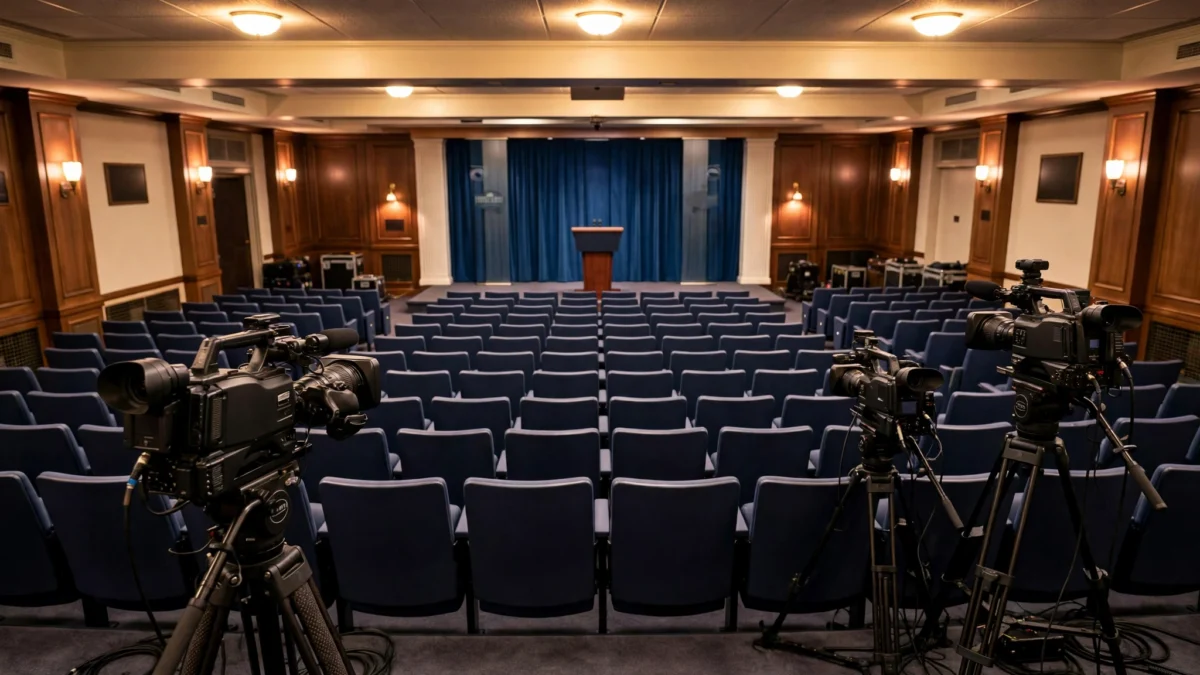
A federal judge in Washington has blocked President Donald Trump from enforcing his ban on three news organisations, ruling late on Tuesday that CNN, MS NOW and Politico are likely to prove the White House violated their constitutional rights when it stripped their reporters of access.
According to USA Today, United States District Judge Timothy Kelly granted a preliminary injunction that preserves the outlets' access to the White House complex while their lawsuit continues. The order replaces a temporary restraining order Kelly issued on September 24, which had been set to expire on Tuesday, October 13. The new order lasts until the underlying case is decided, unless an appeals court sets it aside.
The ruling is an interim decision, not a final judgment. It does not declare the ban unconstitutional once and for all. But it is a substantial escalation from the judge's earlier order, because Kelly has now found that the outlets are likely to succeed not only on a due process claim, but also on two First Amendment claims: retaliation and viewpoint discrimination.
Kelly was appointed to the federal bench by Trump during the president's first term, a fact that has been noted in much of the coverage of the case, according to CNN and USA Today. The judge's opinion ran to 26 pages, according to reporting on the ruling.
What the judge decided
The case turns on the revocation of the outlets' so-called hard passes, the longer-term credentials that let reporters who regularly cover the White House enter the complex without seeking permission for each visit. According to reporting on the ruling, the ban affected 78 journalists across the three organisations.
Kelly found that the outlets are likely to succeed on their claim that their hard passes were revoked without the due process required by the Fifth Amendment, and that the White House unlawfully retaliated against them for exercising their First Amendment rights and discriminated against them because of their viewpoints, according to The Wall Street Journal.
In his opinion, Kelly wrote that the outlets likely did not receive notice either of the conduct that could lead to revocation of their hard passes, or of how sweeping the revocation itself would be, according to USA Today. He found no evidence that Trump or the White House gave the outlets that kind of warning before the president announced the ban.
Kelly also found that without a preliminary injunction, the outlets are likely to suffer irreparable harm, and that the balance of equities and the public interest tip in their favour, according to AP reporting. He declined the government's request to suspend his own decision while it appeals, saying the administration had not justified that request.
The judge was careful to define the limits of his own ruling. According to The Wall Street Journal, he wrote that nothing in his decision should be taken to suggest that Trump's concerns about accuracy and fairness in media coverage are unfounded, or that the government is powerless when its true aim is to protect national security in cases where classified information is unlawfully disclosed. The ruling is about the process and the motive behind this particular ban, not a judgment on the quality of the outlets' reporting.
How the case reached this point
Trump announced the ban on September 18 on social media, saying he was barring CNN, MS NOW and Politico from the White House because of what he described as their constant reporting of fake news. According to USA Today, he told reporters later the same day that he was frustrated by cumulative stories over the last few years from outlets he described as fake news. Reporters who arrived the following day were turned away, according to reporting on the case.
The outlets sued, arguing that the ban violated their rights to free speech and to due process before losing access. On September 24, Kelly issued a temporary restraining order restoring their credentials, initially on due process grounds. That order kept their access in place while the judge considered the broader request for a preliminary injunction, which would last much longer.
In the weeks that followed, the White House sought to build a record to defend the ban. According to CNN, the administration pointed in letters to the outlets to stories they had published about the war with Iran, the construction of a ballroom in the East Wing, and the Republican Party's midterm convention, arguing that their coverage had threatened national security or spread falsehoods. The letters gave the outlets until 5 p.m. that Friday to object to the policy before Trump made what was described as a final decision to ban them.
The outlets asked Kelly to go further than his first order and to rule on First Amendment grounds as well, arguing that no amount of after-the-fact process could cure what they called a ban on the free press. Kelly heard arguments on the injunction at a hearing the previous Thursday, and issued his ruling late on Tuesday night.
Meanwhile, the dispute has widened beyond the courtroom. In a separate development reported earlier, the Justice Department confirmed it was investigating five major television networks over a boycott of the White House press pool, an inquiry the networks' defenders have described as an attempt to use antitrust law against collective action by journalists. That investigation is distinct from the credential case, but it has become part of the same larger confrontation between the administration and the press.
What the injunction does — and does not do
The preliminary injunction preserves the status quo that Kelly's temporary order had already created: the three outlets' reporters keep their hard passes and their access to the White House complex while the lawsuit proceeds.
What it does not do is just as important. According to reporting on the ruling, the order does not require the administration to admit the outlets' reporters to the Oval Office, or to let them travel aboard Air Force One. The White House has continued to block CNN and Politico from travelling on Air Force One even after their credentials were restored, according to USA Today. Those more selective forms of exclusion, which the administration treats as a matter of presidential discretion over his own movements and meetings, were not before the judge in this ruling.
That distinction matters for how the ruling will be felt day to day. The outlets can get back into the building, attend briefings, and work the press area. They cannot, on the strength of this order alone, claim a seat on the president's plane or a place in his office. The fight over those narrower, more discretionary forms of access is likely to continue separately.
The due process holding
The due process holding is the narrower of Kelly's two grounds, but it is the one with the deepest roots in existing law. The principle comes from a 1977 decision of the United States Court of Appeals for the District of Columbia Circuit, Sherrill v. Knight, which has governed White House credential disputes for nearly half a century.
In that case, a correspondent for The Nation named Robert Sherrill challenged the denial of a press pass after the Secret Service advised against granting one, without disclosing its reasons. The appeals court held that once the government sets up an ongoing credentialing system for the press, the First Amendment requires that system to operate according to clear, published and non-arbitrary rules. It required the White House to give notice of the factual basis for a denial, an opportunity to respond, and a final written statement of reasons.
Later cases applied the same logic to revocations. In 2018, during Trump's first term, the White House stripped the credential of CNN correspondent Jim Acosta after a heated exchange at a press briefing. A federal judge ordered the pass restored, focusing on the failure to provide basic due process before confiscating it. In another case, a court blocked a thirty-day suspension of the hard pass of Playboy correspondent Brian Karem, finding the government had not given adequate warning or established written rules that could justify the penalty.
Kelly's ruling follows that line. He found that the outlets had not been told, before the ban, what conduct could cost them their passes, or that the penalty would be so broad. The White House argued that the appeals court decisions were wrong. According to reporting on the ruling, Kelly answered that he was bound by District of Columbia Circuit precedent, full stop.
The administration's after-the-fact letters, inviting objections before a final decision, did not cure the problem in the judge's view, because the revocation had already been announced and carried out. Process offered after punishment, Kelly's reasoning implies, is not the process the Constitution requires.
The First Amendment holdings: retaliation and viewpoint discrimination
The more consequential part of the ruling is the First Amendment analysis, because it goes to motive. Kelly found that the outlets are likely to prove that the ban was retaliation for their reporting, and that it discriminated against them because of the viewpoints they expressed.
The central evidence, in Kelly's account, is Trump's own words. According to CNN, the judge wrote that Trump's comments explaining the ban show a likely causal link between the outlets' protected speech and the revocation of their hard passes. The judge wrote that Trump likely banned the outlets because he believed their reporting was generally inaccurate and biased against him.
The administration's position has been that access to the White House is a privilege, not a right, and that the outlets pose national security risks because of their reporting on classified and sensitive information. At the hearing, the Justice Department lawyer representing the White House, Michael Velchik, called the White House a sacred place that should not have to give people access simply because they identify as reporters, according to reporting on the hearing.
The outlets' lawyer, Theodore Boutrous Jr., argued that the ban was impermissible viewpoint discrimination, because it rested on Trump's dislike of the outlets' reporting and on his stated hope that the ban would force journalists to straighten themselves out. According to reporting on the case, Boutrous pointed to a magazine interview in which Trump complained at length that he banned the outlets because he felt he should not have to bear what he considered constantly negative stories, given that he had won the election and done great things.
After the ruling, Boutrous said he and his clients were grateful to the court for securing their access anew. In a statement reported by AP, he said the president had repeatedly and candidly admitted in public that he banned the outlets from the White House to punish reporting he does not like. The harm the ban did to the outlets, the First Amendment and the public as a whole is profound, he said, and the court was right to block enforcement of what he called an unconstitutional ban.
Why the national-security argument failed
The administration's national-security argument failed because, in Kelly's reading of the record, it arrived after the decision rather than before it. According to CNN, the judge wrote that there was no evidence that Trump made the decision to revoke the hard passes on national-security grounds from the outset, nor that he had ever directly stated that national security was the reason for his decision.
Kelly described the Justice Department's national-security argument as appearing to be merely a post-hoc justification offered after the outlets sued, according to reporting on the ruling. In his 26-page opinion, he wrote that there was practically nothing in the record connected to national security that the court could defer to.
That finding does not mean a president could never revoke a credential on genuine security grounds. Kelly explicitly left that door open, noting that the government is not powerless when its true aim is to protect national security in cases involving the unlawful disclosure of classified information. What it means is that a security rationale must be the actual reason for the decision, supported by evidence from the time, not a reason assembled afterwards to defend a decision already taken for other reasons.
The timing evidence pointed the other way. According to USA Today, Kelly noted in his earlier ruling that nothing in the record predating the lawsuit suggested the revocation was motivated by national-security concerns. When Trump announced the ban, he focused on the alleged lack of truthfulness and negativity of the outlets' reporting. The national-security framing emerged only once lawyers were defending the ban in court.
Analysis: Why It Matters
A preliminary ruling with a clear signal
A preliminary injunction is a provisional remedy, and it would be a mistake to read it as the last word. The case will continue, the administration can appeal, and a higher court may see the questions differently. But preliminary injunctions are not granted lightly. To obtain one, the outlets had to show they are likely to succeed on the merits, likely to suffer irreparable harm without it, and that the balance of equities and the public interest favour them. Kelly found all of that. That is a meaningful signal about how the evidence looks at this stage, even if it is not a final verdict.
The signal is stronger because of who sent it. Kelly is a Trump appointee, and his ruling does not read as a broadside against the presidency. It is narrow, precedent-bound, and careful to preserve the government's real security powers. Its force comes precisely from that restraint: the judge did not need to condemn the administration's view of the press in general. He needed only to look at this decision, this record, and this sequence of events.
The record the president built himself
The most striking feature of the case is how much of the evidence against the ban came from the president himself. Courts deciding retaliation claims often struggle to prove motive. They must infer intent from timing, from shifting explanations, from disparate treatment. Here, the judge found the motive stated openly, repeatedly, and in the president's own words: the ban was announced as a response to coverage he considered fake, and he continued to explain it in those terms afterwards.
That candour cuts both ways, and it is worth being clear-eyed about why. A president who says plainly what he is doing is easier to hold to account than one who hides behind pretexts. But candour does not make an unconstitutional motive constitutional. If anything, it makes the court's job simpler, because the judge does not have to guess at the reason for the decision. The record, as Kelly read it, supplies the reason. The administration's later attempt to reframe the ban as a security measure could not compete with the contemporaneous account the president himself gave.
There is a lesson here that extends beyond this case. In a system where the government's stated reasons matter, the first explanation offered is often the one that sticks. Lawyers can refine arguments later, but they cannot easily rewrite the record of what was said when the decision was made. This ruling is, among other things, a demonstration of that discipline: the court judged the decision by the reasons given at the time, not by the reasons invented afterwards.
Process as the quiet battleground
Public attention naturally focuses on the First Amendment holding, because it speaks the language of free speech and retaliation. But the due process holding may prove the more durable part of the ruling. It rests on nearly fifty years of settled precedent, and it gives courts a way to police credential decisions without deciding whether any particular story was fair.
The principle is modest: if the government runs a credentialing system, it must run it by rules that are known in advance, applied even-handedly, and explained when they are enforced. That principle protects journalists who are unpopular with a president, but it also protects the presidency, because a system governed by published rules is harder to accuse of favouritism or caprice.
The White House's argument that access is a privilege, not a right, contains a real insight and a real overreach. It is true that no journalist has a constitutional right to a particular seat in a particular room. But once the government creates a system of access and opens a press area to a corps of reporters, it cannot hand out and withdraw places in that system as a reward for favourable coverage or a punishment for unfavourable coverage. A privilege that is distributed by the state still has to be distributed lawfully.
Access is the story, not the prize
It is easy to treat this case as a contest between a president and three news organisations. That framing misses what is actually at stake. The hard pass is not a perk, a badge of status, or a ticket to prestige. It is a working tool. Without it, a reporter cannot enter the building, observe events firsthand, question officials in person, or report what happened with the immediacy that the public expects.
Kelly made this point explicitly. According to AP reporting, he wrote that the ban threatened to cut off all of the outlets' access to the White House press area, a space open to many of their competitors, and thereby restrict their ability to observe events there firsthand, immediately report on those activities, and try to engage with government officials. The harm is not only to the three outlets. It is to the readers and viewers who rely on them, and to the competitive ecosystem of the press corps, in which the absence of some outlets changes the coverage produced by all of them.
That is why the irreparable-harm finding matters. Money damages, awarded years later, cannot restore a missed briefing, an unasked question, or a story that was never reported because the reporter was standing outside the gate. Access lost in real time is lost permanently, even if the legal case is eventually won.
What this does not settle
The ruling leaves several important questions open. The first is the appeal. According to CNBC, Trump said last month that he would appeal any decision by Kelly blocking his ban, and the White House and the Justice Department did not immediately respond to requests for comment after the ruling. An appeal to the District of Columbia Circuit would test whether Kelly's reading of the precedent holds, and whether the appellate court agrees that the First Amendment claims are as strong as the due process claim. The administration has already argued that the circuit's precedents are wrong; an appeal would give a higher court the chance to say so, or to reaffirm them.
The second is the fate of the narrower exclusions. The injunction restores access to the complex. It does not compel the White House to admit the outlets' reporters to the Oval Office or to Air Force One. Those are spaces where presidential discretion is at its height, and where the legal arguments for access are weakest. The administration may continue to use those exclusions as a pressure point, and the outlets may have to decide whether to challenge them separately or to accept them as the price of restored access.
The third is the broader confrontation. The credential case is one front in a wider struggle over the relationship between this White House and the press. The separate Justice Department investigation into the press-pool boycott, the threats to broadcast licences, and the continuing rhetoric about fake news all form part of the same environment. A court can resolve a credential dispute. It cannot, by itself, repair a relationship in which each side regards the other as acting in bad faith.
The fourth is the precedent the case will set for future presidents. A ruling that survives appeal would confirm that a president cannot use the credential system as an instrument of retaliation, even against outlets he believes treat him unfairly. A reversal would leave the door open to exactly that. Either way, this case is likely to be cited the next time any White House, of either party, reaches for the tool of exclusion.
What to Watch Next
- The appeal. The administration is expected to ask the District of Columbia Circuit to lift the injunction. The first sign will be whether it seeks an emergency stay, which would ask a higher court to let the ban take effect while the appeal is heard.
- The White House response. Whether the administration complies promptly and fully, or tests the boundaries of the order with new restrictions on the three outlets, will show how much of the ruling it accepts in practice.
- The Oval Office and Air Force One question. Watch whether CNN and Politico regain travel access, or whether those exclusions harden into a permanent two-tier system in which the outlets are inside the building but outside the president's inner circle.
- The merits trial. The preliminary injunction preserves access while the case proceeds. The full trial will determine whether the ban is ultimately struck down, and whether the First Amendment holdings survive closer scrutiny.
- The wider press confrontation. The Justice Department's separate investigation into the press-pool boycott, and any further steps against broadcasters or individual outlets, will show whether the credential ruling cools the conflict or simply moves it to a new front.
Sources
- USA Today — Judge grants CNN, MS NOW and Politico longer-term White House access
- CNN — Judge says Trump press ban likely violates First Amendment
- The Wall Street Journal — Trump Can't Reinstate White House Ban on CNN, Politico and MS NOW, Judge Rules
- Associated Press — Judge extends order blocking Trump from banning CNN, MS NOW and Politico reporters from White House
- CNN — CNN, MS NOW and Politico ask judge to stop Trump from reviving White House ban (background on the White House letters and the injunction request)
- CNBC — Judge blocks Trump White House media ban (appeal and reaction)

About the Author — Abdul Mannan
Related Articles
Six Flags Shuts Nine Roller Coasters Nationwide After Fatal Fall at Georgia Park
One man died and four others were injured at Six Flags Over Georgia, prompting the company to close…
Trump Rallies in Youngstown to Shore Up Ohio Senate Race as Polls Show Husted Trailing Brown
President Donald Trump headlined a raucous 90-minute rally in Youngstown, Ohio, on Monday night to shore up Senator…

‘Breaking Bad’ Actor and Disability Rights Advocate RJ Mitte Dies at 34
RJ Mitte, who played Walter White Jr. on 'Breaking Bad' and became one of Hollywood's most visible advocates…