
National Assembly Backs Emergency and Governor’s Rule in Khyber Pakhtunkhwa as PTI Protests and Court Challenge Continue

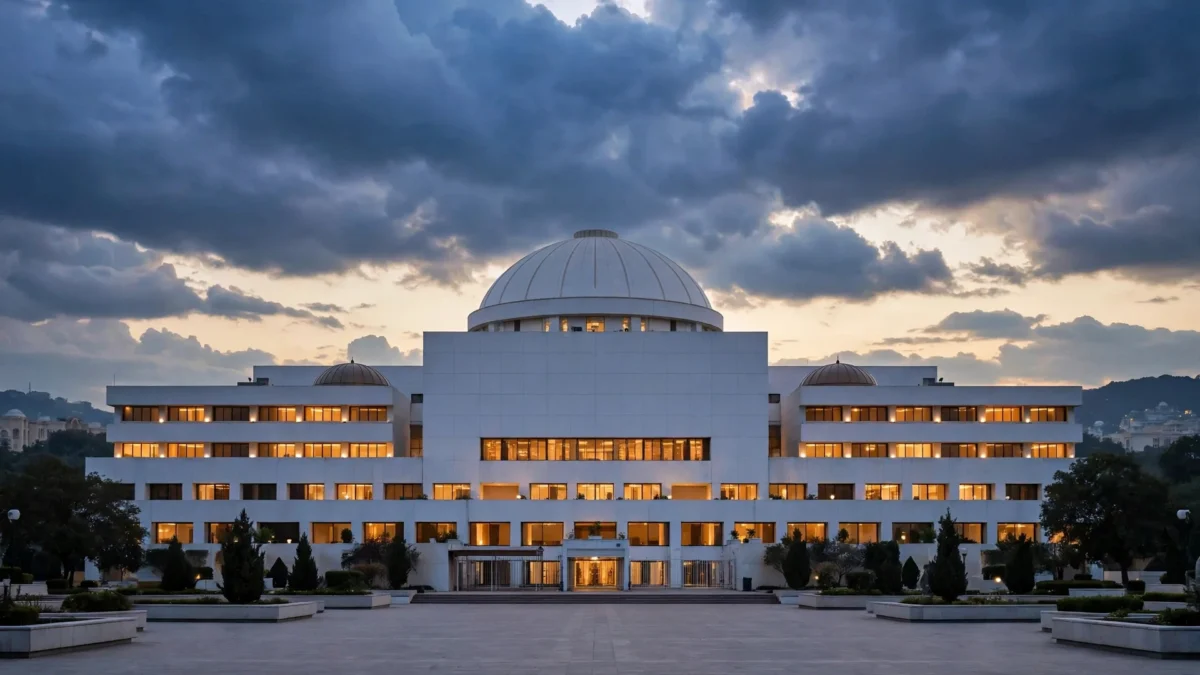
ISLAMABAD — Pakistan’s National Assembly on Wednesday passed a resolution endorsing the federal government’s imposition of emergency and governor’s rule in Khyber Pakhtunkhwa, giving parliamentary backing to one of the most consequential federal interventions in a province in years.
The resolution was adopted by a majority vote after a debate on the emergency proclamation, according to DNA News Agency and other Pakistani outlets reporting from the session. The House suspended its regular question hour to take up the matter. Law Minister Azam Nazeer Tarar opened the discussion, and Minister for Parliamentary Affairs Tariq Fazal Chaudhry tabled the motion concerning the proclamation, which was then adopted.
The vote came three days after President Asif Ali Zardari, acting on the advice of Prime Minister Shehbaz Sharif and the federal cabinet, proclaimed a state of emergency in the northwestern province and imposed governor’s rule, effectively suspending the provincial government led by the Pakistan Tehreek-e-Insaf (PTI), the party of jailed former prime minister Imran Khan, according to Reuters.
Wednesday’s resolution does not by itself end the controversy. The PTI has challenged the measures in the Peshawar High Court, protests against the emergency continued in parts of the province, and opposition leaders used the Assembly debate to argue that the federal government has used a genuine security crisis as cover for a political takeover. The government and its allies insist the step was constitutional, unavoidable and temporary — a response to a province whose leadership, in the federal cabinet’s words, had deliberately disengaged from the fight against terrorism.
What Parliament Decided
The National Assembly session was chaired by Speaker Sardar Ayaz Sadiq, with Attorney General Mansoor Usman Awan also present, according to reporting on the proceedings. The government presented the resolution as the constitutional step that follows a presidential emergency proclamation: Parliament must consider and endorse it within a set period.
Tarar told the House that the emergency had been imposed after careful consideration of the deteriorating security situation in the province. He cited internal unrest, cross-border infiltration and actions by the provincial government as factors that, in the government’s account, had increasingly threatened national security. He also said the Constitution required the presidential proclamation to be placed before Parliament for approval within the stipulated period, and maintained that the federal government had tried to resolve the situation through negotiations before proceeding.
During the debate, Tarar referred to an increase in terrorist incidents, claiming that 3,787 terrorism-related incidents had occurred in 2026. He argued that the worsening security situation demanded a strong response and criticised the provincial leadership for what he described as a failure to adequately address the challenge. He further said negotiations between the government and the opposition had continued for two days but had failed to produce a lasting agreement on counterterrorism and other political issues.
Accounts of the tone inside the chamber differed. DNA News Agency reported that opposition members participated calmly and did not stage loud protests, while other broadcasters described a heated debate, with opposition members protesting and chanting slogans against the move. That difference matters less than the outcome: the resolution passed by a majority, and the government’s parliamentary allies held together on the vote.
The Government’s Case: Security First
The federal government’s public case has been consistent since Sunday: Khyber Pakhtunkhwa faces a militant threat that the provincial government was not confronting, and the Centre could not allow the situation to drift. The cabinet cited the provincial government’s “deliberate disengagement from the fight against terrorism” as the primary reason for the intervention, according to reporting on the cabinet’s decision.
Prime Minister Shehbaz Sharif said on Tuesday that the government had been left with no option but to impose emergency and governor’s rule, according to Pakistani press reports. Defence Minister Khawaja Asif defended the emergency in the Assembly debate, arguing that the prevailing circumstances had left the government with limited options. He criticised past decisions concerning the return and resettlement of militants, referring to discussions involving former military leadership and the previous government’s security policies, and said terrorism was a challenge that required collective action.
Interior Minister Mohsin Naqvi has said the emergency and governor’s rule do not violate the Constitution, according to ARY News headlines summarising the day’s developments. The government’s constitutional argument rests on two provisions: Article 232, which empowers the federal government to declare a state of emergency when security is threatened by war or internal disturbance beyond a provincial government’s control, and Article 234, which allows the president to impose governor’s rule when a provincial government is judged unable to function in accordance with the Constitution.
Under the arrangement, Governor Faisal Karim Kundi, who belongs to the Pakistan Peoples Party (PPP), an ally of Sharif’s federal coalition, has taken over executive functions in the province. An 11-member advisory council assists him, and the military is expected to assist in maintaining order. Parliament has assumed the legislative powers of the Khyber Pakhtunkhwa provincial assembly. The chief minister, provincial cabinet ministers, advisers, special assistants and advocate general have ceased to hold office under the proclamation, according to reporting on its terms.
A separate federal order has established a secretariat for 12 “designated districts,” most of them in the former tribal areas along the Afghan border. It is headed by an additional chief secretary whose orders carry the same legal effect as those of the provincial government. Interior Minister Naqvi said at a Sunday news conference that no province had been divided, and that the districts were war-hit areas needing more funding and focus. The order also states that the constitutional provision requiring the judiciary to be separated from the executive shall not apply to the designated districts — a detail that is likely to draw close scrutiny from lawyers and courts.
Bilawal: Support for the Measure, and an Offer of Talks
The most closely watched speech of the debate came from PPP Chairman Bilawal Bhutto-Zardari, whose party is a key partner in the federal coalition and whose member, Governor Kundi, now runs the province.
Bilawal supported the constitutionality of the measure and blamed the PTI’s Khyber Pakhtunkhwa government for creating the circumstances that led to it, describing the party’s actions as a “political suicide attack” on its own provincial government. Reading out the relevant constitutional provisions, he maintained that the federal government had repeatedly tried to engage the opposition so that the step could be avoided.
At the same time, Bilawal renewed an offer of dialogue. He said the emergency had been imposed out of necessity and was not intended to continue indefinitely. He said he was still asking the government to extend its hand towards the opposition for negotiations, and that if the opposition helped bring about a political situation in which the emergency was no longer necessary, he would personally ask the prime minister to end it. He also warned that if political space is restricted for one party, it cannot be restricted for that party alone — a line that served both as a caution to the government and as an acknowledgement of the stakes.
Bilawal’s dual message — backing the emergency while pressing for talks — reflects the PPP’s awkward position. The party is part of the coalition that imposed the measure, its governor now administers the province, and yet its chairman has positioned himself as the bridge back to a political settlement. Whether that bridge carries any weight will depend on whether the government and the PTI both treat talks as more than a talking point.
The Opposition: Autonomy, Mandate and the Courts
PTI Chairman Barrister Gohar Ali Khan rejected the government’s position in the Assembly, accusing it of undermining democracy and using terrorism as a justification for political action. He maintained that his party supported efforts to combat terrorism but argued that security matters should be addressed through the relevant forums, including provincial authorities and the appropriate security committees. He also raised concerns about the treatment of PTI founder Imran Khan and called for the implementation of court decisions.
Opposition Leader Mahmood Khan Achakzai criticised the decision on broader grounds, arguing that it raised serious questions about provincial autonomy, democratic governance and the federal structure. He accused successive governments of contributing to Pakistan’s security challenges and called for political dialogue to address the crisis, while also raising concerns about security operations, governance in the tribal districts and restrictions on political engagement.
Outside Parliament, the PTI has pursued the legal route. Gohar announced that the party would challenge the emergency and governor’s rule before the Peshawar High Court, and petitions have been filed challenging the measures as unconstitutional. A petition concerning the whereabouts and detention of suspended Chief Minister Sohail Afridi has also been filed by his brother, according to press reports. The PTI has said Afridi and other leaders were detained; the federal government has confirmed detentions in connection with law and order without confirming all identities, according to TBS News.
The courts will now have to weigh two competing claims that both invoke the Constitution. The government says Articles 232 and 234 give it the power it used, and that Parliament’s endorsement strengthens the legal footing. The PTI says the measures are an assault on provincial autonomy and the public mandate, and that the security justification is a pretext. Legal experts quoted in reporting on the measures have offered a middle reading: the elected officials and the assembly are rendered dysfunctional rather than permanently dissolved, and must be restored once emergency rule ends. That interpretation, if the courts adopt it, would make the duration and the exit route the central questions.
Protests in Bara and the Disputed Casualty Claims
The political fight has spilled onto the streets of Khyber district. On Tuesday, a protest against governor’s rule in Bara Bazaar, about 15 kilometres from Peshawar, turned violent. Police fired tear gas and live rounds at supporters of Khan, according to Reuters, which reported that five people were injured in clashes in the province, the most serious in Bara. Police said 50 people were detained and would face terrorism and sabotage charges over damage to government property and disturbing law and order.
A police official, speaking on condition of anonymity, told Reuters that protesters set fire to the National Database and Registration Authority (NADRA) centre in Bara. PTI information secretary Ikram Khatana said the blaze was started by unidentified people, who also stormed nearby offices. The two accounts of who set the fire have not been reconciled, and readers should treat the cause of the blaze as disputed.
The PTI has made a more serious claim: party lawmaker Iqbal Afridi claimed that the violence left 11 party workers injured and one dead. That casualty claim could not be independently verified, according to The Express Tribune, as reported by IANS. Police also said, according to local media reports cited by IANS, that demonstrators allegedly held 15 police personnel hostage during the confrontation — a claim that likewise remains unverified. This article does not treat either unverified claim as established fact. What is established, on Reuters’ reporting, is that clashes occurred, that police used tear gas and live rounds, that five people were injured, and that 50 people were detained.
The protests are the street-level expression of the same dispute being argued in Parliament and the courts. For the PTI, they demonstrate that the emergency has not produced calm. For the government, the violence — including the burning of a NADRA office — is evidence that the province needed firmer control. Both readings cannot be right about causation, but both describe the same dangerous dynamic: each side’s response hardens the other’s case.
Why This Moment Matters
The emergency in Khyber Pakhtunkhwa did not begin on Wednesday. It began on Sunday, when the president signed the proclamation, and its roots run back through weeks of confrontation: the collapse of talks over a joint counterterrorism agreement, the PTI’s planned march toward Islamabad demanding Khan’s release, the hardening of positions on both sides, and a militant threat that is real even when it is invoked for political purposes.
What Wednesday changed is the constitutional standing of the intervention. A presidential proclamation issued without a provincial assembly vote requires parliamentary ratification within 10 days, by October 21, according to reporting on the constitutional timeline. The National Assembly has now given its endorsement. The Senate’s consideration remains, and the courts will have their say. But the government’s measure now carries the backing of the lower house, which matters both legally and politically.
The stakes go beyond one province. Khyber Pakhtunkhwa sits on Pakistan’s northwestern border with Afghanistan. Its crossings, including the Khyber Pass, have served for centuries as key trade and transit routes between the Indian subcontinent and Afghanistan. Its capital, Peshawar, is among the region’s historic commercial and cultural centres. The province has borne the brunt of militant violence for two decades, and its politics have always been entangled with questions of security, federalism and the military’s role. An emergency there is never only a local event.
There is also the question of precedent. Pakistan has a long history of extraordinary constitutional measures being used in moments of political crisis, and each use makes the next one easier to justify. The government’s supporters argue that this time is different — that the security threat is genuine, that the provincial government had stopped cooperating, and that Parliament’s endorsement distinguishes this intervention from cruder power grabs. Critics argue that the timing, coming days before a planned PTI march on Islamabad, exposes the real motive, and that the security argument is the cover rather than the cause. The truth is likely to emerge not from the rhetoric of either side but from how the emergency is actually administered: whether security improves, whether detentions are lawful and time-limited, and whether a credible exit arrives.
One claim worth watching came from Foreign Minister Ishaq Dar, who, according to ARY News headlines, said the Khyber Pakhtunkhwa Assembly would be restored after six months. If that timeline holds, it would give the emergency a defined horizon — something the government’s critics have demanded. But a headline summary is not a proclamation, and the government has not, in the reporting available, published a detailed exit plan. Until it does, the six-month figure should be treated as a political signal rather than a legal commitment.
Analysis: Why It Matters
Parliamentary endorsement changes the character of the emergency in three ways, and each one cuts in both directions.
First, it converts a presidential act into a parliamentary one. That strengthens the government’s legal position: the measure is no longer only the executive’s decision but the legislature’s too. But it also spreads responsibility. Every lawmaker who voted for the resolution now owns a share of what happens under emergency rule — the detentions, the protests, the administration of the designated districts. If the emergency goes wrong, the blame will not be confined to the cabinet.
Second, it clarifies the battlefield. The fight is no longer primarily about whether the emergency was imposed; it is about how long it lasts, how it is run, and how it ends. Bilawal’s offer of talks points in that direction, and so does the PTI’s court challenge. The most important question is no longer the legality of Sunday’s proclamation in the abstract. It is whether the government can show, in weeks rather than months, that the emergency is producing security gains that ordinary constitutional government could not, and that it is prepared to hand power back.
Third, it tests Pakistan’s federal bargain. The Constitution gives the federation extraordinary powers, but those powers were designed for genuine emergencies, not as a routine tool for managing political opposition. Every time they are used against an elected provincial government, the federation’s credibility with smaller provinces and with opposition voters takes a hit — even when the security case is strong. The government’s best defence against that charge is not rhetoric but restraint: minimal detentions, transparent administration, functioning courts, and a visible countdown to restoration.
There is a mirror-image risk for the PTI as well. Protests that turn violent, offices that burn, and unverified casualty claims that circulate as fact all weaken the party’s strongest argument — that it is the victim of an unconstitutional power grab. The party’s case is strongest when it is made in Parliament and in court, with evidence, and weakest when it is made in street confrontations where facts blur and blame is easy to assign. The PTI’s decision to pursue the Peshawar High Court challenge alongside its parliamentary opposition is, from that standpoint, the more promising track.
Finally, there is the security question itself, which risks being lost in the political noise. Khyber Pakhtunkhwa faces a real militant threat, and the federal government’s figure of thousands of terrorism-related incidents this year — even if it is a contested count — points to a problem that predates this emergency and will outlast it. Emergency rule can clear space for security operations. It cannot, by itself, resolve the political grievances that militants exploit, or the distrust between the federation and a province that has repeatedly felt governed from Islamabad rather than from Peshawar. A security gain bought at the cost of deeper alienation would be a poor bargain.
What to Watch Next
- The Senate’s consideration of the emergency proclamation, and whether the upper house endorses the measure as the National Assembly has done.
- The Peshawar High Court’s handling of the PTI’s challenge, including any interim orders on the proclamation and on the detention of Afridi and other leaders.
- Whether protests in Bara and elsewhere grow or subside, and whether casualty and detention figures are independently confirmed.
- How the governor’s administration and the 12 designated-district secretariat actually govern — including whether the suspension of the separation of judiciary and executive in those districts is challenged.
- Whether Bilawal’s offer of talks turns into a real negotiation, and whether the government publishes a credible timeline for restoring the provincial assembly.
Sources
- Reuters — Pakistan president imposes emergency in province ruled by ex-PM Imran Khan’s party
- Reuters — Pakistan police fire tear gas, rounds at Imran Khan backers, party says
- DNA News Agency via Centreline — NA passes resolution endorsing KP emergency and governor’s rule
- Pakhtun Digital — National Assembly approves emergency in KP
- TBS News — What does Pakistan’s governor’s rule in Khyber Pakhtunkhwa mean?
- TBS News — Pakistan imposes emergency, governor’s rule in Khyber Pakhtunkhwa

About the Author — Abdul Mannan
Related Articles
Pakistan Confirms Detention of Ousted KP Chief Minister Sohail Afridi and Cabinet Members in “Preventive Custody”
Pakistan's Interior Ministry has confirmed that ousted Khyber Pakhtunkhwa chief minister Sohail Afridi and several cabinet members were…
Governor Kundi Chairs First Advisory Council Meeting in Peshawar, Makes Security and Anti-Corruption Top Priorities
A day after President Asif Ali Zardari imposed an emergency and governor's rule in Khyber Pakhtunkhwa, Governor Faisal…
President Zardari Imposes Emergency and Governor’s Rule in Khyber Pakhtunkhwa, Suspending PTI-Led Government
President Asif Ali Zardari has imposed emergency rule and governor's rule in Khyber Pakhtunkhwa under Articles 232 and…