
China Moves to Curb AI Exports, Proposing Controls on Models, Agents and Computing Clusters

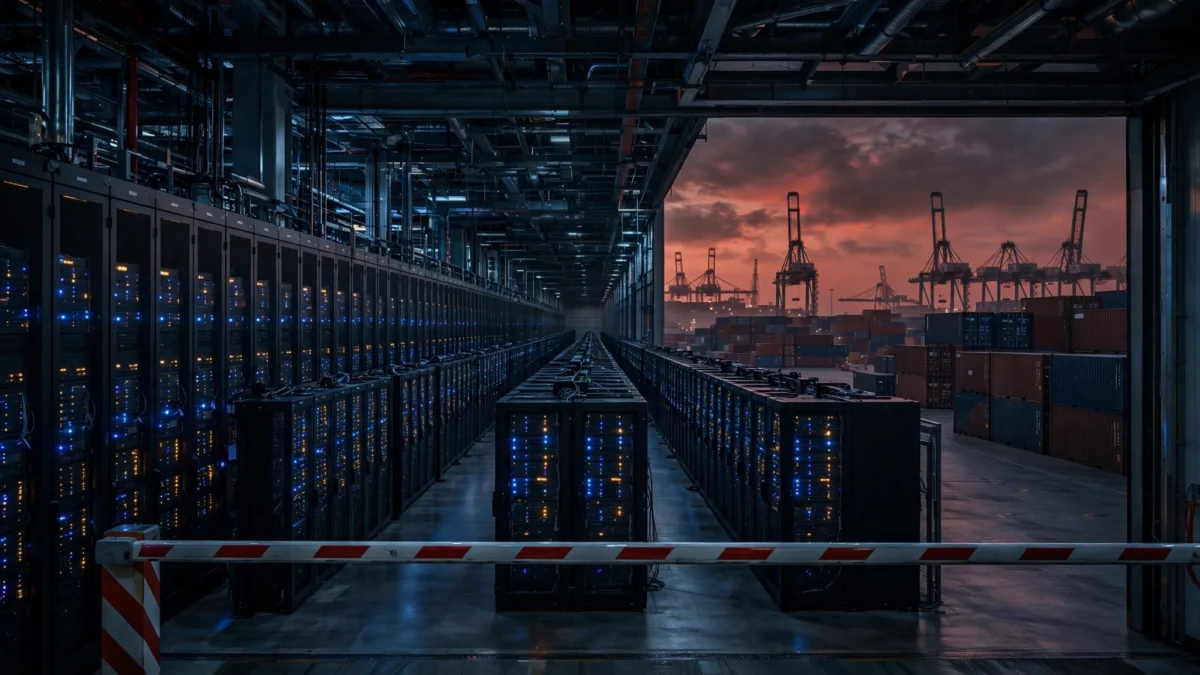
China unveiled a sweeping draft plan on Friday to restrict exports of more than 40 cutting-edge technologies, including artificial intelligence models, intelligent agents and computing clusters, in what amounts to the first time Beijing has proposed placing trained AI systems themselves inside its technology-export control perimeter, according to Reuters.
The Ministry of Commerce announced the proposed revision of the catalogue of technologies prohibited or restricted from export, and is seeking public comment on the plan until November 15. At the same time, China is already implementing an interim pre-export registration regime for the covered technologies, meaning the oversight takes effect before the formal rules are finalized, Reuters reported.
The draft, issued jointly with the Ministry of Science and Technology under the title “Announcement No. 48,” proposes adding 40 technologies across the artificial intelligence, biomedicine and photovoltaic sectors to the catalogue, according to The Hindu BusinessLine. Of those, 23 are AI-related technologies — large language models, AI agents, chip design and computing clusters, according to The Wall Street Journal — which Reuters described as “the three fundamental building blocks of China’s AI industry.”
The proposal marks a significant escalation in the global contest over artificial intelligence. It comes at a moment of intensifying competition and geopolitical tension between the United States and China over the technology’s frontier development, Reuters noted, and arrives just as Washington is standing up its own new AI oversight machinery: a US government task force on artificial intelligence, which President Trump has dubbed the Super Intelligence Task Force, held its inaugural meeting in Washington on Thursday, Reuters reported.
What the draft plan covers
Across the full 40-item catalogue, 14 technologies are proposed for a complete prohibition of export and a further 26 for restricted export, according to The Hindu BusinessLine.
The proposed export bans include AI-driven technology that could be used to generate and mutate malicious code, perovskite and tandem solar-cell module manufacturing technologies, and some platforms related to cell and gene therapy with independent intellectual property rights, The Hindu BusinessLine and the Spanish outlet Demócrata reported.
The restricted list includes AI-assisted vulnerability-detection technology, according to Demócrata, as well as polysilicon engineering technologies used to make solar cells when they involve production lines with annual output capacities of at least 30,000 tonnes, The Hindu BusinessLine reported.
On the AI side specifically, the proposal covers 23 key AI technologies spanning foundation models, intelligent agents, computing clusters and information-processing technologies, according to The Hindu BusinessLine. Notably, the regime would pull model weights and source code into scope for the first time — previously China’s export controls had reached mostly the hardware beneath AI systems — with the controls applying to products above certain performance thresholds, according to Bloomberg, as cited by the AI trade newsletter aiweekly.co.
In biomedicine, the draft incorporates five technologies related to cell and gene therapy, small nucleic acid drugs and pathogenic microorganisms, Demócrata reported. In the photovoltaic sector, 12 technologies covering polysilicon production, wafer manufacturing and solar-cell manufacturing would be added.
Registration starts now
While the public comment period runs until November 15, China has imposed a temporary registration requirement for exports of the technologies covered by the proposed plan until the changes are formally implemented, The Wall Street Journal reported. The registration, which started on Friday, applies to transfers of technology ownership, overseas licensing as well as moving ownership to a foreign entity. Exports that have begun but are not completed yet also fall within the scope of registration, according to the Journal.
The draft rests on the Foreign Trade Law of the People’s Republic of China and the Regulations on the Administration of Technology Import and Export, according to the Chinese business outlet Yicai, as cited by the industry publication goldenra.si. The catalogue has been reviewed and adjusted “multiple times” since 2001, a commerce ministry spokesperson noted, according to Demócrata.
The ministry has been consulting Alibaba, ByteDance, Zhipu and other domestic AI and chip firms on the shape of these controls since the summer, according to the trade publication Implicator, cited by aiweekly.co.
“Safe and controllable”
A commerce ministry spokesperson said on Friday in a statement that the proposed measures aim to ensure that AI technology is “safe and controllable,” according to The Wall Street Journal. In a separate statement, the ministry described the revision as routine and said it does not target any specific country, region or entity, Reuters reported.
Explaining the move, the spokesperson said in a statement cited by The Hindu BusinessLine that “in recent years, AI, biomedicine and photovoltaic technologies have seen expanding applications in sensitive fields.”
“Major economies around the world have implemented varying degrees of export controls in these areas. Drawing on international practice, China is implementing necessary controls in accordance with the law to prevent risks arising from loss of control over technologies or inappropriate proliferation, while also safeguarding normal international technological cooperation,” the statement said.
On the proposed AI controls, the spokesperson said that while “most AI technologies will continue to be freely exportable,” China was adding the 23 key AI technologies because tools such as autonomous malicious-code generation and mutation “could be used to target critical infrastructure, defence systems and core government networks or to evade national security defences.”
“If such technologies were acquired by malicious actors, they could threaten national security and broader human security. China’s objective is to establish security safeguards, prevent misuse and ensure that AI remains under human control,” the statement added.
The Wall Street Journal reported in July that Chinese officials had held discussions with domestic AI labs that produce the country’s most powerful models about how to protect their proprietary technology, noting that Beijing is concerned that sharing some of this technology could help adversaries or other malicious actors and ultimately be weaponized against China. In April, China blocked Meta Platforms’ $2 billion acquisition of AI startup Manus on national security grounds, the Journal reported.
Asked how the proposed export controls would affect Chinese AI companies seeking to expand internationally, the ministry spokesperson said that would hinge on “whether it involves the transfer of restricted technologies from within China to locations outside its borders,” according to the Journal.
What stays free: open source, APIs and overseas fabrication
The draft contains significant carve-outs. Technologies that have entered the public domain through published papers or open-source releases are excluded from controls, according to The Wall Street Journal. The ministry said open-source AI projects and overseas chip fabrication activities “would be eligible for facilitation measures,” while technologies already in the public domain through open-source publication or academic papers would “generally be exempt from export controls,” The Hindu BusinessLine reported. Access through APIs, websites, apps and software-as-a-service platforms is also exempted from the regime, according to Bloomberg, as cited by aiweekly.co.
“Only a limited set of technologies would be regulated” in the solar sector, the spokesperson said, and “other photovoltaic technologies would remain freely exportable,” according to The Hindu BusinessLine.
The statement also said China remained “committed to building an open-source AI innovation ecosystem,” a commitment that carries real weight given that Chinese labs such as DeepSeek and Moonshot AI have built their global influence precisely through low-cost, high-performance open-weight releases that rivals have struggled to match.
Solar and biotech: the wider sweep
The draft’s photovoltaic controls would add 12 solar technologies covering polysilicon production, wafer manufacturing and solar-cell manufacturing. Citing the need to “safeguard national security and interests,” the ministry said “photovoltaic technologies are increasingly being used in aerospace, defence, unmanned systems and other sensitive sectors; as a result, the national-security implications of technology exports have increased,” according to The Hindu BusinessLine.
The controls could affect efforts by countries including India to reduce dependence on China as they move up the solar value chain. Indian manufacturers in the solar space may face licensing delays going forward, said Santosh Pai, Honorary Fellow at the Institute of Chinese Studies and a cross-border lawyer, according to The Hindu BusinessLine. Chinese firms could also face constraints in solo investments, joint ventures and licensing deals with Indian counterparts on account of Announcement No. 48, he said.
In biomedicine, the five technologies covered relate to cell and gene therapy, small nucleic acid drugs and pathogenic microorganisms, Demócrata reported.
Analysis: Why It Matters
The first thing to notice about Announcement No. 48 is its symmetry. For years, Washington has built an export-control architecture aimed at keeping advanced AI capabilities out of Chinese hands — chip restrictions, licensing rules, investment curbs. Now Beijing is constructing the mirror image: a regime that keeps advanced AI capabilities inside Chinese hands. The technology war is acquiring a second, symmetrical wall, and export control is becoming the shared grammar of both sides rather than the weapon of one.
The second is the shift from hardware to weights. Until now, Beijing’s controls reached mostly the hardware beneath AI systems — the chips, the lithography, the manufacturing. Pulling trained models, model weights, source code and agents themselves into the perimeter is a different kind of move: it treats the software as the crown jewel. The logic is straightforward. A decade ago, the valuable thing in a deal was the factory; today, it is the model. The regime is finally priced to the asset that matters.
The third is the deliberate design of the escape valves. Exempting APIs, SaaS, published papers and open-source releases — and promising facilitation for open-source projects and overseas chip fabrication — is not generosity; it is strategy. China’s AI labs have become global brands through openness: DeepSeek’s low-cost open models, Zhipu’s GLM series, Qwen’s ecosystem. A regime that choked open weights would strangle the very influence operation it is meant to protect. Beijing wants to police the frontier without breaking the megaphone, and the carve-outs are where that balancing act shows.
The fourth is the timing and the form. A draft with a public comment period running to November 15, combined with an interim registration regime that bites immediately, gives Beijing leverage now while preserving flexibility later. In-flight deals, ownership transfers and overseas licensing all fall under registration starting Friday — the uncertainty itself becomes an instrument. Every company negotiating with a Chinese AI lab, every sovereign-AI partnership being assembled, must now price in approval risk, and that risk is a negotiating chip in its own right. The move lands in a week when Washington stood up its Super Intelligence Task Force and markets were convulsing over AI debt — the choreography is hard to miss.
The fifth is the enforcement fog. The performance thresholds that trigger controls on weights and source code have not been quantified in the published summaries, and “whether it involves the transfer of restricted technologies from within China to locations outside its borders” is the kind of test that will be decided case by case. Regimes built on case-by-case discretion give the regulator enormous power and the regulated enormous headaches. For Alibaba, ByteDance and Zhipu — consulted since the summer, according to industry reports — the question is now how much of their international expansion survives contact with the paperwork.
What to Watch Next
- The comment period: Public consultation runs until November 15. Watch which items get narrowed, dropped or clarified — industry pushback from the big labs, which have been in talks with the ministry since the summer, will be the first signal of how hard the final rules bite.
- The interim registration in action: Registration applies to exports already begun but not completed, plus ownership transfers and overseas licensing. The first delayed or blocked deal will show what the regime means in practice.
- Washington’s response: Does the US treat this as escalation and tighten chip or investment rules further, or as bargaining material in the ongoing trade talks? The Super Intelligence Task Force’s risk study, now getting underway, will be reading this file closely.
- The open-weight labs: How DeepSeek, Zhipu, Moonshot AI and the Qwen ecosystem navigate the above-threshold rules on weights and source code — and whether the open-source carve-outs hold — will decide how much of China’s AI influence strategy survives its own controls.
- The solar side effects: Beyond AI, the 12 photovoltaic technologies and the polysilicon thresholds could ripple through India’s solar localisation plans and global PV equipment order books — a second front in the same announcement.
Sources

About the Author — Abdul Mannan
Related Articles
Global Financial Watchdog Demands Tighter Human Control Over AI Agents in Finance
The Financial Stability Board has finalised 12 sound practices for banks' AI use, demanding tighter human oversight of…

Anthropic’s Revenue Soars to $16.8 Billion as It Reports First Adjusted Profit Ahead of Blockbuster IPO
Anthropic told investors its third-quarter revenue jumped 45% to $16.8 billion and that it turned an adjusted profit,…

OpenAI Engineer Arrested After Hidden Listening Device Found in Executive Conference Room
Federal prosecutors say an OpenAI engineer planted a concealed recording device in an executive conference room where highly…