
Real Madrid Demand La Liga President Javier Tebas Resign After Goebbels Comparison

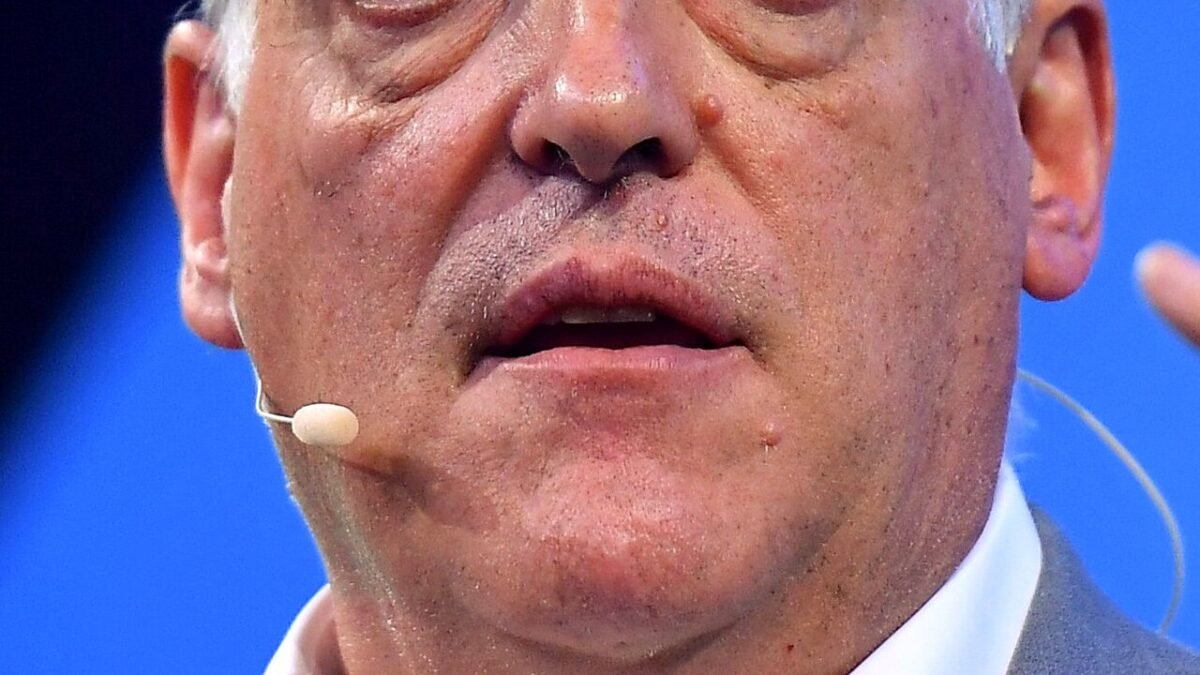
Real Madrid have demanded the immediate resignation of Javier Tebas as president of La Liga after he compared the club’s management and its in-house television channel to the propaganda methods of Nazi Germany’s minister Joseph Goebbels.
The Spanish giants issued a furious official statement on Friday, 16 October 2026, hours after Tebas published a lengthy social media post attacking Real Madrid TV and two journalists he accused of acting as the club’s mouthpieces. In the post, Tebas wrote that “Real Madrid’s management directs an orchestra of mouthpieces and Real Madrid TV leads the singing,” according to Reuters.
The La Liga president went on to argue that the channel’s coverage of refereeing followed a script of picking favourable incidents, repeating grievances, feeding suspicion and pointing at enemies — a method he said “recalls propaganda mechanisms used by Goebbels,” Nazi Germany’s minister of propaganda. He added that “the comparison is with those propaganda techniques, not with an ideology or, of course, with the Madridista fanbase,” Reuters reported.
Real Madrid’s statement described Tebas’s intervention as “intolerable and extraordinarily serious,” saying it was unacceptable that someone holding two positions of top responsibility in Spanish football — the La Liga presidency and the vice-presidency of the Royal Spanish Football Federation (RFEF) — should resort to a comparison with the Nazi regime’s propaganda methods to discredit the club, its leadership and its television channel, according to the Associated Press and USA Today.
The club demanded that the 64-year-old step down from both posts immediately, accusing him of “repeated conduct” that “demonstrates a lack of neutrality, respect and impartiality incompatible with his institutional responsibilities,” and describing his “constant attacks” on the club as “a real scourge for Spanish football,” the AP reported.
What sparked the latest explosion
Tebas’s post was a direct response to articles by two journalists — writing in the Spanish newspaper El Debate — who had suggested that he and La Liga were working against Real Madrid’s interests, according to Reuters. Tebas countered that the writers were amplifying a message on behalf of the club’s management, and he singled out one of them, journalist Tomás González-Martín, in a pointed aside, The Times reported.
The immediate trigger was the ongoing row over refereeing in Spain, which has dominated the new season. Real Madrid TV, the club’s own channel, regularly broadcasts video compilations of what it presents as serious errors by match officials ahead of upcoming fixtures — a practice Tebas has repeatedly criticised. His Friday post accused the channel of selecting the plays that suit the club, repeating grievances and subordinating facts to a narrative, in language that deliberately echoed historical propaganda technique.
Tebas also used the post to refer to the Negreira case — the long-running scandal centred on payments made by Barcelona to José María Enríquez Negreira, the former vice-president of the Spanish federation’s refereeing committee — a mention the club described as “especially concerning,” the AP reported. Real Madrid have handed UEFA a dossier on the affair, while Barcelona maintain the payments were for technical and scouting reports on referees.
Madrid hit back on refereeing and neutrality
In its statement, Real Madrid broadened the charge beyond the Goebbels remark, complaining about what it called La Liga’s and the federation’s inaction over the Negreira scandal and calling for a complete overhaul of the refereeing system in the Spanish top flight, according to the AP.
Head coach Jose Mourinho has also voiced complaints in recent weeks that Madrid, who hold a record 36 Spanish league titles and a record 15 European Cups, are regularly hurt by officiating decisions. The tension sharpened after a 2-1 defeat at Atlético Madrid, which Madrid believed was affected by officiating — though, according to the AP, Tebas had dismissed the club’s refereeing complaints in September as a “smokescreen” for shortcomings on the pitch.
That September exchange had already produced one demand for Tebas’s removal: the club called for a new La Liga president in response to the “smokescreen” remark, Reuters reported. Friday’s statement makes the demand explicit and personal — and adds the RFEF vice-presidency to the list of posts Madrid say he should vacate.
Tebas responded to the club’s demand by accusing Real Madrid of trying to “destroy” La Liga, The Times reported, a charge that underscores how far the relationship between the league and its most powerful club has deteriorated.
Why it matters: a presidency under fire
Javier Tebas has been president of La Liga since 2013, re-elected unopposed in 2023 to serve until 2027. He is elected by the 42 professional clubs in Spain’s top two divisions — which makes Real Madrid’s demand a political act as much as a protest: it can only succeed if a significant bloc of those 42 clubs agrees that his position is no longer tenable, Reuters noted.
The row landed on the same day La Liga confirmed that Real Madrid are one of six clubs that will sit on the league’s Executive Committee this season, Reuters reported — an irony that captures the paradox of the feud: the club is both a governing insider and the president’s most vocal critic.
Tebas’s tenure has been defined by combative governance. He has overseen La Liga’s financial transformation and global commercial growth, but his relationship with Real Madrid — and in particular with club president Florentino Pérez — has been adversarial for years, touching on everything from the proposed Super League to television-rights policy, fixture scheduling and, most persistently, refereeing.
Analysis: Why it matters
A line crossed in public language
Whatever one thinks of Real Madrid TV’s refereeing montages, the invocation of Goebbels represents a deliberate escalation with real costs. In Spanish — and European — public life, comparisons with Nazi propaganda are not ordinary political rhetoric; they carry a moral weight that forecloses normal disagreement. Tebas’s caveat, that the comparison concerned techniques rather than ideology, was never likely to survive first contact with the headline, and the club’s response was calibrated to ensure it did not. For a league president who has made media combat a signature of his governance, the choice of metaphor handed Madrid its strongest grievance of the season.
The structural problem: judge and participant
The deeper issue exposed by this row is institutional. A league president elected by the clubs is supposed to act as a neutral custodian of the competition; instead, Tebas has operated as an active combatant in the media arena, regularly trading blows with the biggest club in the competition. That posture has defenders — his supporters argue Spanish football’s governance needed a strong hand after years of disorder — but each public clash erodes the perception of impartiality that the office requires. When the man responsible for refereeing standards is publicly at war with the loudest critic of those standards, every contested decision risks being read through the lens of the feud rather than on its merits.
Real Madrid TV: the weapon that keeps firing
The club’s in-house channel is the other half of this equation, and its role deserves scrutiny on its own terms. Real Madrid TV’s pre-match referee videos — curated clips of errors presented without context or counterweight — are an institutional innovation with no real precedent at this scale: a major club systematically campaigning against the officials of its own league through a media outlet it owns. Tebas’s criticism of the practice, stripped of its poisonous framing, identified a genuine problem: a competition in which the richest club conducts a permanent public prosecution of the referees cannot expect officiating debates to remain rational. Both institutions are behaving as media actors first and sporting ones second.
What this means for La Liga’s brand
The timing is poor for Spanish football. La Liga sells itself globally as the home of a sophisticated, competitive product — the league that hosts the Clásico, that has rebuilt its stadiums and its finances. A public war between the league’s chief executive and its flagship club, conducted in the language of wartime propaganda, is terrible for that brand. Sponsors, broadcasters and neutral fans are watching an internal power struggle consume the oxygen of the competition. The longer it continues, the more it feeds the narrative that Spanish football’s governance is unstable — a narrative rival leagues are happy to encourage.
The 42 clubs hold the cards
The decisive question now is whether other clubs rally behind Madrid, behind Tebas, or choose strategic silence. Tebas has survived plenty of confrontations with Florentino Pérez before, often with the backing of smaller clubs that credit him with financial stabilisation and collective television deals. But the Goebbels remark is the kind of episode that tests those loyalties: even supporters of the president may find the comparison indefensible, while even critics of Madrid may hesitate to join a campaign led by the most powerful club in the league. Watch the tone of statements from clubs like Atlético Madrid, Sevilla and Athletic Club — their silence or otherwise will signal whether this stays a two-man war or becomes a governance crisis.
What to watch next
- Tebas’s position: Will he apologise, double down, or stay silent? An apology would be out of character; defiance would prolong the story. His standing depends on the reaction of the 42 clubs that elected him.
- The RFEF angle: Madrid wants him out of the federation vice-presidency too. Any response from the RFEF leadership — or from Spain’s sports authorities — would raise the stakes from a league row to a national governance question.
- Refereeing reform pressure: Madrid’s call for a complete overhaul of the refereeing system, and its continued agitation on the Negreira case, suggests the club will keep pressing on the officiating front regardless of the Tebas outcome.
- The UEFA dimension: With Madrid’s Negreira dossier already with UEFA, and Tebas a prominent voice in European football politics, any spillover into continental institutions would widen the blast radius.
- The pitch itself: Amid all this, Madrid continue their season. How the squad and Mourinho handle the noise — and whether the club’s form holds — will shape whether this reads as institutional crisis or noisy background music.
Sources
- Reuters — Real Madrid demand resignation of LaLiga chief after Nazi propaganda comparison
- Associated Press (via theScore) — Real Madrid demand Tebas resignation over Nazi propaganda
- USA Today — Real Madrid calls for La Liga president’s resignation after Nazi propaganda comparison
- The Times — Real Madrid want Liga chief to resign after he compared them to Goebbels

About the Author — Abdul Mannan
Related Articles
Bhuvneshwar Kumar Earns India Recall for Series Decider as Arshdeep Singh Faces Late Fitness Test
India have recalled 36-year-old seamer Bhuvneshwar Kumar as cover for Arshdeep Singh, whose shoulder injury has put his…
Guardians Edge Rays 3–2 Behind Rookie Halpin’s Go-Ahead Homer, Take 2–1 ALCS Lead
Rookie Petey Halpin's go-ahead two-run homer and a dominant Cleveland bullpen powered the Guardians past the Rays 3–2…
Broncos Edge Seahawks 17–14 in Overtime as Defense Rescues Another Night
Denver's defense forced three takeaways and Wil Lutz nailed a 53-yard field goal in overtime to stun the…