
Millions Expected as ‘No Kings: Vote Early’ Rallies Sweep All 50 States in Final Midterm Push

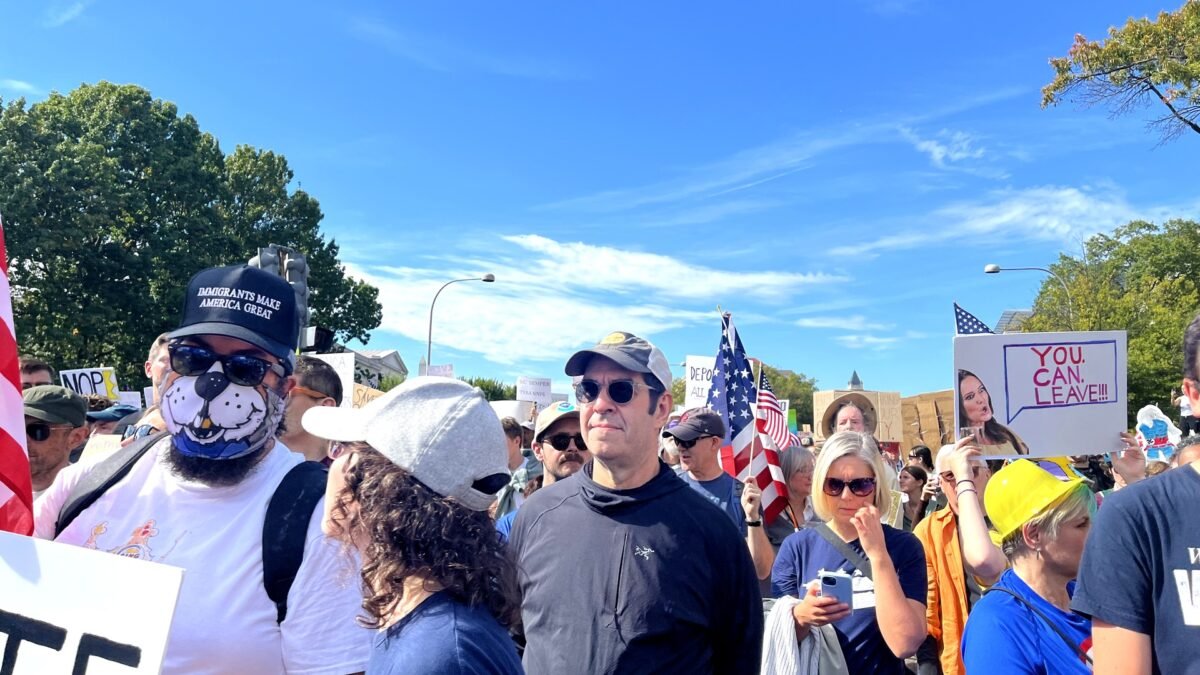
Thousands of rallies, marches and voter-mobilisation events are set to take place across all 50 American states and Washington, D.C., on Saturday, October 17, as the “No Kings” movement holds its fourth nationwide day of action — this time with a new mission: getting Americans to vote early in the November 3 midterm elections.
Dubbed “No Kings: Vote Early,” the events represent a deliberate shift for a movement that began as street protest and is now trying to convert its crowd energy into ballots. Organisers have listed more than 3,000 events nationwide, from a music festival in Los Angeles to a march on the Supreme Court in Washington, family-friendly workshops in Chicago and election-observer training sessions in Atlanta, according to an AFP report.
“It’s a day of nonpartisan voter participation: we are bringing our community together to make a plan to vote early and ensuring every eligible voter understands their options for how to vote and has the opportunity to make their voice heard,” organisers said in a statement reported by AFP.
The day’s programming is deliberately timed to the start of early voting. Although Election Day falls on Tuesday, November 3, most American states allow ballots to be cast days or even weeks earlier. Ezra Levin, the co-founder and co-executive director of Indivisible, one of the coalition’s anchor organisations, told reporters the October 17 date was chosen on purpose: “That was intentional — to put it smack dab in the middle of the start of early voting all around the country — because we wanted a mass, nonviolent, geographically distributed movement demonstration in the streets to show that democracy is going to reassert itself,” the Greene County-based Porcupine Soup News reported.
The coalition behind the effort has grown into one of the largest protest alliances in modern American history, with more than 200 advocacy groups signed on, including Indivisible, MoveOn, the American Civil Liberties Union, the American Federation of Teachers, the Black Voters Matter Fund, Voto Latino and Public Citizen, according to local coverage of the events. The “50501” network — named for “50 protests, 50 states, one movement” — is also a core organising partner.
A nationwide map of Saturday’s events
The scale of the day is visible in local listings across the country. In Southern California, organisers told LAist they expected “tens of thousands” of people at rallies in the greater Los Angeles area alone, including a 1 p.m. gathering at Gloria Molina Grand Park in downtown Los Angeles, with additional events in Pasadena, Long Beach, Riverside, Burbank, Culver City and other cities. “We expect tens of thousands of people to attend the various No Kings rallies throughout the greater Los Angeles area, and we would not be surprised to see tens of thousands at the downtown rally itself,” said Nick Miller, a press coordinator with 50501 SoCal, according to LAist.
In Massachusetts, more than 130 events were scheduled, with over 30 planned across Vermont, dozens across New Jersey — including a noon march and rally at the Lincoln statue in Newark, plus gatherings in Teaneck, Montclair, Hawthorne and South Orange — and events in small towns and rural communities as well as big cities, local outlets reported. In upstate New York’s Greene County, rallies were planned in Greenville and Catskill; in the South Shore region of Massachusetts, eight towns each hosted their own event, the Patriot Ledger reported.
“No Kings: Early Vote will be thousands of joyful celebrations of our right to vote across the country,” said Deirdre Schifeling, the ACLU’s chief political and advocacy officer, in the AFP report.
From protest signs to voter lists
The “No Kings” movement first erupted on June 14, 2025, when roughly 2,000 demonstrations drew millions of participants to streets in large cities and small towns alike, according to Gannett-affiliated outlets. A second round followed that October and a third in March 2026. Each successive iteration has been larger than the last, and organisers say this weekend’s events are the biggest yet.
The name reflects the organisers’ central accusation: that President Donald Trump is exercising power like a monarch rather than the head of a constitutional republic. Trump has dismissed the movement, calling the protests “a joke” and rejecting any comparison to a king.
But Saturday’s theme marks a strategic pivot. Where earlier rounds centred on opposing the administration’s policies — immigration enforcement, executive overreach, the concentration of presidential power — this weekend is explicitly about the ballot box. The events include rallies, block parties and organised walks to the polls, the Worcester Telegram reported, alongside practical tools such as voter-planning drives, rides to polling places and election-defence workshops.
Alma Couverthie, who oversees grassroots organising for the democracy watchdog Common Cause, framed the day as an act of reclamation. “This Saturday, October 17, will be a celebration of our collective power. Walk together to the polls. Organise rides. Bring your neighbours, friends, and family,” she urged participants, according to AFP.
Why the early-vote emphasis matters
The focus on early voting is not incidental — it is the movement’s insurance policy. Trump has repeatedly and openly criticised mail-in voting, and his opponents have voiced concern that his administration could attempt to undermine or contest the midterm results, especially if Republicans lose seats, as opinion polls suggest is quite likely, AFP reported.
Organisers argue that banking votes early makes any post-Election-Day manoeuvre harder. “The best way to prevent any funny business from this administration after election day is to make sure that our turnout is massive, so clear and so overwhelming that our victory for democracy is impossible to question,” Couverthie said.
The legal infrastructure behind the day reflects the same thinking. Fast Company reported that the ACLU has identified dozens of potential election-interference and voter-disenfranchisement scenarios and prepared to respond “immediately with legal action and community mobilisation,” deploying tens of thousands of volunteers and organisers through its affiliate network. “Together with our affiliates and partners, we have built a powerful network of organisers, community leaders, and tens of thousands of volunteers who are ready to navigate attacks on our elections and assist voters,” said the ACLU’s Schifeling, according to Fast Company.
The election-security backdrop is unusually tense. Just this week, the FBI, the U.S. Postal Inspection Service and the U.S. Capitol Police opened a nationwide investigation into a series of suspicious mailings sent to election offices and congressional offices — some containing unknown substances — with several state election offices evacuated and at least one employee hospitalised as a precaution. A 2023 wave of fentanyl-laced letters to election officials in five states remains a fresh memory for the people who run American elections.
A midterm preview, 17 days out
The No Kings day arrives at a combustible moment in American politics, just 17 days before the November 3 midterms and in the middle of a week of cascading headlines: the abrupt exit of White House press secretary Katie Zacharia after five days, a fight over an alleged slowdown of Ukraine’s Starshield internet service, and a presidential waiver shelving new Russia sanctions two days before they were due to take effect. Against that backdrop, Saturday’s demonstrations will serve as the clearest real-time measure of anti-Trump grassroots energy since the spring.
Political scientists will be watching two numbers above all others: how many people actually turn out, and how many of them leave Saturday with a concrete plan to vote early. If the coalition can translate its street presence into banked ballots, the movement’s argument goes, it will have answered the most persistent criticism of American protest politics — that marches change nothing. The answer No Kings is offering, 17 days before the midterms, is a ballot plan.
Analysis: Why It Matters
The protest-to-pipeline shift is the real story. American street movements have a well-documented failure mode: enormous crowds, enormous energy, and then a cliff — turnout at the next election barely moves. What No Kings is attempting on Saturday is explicitly designed to break that pattern. A music festival that ends with a voter-registration table, a block party that ends with a ride schedule to the polls, a march that literally walks people to an election office — these are not protests in the classic sense at all. They are get-out-the-vote machinery wearing the clothes of a demonstration. If it works, it becomes the template for how American opposition politics organises for the rest of the decade.
Early voting is the movement’s legal strategy, not just its calendar. Read Couverthie’s “funny business” line carefully: the organisers are openly framing early voting as a deterrent against contested outcomes. There is a hard logic behind it. Every ballot cast before November 3 is a ballot that cannot be suppressed by an Election-Day disruption, a last-minute polling-place closure, or a delayed certification fight. And in a cycle where the FBI is literally intercepting suspicious white-powder mail sent to election offices, the argument that voting early is voting safely lands with unusual force. The movement is not just encouraging participation; it is trying to shrink the attack surface of the election itself.
Trump’s dismissal is a tell, not a shrug. Calling millions of protesters “a joke” is a familiar tactic — diminish, delegitimise, deny the scale. But the polling context cited by AFP, which suggests Republicans are likely to lose ground on November 3, makes the dismissal read differently. An administration confident in its midterm prospects does not need to pre-emptively discredit both the demonstrators and the early-voting mechanisms they are promoting. The double dismissal — of the movement and of mail-in voting — suggests the White House sees the same arithmetic the organisers do: banked early votes are the hardest votes to unwind after the fact.
The coalition’s breadth is its insurance against fracture. The No Kings umbrella now stretches from labour unions and teachers to civil-rights groups, Latino civic organisations and online-activist networks — more than 200 organisations with different theories of change. Historically, coalitions this wide splinter. But the “Vote Early” theme is a lowest-common-denominator goal that every member can endorse without compromising its identity: nobody in that coalition is against voting. Whether the unity survives a contested November is another question, but for one Saturday, the movement has found the one message its entire tent can stand behind.
The observer training is the detail that signals seriousness. Among the day’s listed activities, the election-observer training sessions in Atlanta deserve special attention. Training citizens to watch polling places is the infrastructure of a movement that expects trouble on Election Day — and intends to be the one documenting it. Combined with the ACLU’s legal war-room posture, it paints a picture of an opposition that is preparing not merely to vote but to litigate, witness and contest. That is a long way from a sign-waving march. It is the protest movement growing up into an electoral institution, in real time, in the final fortnight before the vote.
What to Watch Next
- Turnout figures and event coverage: Organisers have claimed millions at previous rounds; whether Saturday meets, exceeds or falls short of those claims will shape the midterm narrative. Independent crowd estimates will be scrutinised closely.
- Early-voting numbers in the coming days: The clearest measure of the day’s impact will be whether early-ballot returns spike in the week of October 19–25, particularly in swing states where the coalition concentrated its events.
- White House response: Whether the president or his spokespeople engage with the demonstrations — beyond the previous “joke” dismissal — will signal how seriously the administration treats the opposition’s midterm mobilisation.
- Election-security developments: The ongoing FBI investigation into suspicious mailings to election offices will cast a shadow over the final stretch; any new incident could reshape both the voting process and the rhetoric around it.
- Midterm polling trajectory: With Election Day on November 3, the next round of national and state polls will show whether the Democratic enthusiasm the coalition is banking on is translating into the margins opinion surveys currently project.
Sources
- AFP: ‘No Kings’ movement seeks to boost early voting (via Deutsche Tageszeitung)
- Fast Company: ‘No Kings’ October 17 protest — 2,500+ rallies urge Americans to vote early
- LAist: ‘No Kings’ protests planned in LA area Saturday
- Worcester Telegram: More than 130 No Kings events planned in Mass.
- Porcupine Soup News: ‘No Kings’ rallies Saturday to focus on early voting

About the Author — Abdul Mannan
Related Articles
‘It Wasn’t Me’: Trump Denies Ordering Starshield Slowdown for Ukraine as Zelenskyy Says Speeds Still Not Restored
Trump denied he ordered limits on Ukraine's Starshield service as a Reuters report said the slowdown order came…
Trump’s Press Secretary Katie Zacharia Out After Five Days Following Rocky Debut and Bar-Exam Controversy
Katie Zacharia's five-day tenure as White House press secretary has ended after a faltering debut briefing and questions…

US Pushes Back Small-Package Customs Rule Until After Midterms as Prescription-Drug Alarms Grow
US Customs and Border Protection has pushed the mandatory start of new mail-entry rules for small international shipments…