
Bilawal Bhutto-Zardari Says KP Emergency Could End if Opposition Engages on Counterterrorism Plan

ARTICLE BODY STARTS — paste everything from here
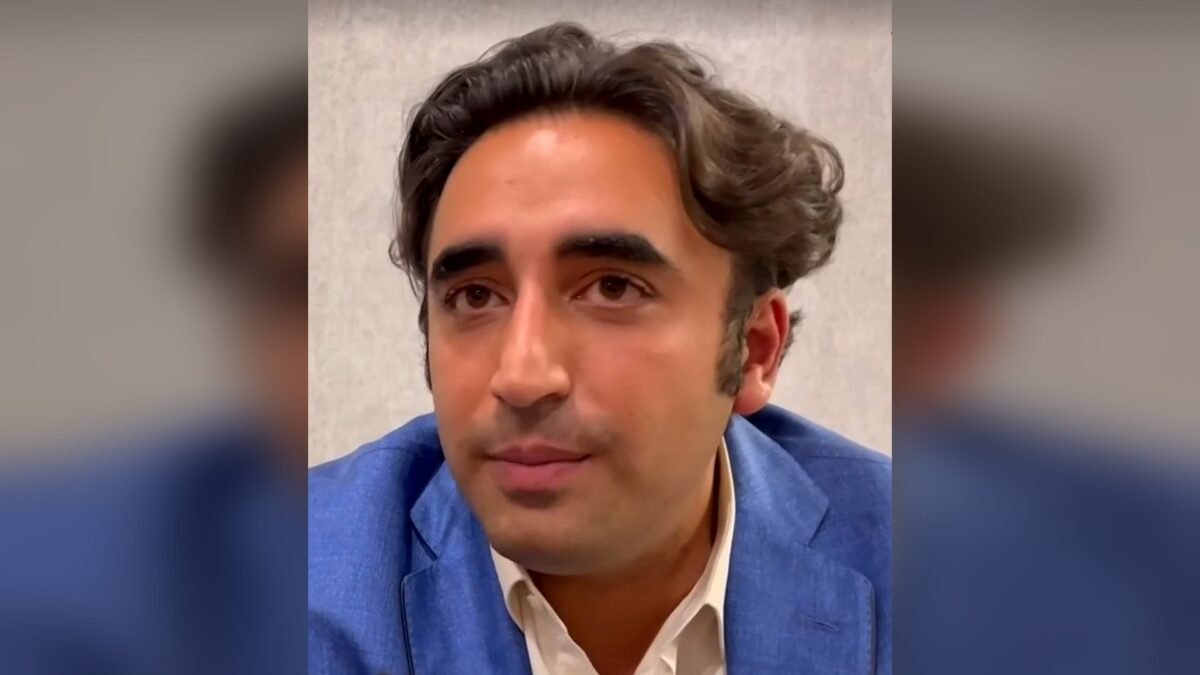
Pakistan Peoples Party (PPP) Chairman Bilawal Bhutto-Zardari said on Sunday that the emergency and governor’s rule imposed in Khyber Pakhtunkhwa could be lifted if the opposition engages with the federal government on a joint plan to fight terrorism, according to Dawn.
“If they really want to fight terrorists, and if they want that emergency and governor’s rule in KP to end, they should engage with the federal government and politicians and discuss a united policy regarding the fight against terrorism,” Bilawal said while speaking to the media in Karachi, as reported by Dawn. He added that if the opposition was ready to fight terrorism and “we agree on a plan” to do so, the emergency and governor’s rule in the province could end.
The PPP chairman made the remarks during a visit to the Karsaz Monument in Karachi on the 19th anniversary of the 2007 Karsaz bombing, the deadly attack on Benazir Bhutto’s homecoming procession that killed scores of people. Bilawal defended the federal takeover of Khyber Pakhtunkhwa while placing the onus for ending the constitutional crisis squarely on the opposition, particularly Imran Khan’s Pakistan Tehreek-e-Insaf (PTI).
Bilawal was unsparing in his criticism of the deposed provincial leadership. “If the Khyber Pakhtunkhwa chief minister is a coward, if he is not ready to defend his homeland, if he is not ready to fight those terrorists, then the PPP is ready to fight them,” he said, referring to Sohail Afridi, the PTI chief minister whose administration was suspended on October 11. “That is why we supported the government’s decision to impose governor’s rule in KP.”
He stressed that his party would “join forces with everyone to fight these terrorists,” and conceded that the country’s security situation was deteriorating drastically. “Terrorist attacks are taking place from Khyber to Khuzdar,” he said, adding that the country had reached a point where “some forces want to take down Pakistan’s flag in Swat,” according to Dawn’s account of his remarks.
A week into the federal takeover
Bilawal’s statement comes exactly a week after President Asif Ali Zardari approved the imposition of an emergency and governor’s rule in Khyber Pakhtunkhwa on October 11, on the advice of Prime Minister Shehbaz Sharif’s cabinet, under Articles 232 and 234 of the Constitution. The move suspended the PTI-led elected provincial administration and transferred executive authority to Governor Faisal Karim Kundi, assisted by an 11-member technocratic advisory council, for an initial period of six months.
The federal government justified the intervention by citing the provincial administration’s alleged “deliberate disengagement” from the fight against terrorism, as the prime minister’s office put it. The takeover followed a PTI mobilisation drive and the party’s planned long march towards Islamabad to demand the release of its jailed founder, Imran Khan, who has been incarcerated since August 2023.
Both houses of parliament endorsed the presidential proclamations in a joint sitting on October 14 and 15. Bilawal himself addressed the National Assembly on October 14, accusing the PTI of creating the circumstances that made the emergency necessary, calling it a “political suicide attack,” and reading out the text of Article 232 while insisting the Centre had made every effort to engage the opposition so the step could be avoided.
PTI has rejected the intervention as unconstitutional and politically motivated, describing it, in the words of Khan’s aide Zulfikar Bukhari, as a move amounting to a “coup disguised as emergency.” The party has challenged the emergency and governor’s rule at the Peshawar High Court, which has fixed October 20 — Tuesday — for the hearing of petitions filed by PTI Chairman Barrister Gohar Khan and others. Tehreek Tahaffuz Aiyeen-e-Pakistan (TTAP), the opposition alliance, has also filed a petition challenging the measures.
Economic crisis and electoral reforms
In his media talk, Bilawal also addressed Pakistan’s economic situation, which he described as a “historic economic crisis.” “It appears that the situation will worsen. Our priority is to address this economic crisis, and to do that, we will have to fight terrorism as well,” he said, according to Dawn.
He noted that efforts should be made to improve the democratic and electoral system of the country, saying the federal government had decided to establish an electoral reforms committee in the National Assembly and inviting opposition parties to participate in the process. He argued that tackling terrorism was essential to addressing the country’s wider challenges, including economic instability.
On the debate over creating new provinces, Bilawal said any such changes must comply with the Constitution and the law, adding that new provinces could be established where there was clear political consensus and support from the relevant provincial assembly. He also reiterated the PPP’s opposition to proposals that could divide Sindh, where the party governs.
Commenting on Jamiat Ulema-e-Islam-Fazl (JUI-F) chief Maulana Fazlur Rehman, who has opposed the governor’s rule, Bilawal acknowledged his right to criticise government policies while urging him to condemn terrorist violence.
Analysis: Why It Matters
Bilawal Bhutto-Zardari’s conditional offer — lift the emergency if the opposition engages on a counterterrorism plan — is the clearest articulation yet of what the federal government wants from the PTI to end Khyber Pakhtunkhwa’s constitutional crisis. Framed as an open door, it is also a political manoeuvre: it shifts the burden of ending governor’s rule onto the opposition while keeping the security pretext that justified the takeover firmly in the government’s hands. If the PTI engages, Islamabad can claim the emergency worked as leverage. If it refuses, the government can argue the opposition prefers confrontation to consensus, justifying the continuation of Governor Kundi’s administration.
The PPP chairman’s positioning here is worth noting. His party is not part of the federal government, yet it was the PPP’s own leader’s signature — President Asif Ali Zardari’s, on the emergency proclamations — that enabled the takeover, and it is the PPP’s own governor, Faisal Karim Kundi, who now runs the province. Bilawal’s October 14 National Assembly speech already put the PPP on record supporting the intervention, so Sunday’s “condition” does not signal a change of heart. Rather, it is an attempt to give the intervention a political exit ramp that keeps the counterterrorism framing intact and the PPP’s hands clean in the eyes of voters who dislike emergency rule.
The timing, on the eve of Tuesday’s Peshawar High Court hearing, is hardly accidental. With the judiciary set to scrutinise the legality of the October 11 proclamations, the federal government benefits from any signal — even an informal one — that a political settlement remains possible. Courts deciding the fate of emergency powers often weigh whether the executive exhausted less drastic alternatives; a public offer of engagement, documented a day before the hearing, becomes part of that record. It is also aimed at the international audience that has begun to notice: an Athens-based report this week warned that the KP emergency could invite closer European Union scrutiny of Pakistan’s GSP+ trade preferences, and every public gesture towards dialogue softens the “democratic backsliding” narrative.
Bilawal’s personal attacks on Sohail Afridi — calling the deposed chief minister a “coward” unwilling to defend his homeland — cut in the opposite direction from the olive branch he extended. The language personalises the dispute and makes a quiet negotiated settlement harder, because it requires the PTI to engage with leaders who have publicly humiliated their chief minister. The PTI’s base, already convinced that the emergency is a pretext for dismantling the party, is unlikely to read the “coward” remark as an invitation. The question is whether Bilawal’s target audience is really the PTI leadership, or the broader public and the establishment: demonstrating that the PPP is the responsible, dialogue-seeking party while painting the PTI as the obstacle.
Finally, linking the economic crisis to the terrorism fight reveals the PPP’s wider narrative — that militancy is not just a security problem but the bottleneck for investment, trade and recovery. Pakistan recorded its highest monthly number of militant attacks in 12 years in September 2026, and the government’s own figures trace the spike to cross-border infiltration from Afghanistan. If the KP emergency fails to produce visible security gains, the entire justification for suspending an elected government collapses, and the political cost will land hardest on the PML-N-led Centre and the PPP that backed it. Bilawal’s condition, in that sense, is also a hedge: it keeps a political path open before the security argument is tested on the ground.
What to Watch Next
- The Peshawar High Court hearing on October 20: The court’s handling of the PTI and TTAP petitions will be the first judicial test of the emergency and governor’s rule. Watch for whether the bench grants interim relief or pushes the matter towards a full hearing.
- PTI’s response to Bilawal’s condition: Whether the party engages on a counterterrorism plan, rejects the offer as a trap, or counters with its own conditions will determine if the “exit ramp” is real.
- The advisory council’s moves in Peshawar: Governor Kundi’s administration has already reshuffled commissioners and officials; its handling of security operations and development funds will be scrutinised for political use of state machinery.
- The EU/GSP+ angle: Whether Brussels formally raises the KP emergency in its assessment of Pakistan’s trade preferences, as the Directus report suggests it might.
- Militancy trends in KP and Balochistan: The government’s entire case rests on a security emergency; any let-up or escalation in attacks in the coming weeks will reshape the political argument on both sides.
Sources
- Dawn News English: “Bilawal Bhutto Sets Condition for Ending Governor’s Rule in Khyber Pakhtunkhwa”
- ANI (via LatestLY): “Zardari Says Oppn Should Engage with Centre on Counterterrorism to Lift Emergency in Khyber Pakhtunkhwa”
- Burak Digital: “KP Governor’s Rule Could End if Opposition Cooperates on Counterterrorism”
ARTICLE BODY ENDS

About the Author — Abdul Mannan
Related Articles
Shehbaz Sharif Says Federal Government Was ‘Compelled’ to Impose Governor’s Rule in Khyber Pakhtunkhwa
Shehbaz Sharif said in Gujranwala on Saturday that the Centre was "compelled" to impose emergency and Governor's Rule…
CPJ Urges Pakistan to Scrap PEMRA Ban on Live TV Coverage of Terror Attacks and ‘Unpleasant’ Incidents
The Committee to Protect Journalists has urged Pakistan to withdraw a PEMRA directive barring TV channels from live…
Pakistan Stands ‘Shoulder to Shoulder’ With Saudi Arabia as Houthi Strikes Test Makkah Defence Pact
Prime Minister Shehbaz Sharif has pledged Pakistan's full backing for Saudi Arabia under the Makkah Joint Defence Agreement…