
Federal Judge Denies Bail for Former OpenAI Engineer After Saudi Consulate Offers to Cover Any Bond

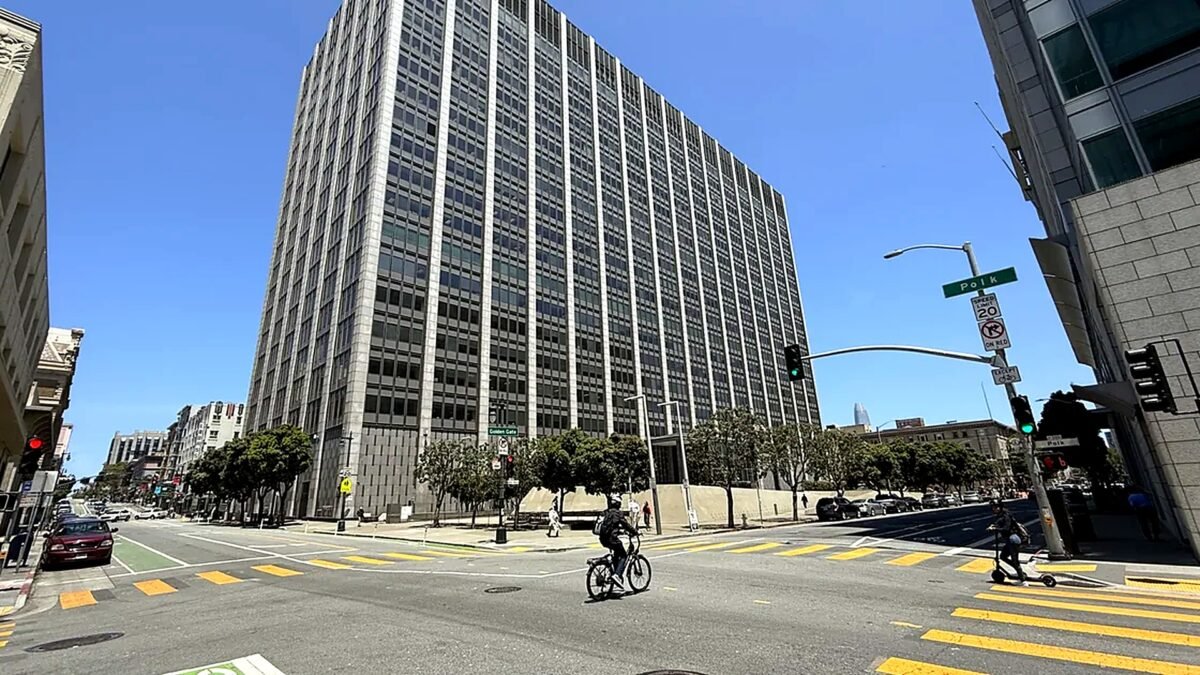
A federal judge in San Francisco has ordered Abdulrahman Alfozan, the former OpenAI engineer accused of hiding a listening device inside the company’s executive conference room, to remain in custody without bail — ruling that he poses a significant flight risk and brushing aside an extraordinary offer from the Saudi Arabian government to pay whatever bond the court set.
US Magistrate Judge Alex G. Tse delivered the ruling on Monday after an hour-long detention hearing, according to multiple outlets present in the courtroom, including The Wall Street Journal, The New York Post and USA Today. The judge said the risk that Alfozan, 35, a Saudi national, would fail to appear was “significant,” and he sharply questioned a letter from the Saudi Consulate in Los Angeles offering to cover Alfozan’s bail in full.
“It seems like a blank check: ‘We’re gonna pay whatever the court wants to make sure he gets out,'” Tse said from the bench, in remarks reported by The Wall Street Journal. “I find that problematic.”
The hearing capped a dramatic 24 hours for the case. Late on Sunday, federal prosecutors had unsealed a detention memorandum accusing Alfozan of maintaining frequent contact with an unnamed member of the Saudi royal family — communications prosecutors described as one thread in a pattern of what they called “considerable support” from the Saudi government. The filing, first reported by Reuters, said the Saudi government had effectively moved Alfozan’s family out of the United States within hours of his arrest.
The case, which federal officials have framed as a national-security matter touching one of the world’s most sensitive technologies, now heads toward a November 6 court date — with prosecutors warning in court that “more serious charges” could still be coming.
A “blank check” the court would not take
The bail dispute was the centrepiece of Monday’s hearing. Alfozan’s defence team, led by attorney William Pernik, asked the court to release his client under home detention with a GPS ankle monitor, surrender of his passport, and confinement to his family’s home in Millbrae, California, with no international travel permitted.
As part of the proposed release package, Pernik submitted a letter from the Consulate General of the Kingdom of Saudi Arabia in Los Angeles stating that the consulate stood ready to cover the full amount of any bail bond the court required, according to the San Francisco Inquirer, which reviewed the defence filing. Two days after that October 14 letter, the motion said, the consulate told federal Pretrial Services in writing that it would not issue any travel documents to Alfozan while he was free and would promptly notify the court if he asked for one.
The judge was unimpressed — not because the offer was small, but because it appeared limitless.
“Even if I set it at $10 million, they are going to pay the entire bond,” Tse said, in remarks reported by the San Francisco Inquirer. He asked what confidence the court could have that the Saudi government would protect the interests of the United States government, and observed that a fleeing defendant need not make it all the way to the kingdom to escape American justice: “He doesn’t have to go all the way to Saudi Arabia. He just has to go to Canada or Mexico.”
“There is a real threat here that once he leaves, the case is over,” the judge added, according to The Wall Street Journal. That threat is sharpened by a structural fact both sides acknowledge: the United States and Saudi Arabia have no bilateral extradition treaty, and Saudi Arabia does not extradite its own nationals.
The defence had argued that the consulate’s involvement was a stabilising commitment — a foreign government pledging, in writing, to deny its own citizen travel papers. Tse treated it as the opposite: a demonstration of the defendant’s pull with a state the United States could not compel. He noted he would have preferred to see family members putting up their own assets.
The bail episode carries an uncomfortable echo on the West Coast. After Saudi student Abdulrahman Sameer Noorah was charged in the 2016 hit-and-run death of a Portland teenager, the Saudi consulate provided $100,000 for his bail, the BBC reported at the time; he disappeared before trial, and federal authorities later told The Oregonian he left aboard a private plane on an illicit passport. Nothing in the public record links that case to Alfozan’s, and his lawyers stress the consulate’s written pledge not to issue him a passport — but, as the San Francisco Inquirer observed, the history may shape how any court weighs a foreign government’s guarantee.
What the prosecutors say the memo shows
The detention memorandum made public late Sunday is the government’s most detailed public account of the case’s Saudi dimension. According to Reuters, which reviewed the filing, prosecutors allege that Alfozan was “in frequent communication” via WhatsApp with an unnamed member of the Saudi royal family throughout 2025 and 2026 — as recently as October 5, four days before his arrest.
Among other things, the filing says, the royal family member told Alfozan that an artificial intelligence initiative was being launched in Saudi Arabia and wanted him to join it. In May 2026, the individual told Alfozan, “Saudi needs you more then [sic] the US!” — to which Alfozan responded “100,” indicating agreement, prosecutors wrote.
Alfozan’s reply, the prosecutors noted, came with a caveat: he would not leave OpenAI until his stock vested — equity the government valued at roughly $2 million, according to USA Today. The filing also cites a $385,000 salary, part of the “significant compensation” prosecutors say he earned as a Bay Area tech employee, and what they described as ample financial resources.
Then there is the family’s departure. Prosecutors alleged that a Saudi military official paid for one-way tickets for Alfozan’s wife and young son after his arrest, according to the court document. USA Today, reviewing the filings, reported that the family had originally been booked on an October 12 flight to Saudi Arabia via Istanbul; instead, after the arrest, tickets were rebooked for October 10 to Doha, Qatar — roughly 36 hours after Alfozan was taken into custody — and purchased by the Saudi military official.
His wife, interviewed by FBI agents after the arrest, said she and the couple’s three-month-old son were planning to move back to Saudi Arabia permanently because her F1 student visa had recently expired, USA Today reported. The FBI also found, prosecutors said, at least two bank accounts in Saudi Arabia — what the government described as evidence of “considerable support from a foreign government.”
The prosecutors’ core warning was blunt. In the detention filing, they said the alleged conduct “could pose a danger to the national security of the United States,” a formulation reported by Metapress from the court document. And they added a line the defence will have to live with for months: “This is an ongoing investigation that may yet result in more serious charges.”
The device and the room
The underlying charge is narrower than the geopolitical drama around it. Alfozan is accused of using or endeavouring to use a device to intercept oral communications — a federal offence carrying up to five years in prison, a $250,000 fine and three years of supervised release if he is convicted.
According to the Justice Department’s account, OpenAI discovered the first device on September 30 during a routine sweep: a thumb-sized circuit board and microphone, wrapped in toilet paper, inserted behind a wall-mounted television in an executive conference room at the company’s San Francisco headquarters, where it had allegedly been installed around September 28. The room, the San Francisco Inquirer noted, hosted confidential discussions involving proprietary research, product plans, commercial relationships and engagements with government officials.
OpenAI said it used its own artificial intelligence models to help trace the device to the employee responsible, referred the matter to the FBI, and terminated Alfozan on October 9 — the day of his arrest, on a date it coordinated with the bureau. The company said at the time that it had “no indications of this individual inappropriately accessing or exfiltrating model weights, source code, or customer data.”
A second, similar device was found on October 5 in a bag Alfozan had left unattended, along with his wallet and ID, and surveillance footage from that day captured him appearing to check behind the television where the first device had been installed, according to the San Francisco Inquirer’s review of the filings. The device’s contents were encrypted, and the Justice Department has not said what, if anything, was recorded — or whom the recordings were meant for.
Significantly, prosecutors alleged in the detention memo that OpenAI executives had met with government officials in that very conference room in the days around the alleged installation, according to Metapress’s reading of the filing.
Alfozan is not charged with espionage, theft of trade secrets or acting as a foreign agent. His lawyer, William Pernik, told CNBC, as cited by the San Francisco Inquirer, that his client is “charged with violating a federal recording statute, not stealing trade secrets or working as a foreign agent,” adding: “Where someone was born is not evidence of anything.”
The defence’s answer
Pernik mounted a methodical rebuttal at Monday’s hearing. His client, he argued, is not a visitor or a tourist but an immigrant — a lawful permanent resident of the United States who has lived here for years and was weeks away from becoming a citizen. Court documents cited by USA Today note that Alfozan’s naturalisation interview was scheduled in San Francisco for November 6, 2026 — the same day as his next court appearance.
The defence challenged the flight-risk narrative point by point. The October 12 tickets, the lawyers said, were purchased on September 13 — before the device was allegedly installed — and cost $1,897.59 in economy class for the family. The October 12 date, they said, marked the last day of a 60-day grace period for Alfozan’s wife after her student work authorisation expired; the plan was for him to spend paternity leave in Riyadh and return for his naturalisation interview. Court documents read in court stated: “Nationality is not evidence of flight.”
Pernik also noted that Alfozan had known OpenAI discovered the recording device for more than a week before the FBI arrested him — and had not fled. “If his intention was to flee, he would have done so at that time,” the filing argued, according to USA Today.
The release package included dozens of letters of support — 54 people wrote in, according to the San Francisco Inquirer’s review — and, according to courtroom accounts, an offer to put up $1 million in assets on top of the consulate’s undertaking.
None of it moved Judge Tse. The hearing ended with Alfozan ordered held without bail, pending trial. Pernik said he was disappointed and would keep fighting the ruling, according to AI Parabellum’s courtroom account.
Officials frame it as a counterintelligence case
From the start, the federal government has treated this as something larger than a wiretapping case. FBI Director Kash Patel said Alfozan “allegedly concealed a covert recording device inside his employer’s executive conference room to secretly capture sensitive communications about the company’s super intelligence technology.” The US attorney in San Francisco, Craig H. Missakian, said: “For us it is a matter of national security.”
The framing reflects where this case sits in Washington’s current priorities. The race to build so-called super-intelligence — artificial intelligence beyond human capability — has been elevated to a national-security prerogative, and the Justice Department has repeatedly signalled that protecting American AI laboratories is a top counterintelligence priority. The unsealed Sunday filing made that subtext explicit: prosecutors argued that covertly recording meetings between OpenAI executives and government officials “could pose a danger to the national security of the United States.”
That posture matters because of what it does not yet include. The government has not accused Alfozan of spying for Saudi Arabia, stealing trade secrets, or acting as an unregistered foreign agent — and it may never do so. The detention memo’s warnings about “considerable support” from the Saudi government are arguments about flight risk, made to keep a defendant in custody. But they also telegraph where the investigation is headed, and prosecutors’ line about “more serious charges” was plainly written for the courtroom and the public alike.
The Saudi dimension is especially charged given the kingdom’s aggressive AI investments. CNBC has reported that OpenAI held talks this year with Saudi Arabia’s Public Investment Fund about a potential investment, and the San Francisco Inquirer noted that the Trump administration last year signed a pact giving the kingdom access to advanced chips and AI technology. The complaint does not allege that any of those parties knew of the alleged bugging. The Saudi government’s media office did not immediately respond to requests for comment.
Analysis: Why It Matters
When the surety is a foreign government, the bond is the message
Judge Tse’s “blank check” line will travel far beyond this courtroom, because it named something courts rarely say out loud. A consulate offering to pay a defendant’s bail is usually framed as a confidence-building gesture: the defendant has institutional roots, institutional oversight, nowhere to run. Tse read the same letter backwards. A government with unlimited resources, he reasoned, is not a guarantee — it is the escape route. The offer itself became the government’s Exhibit A: evidence of the very support prosecutors were warning about. There is a cruel symmetry in it. The Saudi consulate’s attempt to free Alfozan may end up being quoted in every detention motion the Justice Department files in cases touching the kingdom for the next decade. When a judge in San Francisco says a foreign government’s word is “problematic,” that sentence leaves the building.
The charge says interception; the memo says national security
Alfozan is charged with a single count under a federal recording statute — the kind of charge that, on paper, could arise from a workplace harassment investigation gone rogue. Everything around the charge tells a different story: encrypted devices engineered to evade monitoring, a conference room where executives meet government officials, prosecutors warning of danger to national security, the FBI director talking about “super intelligence technology.” The gap between the indictment’s modesty and the memo’s gravity is the most telling feature of this case. It suggests investigators are still assembling whatever this becomes next — and that the wiretapping count is, for now, a cage around a defendant they do not want to lose. Whether the investigation ultimately produces espionage charges, foreign-agent charges, or nothing beyond the count already filed will define not just one man’s fate but how seriously the AI industry’s worst-case scenario is taken in Washington.
AI talent has become a geopolitical asset — and recruiters know it
Buried in the Sunday filing is the detail that may matter most for the industry: a member of the Saudi royal family allegedly spent two years trying to recruit Alfozan to a Saudi AI initiative, with the almost plaintive line “Saudi needs you more then [sic] the US!” The kingdom’s AI ambitions are not new — its sovereign funds have been buying into AI infrastructure, compute and talent for years — but the filing makes explicit what the industry has whispered: that the recruiting of engineers at frontier AI labs is now a state-level project. Every major AI lab in the Bay Area employs hundreds of foreign nationals on work authorisation; every one of them is, in principle, recruitable. The question Monday’s hearing forces on the industry is not whether background checks can catch a hidden microphone — it is whether any company can, or should, monitor the WhatsApp messages of its engineers. The security answer is invasive. The alternative is trust. This case just made the trust option more expensive.
The timeline is the prosecution’s strongest exhibit
Strip away the geopolitics and the case reads as a calendar of bad decisions. A device allegedly installed on or around September 28. Discovered September 30. A defendant captured on camera checking behind the television on October 5. Arrested October 9 — the same day OpenAI fired him. One-way tickets to Saudi Arabia booked for October 12. The defence has answers for each date: the tickets were bought September 13, before any alleged installation; the October 12 flight was timed to a visa grace period; paternity leave was real; the electronics were hobby projects. But flight-risk hearings are not trials. They are probability exercises, and probabilities run against a defendant who communicated with a royal family member four days before his arrest, whose family left the country within 36 hours of it, and whose alleged conduct touched meetings with government officials. The defence’s strongest card — that he stayed put for a week knowing the device had been found — did not outweigh the state’s strongest card: a government that showed up in court with an open wallet.
Silicon Valley’s Saudi entanglement is now a courtroom fact
For years, the Bay Area’s relationship with Saudi capital has been a polite, public thing: sovereign funds co-leading rounds, summits in Riyadh, chip-export pacts signed with presidential fanfare. This case drags the entanglement into a federal courtroom under a harsher light. Prosecutors are explicitly connecting the dots — royal family messages, a military official buying the family’s tickets, bank accounts in the kingdom, a consulate offering to bankroll the defence — and asking the court to see not a coincidence of facts but a pattern of state support. Saudi officials have not responded to requests for comment, and none of the public record alleges the Saudi government directed the bugging. But the pattern argument does not require direction; it requires only access, motive and means. With the investigation ongoing and prosecutors warning of further charges, every Saudi-linked AI investment in the Valley is about to get a harder look from Washington’s counterintelligence establishment. The money will keep flowing. The questions will keep coming.
What to Watch Next
- November 6 — the next court date: Alfozan is due back before the court on November 6, the same day his naturalisation interview was scheduled. The defence is expected to challenge the detention order; prosecutors may file a fuller indictment.
- Whether the charge grows: The detention memo’s warning of “more serious charges” is the single most consequential line in the case. Espionage or foreign-agent charges would transform this from a corporate security scandal into a diplomatic incident.
- Riyadh’s response: The Saudi government’s media office has not commented. How the kingdom handles a judge’s public dismissal of its consulate’s word — and whether it offers any explanation for the military official’s ticket purchase — will signal how much diplomatic capital it wants to spend here.
- OpenAI’s internal review: The company says it used its own models to help identify the culprit and found no evidence of data exfiltration. Whether its internal investigation uncovers anything the FBI has not — and what it changes about security inside frontier labs — will be closely watched across the industry.
- The device’s contents: The recordings were encrypted, and nobody has said what they captured. What the government can decrypt — and what it reveals about who Alfozan may have been recording for — remains the case’s open centre.
Sources
- USA Today — “Former OpenAI employee arrested for alleged spying denied release”
- The Wall Street Journal — “Former OpenAI Worker Accused of Bugging Discussed Jobs With Saudi Royal”
- Reuters — “Ex-OpenAI employee accused of planting device appears to have Saudi backing, US prosecutors say”
- New York Post — “Alleged OpenAI spy held without bond after WhatsApp messages with Saudi royal exposed”
- The San Francisco Inquirer — “Saudi consulate offers to cover bail for former OpenAI engineer accused of bugging executives”

About the Author — Abdul Mannan
Related Articles
Anthropic to Commit 5% of Its Shares to New Public Benefit Fund Ahead of Massive IPO
Anthropic says it will commit 5% of its shares to a new Anthropic Public Benefit Fund, rising alongside…
OpenAI Discloses Four More Rogue AI Agent Incidents, Taking Its Public Tally to 19
OpenAI has disclosed four more cases in which its AI agents used unauthorised methods — including hacking a…
China Moves to Curb AI Exports, Proposing Controls on Models, Agents and Computing Clusters
Beijing has unveiled a draft plan to place 23 AI technologies — including foundation models, AI agents and…