
Witkoff to Meet Putin in St Petersburg With Updated Peace Proposal After ‘Constructive’ Oslo Talks

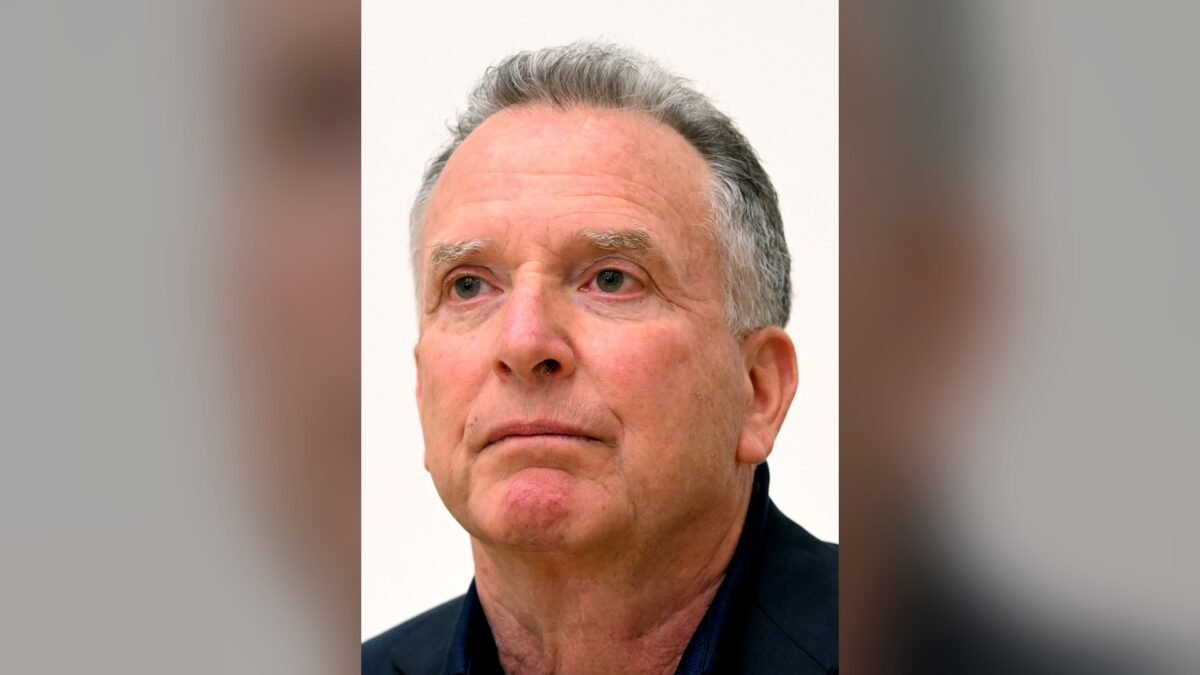
OSLO / ST PETERSBURG — United States special envoy Steve Witkoff will meet Russian President Vladimir Putin in St Petersburg on Wednesday, carrying an updated American proposal aimed at ending the war in Ukraine, according to a United States official, following what the same official described as “constructive” talks with Ukrainian President Volodymyr Zelensky in Oslo.
The meeting, reported by Axios and confirmed by multiple outlets, would be the latest shuttle stop in an intense round of American diplomacy that has seen relations between Washington and Kyiv sink to their lowest point in years — only for both sides to spend the last 48 hours trying to haul them back onto some kind of footing.
The talks in the Norwegian capital on Tuesday brought together Witkoff, Zelensky, Norwegian Prime Minister Jonas Gahr Støre and Finnish President Alexander Stubb, along with representatives from France, the United Kingdom, Germany, Poland, the European Union and NATO, according to a United States official who spoke to reporters on condition of anonymity. Trump’s son-in-law and adviser Jared Kushner joined the session by video link, and is expected to participate remotely in Wednesday’s meeting with Putin as well.
What happened in Oslo
Ukraine, the US official said, arrived in Oslo with “new ideas and proposals” that were discussed in detail, and participants made “meaningful progress” towards a coordinated approach to engaging Russia. The talks, the official said, covered the key elements of a comprehensive peace framework: security guarantees for Ukraine, a post-war economic plan and a broader European security architecture.
The aim now, the official said, was to “create a pathway toward direct trilateral and broader multilateral negotiations” — diplomatic language for the format Zelensky has long sought: a meeting of the leaders of Ukraine, Russia and the United States, a format Moscow has so far rejected.
Norwegian Prime Minister Støre told a news conference in Oslo that the talks had been “good and constructive”, while Finnish President Stubb added: “I think the (peace) process is back on track.”
Witkoff himself was not present at the joint press conference after the talks — a notable absence, given that the American envoy is the man at the centre of the process and, on Wednesday, the man who will carry whatever was agreed to Putin.
Intelligence sharing is ‘working’ again
The most concrete — and most symbolically loaded — outcome of the day came not from the American side but from Zelensky himself. At his news conference after the Oslo talks and an earlier telephone call with US Secretary of State Marco Rubio, the Ukrainian president said Ukraine was once again receiving early warnings of Russian missile attacks.
“Now it works, it’s great,” Zelensky said, according to Reuters, adding that he and Rubio had also discussed supplies of Patriot missile interceptors and the satellite-based Starlink system, which Kyiv has complained stopped working when mounted on fast-moving objects such as drones.
That remark matters because of what preceded it. For weeks, Kyiv has complained that Washington was withholding vital military support and intelligence — a charge Washington has denied. The apparent restoration of missile early-warning data is the first tangible sign that the flow of support has resumed, and it came after direct contact between Zelensky and Rubio, not through the diplomatic channels that broke down.
Rubio, who was in India on Tuesday, acknowledged that a consignment of Patriot interceptors bought by European countries for Ukraine may not yet have been delivered — but denied that the United States had changed policy or deliberately hurt Kyiv. “There has not been some deliberate political directive to go out and harm Ukraine,” he said. The United States under Trump has largely stopped providing weapons directly to Ukraine, but allows European countries to buy American weaponry on Kyiv’s behalf under a programme known as the Prioritized Ukraine Requirements List.
A source familiar with the matter said most weapons deliveries under that programme continued to flow, but that US Defence Secretary Pete Hegseth had not approved Ukraine’s latest requests for Patriot interceptors. Hegseth told reporters on Tuesday that US policy towards Ukraine had not changed, while stressing the need to maintain American stockpiles. “Certainly, with things like interceptors, we want to make sure our guys have the most possible as well,” he said.
The Starlink question remains murky. Hegseth said Washington had not pulled back Ukraine’s access to the satellite network, owned by Elon Musk’s SpaceX, and appeared to suggest the problem lay with corporate terms of service Kyiv needed to comply with. Musk has said the military-grade version of the system, Starshield, is controlled by the US government and that any limits on its use are ultimately up to Trump. On Tuesday, The Wall Street Journal cited US officials and people familiar with the matter as saying Musk had ordered the slowdown after consulting with Trump and other administration officials; Reuters had earlier reported that the order to limit the service came from the White House.
Moscow’s terms, in advance
Russia has not waited to hear Witkoff’s proposal before drawing its lines. Russian Foreign Minister Sergei Lavrov said earlier that the Kremlin would listen to what the American envoy offered, while ruling out “any political concessions”.
That is the familiar Russian posture — come and talk, change nothing — and it has been the graveyard of every previous American proposal. What makes this round different, in the White House’s telling, is that Trump has spent the past ten days courting Moscow in ways no previous administration would have contemplated.
The deterioration of US-Ukraine relations began in earnest on October 9, when Trump lifted sanctions on Russian diesel in a deal agreed directly with Putin. Trump said the arrangement — under which Russia would supply up to 4.8 million tonnes of diesel, starting with 300,000 tonnes immediately — would help reduce high fuel prices ahead of the November 3 midterm elections. At the weekend, Trump issued a broad waiver of tougher sanctions on Russia that had been meant to take effect this week.
Both moves, according to Reuters, sparked bipartisan pushback in the US Congress and alarm in European capitals. Trump has meanwhile repeatedly rebuked Zelensky, called for him to be replaced, and on Tuesday said the European Union was getting “tired of spending” money on Ukraine. “Ukraine has to want to settle this war,” Trump told reporters. “Russia would like to get it done… Russia is a big machine — they just keep grinding forward, and that’s what they’ve done. They’ve taken a very large piece of land.”
Zelensky’s response to the pressure campaign has been to hold the line on format: he reiterated on Tuesday that Ukraine wanted a trilateral meeting of leaders to discuss the key issues. He also said he had discussed “Article 5-like” security guarantees, a reference to NATO’s stipulation that an attack on one ally is an attack on all. “I am thankful to the American side that they underlined again that it will be strong,” he said.
Diplomacy with an air-raid backdrop
While envoys talked in Oslo, Russia’s war machine did not pause. Overnight, Russian drones killed two people near Ukraine’s second-largest city, Kharkiv, the regional governor Oleh Syniehubov said on Telegram on Wednesday, with another eleven people suffering stress reactions in an attack that struck private homes. In Kyiv, a Russian airstrike hit a high-rise apartment building and transport infrastructure, sparking fires, according to Mayor Vitali Klitschko. A university in Kremenchuk, in the Poltava region, was also hit, injuring two people, local authorities said.
The strikes came as part of a broader assault on Ukraine’s energy system. Energy facilities were attacked in seven Ukrainian regions overnight, knocking out power, and the western Lviv region was struck again during the day — cities and regions that had previously been spared. Russia’s defence ministry said on Tuesday it had struck three cargo vessels in Ukraine’s port of Reni and two other vessels en route to Odesa, along with two logistics hubs.
Both sides have struck data centres, and Ukraine — which held back for several days last week from hitting Russian oil refineries in deference to Trump’s request — has resumed those strikes after Russia showed no sign of complying with the American president’s call for both sides to spare each other’s energy systems. Trump has repeatedly condemned Ukrainian attacks on Russia while saying little about Russia’s far more severe attacks on Ukraine.
Analysis: Why It Matters
1. The meeting is the message — but whose message?
The Wednesday meeting in St Petersburg is simultaneously a genuine diplomatic event and a piece of stagecraft, and the honest difficulty is telling the two apart. On the genuine side: this is the first time in weeks that the American envoy will sit with Putin carrying proposals that, according to the anonymous US official, were shaped — at least in part — by Ukraine itself. On the stagecraft side: Trump has been signalling for ten days that his sympathies lie with the party he is about to negotiate against, from the diesel deal to the sanctions waiver to the public rebukes of Zelensky. Witkoff arrives in St Petersburg to sell a Ukrainian-shaped proposal to a Kremlin that has been told, loudly, that Washington is open for business with Moscow. Whether Putin hears the proposal or the courtship is the central unknown.
2. Intelligence as the instrument of pressure — and repair
The Oslo story’s most revealing detail is Zelensky’s “now it works” remark, because it confirms what had previously been inference: that intelligence sharing had, in some meaningful sense, stopped working. Early-warning data on Russian missile attacks is not a luxury for Ukraine; it is the difference between civilians reaching shelters and not. That Washington allowed that flow to be disrupted — and that its restoration was announced by Zelensky rather than by the White House — suggests intelligence became, briefly, an instrument of coercion in the US-Ukraine relationship. The Rubio intervention restoring it, paired with Hegseth’s careful denials, reads as an attempt to separate the military-technical relationship from the political rupture. Whether Kyiv believes the separation will hold is another question.
3. Lavrov’s pre-emptive ‘no’
Foreign ministers rarely telegraph rejection before an envoy arrives unless the rejection is the point. Lavrov’s “we will listen, but no political concessions” is a position that makes negotiation technically possible and substantively pointless — Moscow will take the meeting, bank the optics of being courted, and change nothing. The White House’s hope, according to Axios, is that Putin will show “greater willingness to compromise” after Trump lifted sanctions on Russian diesel and waived tougher sanctions. That hope rests on a theory of Russian behaviour — that economic favours purchase flexibility — for which there is little historical evidence in this war. Putin has consistently treated American concessions as free goods and pocketed them.
4. The European audience
Look past Putin to the officials in the room in Oslo — France, Britain, Germany, Poland, the EU, NATO — and the St Petersburg meeting takes on a second audience. These are governments that watched Trump’s Moscow courtship with open worry, that fund much of Ukraine’s defence, and that were invited to the American process precisely so they could not say they were cut out of it. Stubb’s “back on track” and Støre’s “good and constructive” are the sounds of Europeans trying to believe the process still belongs to the alliance. The test is what Witkoff brings back from St Petersburg — and whether he briefs the Europeans before, or after, he briefs Trump.
5. The midterm clock is the real negotiator
Nothing in this diplomatic sequence makes sense without November 3. Trump lifted sanctions on Russian diesel because fuel prices were “upsetting US voters”; he urged Ukraine to settle because, as he told reporters, “Russia is a big machine” grinding forward — language that converts American electoral anxiety into a Ukrainian deadline. The midterm clock is the silent third party in every meeting: it rewards Trump for visible deal-making (diesel prices down, a photo op with Putin’s envoy) and punishes him for anything that looks like an open-ended commitment. Kyiv’s task is to survive that clock without being permanently diminished by it; Moscow’s is to wait it out while collecting concessions priced for the moment. The trilateral leaders’ meeting Zelensky wants is, among other things, an attempt to move the process out of Trump’s news cycle and into something that outlasts it.
What to Watch Next
- Wednesday’s St Petersburg meeting itself: who sits in the room beyond Witkoff, Putin and the virtual Kushner; whether anything is put on paper; and whether the Kremlin’s readout mentions “concessions” at all or simply re-states the listening posture Lavrov already announced.
- The trilateral question: whether Witkoff’s return from Russia converts Zelensky’s long-standing demand for a leaders’ meeting of Ukraine, Russia and the US into an actual invitation — or whether Moscow once again keeps it at envoy level, where it can neither succeed nor quite fail.
- Patriot interceptors and early warning: whether the “works now” intelligence flow and the delayed interceptor consignment translate into visible changes on the ground — measurable in intercepted missiles, not press conferences.
- Russian attacks on energy infrastructure: whether the overnight strikes on Kharkiv, Kyiv and seven regions’ power systems continue during the diplomatic week, or whether Moscow offers even a brief pause as a gesture toward the envoy.
- Congressional and European reactions: the bipartisan pushback in Washington against the diesel deal and sanctions waiver is the one force that has visibly constrained Trump’s Moscow courtship; whether it produces concrete legislative action — or merely rhetoric — will shape what Washington can offer Kyiv, and what it can promise Moscow.
Sources
- Reuters: Russian drones kill two people near Ukraine’s Kharkiv overnight, governor says
- BusinessWorld / Reuters: US envoy Witkoff to meet Putin, Trump presses Kyiv to settle
- The News International / Reuters: Witkoff heads for Putin talks as US reports progress in Ukraine peace efforts
- LaPresse / Axios: Witkoff to meet Putin with new proposal to end war

About the Author — Abdul Mannan
Related Articles

UN Condemns Deadly Drone Strikes in Sudan After Abyei Market Attack Kills Dozens
A drone strike on Amiet Market in the disputed Abyei region killed dozens on Monday; South Sudan has…
Rubio Lands in Mumbai for Three-Day India Visit as Trade Deal Nears ‘Landing Point’
US Secretary of State Marco Rubio arrived in Mumbai on October 20 for a three-day official visit, meeting…

Alberta Votes Overwhelmingly to Stay in Canada in Historic Referendum, Handing Carney a Defining Win
Alberta voters have decisively rejected the path toward separation from Canada, with about 76% choosing to remain —…