
Judge Orders Meta to Pay Record $25 Billion Over New Mexico Privacy Lawsuit

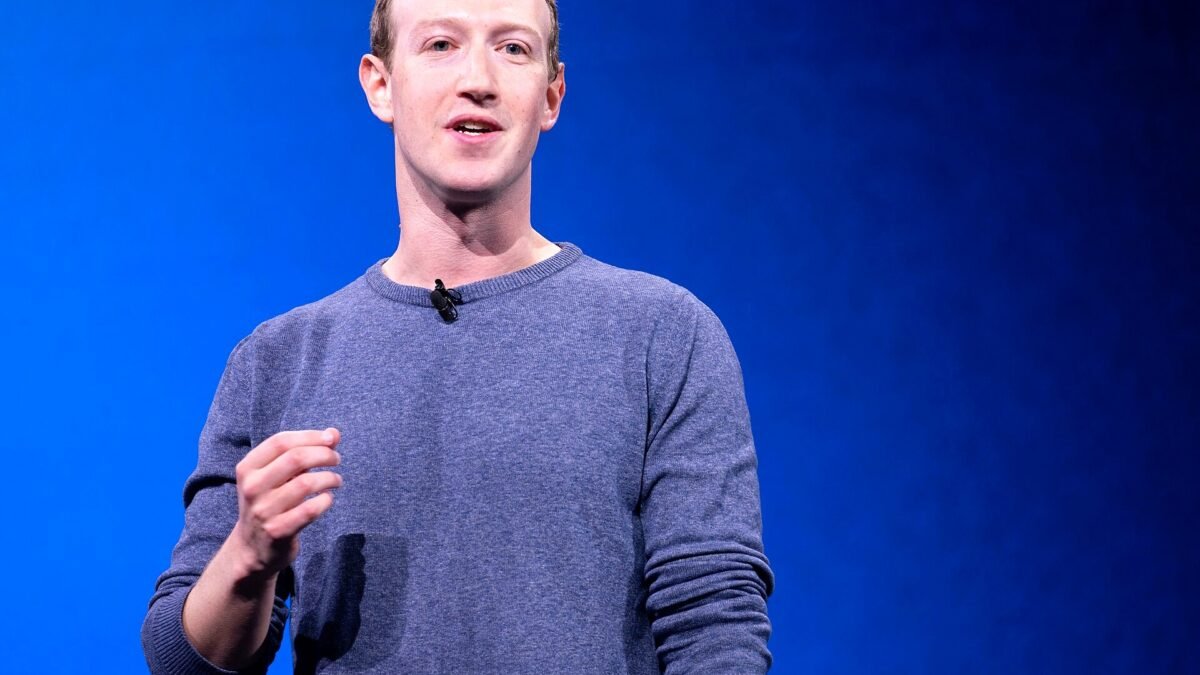
Meta has been ordered to pay $25 billion to the US state of New Mexico after a judge ruled that the company spent years misleading Facebook users about who could access their personal data, imposing one of the largest penalties ever handed down to a company in American legal history.
The order, issued on Wednesday by Judge Francis Mathew in Santa Fe, followed a jury verdict on September 25 that found Meta had committed more than 43 million violations of New Mexico’s consumer protection laws. Jurors determined that 26 of 29 public statements made by the company and its leadership about privacy, data handling, hate speech and misinformation were misleading.
New Mexico Attorney General Raúl Torrez, whose office brought the lawsuit in 2021, described the outcome as possibly the largest single-state verdict against a company in American history. He said the judgment was a warning to the entire technology industry.
“For too long, powerful technology companies have operated as though their size and influence put them beyond the reach of the law,” Torrez said at a press conference in Albuquerque. “Today’s result makes clear that no corporation is too powerful to be held accountable.”
The penalty is the largest ever imposed on Meta and one of the biggest civil penalties any corporation has faced in US history. The case grew out of the Cambridge Analytica scandal, in which a now-defunct British political consulting firm that worked on Donald Trump’s 2016 presidential campaign harvested the personal data of as many as 87 million Facebook users through a third-party personality quiz app.
The ruling landed just as Meta was preparing to report its quarterly earnings after markets closed on Wednesday, and its scale stunned even veteran court watchers: the $25 billion figure is roughly five times the $5 billion penalty the US Federal Trade Commission imposed on Facebook in 2019 for the same underlying scandal.
The jury’s verdict
Under New Mexico law, each violation of the state’s consumer protection statutes can carry a penalty of up to $5,000, and the law directs that all of the money collected goes into the state’s public school system. Jurors counted the violations by multiplying the misleading statements by the New Mexico residents who were exposed to them, arriving at more than 43 million violations.
That arithmetic produced a theoretical maximum penalty of more than $219 billion, which Judge Mathew said was warranted by the evidence before exercising his discretion to reduce it to $25 billion.
At an October 1 hearing, Randi McGinn, the lawyer representing New Mexico, had asked the judge to award between $35 billion and $40 billion, arguing that amount was supported by the US Constitution’s protections on due process and the jury’s verdict.
“This court should speak to Meta in the only language it understands, which is money, and the value of its stock price,” McGinn said, according to Reuters.
Meta, for its part, had urged the judge to cap penalties at $3.45 billion, saying a higher penalty risked scaring businesses out of the state. In court filings, the company argued that the evidence showed Meta does not sell user data and that New Mexico had failed to prove any consumer had actually been misled.
Years of misrepresentation
Judge Mathew’s order did not spare the company. He found that Facebook’s violations were willful and spanned more than eleven years, from 2010 to 2021, and that communications from senior executives, including chief executive Mark Zuckerberg, had been designed to mislead the public.
“Facebook’s wrongdoing — over the course of years and systematically broadcast to the public — goes to the heart of Facebook’s core business practices,” the judge wrote in his order following the verdict.
According to court reporting, the judge was particularly direct about the scale of the deception, noting that the company’s public claims that user data was never shared with or accessed by third parties without permission simply did not match reality. The state also argued that Meta had misled users about how it handles hate speech and misinformation on its platforms and about other internal policies, tolerating harmful content when it benefited the company’s bottom line.
The case was only the second verdict in six months by a Santa Fe jury against Meta. In the first trial, which ended in March, a jury found that Meta had misled users about the safety of young people on its Facebook, Instagram and WhatsApp platforms and ordered the company to pay $375 million in civil penalties. After a second phase of that trial, a judge directed Meta to pay a further $567 million into a New Mexico fund for teen mental health and ordered the company to put measures in place to protect teenage Facebook and Instagram users in the state.
Meta promises appeal
Meta said it would appeal. C.J. Mahoney, the company’s chief legal officer, told reporters that the company was confident it would prevail in a higher court.
“This ruling, and the Attorney General’s approach to this enforcement, makes it all but impossible to do business in the state of New Mexico,” Mahoney said in a statement. “At its core, this lawsuit seeks to impose a tax on speech to enforce new rules for what people can say online. We are confident we will prevail on appeal.”
The company had previously argued in filings that a penalty in the billions of dollars risked violating its constitutional rights to due process and protection from excessive fines.
Meta’s earnings report, released the same evening, was expected to show quarterly revenue and profit figures in the ballpark of the penalty itself — the $25 billion fine is roughly equivalent to what the company earns in a single quarter.
A long-running legal siege
The New Mexico judgment is the latest and by far the largest in a string of costly legal settlements involving Meta’s data practices this year. In 2019, the Federal Trade Commission fined the company $5 billion over the Cambridge Analytica scandal. This year, the company struck an $18 billion deal with California over child safety claims, and six other states settled their Cambridge Analytica-related lawsuits for $459.2 million as part of a $17.1 billion multistate settlement Meta reached in August to resolve claims that its platforms had harmed teenagers’ mental health.
The cumulative weight of those payments underscores how the Cambridge Analytica episode, first exposed more than a decade after the data was harvested, continues to shadow the company. The researcher who collected the data had been allowed by Facebook to deploy an app on its network; the information was then passed to the political consultancy without users’ consent and used for voter profiling and targeted election advertising.
Technology analyst Gil Luria, head of technology research at D.A. Davidson & Co., told reporters the ruling was costly but unlikely to damage the company’s market value.
“Meta is worth nearly two trillion dollars, and will likely continue to appeal these cases and drag them out,” Luria said.
Analysis: Why It Matters
The arithmetic of accountability finally catches up
The most remarkable number in this case is not $25 billion — it is $219 billion. That is what Judge Mathew calculated the penalty could have been before he reduced it. New Mexico’s consumer protection law, with its $5,000-per-violation cap and violation-counting method, was written to make deception expensive at scale. For years, that law was a theoretical threat; a small state’s attorney general with limited resources was supposed to be outgunned. This verdict shows that the threat was real all along. Other state attorneys general, and plaintiffs’ lawyers watching from the sidelines, will have taken notice.
Meta’s legal calendar is its new business risk
The striking feature of Meta’s 2026 is how much of its money and management attention is flowing into courtrooms rather than products. An $18 billion California settlement, a $17.1 billion multistate settlement, and now a $25 billion jury award — in a single year the company has been ordered or agreed to pay well over $60 billion over historical conduct. Analysts like Gil Luria may be right that a company valued near $2 trillion can absorb the cost, but the strategic question is different: Meta is pouring tens of billions into artificial intelligence infrastructure at the same time that its past is draining tens of billions from its balance sheet. The AI race is a capital-expenditure war, and every dollar reserved for litigation is a dollar not spent on data centres.
“Tax on speech” — a defence that reveals the stakes
Meta’s chief legal officer did not argue primarily that the company behaved well; he argued that the lawsuit is a tax on speech, an attempt to police what people may say online. That framing is deliberate. It previews the constitutional arguments Meta will bring on appeal, and it recasts a consumer-protection case about privacy lies as a First Amendment fight. The appeal will therefore be watched far beyond New Mexico: if courts accept that large state penalties for deceptive privacy statements amount to speech regulation, the entire state-level enforcement model that produced this verdict would be weakened.
The money goes to schools — a political masterstroke
New Mexico law directs the penalty money into the state’s public school system, which transforms the case politically. It is much harder for a corporation to campaign against a judgment when the beneficiary is schoolchildren. That provision also explains why the state pursued a penalty of this magnitude rather than a modest settlement: every dollar is earmarked for classrooms, making the verdict popular in a way a generic government fine never could be. Expect other states to study that structure.
The $5 billion FTC fine was supposed to be the ceiling
When the Federal Trade Commission imposed its $5 billion penalty in 2019, it was the largest privacy fine in US history at the time, and Meta treated it as a line under the Cambridge Analytica era. The New Mexico case shows there was no such line. The same facts, examined through state consumer-protection law rather than federal regulation, produced a penalty five times larger — and the FTC’s 2019 deal did not cover state claims. Companies that assumed a federal settlement ended their exposure have learned that each state is its own battlefield.
What to watch next
- The appeal: Meta says it is confident it will prevail. The appeal will test whether due-process and excessive-fines protections can cap what a jury-derived state penalty can be.
- Copycat lawsuits: other state attorneys general with consumer-protection statutes may now do the math New Mexico did — tens of millions of violations times thousands of dollars.
- Meta’s earnings call: how the company guides investors on litigation reserves after a year of extraordinary settlements.
- The money trail: New Mexico’s schools are the stated beneficiary; the mechanism for collecting and distributing $25 billion will itself be contested on appeal.
- Federal response: whether Congress or federal regulators cite this verdict to push for a national privacy law that pre-empts the patchwork of state actions.
Sources
- Reuters: Meta ordered to pay $25 billion to New Mexico after jury finds company misled consumers about data privacy
- USA Today: Meta ordered to pay record $25 billion for misleading users on privacy
- AAP: Meta fined $US25 billion over New Mexico data privacy
- The Times: Meta fined $25bn for ‘lying’ to Facebook users about data privacy

About the Author — Abdul Mannan
Related Articles

S&P 500 Poised to Climb as Wall Street Awaits Tesla and Meta Earnings After SpaceX and 3M Deliver Beats
Wall Street heads into a split Wednesday with S&P 500 and Nasdaq futures higher ahead of after-close earnings…

Salesforce to Buy Braze for $5.66 Billion in All-Cash Deal to Power AI Marketing Push
Salesforce has agreed to acquire customer engagement platform Braze for $5.66 billion in cash — $47.50 a share…
Trump Sued Over 50% Canada Tariffs in Landmark Challenge to Dormant 1930 Trade Statute
The Liberty Justice Center has filed suit in the US Court of International Trade, arguing the 50% tariffs…