
Seafloor Bacteria Build Metal–Organic Frameworks, a First in the Living World

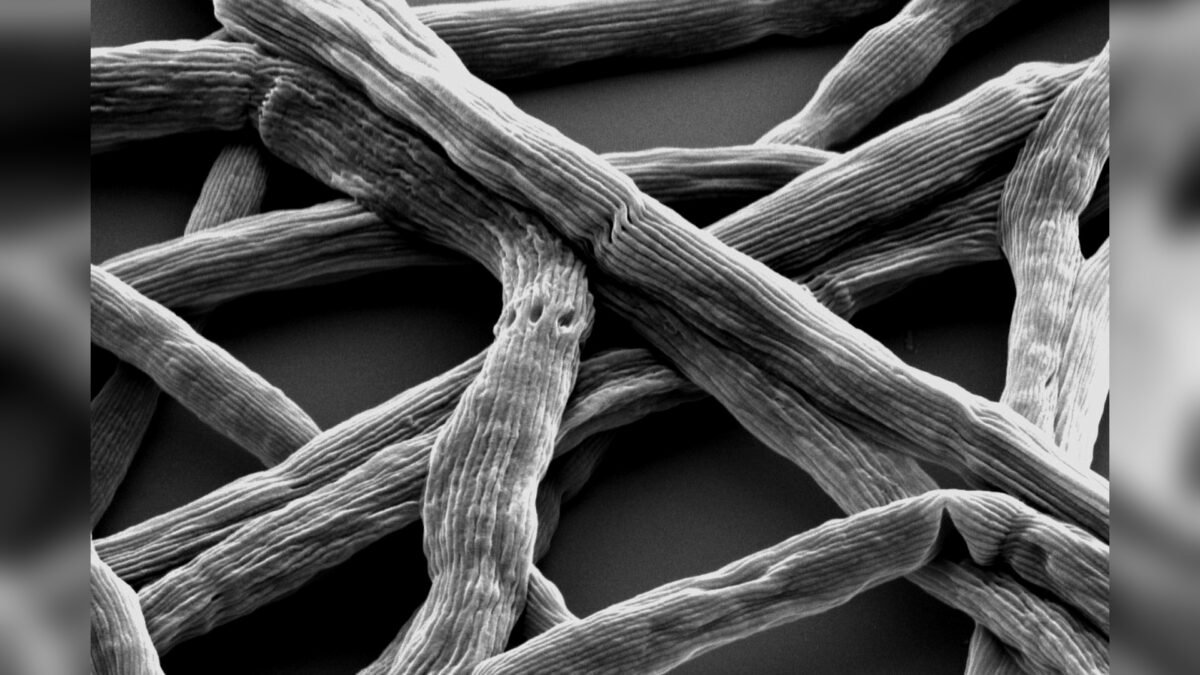
A humble bacterium living in seafloor mud has turned out to be a master chemist. Researchers have discovered that so-called cable bacteria — microbes that string themselves into living electrical wires centimetres long — build their conductive fibres out of metal–organic frameworks, a class of designer material chemists believed only humans could make. According to a study published in Nature Communications, and reported by Chemistry World on Thursday, it is the first time a metal–organic framework, or MOF, has ever been found in a living organism.
The bacterium at the centre of the discovery is Candidatus Electrothrix gigas, a member of the cable-bacteria family found in the sediments of rivers, lakes and coastal seabeds. These organisms join thousands of cells end to end into filaments that can stretch for centimetres — an enormous distance for a microbe — and they use those filaments to move electrical current through the mud. Scientists have known about this ability for about fifteen years, but the molecular machinery behind it has been a mystery until now.
The international team, led by Filip Meysman of the University of Antwerp in Belgium, found that each of the 20 to 70 conductive fibres running along a filament contains bundles of intertwined nanoribbons built from repeating nickel bis(dithiolene) units — NiBiD complexes — in which nickel centres are linked by sulphur-containing organic ligands into long, highly conjugated chains. According to the European Synchrotron Radiation Facility (ESRF), which supported the research, about eleven such nanoribbons, each roughly 1.4 nanometres thick, weave along the centre of every fibre. The chains align and stack into one-dimensional pathways that ferry charge along the length of the organism.
“We were totally stupefied when we found out that a MOF structure was present in our bacteria,” Meysman told the ESRF. “Somehow evolution came up with the exact same idea as the Nobel Prize chemists.”
The basic building blocks the bacterium uses are strikingly similar to those a chemist would reach for: a metal core joined to organic linkers. But the finished architecture is something else entirely. “The resulting supramolecular structure is very unique and novel,” Meysman told Chemistry World, calling it “a whole new type of [bio]molecular structure” that is “unseen in human-made materials”. The twisted bundles of nanoribbons create an electronic environment in which charge is delocalised across the structure, enabling what he describes as electron transport over extremely long distances.
And the conductivity is genuinely remarkable. Chemistry World reports that Meysman calls it “extraordinary”, adding that it “approaches the conductivity of metals”. The ESRF release puts numbers to the claim: whole fibres conduct at 5 to 500 siemens per centimetre, rivalling the conductive inks used in printed electronics. When the estimate is narrowed to the nanoribbon network alone — which fills only a small fraction of each fibre’s cross-section — the conductivity reaches 150 to 15,000 S/cm, ranking, according to the ESRF, among the highest values ever reported for any metal-organic material.
Independent experts are impressed. “This is a great discovery,” Aitziber Cortajarena, a biomaterials specialist at CIC biomaGUNE in San Sebastián, Spain, told Chemistry World, describing the finding as the first report of a MOF of biological origin. She said it “reveals a new set of [bio]tools to create conductive structures”, noting that the bacterial MOF’s conductivity is similar to the best synthetic polymers and exceeds that of most synthetic MOFs.
Cracking the structure took an arsenal of techniques. The team combined nano-X-ray fluorescence imaging at the ESRF’s ID16A beamline in Grenoble — scanning an X-ray beam focused to just 35 nanometres across individual filaments kept frozen at 100 kelvin — with high-resolution electron microscopy at the University of Antwerp, Raman spectroscopy, electron paramagnetic resonance, X-ray absorption spectroscopy at Diamond Light Source in Britain, and computational modelling. The X-ray fluorescence maps showed nickel concentrated in evenly spaced parallel lines matching the fibres one by one, running unbroken across several cell-to-cell junctions; the nickel content and sulphur-to-nickel ratio they yielded pinned down the molecular model. That spectroscopy also ruled out one of the two candidate structures, leaving the stacked NiBiD chains as the answer.
The maps even revealed a second feature: the cell junctions themselves hold a copper-rich complex, sitting in a wheel-shaped structure that appears to electrically connect the fibres of neighbouring cells. The resulting architecture, the ESRF notes, resembles the braided copper wire inside a household power cord — many thin conductors twisted together inside a protective sheath, except here the sheath is a layer of protein, and the whole cable is alive, motile, and bends sharply without losing conductivity.
Why does the bacterium bother? For these organisms, the wires are a matter of survival. Cable bacteria live straddling the boundary between oxygen-rich surface sediment and the anoxic mud below. Cells buried deep oxidise sulphides to release electrons, while cells at the surface pass those electrons to oxygen — a division of labour across a distance of centimetres, roughly 10,000 times the length of a single bacterium, according to Chemistry World. Without the conductive fibres, that metabolic trick would be impossible. “It’s an evolutionary advantage,” Cortajarena told Chemistry World. The MOF nanoribbons, in effect, are the plumbing of a collective metabolism.
The same spectroscopic signature has been detected across the cable-bacteria family. Chemistry World reports that researchers have identified around 90 bacterial species that employ these conductive structures, and the shared signature suggests the MOF architecture is common to many of them. Meysman told the outlet that cable bacteria capable of building such structures originated about 600 million years ago — meaning microbes may have been quietly manufacturing metal–organic frameworks since long before animals existed.
The practical implications are already being explored. Meysman told Chemistry World that his group is “currently investigating how to produce these wires” and is “preparing a start-up” to commercialise the conductive materials. The hope is that the bacterial design can inspire sustainable electronic materials: lightweight, carbon-based architectures that achieve high conductivity with only modest amounts of metal.
Analysis: Why It Matters
Evolution reached the MOF first — and improved the design
There is a delicious irony at the heart of this story. Metal–organic frameworks are a triumph of human materials chemistry — porous, tunable networks of metal nodes and organic linkers, intensively studied for gas storage, catalysis and electronics, and, according to the ESRF, the subject of the 2025 Nobel Prize in Chemistry. Yet a bacterium in the mud appears to have invented the concept hundreds of millions of years before chemists drew their first framework on a whiteboard — and, crucially, it did not copy the textbook. The intertwined, braided nanoribbon architecture is, in Meysman’s words, unseen in human-made materials. That is the deeper news: biology did not merely stumble onto the same chemistry; it found a structural solution that human laboratories had not. For materials science, that is both humbling and instructive. The most valuable technology transfer here may not be the molecule but the weave.
A blueprint for greener electronics
Modern electronics are heavy on metals and energy-intensive processing. The bacterial MOF points at a different philosophy: extraordinary conductivity achieved with a skeleton of carbon-based ligands and only modest amounts of nickel, assembled at ambient seafloor temperatures by a living cell. As Meysman put it to the ESRF: “Effectively, the cable bacteria turn out to be excellent chemists.” If researchers can learn to grow or mimic these wires — and Meysman’s planned start-up suggests someone intends to try — the payoff could be bio-based conductive materials for sensors, flexible electronics or printed circuits that sidestep some of the environmental costs of conventional manufacturing. The honest caveat is that cable bacteria are famously difficult to cultivate, and scaling a mud-dwelling microbe’s nanotechnology into a factory process is a long road. But every sustainable-materials breakthrough begins as a curiosity in a place nobody was looking.
It closes a fifteen-year mystery — and opens several new ones
Since cable bacteria’s long-distance electron transport was first described roughly fifteen years ago, the identity of the conductive machinery has been one of microbiology’s most tantalising open questions. This study answers it with unusual completeness: not just the element (nickel), not just the arrangement (NiBiD chains), but the quantitative packing, the coordination geometry, and the junction architecture, cross-checked by half a dozen independent techniques. Yet the answer raises its own questions. How does a bacterium assemble such precise organometallic architecture — does it have dedicated enzymes for NiBiD synthesis, and if so, what are their genes? What exactly does the copper-rich junction complex do? And is the MOF truly universal across all 90-odd cable-bacteria species, or do some lineages use a different trick? The paper is a foundation, not a finish line.
The Nobel timing concentrates attention — usefully
Discoveries do not land in a vacuum; they land in a moment. With MOFs fresh in the scientific spotlight after the 2025 chemistry Nobel, a biological MOF arrives at precisely the moment the field is most alert to new framework architectures — and most funded to explore them. That timing matters for how quickly follow-up work gets done. It also raises the bar for scrutiny: extraordinary claims about conductivity “approaching metals” will be re-measured, the 600-million-year evolutionary claim will be tested against more genomes, and the start-up’s progress will be watched. Healthy scepticism is how a striking result becomes a durable one, and this result has been built — unusually — to withstand it, with synchrotron quantification at its core rather than as decoration.
From mud to market: the commercial road is real but long
It is worth pausing on Meysman’s start-up remark, because academic spin-outs in advanced materials have a chequered history of overpromising. The gap between “bacteria make remarkable wires” and “we sell remarkable wires” includes cultivation at scale, purification, stability outside the cell, integration into devices, and cost. What argues for taking this one seriously is the specificity of the design principle: the paper does not just report a wonder of nature, it hands engineers a concrete structural motif — stacked, conjugated NiBiD nanoribbons in a braided bundle — that can be pursued synthetically even if the bacteria themselves never leave the mud. The bio-inspired route may outrun the bio-produced one. Either way, the discovery reframes cable bacteria from a geochemical curiosity into a materials-science resource.
What to Watch Next
- Replication across the family: independent groups will test whether the NiBiD signature holds across the full diversity of cable-bacteria species, or whether some lineages evolved alternative conductive machinery.
- The assembly question: the hunt is now on for the genes and enzymes the bacteria use to build nickel bis(dithiolene) chains — finding them would open the door to engineering the pathway into tractable host organisms.
- The junction complex: follow-up studies will probe the copper-rich structure at cell junctions, which may be the key to how current passes seamlessly between thousands of cells in a filament.
- Meysman’s start-up: the first public details of the commercialisation effort — what exactly it aims to produce, and whether the bio-inspired or bio-produced route comes first.
- A wider search: if one MOF has been hiding in biology for 600 million years, researchers will start looking for others — in sediments, biofilms and extreme environments where evolution may have engineered more surprises.
Sources
- Meysman, F.J.R. et al., “Highly efficient long-range conduction through a biosynthetic nickel-organic framework,” Nature Communications 17, 8814 (2026)
- European Synchrotron Radiation Facility, “Unveiling the structure of ‘living electronics’ produced by bacteria” (28 September 2026)
- Chemistry World, “Bacteria discovered to be synthesising metal–organic frameworks with ‘extraordinary conductivity’” (22 October 2026)

About the Author — Abdul Mannan
Related Articles

PHP2Shell: AI-Found Critical Flaw Sparks Emergency Patching as Governments Take Websites Offline
Governments across Europe, Asia and Australia pulled websites offline as security teams raced to patch two critical AI-discovered…

The Company Returns: Google Is Now Selling Its Rival’s Brain by the Token
OpenAI's frontier models are coming to Google Cloud. This column reads the 21 October deal through the East…

UN Declares 1.5°C Climate Goal ‘Gone’, Warns World on Track for 2.8°C Warming
The UN's Emissions Gap Report 2026 declares that holding warming to 1.5°C without overshoot is no longer possible,…