
Wall Street’s AI Euphoria Cracks: Nasdaq Suffers Worst Day Since June as Meta’s $825 Billion Spending Pledge Spooks Investors

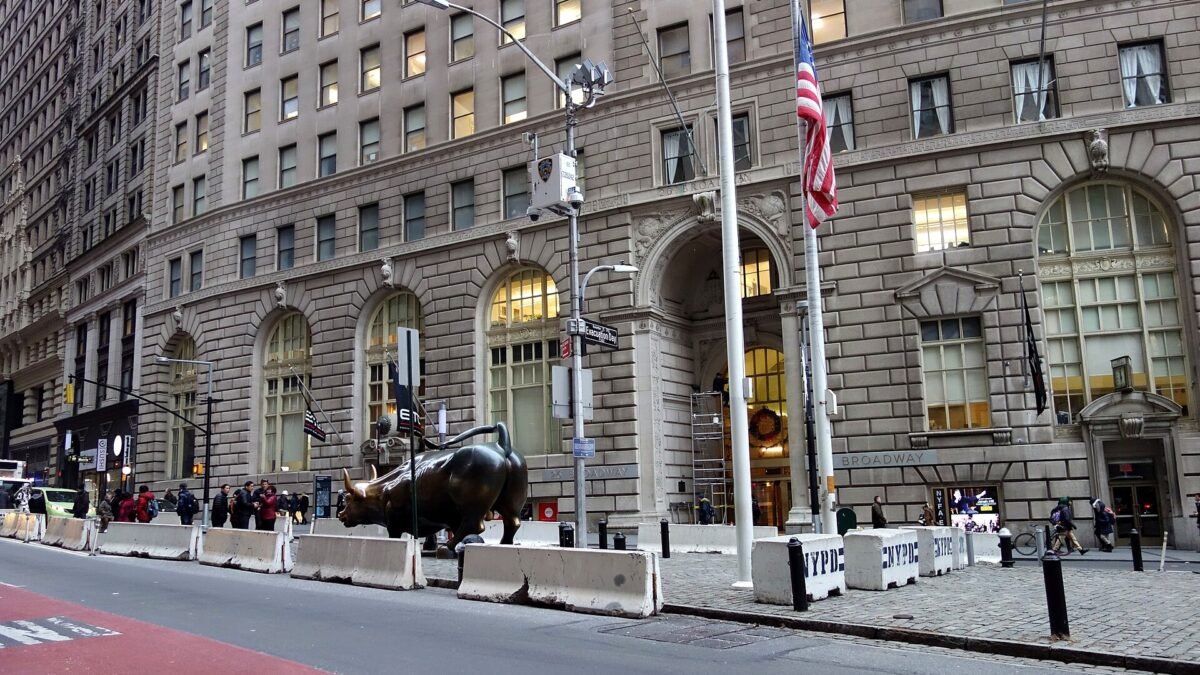
Wall Street’s months-long romance with artificial intelligence hit its sharpest rupture yet on Thursday, as a wave of earnings reports from the technology industry’s biggest spenders convinced investors that the AI buildout may be costing far more than it is returning. The technology-heavy Nasdaq Composite fell 2.6 per cent to 26,008.86, its steepest single-day decline since early June, while the broader S&P 500 dropped 1.21 per cent to 7,663.43, its worst session since July, according to market data reported by Reuters. The blue-chip Dow Jones Industrial Average edged up a nominal 0.02 per cent to 52,867.98, with the pain concentrated almost entirely in the technology shares that have powered this year’s rally.
The trigger was Meta Platforms. Late on Wednesday, the owner of Facebook, Instagram and WhatsApp reported third-quarter results that beat expectations on revenue, then spent the next day watching its shares sink by roughly 7 per cent, erasing about $124 billion of market value, according to the Wall Street Journal. The company’s revenue rose 26 per cent to $64.6 billion, comfortably ahead of the roughly $63.3 billion analysts had expected, but investors looked past the top line to a balance sheet being stretched in ways few could have imagined two years ago.
Meta’s cash burn reignites the AI financing debate
Meta reported free cash flow of negative $2.12 billion for the September quarter, its first quarterly cash outflow since 2012, the year it went public, according to Investor’s Business Daily. A year earlier, the company had generated $10.6 billion in free cash flow in the same quarter. Capital expenditure reached $34.91 billion, outrunning the cash its operations produced, as spending on servers, data centres and AI infrastructure continued to accelerate.
The company then told investors it would keep spending aggressively. Meta raised the lower end of its 2026 capital expenditure guidance to $135 billion, narrowing the range to $135 billion–$145 billion, and said it expects to “continue investing aggressively” next year. A regulatory filing disclosed that Meta has now committed roughly $825 billion in future spending on leases and contracts, mostly for computing power and AI infrastructure, up from about $700 billion as recently as July, according to Bloomberg reporting cited by IBD.
Perhaps most unnerving for shareholders was the signal that Meta intends to fund the expansion with new money: the company announced a new class of non-voting shares, effectively a two-for-one stock split, which it expects to use for future share sales. “Investors are concerned about Meta’s capital needs next year,” D.A. Davidson analyst Gil Luria told IBD. “An ‘aggressive’ year of investment means more debt raising and the new nonvoting share class means also more equity issuance.”
The headline earnings figures absorbed a $9.89 billion charge tied to an August agreement with 52 US attorneys general settling litigation over teen mental health and social media, with payments under the deal potentially reaching about $18.59 billion, according to SiliconANGLE. Net income was $9.86 billion, or $3.83 a share; Meta said earnings would have been $7.40 a share without the legal charge. The company forecast fourth-quarter revenue of $73 billion to $76 billion, with the midpoint above the consensus estimate of roughly $73.6 billion — a reminder, several analysts noted, that the advertising business itself is not the problem. Advertising made up $63.06 billion of quarterly revenue, with the average price per ad climbing 14 per cent on 10 per cent more impressions, while daily active people across Meta’s apps averaged 3.64 billion in September, up 3 per cent.
Tesla cuts its plans, IBM warns on enterprise returns
Tesla shares fell 3.1 per cent after the electric-vehicle maker reported mixed third-quarter results, according to the Wall Street Journal. The carmaker unexpectedly posted positive free cash flow for the quarter, but it cut its 2026 capital spending outlook to $20 billion from $25 billion, showing a caution that spooked investors, Barron’s reported. Tesla’s adjusted net income slid, and despite chief executive Elon Musk touting the company’s AI ambitions, what stuck with investors was that the AI efforts have not yet translated into growth. Operating income of $718 million was 56 per cent lower than a year earlier and roughly half the $1.47 billion analysts had expected, with the company attributing the miss to higher AI investment, increased research and development spending, and lower revenues from regulatory credits and energy storage.
IBM delivered one of the day’s most telling moments. The technology giant reported third-quarter revenue of $17.1 billion, up 5 per cent and ahead of the roughly $16.8 billion consensus, with adjusted earnings of $2.95 a share beating the $2.85 that analysts polled by FactSet had forecast, according to Investor’s Business Daily. Shares initially jumped in after-hours trading on Wednesday, then reversed violently during the earnings call. CEO Arvind Krishna told analysts that large corporate customers were becoming “a lot more cognizant and a lot more aware of what the true ROI of all of their AI spend is,” and said clients were “getting worried if some of the AI spending [is] completely out of control with no real return,” according to the Motley Fool. The stock sank about 5 per cent in Thursday trading, despite the clean headline numbers.
Chips take the heaviest beating
Chip stocks, which have become almost synonymous with the AI trade, were hit hardest of all. The Philadelphia Semiconductor Index plunged 6.7 per cent on Thursday, its biggest daily percentage drop since June 23, according to Reuters. With the decline, the index is now off more than 26 per cent from its record closing high of June 22, though it remains up 51.5 per cent for the year.
Advanced Micro Devices fell more than 8 per cent, Micron Technology declined 6 per cent and Nvidia lost 4 per cent, while CoreWeave, a major provider of AI-focused cloud infrastructure, dropped more than 10 per cent amid continued concerns about its debt and financing costs, according to market coverage of the session. Lam Research delivered quarterly guidance merely in line with estimates rather than crushing them, which was enough to sour sentiment on semiconductor equipment makers. SpaceX, which had reported a profitable quarter earlier in the week and said it might merge with Tesla, declined 9.1 per cent, the Wall Street Journal reported.
“It’s a wonderful day on Wall Street,” Paul Nolte, senior wealth adviser and market strategist at Murphy & Sylvest in Elmhurst, Illinois, told Reuters. “The only part of the market that is really suffering here is technology, which has been the golden child of the markets up until about June.” He added: “Investors are starting to realize that there are some holes in the AI story. And that’s having an impact on the indices because they’re so heavily weighted toward technology.”
The sell-off spreads to Asia and Europe
The rotation was global. In Tokyo, the Nikkei 225 tumbled 1,713.40 points, or 2.65 per cent, to close at 62,907.84, falling below the 63,000 level for the first time since mid-September, as weak guidance from Lam Research sent Tokyo Electron down 6.51 per cent and SoftBank Group down 6.86 per cent. Hong Kong’s Hang Seng fell 3.03 per cent and South Korea’s Kospi dropped 0.67 per cent.
In Europe, the pan-European STOXX 600 slipped 0.84 per cent on Thursday as investors weighed a heavy slate of earnings, according to Reuters. Kicking off European bank earnings, Barclays fell 2.5 per cent after reporting third-quarter profit before tax of £2.3 billion, missing company-compiled estimates of £2.4 billion, and announcing plans to cut about 5,000 jobs. Hermès dropped 6.7 per cent after the Birkin bag maker posted slightly weaker third-quarter revenue than analysts expected, while Nestlé rose 2.3 per cent on better-than-expected organic sales growth. London’s FTSE 100 fell 0.5 per cent to 10,699.33, dragged down by heavyweight banks, as rising oil prices dampened risk appetite.
Oil surges past $113 on fears of strikes on Iran
Compounding the market anxiety, Brent crude futures rose about 4 per cent to roughly $113.17 a barrel, a five-month high, while West Texas Intermediate jumped 2.4 per cent to about $99.47, according to the New York Post. Traders feared an escalation in the Middle East conflict after about a month-long pause in US strikes on Iran. The New York Times reported on Wednesday evening that US and Israeli officials had drawn up plans for a “short but intensive” operation in Iran after the midterm elections, and President Trump told reporters late Wednesday that “something one way or another” would “happen fairly soon” in Iran, while repeating his promise of no strikes before the midterms. The US also ordered non-emergency personnel and their families to leave Saudi Arabia following Houthi attacks on the kingdom, a move investors read as a sign of potential upcoming operations.
The twin shocks sent investors scurrying for safety. US Treasuries rallied, pushing the yield on the 10-year Treasury note back below 5 per cent in its largest one-day drop since March 2023, when markets were gripped by a regional banking crisis, the Wall Street Journal reported. Gold fell 2.82 per cent to $4,024.21 as risk assets repriced. On the economic data front, the Labor Department said weekly initial unemployment claims unexpectedly fell to 194,000 from 199,000 the prior week, against expectations of a rise to 200,000, a sign the labour market remains resilient even as equity investors fret.
Analysis: Why It Matters
The spending-discipline inflection point
The most important signal in Thursday’s sell-off is not the size of the decline but its character. As Dave Rosenberg of Rosenberg Research wrote in a note cited by Barron’s, the key message from otherwise solid results at Meta, IBM and Tesla was one of spending discipline, which “could put a dent in the capex boom, with repercussions for suppliers across the entire chain.” Thursday’s session marked what Rosenberg called “spending discipline replacing capex euphoria” — a phrase that captures the market’s central tension.
For two years, the logic of the AI trade has been beautifully simple: the hyperscalers spend staggering sums on data centres and chips, the chipmakers and equipment suppliers convert that spending into revenue, and everyone along the chain rises together. The five largest hyperscalers are expected to spend a combined $892 billion this year and $1.1 trillion next year, according to one weekly market commentary. That spending has been the single most important engine of the equity bull market. The moment investors begin to doubt the returns on that spending, the engine becomes a liability. Thursday suggests that moment may have arrived — not as a gradual repricing, but as a genuine shock.
Meta’s outflow is the warning shot the market cannot ignore
There is a reason Meta’s report did more damage than any other. A company that printed money for a decade has suddenly told the market two things at once: it will spend more than it earns in the near term, and it will issue new shares to keep the expansion going. A negative free-cash-flow quarter at Meta is not a rounding error; it is the first since 2012, and it arrived precisely as the company committed itself to another $825 billion of future obligations. Management insists the AI agent Muse is paying off and that aggressive investment is the right call. The market’s verdict — a 7 per cent single-day fall despite a clean revenue beat — is that conviction alone no longer suffices. When the world’s most profitable advertising business cannot fund its own ambitions, every other AI spender faces the same question with worse answers.
Concentration turns a tech wobble into a market event
The Nasdaq’s 2.6 per cent fall against the Dow’s flat close illustrates the market’s deepest structural vulnerability: index concentration. As Nolte noted, the indices are so heavily weighted toward technology that doubts about the AI story become doubts about the entire market. The S&P 500 has risen 11.9 per cent this year while the semiconductor index has gained 51.5 per cent, meaning the most richly valued slice of the market is doing almost all of the lifting. When that slice falls 6.7 per cent in a day, diversification offers little shelter. For portfolio managers and pension savers alike, the lesson is that the 2026 market is effectively a leveraged bet on AI capex — and Thursday was the first day that leverage worked violently in reverse.
The demand question may matter more than the supply glut
Krishna’s comments at IBM deserve more attention than the market gave them in a single session. The AI trade has always had two untested assumptions: that the spending will produce returns, and that enterprises will keep buying. A sitting CEO of one of the world’s largest enterprise technology companies openly telling analysts that customers fear AI spending is “completely out of control with no real return” is a demand-side red flag. If corporate buyers begin demanding measurable returns before signing cheques, the entire AI supply chain — from Nvidia’s chips to CoreWeave’s cloud capacity — faces a slower, more demanding customer. The IBM anecdote, coming alongside Meta’s financing scramble, suggests the AI boom’s next phase will be judged on unit economics, not on the size of the announcement.
The Iran wildcard multiplies the risk
Thursday’s double shock — collapsing tech valuations alongside oil above $113 — is a reminder that geopolitics can amplify financial stress. Elevated oil prices have already been fanning inflation concerns and forcing central banks to keep interest rates higher; British inflation came in hotter than expected this week, cementing the case for a Bank of England hike in November. A US-Israeli strike on Iran after the midterms, which officials have now drawn up plans for according to the New York Times, would hit an economy already straining under energy costs. For Europe in particular, which imports most of its energy, the combination of an AI capex squeeze and an oil supply shock could revive fears of a eurozone debt replay, as Reuters noted in its European earnings coverage.
What to watch next
The immediate test comes from the rest of big tech’s earnings calendar: investors will demand to hear how Alphabet, Microsoft, Amazon and Nvidia plan to fund their AI ambitions without following Meta into cash burn and equity issuance. Then comes the midterm election and whatever follows in the Gulf — the market has now priced a US-Israeli operation in Iran as a realistic November-or-later scenario. On the economic front, the Federal Reserve’s rate decision looms against core inflation running at a 3.41 per cent three-month annualised rate, the fastest since September 2025, with most analysts now expecting the Fed to skip October and wait until December. The AI boom is not over; Thursday’s rotation was orderly in bonds and currency markets. But the terms of the trade have changed. Spending without returns no longer gets the benefit of the doubt.
Sources
- Reuters — “S&P 500, Nasdaq end sharply lower as revived AI doubts ignite tech selloff” (via SRN News)
- Wall Street Journal — “Meta’s Hunt for AI Capital Strikes a Raw Nerve on Wall Street”
- Investor’s Business Daily — “Meta, AI Stocks Tumble As AI Spending Fears Reignite”
- Barron’s — “Tech Earnings Optimism Soured Overnight. Stock Futures Sink.”
- New York Post — “Oil soars above $113, Nasdaq plummets in worst day since June on Iran strike news, AI spending concerns”

About the Author — Abdul Mannan
Related Articles
Australian Court Orders Apple to Open iPhone to Rival App Stores and Outside Payments From March 2027
Australia's Federal Court has ordered Apple to open the iPhone to rival app stores and alternative payment systems…

Judge Orders Meta to Pay Record $25 Billion Over New Mexico Privacy Lawsuit
A New Mexico judge ordered Meta to pay $25 billion after a jury found the company misled Facebook…

S&P 500 Poised to Climb as Wall Street Awaits Tesla and Meta Earnings After SpaceX and 3M Deliver Beats
Wall Street heads into a split Wednesday with S&P 500 and Nasdaq futures higher ahead of after-close earnings…