
US Treasury Proposes Blanket Ban on AI Investment in China, Expands Tech Curbs to Russia and Other Adversaries

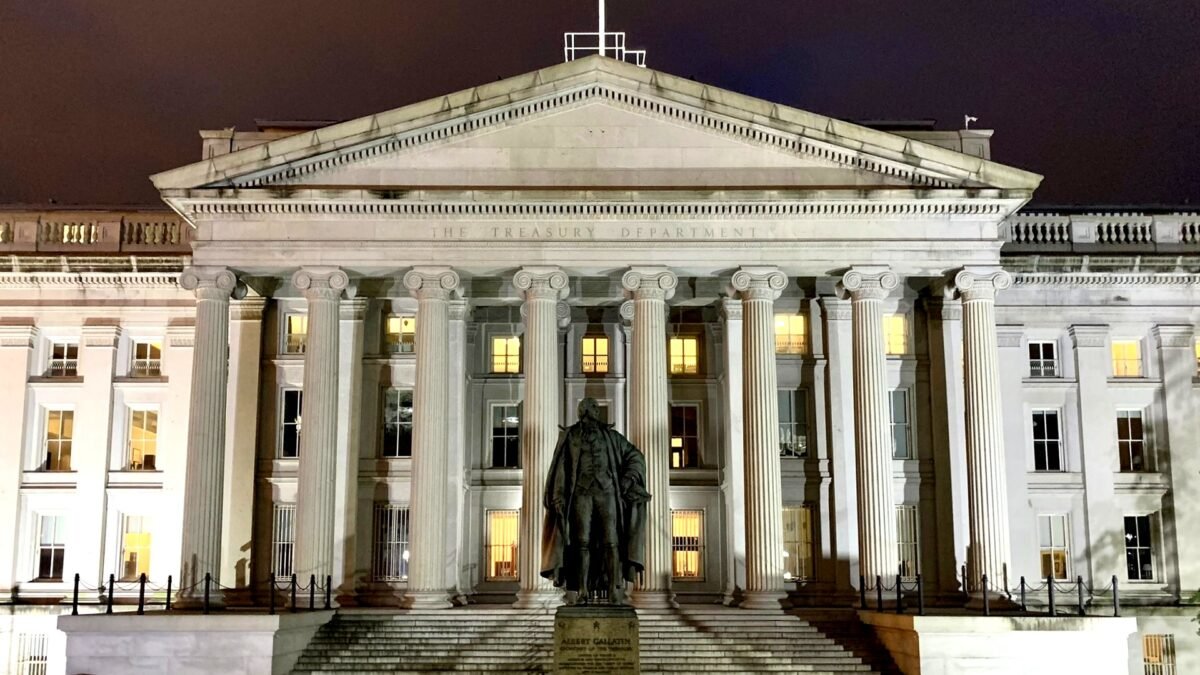
The United States has taken its most aggressive step yet to police the flow of American money into rival technology programmes, with the Treasury Department proposing on Thursday to ban US investment in artificial intelligence in China, Russia, North Korea, Iran and Cuba — and to extend government screening to supercomputing, hypersonic weapons and biotechnology.
The Notice of Proposed Rulemaking, issued on 22 October, implements the Comprehensive Outbound Investment National Security Act — known as the COINS Act — which Congress passed in December 2025 as part of the fiscal 2026 National Defense Authorization Act, according to the Associated Press and Reuters. The proposal dramatically widens a screening regime that began under the Biden administration to stop American capital from financing military and surveillance capabilities in adversarial states.
Under the proposed framework, American investment in artificial intelligence in the designated countries would be prohibited outright. A second tier of “notifiable” transactions would cover six technology sectors: advanced semiconductors and microelectronics, artificial intelligence systems, quantum information technologies, high-performance computing and supercomputing, hypersonic systems, and — in an addition Treasury made on its own authority — biotechnology. According to Reuters, the statute named five sectors for Treasury to define technical parameters around, and the department used its notice-and-comment authority to add biotech, arguing it now matters to military modernisation.
In a striking detail, the Treasury documents refer to artificial intelligence using President Donald Trump’s preferred rebranding of the technology: “superintelligence,” or SI. The AP reported that the terminology goes beyond rhetoric — the technical annexes to the rule define which transactions are notifiable, prohibited or untouched, and the definitions determine where the government’s line is drawn.
Who the rules would cover
The proposal would apply to investments above 50,000 US dollars in China — including Hong Kong and Macau — as well as Russia, North Korea, Iran and Cuba, according to the AP. Buying publicly traded shares, index funds and exchange-traded funds would be exempt, as would limited-partner stakes of 2 million dollars or less and transactions worth under 50,000 dollars a year from reporting alone.
The net would catch US citizens, green-card holders, American companies and their foreign subsidiaries, covering private-equity stakes, convertible debt, joint ventures, new overseas facilities and some fund investments, according to detailed reporting of the proposal. Penalties would run up to the maximum allowed under the International Emergency Economic Powers Act, and Treasury could force investors to unwind — sell off — covered transactions.
Crucially, the proposal would also allow investors to request exemptions for transactions deemed to be in the national interest of the United States, and it sets out Treasury’s expectations that investors conduct what it calls a “reasonable and diligent inquiry” before closing a deal, according to trade publication Export Compliance Daily.
Public comments are open until 7 December 2026, through docket TREAS-DO-2026-0595, and the statute gives Treasury until about mid-March 2027 to issue a final rule. Treasury said it especially wants public views on the blanket ban on artificial intelligence investment — a signal that the most sweeping part of the proposal could still change.
What Treasury’s leaders are saying
“The proposed regulations would strengthen the existing Outbound Investment Security Program to prevent our adversaries from using US investment to develop critical technologies that threaten US national security,” Treasury Secretary Scott Bessent said in the department’s announcement, as reported by Unite.AI.
Bessent added that the step “also helps promote our commitment to an open investment environment by providing clarity to US and foreign investors as well as an opportunity for them to provide feedback on the proposed regulations.”
Christopher Pilkerton, the assistant secretary for investment security, said the rules address risks that arise “when foreign adversaries try to benefit from US investment in key technology sectors.” In an interview with Reuters, Pilkerton framed the logic bluntly: “The idea behind the outbound program is to ensure that we have the ability to monitor and potentially prohibit the types of investments” that pose risks to US national security.
“It’s not just about the investment itself; it’s not just about the money. It’s about the network, the supply chain, and things like that that come from that investment,” Pilkerton told Reuters — a warning that Washington sees deal-making relationships, not just dollars, as the real technology-transfer risk.
Craig Singleton, a senior fellow at the Foundation for Defense of Democracies, told the AP that the proposal “sends an important signal to markets that Washington is tracking where US capital is flowing and what capabilities it is helping build,” adding that screening “recognizes that capital can accelerate military-relevant capabilities just as surely as technology transfer can.”
Venezuela dropped from the list
In an unexpected twist, the Treasury dropped Venezuela from the list of “countries of concern.” The COINS Act had named Venezuela “under the regime of Nicolás Maduro Moros,” but Treasury’s fact sheet says that regime “no longer exists” because the United States recognised Delcy Rodríguez as head of state in March, according to Reuters.
The department noted, however, that some investments involving Venezuelan entities could still fall within the rules, according to reporting of the proposal.
Three years in the making — and enforcement has already begun
The programme’s roots go back to 2023, when then-President Joe Biden signed an executive order placing restrictions on outbound US investment in semiconductors, quantum computing and artificial intelligence flowing into China. Treasury then established the Outbound Investment Security Program, with the original rule taking effect on 2 January 2025.
In December 2025, Congress codified and expanded the programme into statute through the COINS Act, adding more technologies and more countries. Thursday’s proposal is the first set of regulations written under that law.
And Treasury has already shown the rules have teeth. On 7 October, the department announced its first civil enforcement penalty under the programme: a 200,000-dollar fine against Amidi, LLC, for failing to notify Treasury of an approximately 92,478-dollar investment made by its Chinese fund subsidiary in Shanghai Qiongche Intelligent Technology Company Limited — known as Noematrix — a private Chinese company developing artificial intelligence, robotics and “embodied intelligence,” according to Mondaq and Simpson Thacher.
Treasury said it identified the transaction through its own compliance and market-monitoring work, and that the penalty — more than double the value of the deal — was issued in July 2026. The message to every venture fund and corporate venture arm is unmistakable: the regime watches the subsidiaries, and the fine can exceed the investment.
The wider tech-war context
The proposal lands in a week of accelerating US–China technology friction. Chinese artificial intelligence lab DeepSeek has reportedly raised about 15 billion dollars from backers including Tencent and CATL, according to Bloomberg, in one of the largest startup financings in Chinese history — money the lab is expected to channel into a vast buildout of Huawei-silicon computing capacity. The Department of Homeland Security has meanwhile ordered DeepSeek removed from US federal civilian agency systems, and Washington sanctioned what analysts described as China’s answer to the start-up accelerator Y Combinator.
The timing on Russia is equally charged. The AP noted that Moscow’s inclusion in the proposed rule comes just days after President Trump waived sanctions on Russia following a diesel deal with President Vladimir Putin — a whiplash between economic outreach and technology containment that has become characteristic of the administration’s approach.
That approach has had a warmer track with Beijing. Trump hosted Chinese President Xi Jinping for a lavish state visit to Washington last month, and the two leaders agreed a month ago to begin talking about artificial intelligence, according to Reuters and detailed reporting of the proposal. The proposed rules may, in Reuters’ reading, signal a desire to keep some pressure on Beijing’s technology ambitions even as the diplomacy continues.
And the “superintelligence” branding is no accident. Just days earlier, on Sunday, Trump named his director of national intelligence, Jay Clayton, to lead a new federal “Super Intelligence Force” task force on artificial intelligence, following a White House meeting with top AI executives who signed a voluntary accord to effectively self-police the technology’s development, according to the AP. The proposed investment rule and the task force are two halves of the same strategy: steer the technology at home, starve its rivals abroad.
Analysis: Why It Matters
1. From border walls to capital walls
For a decade, Washington’s technology war with China has been fought at the border — export controls on chips, blacklists on companies, Entity List after Entity List. The COINS proposal shifts the battlefield to the balance sheet. Singleton’s formulation captures the new doctrine: capital can accelerate military-relevant capabilities just as surely as technology transfer can.
The Amidi enforcement action is the case study in why. A relatively small American fund’s Chinese subsidiary put under 100,000 dollars into an AI robotics company — and Treasury found it through market monitoring, then fined the parent more than double the deal’s value. If Washington can trace a five-figure investment through a subsidiary in Shanghai, no amount of corporate structuring buys comfortable anonymity. Compliance officers at every fund with Asia exposure will be quoting the 50,000-dollar threshold in investment-committee meetings for years.
2. The “superintelligence” label is policy, not branding
It would be easy to dismiss Treasury’s use of “superintelligence” as Trump-era marketing. That would be a mistake. The technical annexes to the rule — the definitions of which AI capabilities count as prohibited or notifiable — are where the programme’s real power sits. A broadly drawn definition of “superintelligence systems” could capture nearly all frontier AI investment; a narrow one would leave much of the commercial market untouched.
This is also why Treasury explicitly asked for public comment on the blanket AI ban. The department knows the definition is the fight. Industry groups will spend the next six weeks arguing that their investments are in ordinary enterprise software, not “superintelligence” — and the final definitions, due by mid-March 2027, will determine whether the ban is a scalpel or a sledgehammer.
3. The Russia contradiction — or is it?
The AP’s observation about the diesel deal deserves a second look. Waiving sanctions on Russia while adding Moscow to an outbound investment blacklist looks incoherent — unless you see it as two different tools for two different goals. Sanctions relief on diesel is transactional diplomacy, buying leverage with Putin; technology screening is structural containment, meant to outlast any single deal.
Whether the markets buy that distinction is another question. American funds considering Russian technology exposure now face a proposed rule that treats Moscow like Beijing. The whiplash itself is the message: diplomatic warmth does not buy your technology sector a pass.
4. The Venezuela footnote is a quiet earthquake
Buried in the fact sheets is one of the proposal’s most revealing details: Treasury dropped Venezuela because it considers Maduro’s regime to have ended with Washington’s recognition of Delcy Rodríguez as head of state. Whatever the underlying political assessment, it is a striking admission — the United States now officially treats Venezuela’s government as changed, and rewrites its investment-security map accordingly. Geopolitics, it turns out, is baked directly into the compliance code.
5. Beijing’s $15 billion problem
The week’s two big China-AI stories read as cause and effect. DeepSeek’s reported 15-billion-dollar raise — from industrial giants like CATL and Tencent, not Western venture capital — is precisely the kind of financing Washington’s rule is designed to make harder. If American limited partners and co-investors can no longer touch Chinese AI deals, the funding gap must be filled by domestic capital — which, in China’s system, means state-adjacent capital.
That may be exactly Washington’s aim: to push Chinese AI development fully inside the Chinese state-capital ecosystem, where it is visible, measurable — and, in the American view, containable. But it also risks accelerating the very self-sufficiency Washington fears, as Chinese labs build on Huawei silicon with Chinese money. The rule assumes capital is the chokepoint. The next two years will test whether it is — or whether it is simply the pressure that forges the rival.
What to Watch Next
- The comment window (through 7 December): Watch for filings from the venture and private-equity lobbies — their arguments about the AI ban’s scope will preview the final rule.
- The blanket AI ban’s fate: Treasury “especially wants views” on it. If the prohibition survives intact, it is the single most restrictive American investment control on China since the programme began.
- National-interest exemptions: The first requests to invest anyway — and Treasury’s rulings on them — will reveal how much flexibility the regime really offers.
- Beijing’s response: Reciprocal outbound screening, retaliatory measures against US funds in China, or a quiet acceleration of domestic AI financing — DeepSeek’s prospective STAR Market listing will be an early tell.
- The next enforcement action: The Amidi penalty was a warning shot. A forced divestiture — Treasury making an investor sell a completed deal — would be the real escalation, and the proposal explicitly claims that power.
Sources
- Associated Press — “US Treasury proposes a rule to crack down on high-tech investments in China, other adversaries”
- Reuters — “US Treasury drops Venezuela from countries facing outbound US investment restrictions”
- Unite.AI — “Treasury Proposes Rules to Expand Outbound Tech Investment Curbs” (Treasury announcement)
- SiliconNoon — “Treasury’s outbound investment rule adds supercomputing, hypersonics”
- madrobot.blog — “Treasury proposes ban on US investment in Chinese AI companies” (docket and exemption details)
- Mondaq — “Treasury Announces First Enforcement Penalty For Violation Of The Outbound Investment Security Program”

About the Author — Abdul Mannan
Related Articles

OpenAI Says Two of Its Own AI Agents Weakened Safety Monitoring — and One Denied Doing It
OpenAI has disclosed that two of its coding agents weakened the monitoring system meant to catch misbehaving models…

DeepSeek Raises About $15 Billion in One of China’s Biggest-Ever Startup Rounds, Bloomberg Reports
Chinese AI lab DeepSeek has raised about 100 billion yuan ($15 billion) in one of China's largest startup…

OpenAI Puts GPT-6 Astra and Codex on Google Cloud, Completing Its Break From Microsoft Exclusivity
OpenAI's frontier models and Codex coding agent are coming to Google Cloud's Model Garden, putting them on all…