
Apple’s $1,999 iPhone Duo Goes on Sale Worldwide as Launch-Day Stock Runs Dry Within Minutes

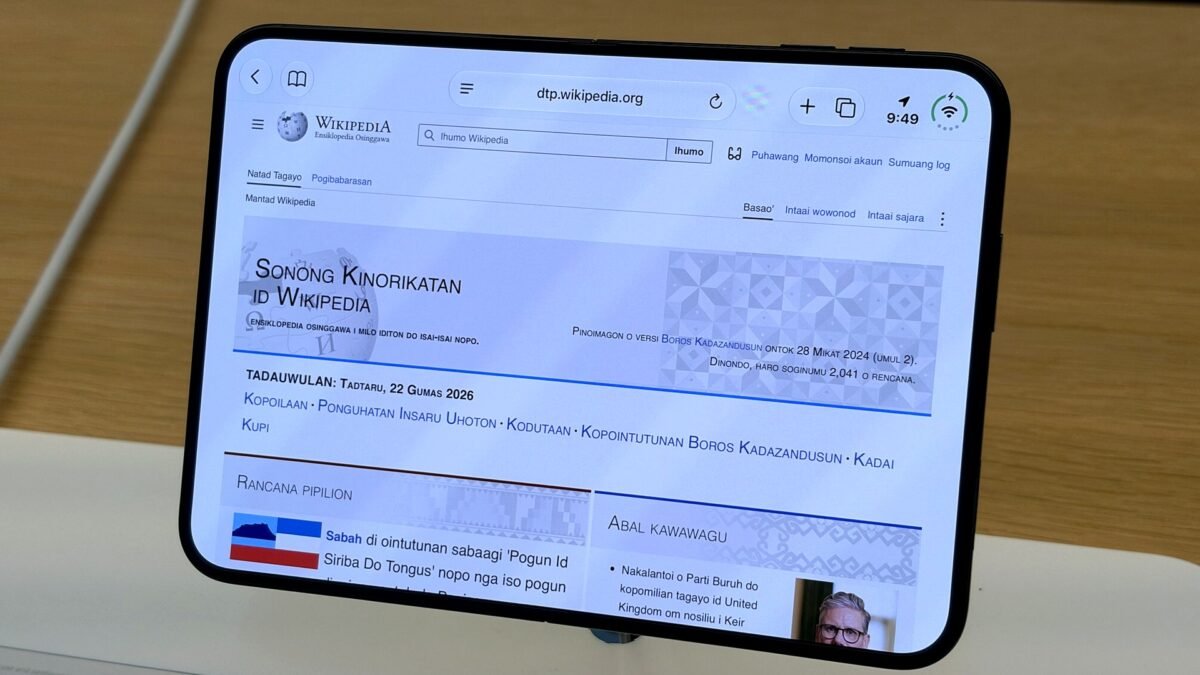
Apple’s first foldable iPhone went on sale around the world on Friday, and the launch quickly became a story about scarcity. The iPhone Duo, priced from $1,999 in the United States, became available in stores and online on 23 October in roughly 70 countries and regions, according to Apple. But walk-in buyers hoping to pick one up today were warned not to get their hopes up: Apple itself said stores would have only limited stock, and in several large markets there was effectively no walk-in supply at all.
The shortage was telegraphed a week ago. When pre-orders opened on 16 October, shipping estimates for every configuration slipped to January 2027 within about half an hour, according to MacRumors, which tracked Apple’s own store. Apple described demand as “nothing short of extraordinary”, and outlets including CBS News, CNET and 9to5Mac reported that pre-orders sold out within minutes, according to USA Today. On launch day, Apple capped purchases at two units per customer in several markets to slow resellers.
In the United States, USA Today reported that Apple Stores received a limited allocation for walk-in customers, which the company expects to sell out quickly. Apple told the outlet that outlets in the US, UK, Australia, Austria, Belgium, Canada, Mexico, Germany, the Netherlands, Singapore, Spain, Sweden, Switzerland and Turkey would have a small supply, with select Italian stores also carrying some stock. Meanwhile shoppers in France, China, Hong Kong, India, Japan, Malaysia, South Korea, Taiwan, Thailand and the United Arab Emirates would find no walk-in stock at all, according to reports from the launch-day coverage. The company said teams were working to get “this revolutionary new product” into customers’ hands as quickly as possible.
The scale of the demand is being measured in minutes and seconds in several markets. In India, the quick-commerce platform Blinkit said it sold out its entire iPhone Duo allocation in Delhi NCR within five minutes of the launch going live at 8:15 AM, according to Storyboard18, with founder Albinder Dhindsa confirming the sellout on X. Indian pricing runs from approximately Rs 3 lakh to Rs 4.5 lakh, according to reporting by the Press Trust of India, and Apple’s own retail stores at Bandra Kurla Complex in Mumbai and Saket in New Delhi recorded the highest number of bookings. In South Korea, the country’s three major mobile carriers sold out their first-round launch-day pre-order allocations in one minute, according to MoneyToday, with buyers in their 30s forming the largest age group at 36 per cent, followed by those in their 40s at 35 per cent. Seven out of every ten buyers in the Korean market chose Star White over the other colour, Night Sky.
The most expensive iPhone Apple has ever sold
The Duo is Apple’s biggest bet on smartphone hardware in years, and its price reflects that. The device opens like a notebook: closed, a 5.4-inch outer display delivers 90 per cent of the screen area of the iPhone 18 Pro in a pocketable form; opened, a 7.6-inch inner display — the largest ever on an iPhone — provides a tablet-sized canvas for reading, video and multitasking, according to Apple’s announcement. Both displays share the same aspect ratio so content scales proportionally, and the inner screen carries a nano-texture finish intended to cut glare and reduce the visibility of the fold crease.
The starting price of $1,999 buys the 256GB model, or $83.29 a month over 24 months in the US. The range climbs to $2,199 for 512GB, $2,599 for 1TB and $3,199 for a top-end 2TB configuration, according to Apple’s pricing. The hardware includes the new A20 Pro chip, paired with 12GB of RAM, dual 48-megapixel rear cameras — main and ultra-wide with optical-quality 2x zoom — a grade-5 titanium enclosure, IP68 water and dust resistance, and Touch ID built into the side button. Apple says support for the USB-C Apple Pencil on both displays will arrive later this year.
On the software side, iOS 27 has been reimagined for the foldable form factor, with a Split View mode that can run two apps — or two windows of one app — side by side, and saved app pairs for favourite combinations. Apple said this week that more than 2,000 developers have attended its workshops on adapting apps for the device, with business apps including Microsoft Word, Outlook, Zoom, Slack and Salesforce among those being updated, according to Small Business Trends. Apple Intelligence and a new Siri AI run across the system.
A production ramp that never quite caught up
The gap between demand and supply did not happen by accident. Reports throughout the year described a difficult production ramp: early yields were said to be around 60 per cent, mass production began slowly with only a few hundred units a day by late August, and Apple reportedly gave suppliers a choice between prioritising output or yield rates, according to reporting summarised in the iPhone Duo’s production history. In October, as demand became clear, Apple reportedly raised its first-year production target by 44 per cent, from 9.7 million units to 14 million.
Bloomberg’s Mark Gurman reported that Apple knew the Duo would face “severe supply constraints”, with manufacturing challenges around the foldable display, the hinge and final assembly, according to coverage of the launch. The constraints mirror the experience of every major foldable launch before it: the engineering of a display that bends hundreds of thousands of times, sealed against dust and water, remains one of the hardest problems in phone manufacturing.
It is also the first flagship launch under John Ternus, who became Apple’s chief executive on 1 September after Tim Cook moved into the executive chairman role. Ternus previously ran Apple’s hardware engineering group, responsible for the iPhone, iPad, Mac, Apple Watch, AirPods and Vision Pro. The Duo — Apple’s most structurally different and most expensive mainstream iPhone ever — is the first product that will carry his name on the result, win or lose.
The device lands in roughly 70 countries today, with 28 additional countries and regions to follow on 30 October, according to Apple. What buyers in the second wave find on shelves will depend on how quickly the supply chain catches up with demand that, so far, has outrun it everywhere it has been measured.
Analysis: Why It Matters
The $1,999 gamble — folding comes at a premium price
No mainstream iPhone has ever cost this much, and that is the point. Apple is not selling the Duo as a better phone; it is selling a second device that happens to fold. At nearly double the price of a conventional flagship, the Duo asks buyers to pay laptop money for a telephone. The original commentary worth making here is simple: this pricing is only possible because of the extraordinary demand signal Apple is reading. A company does not launch its first product in a new form factor at $1,999 with limited supply unless it is confident that scarcity itself will market the product. Sold-out headlines are doing exactly the advertising a launch-day ad campaign would do, at zero cost. But the strategy has an expiry date: if, six months from now, the Duo is merely hard to find rather than fought over, the premium starts to look like a tax on curiosity rather than a reflection of value.
Supply is the real story, not the screen
Foldables have been commercially available since Royole’s FlexPai in 2018 and Samsung’s first Galaxy Fold in 2019 — nearly seven years before Apple entered. Nothing about the physics has got easier. Teardown specialists have repeatedly shown that hinges and dust are a brutal combination: iFixit’s teardown of Samsung’s latest foldable produced grinding hinge noises after deliberate dust exposure, and while that is not evidence of ordinary failure, it is a reminder of why Apple reportedly told suppliers to choose between volume and yield. The honest reading of the Duo’s constrained launch is that this is a genuinely hard device to build, and Apple is shipping it at the edge of what its supply chain can do. Watch the January 2027 shipping estimates. If they shorten quickly, Apple solved the ramp. If they do not, the Duo becomes a niche halo product — profitable per unit, but not a category-maker.
Ternus’s first real test
Every Apple chief executive is defined by their first product bet. Cook inherited and then scaled; now Ternus owns the foldable era from day one. A former hardware engineering chief launching the most mechanically complex iPhone ever is a bet on his own competence, and the early indicators — extraordinary pre-order demand, production raised 44 per cent, a second-wave country expansion on schedule — all point to a launch he can defend. But the risks are also his: foldables have a higher service and warranty profile than slab phones, and a hinge or crease controversy in the first holiday quarter would be the kind of reputational dent no CEO wants attached to their name in year one. For now, the scoreboard favours him — demand is real. The durability verdict, which only months of real-world use can deliver, is the audit he cannot control.
The foldable era, seven years late — or right on time
There is a long history of Apple arriving late and then defining a category it did not invent. But foldables are not a proven category in the way the smartwatch was when the Apple Watch arrived. Samsung has spent seven years proving the concept works for enthusiasts while never quite making it mainstream: durability questions, high prices and the simple fact that most people do not need a bigger phone screen have kept foldables a single-digit share of the smartphone market. Apple’s contribution is legitimacy — 2,000 developer workshops, Microsoft and Salesforce on board, carrier activations worldwide. If any company can move the needle on foldables, it is the one with the installed base to demand that developers optimise for two screens at once. The counter-argument is that Apple needed the Duo precisely because the conventional smartphone market is mature and replacement cycles keep lengthening; the foldable is a new reason to upgrade in a world running out of reasons. Both things can be true: it can be a strategic necessity and a genuine category push at the same time.
The ecosystem moat — why the specs matter less than the software
Strip out the folding screen and the Duo’s spec sheet is ordinary for 2026: A20 Pro, 12GB of RAM, 48-megapixel cameras. What is not ordinary is Split View, saved app pairs, an under-display camera and an operating system that treats the fold as a feature rather than a compromise. Samsung’s foldables have had big screens for years; what they have lacked is a software story compelling enough to change habits. Apple’s 2,000-developer workshop push is the tell: the company understands that the Duo lives or dies on whether apps feel native to the fold, not merely stretched across it. Combined with Apple Intelligence running on-device, the pitch is that this is not a phone with a trick — it is a new surface for the ecosystem millions already live inside. That moat, more than titanium or nano-texture, is what the $1,999 is really buying.
What to Watch Next
- Launch-weekend sell-through data: whether walk-in stock actually disappears on Friday across the US, UK, Europe and Australia — and what Apple’s next delivery-estimate guidance looks like by next week.
- Durability verdicts: the first teardowns and long-term reviews, especially hinge and crease behaviour after weeks of daily folding — this is the single biggest technical risk in the product.
- Supply catch-up: whether shipping estimates move in from January 2027, and whether the reported 44 per cent production increase materialises in the December quarter.
- The second wave: how the 28 additional countries launching on 30 October affect global availability, and whether markets left out of walk-in stock see queues or cancellations.
- Rival response: whether Samsung answers with Fold8 pricing or promotions before the holiday quarter — the foldable duel is now officially a two-player race.
Sources
- Apple Newsroom: “Apple unveils iPhone Duo” (official announcement, specs and pricing)
- USA Today: “The iPhone Duo is available today. Apple has a ‘limited’ supply” (launch-day availability and pricing)
- Storyboard18: iPhone Duo sells out on Blinkit within five minutes in Delhi NCR
- MoneyToday: iPhone Duo sells out in one minute on launch day in South Korea
- Cult of Mac: “iPhone Duo goes on sale with a $1,999 price and a stock problem” (pre-order sellout, shipping estimates)

About the Author — Abdul Mannan
Related Articles

OpenAI Cuts Valuation Target to $1.25 Trillion as Investors Balk at $1.4 Trillion Ask, Reports Say
OpenAI has reportedly trimmed its fundraising valuation target to $1.25 trillion — $150 billion below the $1.4 trillion…

Wall Street’s AI Euphoria Cracks: Nasdaq Suffers Worst Day Since June as Meta’s $825 Billion Spending Pledge Spooks Investors
The Nasdaq Composite fell 2.6 per cent to its worst day since June as Meta's $825 billion AI…
Australian Court Orders Apple to Open iPhone to Rival App Stores and Outside Payments From March 2027
Australia's Federal Court has ordered Apple to open the iPhone to rival app stores and alternative payment systems…