
Prime Editing Reaches a Milestone: DNA Rewritten Inside a Living Person for the First Time

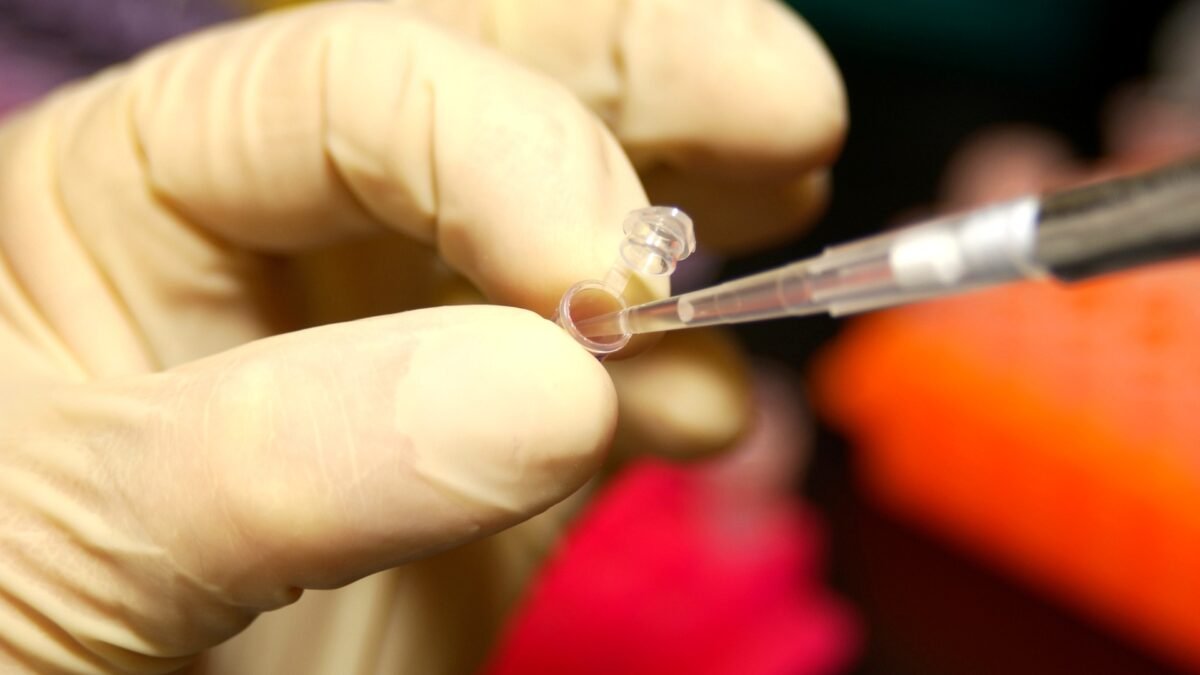
The Milestone
A powerful gene-editing technique has been used to edit DNA directly inside a person’s body — the first known instance of such a treatment, Nature reported on 23 October. The milestone treatment is part of a clinical trial of prime editing, a technique that can alter DNA with more precision than standard CRISPR–Cas9 methods can.
The company behind it, Prime Medicine of Cambridge, Massachusetts, announced that it had administered its experimental therapy to the first participant in its clinical trial earlier this month. The treatment targets Wilson disease, a rare inherited disorder, by rewriting DNA in liver cells to erase a mutation that prevents them from eliminating excess copper.
Prime Medicine said the first patient had been dosed in its global Phase 1/2 trial of the investigational therapy, designated PM577a, making this the company’s first-ever human study of an in vivo prime-editing therapy. According to the company, initial clinical data from the trial are expected in 2027.
“Dosing the first patient with PM577a is a meaningful step toward our goal of delivering a transformative, one-time treatment for people living with Wilson disease,” said Allan Reine, the company’s chief executive officer, in the announcement.
How Prime Editing Differs From Standard CRISPR
Prime editing was developed in the laboratory of Prime Medicine co-founder David Liu at the Broad Institute of MIT and Harvard. According to reports on the trial, the technology uses a Cas-derived nickase fused to a reverse transcriptase to introduce precise DNA sequence changes without relying on a conventional double-strand DNA break or homology-directed repair — an approach that may be advantageous in largely nondividing tissues such as the adult liver.
The distinction matters because of what each tool does to the genome. As science reporters have explained the difference, existing CRISPR–Cas9 “gene scissors” have mainly been used to switch off gene function — to knock genes out. Prime editing, by contrast, is a gene-correction technology that can insert or delete segments of DNA and rewrite faulty sequences directly. In this case, rather than disabling anything, the editor is intended to repair a single flawed letter of genetic code in the ATP7B gene.
PM577a is designed as a one-time intravenous therapy. It uses a lipid nanoparticle — a tiny fat-based delivery vehicle — to carry the prime-editing machinery through the bloodstream and into hepatocytes, the liver cells where the target gene is expressed. Once inside the cells, the tools aim to correct the H1069Q mutation, the most prevalent Wilson-disease-causing allele in North America and Europe, according to the company.
The Trial Itself
The open-label, first-in-human study, registered under ClinicalTrials.gov identifier NCT07748403, will evaluate ascending doses of PM577a in adults and adolescents carrying at least one copy of the p.H1069Q allele in the ATP7B gene. Initial enrolment will focus on clinically stable adults who remain on standard-of-care treatment, with efficacy assessed through a battery of copper-related measures: copper efflux measured by 64Cu PET imaging, serum ceruloplasmin, non-ceruloplasmin-bound copper, and 24-hour urinary copper excretion.
The US Food and Drug Administration has granted the PM577 programme Rare Pediatric Disease designation, a regulatory status intended to support development of treatments for serious rare conditions affecting children.
Patient advocates greeted the news with emotion. Rhonda Rowland, president of the Wilson Disease Association in Atlanta, Georgia, told Nature: “I never dreamed that in my lifetime I would see this applied to my rare disease. It’s going to be a really exciting year.” As she put it, patients with Wilson disease “desperately long for a one-time therapy instead of complex treatment regimens that require multiple medications.”
What Wilson Disease Is — and Why It Demands a Fix
Wilson disease is caused by pathogenic variants in ATP7B, which encodes a copper-transporting ATPase expressed predominantly in liver cells. When the gene fails to work properly, the liver cannot excrete excess copper into bile. The metal then accumulates — first in the liver, and over time in other tissues including the brain — causing organ damage and, in untreated patients, neurological impairment and death.
Current treatment does not address the genetic cause. It relies on lifelong copper chelation — drugs that help remove copper from the body — or zinc therapy that reduces copper absorption in the intestines. These approaches can control the disease and reduce the risk of organ damage, but they require ongoing treatment for the rest of a patient’s life, with all the adherence burden and side effects that entails. In theory, if the causative genetic mutation is corrected just once, the therapeutic effect could last a lifetime.
The Road Here
Prime Medicine’s announcement lands five years after the field proved that editing genes inside the human body was possible at all. In the summer of 2021, Intellia Therapeutics and its partner Regeneron shared landmark clinical data from a Phase 1 study of NTLA-2001, an in vivo CRISPR candidate for hereditary transthyretin amyloidosis — results published in The New England Journal of Medicine that marked the first clinical proof of directly editing human genomes in the body. Like PM577a, NTLA-2001 travelled to the liver inside lipid nanoparticles delivered by a single intravenous infusion; it worked by inactivating the TTR gene to reduce levels of a misfolded protein.
Prime Medicine’s step is different in kind. Where Intellia’s therapy switched a gene off, this trial attempts the harder trick: rewriting a broken gene so it works properly again. It is the first time the more sophisticated prime-editing machinery — a larger, more complex molecular system than standard CRISPR — has been deployed inside a living person.
Analysis: Why It Matters
1. In vivo delivery is the real breakthrough, not just the editor
The history of gene therapy is, to a large extent, a history of delivery problems. Editing a cell in a laboratory dish is relatively straightforward; getting the editing machinery safely to cells inside a living person — in sufficient quantity, without the immune system destroying it, without it wandering into the wrong tissue — has been the field’s defining obstacle. Intellia proved in 2021 that lipid nanoparticles could carry a CRISPR editor through the bloodstream to the liver. Prime Medicine has now shown that the same delivery route can carry something far more ambitious: a prime editor, a two-part molecular machine that must find its target, nick one DNA strand, and reverse-transcribe a corrected sequence into the genome. That the trial’s first-in-human study targets the liver is no accident — it is the one organ where in vivo delivery is a solved problem. Everything else remains the frontier.
2. Precision matters because this disease demands it
Most genetic medicines in trials today work by disabling something: knocking out a gene that makes a harmful protein, or silencing one. But many diseases cannot be treated that way, because the patient’s gene is not an enemy to be destroyed — it is a broken component that needs repair. The H1069Q mutation in ATP7B is a single-letter error in a gene whose normal function the body desperately needs. You cannot knock out ATP7B to treat Wilson disease; you must fix it. Prime editing’s ability to rewrite rather than merely disrupt is what makes this trial conceptually possible, and it points toward a much larger class of diseases — from cystic fibrosis to sickle cell — where correction, not destruction, is the goal.
3. A permanent fix invites permanent scrutiny
A one-time treatment is the dream, but it is also the risk. A drug that washes out of the body can be stopped; an edited genome cannot be unedited. That irreversibility is why the trial begins with ascending doses in clinically stable adults already on standard treatment, and why efficacy is being measured through multiple independent copper biomarkers rather than a single endpoint. Krishanu Saha, a biomedical engineer at the University of Wisconsin–Madison, put the caution succinctly in the Nature report: in vivo approaches have their own challenges — “It depends on what types of risks you’re willing to accept.” Off-target edits, immune responses to the delivery vehicle, and whether a single correction in enough liver cells translates into lasting clinical benefit are all questions the 2027 data must answer. One point deserves emphasis for public understanding: this is somatic editing — it alters liver cells, not reproductive cells — so the correction is not inherited by the patient’s children.
4. Wilson disease was chosen with unusual care
First-in-human trials are bets, and this one is hedged intelligently. Wilson disease is monogenic, meaning a single gene is at fault; the faulty allele is common and well-characterised; the disease’s biochemistry is measurable through clear copper biomarkers, so success or failure will show up in the blood; and the patient population carries an enormous treatment burden that makes a one-time therapy genuinely transformative rather than merely convenient. It is also rare, which matters for trial design: rare-disease trials are small, closely monitored, and supported by dedicated regulatory pathways such as the Rare Pediatric Disease designation Prime Medicine has received. The strategy mirrors the field’s standard playbook — prove the platform in a rare, measurable disease, then expand — but the execution here is unusually clean.
5. The race is no longer about whether editing works, but who edits best
The significance of this milestone extends beyond one company or one disease. Five years ago the question was whether DNA could be edited inside a living human being. That question was answered in 2021. The question now is which editing technology wins: standard CRISPR, which cuts and disrupts; base editors, which swap single letters with high efficiency; or prime editors, which can rewrite longer sequences with the greatest precision but are the hardest to deliver. Prime Medicine has now planted its flag inside a living person. Rivals pursuing in vivo base editing and other next-generation approaches will be watching the 2027 readout as closely as anyone — because the first company to prove that precision editing works in the body sets the terms for everything that follows.
What to Watch Next
- The 2027 data readout: The first clinical data — expected next year — will show whether the edited liver cells actually restore copper handling, measured through ceruloplasmin levels, urinary copper, and PET imaging. Biomarkers will be the story.
- Trial expansion to adolescents: The study is designed for adults and adolescents; moving from the initial stable-adult cohort to younger patients will test both safety and the therapy’s durability in a growing liver.
- Off-target and durability evidence: Investigators will need to show not only that copper metabolism improved, but that the edits stayed where they were aimed — and that a single dose’s effect persists over time.
- How regulators respond: Prime editing is a new class of therapeutic machinery. The FDA’s Rare Pediatric Disease designation signals support, but agencies will be writing much of their playbook for prime editors as this trial proceeds.
- The competitive response: With in vivo editing now proven for two distinct editor technologies, expect rival programmes — and new capital — to flow into delivery beyond the liver, which remains the field’s hardest unsolved problem.
Sources
- Nature — “A first for CRISPR: powerful prime editing alters DNA directly in the human body”
- DongA Science — “Prime Medicine launches first in-body prime editing trial for Wilson disease”
- AllSci — “Prime Medicine doses first patient in prime-editing trial for H1069Q Wilson disease”
- embers.news — “Prime Medicine Doses First Patient in Wilson Disease Trial”

About the Author — Abdul Mannan
Related Articles

Scientists Build ‘Scentronic’ System That Can Detect Smells and Transmit Them Over the Internet
Ohio State and Zhejiang Lab researchers have built Scentronic, an AI-powered system that can detect a smell in…
Seafloor Bacteria Build Metal–Organic Frameworks, a First in the Living World
Seafloor cable bacteria build their electricity-carrying fibres from metal–organic frameworks — the first MOF ever found in a…

PHP2Shell: AI-Found Critical Flaw Sparks Emergency Patching as Governments Take Websites Offline
Governments across Europe, Asia and Australia pulled websites offline as security teams raced to patch two critical AI-discovered…