
Volvo Cars Cuts 2,500 Jobs After Q3 Loss as China Sales Collapse and US Tariffs Bite

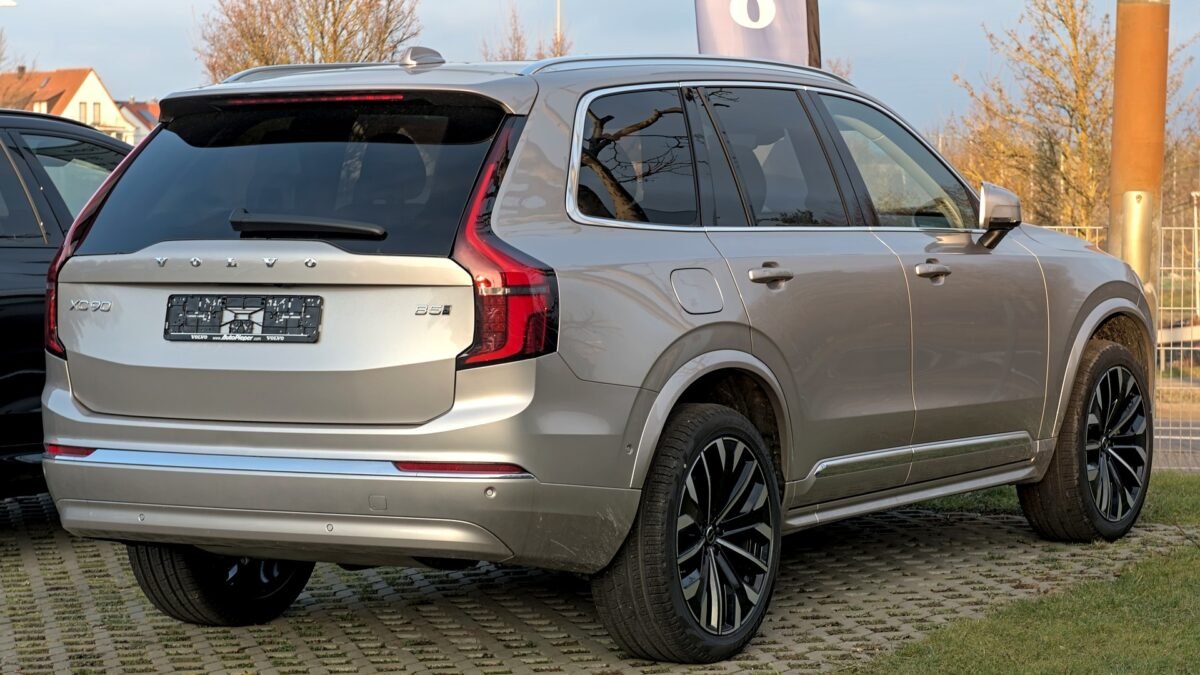
Volvo Cars will cut about 2,500 jobs, most of them in Sweden, after plunging to a much larger than expected third-quarter loss, the Swedish carmaker announced on Friday, as collapsing sales in China and tariff and incentive pressures in the United States overwhelmed a resilient performance in Europe.
The company reported an adjusted operating loss of 3.7 billion Swedish kronor (about $373 million) for the three months to September, according to Reuters, compared with a profit of 5.8 billion kronor a year earlier. Analysts at Citi had expected a loss of just 724 million kronor, Reuters reported, underlining how far the result missed even gloomy expectations. On a net basis, the company swung to a loss of 5.7 billion kronor, according to Agence France-Presse (AFP), against a net profit of 4.5 billion kronor in the same quarter of 2025.
Revenue fell to 66.9 billion kronor from 86.4 billion kronor a year earlier, a drop of nearly 23 per cent, while the gross margin — a closely watched measure of how much profit the company keeps from each car after production costs — narrowed to 14.7 per cent from 20.4 per cent, according to Reuters. Free cash flow was negative 8.9 billion kronor, against negative 4.3 billion kronor a year earlier, and basic earnings per share were negative 1.63 kronor, compared with positive 1.75 kronor in the third quarter of 2025, according to the company’s own results statement.
Shares in Volvo Cars fell by almost 30 per cent on Friday, according to Reuters, after the announcement. AFP recorded the shares down by more than 25 per cent by late morning in Stockholm, as investors absorbed the scale of the miss and the fresh round of cuts.
“The third quarter of 2026 was very disappointing and reflects a year that has become far more challenging than originally anticipated. Our ongoing turnaround plan therefore needs a decisive reinforcement,” chief executive Hakan Samuelsson said, according to Reuters.
The cuts: 2,500 jobs, mostly in Sweden
The latest measures will affect about 6 per cent of Volvo Cars’ workforce, according to Reuters, including around 2,000 jobs in Sweden, with the remainder spread across its other operations. The company said the reduction would be achieved by ending consultant contracts, through natural attrition and by offering targeted exit packages to employees, rather than through a single mass redundancy programme.
Volvo Cars employs about 39,300 people worldwide, including 19,500 in Sweden, according to figures the company gave to AFP. Samuelsson told Reuters the latest cuts should be completed by mid-2027, although he did not rule out further measures if the turnaround plan falls short.
The job cuts accompany a new savings target: a further 5 billion kronor reduction in indirect spending and variable costs, on top of earlier cost programmes, with the full financial effects expected by the end of 2027, according to the company’s results statement. By then, Volvo Cars said, its overall indirect spending would be almost 25 per cent lower than in the 2024 financial year.
The new round comes on top of about 3,000 job cuts announced in 2025, shortly after Samuelsson returned as chief executive, as part of an 18 billion kronor cost and cash programme launched that year. Volvo Cars had already scrapped its guidance for full-year sales volume and cash flow earlier in October, according to Reuters, citing an increasingly challenging market and a deteriorating near-term outlook.
China: revenues nearly halved
The sharpest damage came in China, where Volvo Cars’ revenues fell by almost 50 per cent year on year in the third quarter, according to Reuters and the company’s own statement. The company blamed hypercompetition from new Chinese domestic brands and severe pricing pressure, which it said had essentially eliminated profitability for legacy premium brands in the market.
“We continue to operate in a very tough environment with strong external challenges: de-globalisation, hypercompetition and climate change,” Samuelsson said in the results statement. “However, in the short term, with severely challenged volumes, we need to reinforce our turnaround plan with additional decisive actions, lowering our break-even point and improving cash flows to make us more resilient.”
Samuelsson told CNBC that the change in the Chinese market had come faster than the company had expected, and that selling cars developed for global markets was no longer working there, according to a summary of the interview. Chinese buyers, he said, increasingly favour locally developed vehicles over models designed elsewhere — a shift that affects every Western carmaker in China, not only Volvo.
Volvo Cars said it would prioritise margins over market share in China rather than engage in aggressive price competition with domestic rivals, according to Reuters, and that it planned to take a similar approach in the United States. The strategy amounts to an admission that chasing volume in China, at any price, now destroys more value than it creates.
America: tariffs and the end of EV incentives
In the United States, Volvo Cars said it continued to suffer negative effects from tariffs and from the removal of consumer incentives for electrified cars, both of which pressured margins, according to its results statement. The company, which had bet heavily on electric vehicles, said the removal of those incentives under President Donald Trump had hit its margins, according to AFP.
The quarterly result was also affected by other external developments, the company said: a negative revaluation of 1.1 billion kronor in fuel-economy credits due to legislative changes in the United States, negative raw-material developments, and a 0.9 billion kronor charge from recognising the losses of Polestar, the electric-car maker in which Volvo Cars holds a stake, for the second quarter of 2026.
Europe, by contrast, held up. Volvo Cars said it remained a leader in the premium fully electric segment, underpinned by a resilient performance in Europe, where its fully electric cars took a 45 per cent share of its sales in the quarter. Across the group, fully electric cars accounted for 32 per cent of sales, up from 22 per cent a year earlier, while electrified cars — fully electric plus hybrids — accounted for 53 per cent, up from 46 per cent.
A carmaker at a crossroads
Volvo Cars is majority-owned by China’s Geely Holding, which bought the carmaker from Ford in 2010. It is a separate company from the Volvo Group, which makes trucks and construction equipment. The distinction matters in this story: the carmaker’s troubles are its own, shaped by the premium car market, not by the truck cycle.
The company has already retreated from one of its boldest bets. In 2024, according to AFP, Volvo Cars dropped its plan to sell only fully electric cars by the end of the decade, as demand for electric vehicles cooled and policy support wavered in key markets. The electric transition has not been abandoned — the rising electric share of sales shows that — but the timetable has plainly slipped.
Leadership change is also on the horizon. Samuelsson is due to resign when his contract ends, according to AFP, with Skoda chief executive Klaus Zellmer set to replace him no later than October next year. The handover means the turnaround will soon be executed by a new chief executive, who will inherit both the savings programme and the strategic choices behind it.
For Sweden, the human cost is concentrated. About 2,000 of the 2,500 jobs going are in Sweden, where Volvo Cars’ headquarters, product development and main Gothenburg plant are based. The company has been one of Sweden’s most recognisable industrial employers since 1927, and each round of cuts lands heavily in Gothenburg, where the carmaker anchors a wider supplier and engineering ecosystem.
Analysis: Why It Matters
China is no longer a growth market for legacy premium brands — it is a battlefield
For two decades, Western carmakers treated China as the engine of their growth: a vast, expanding market where a premium badge commanded a premium price. Volvo Cars’ third quarter shows how completely that assumption has inverted. Revenues nearly halved in a single quarter, not because the Chinese car market shrank, but because domestic brands now build cars Chinese buyers prefer, at prices and with software and features that legacy brands struggle to match. When a company says profitability for its entire category has been essentially eliminated, it is not describing a bad quarter. It is describing a structural change. The decision to prioritise margin over volume is sensible, but it also concedes that the old China playbook — sell more cars, every year, at a premium — is finished, and no one yet knows what replaces it.
The American hit is policy-made, not cyclical
Carmakers are used to cycles: demand rises and falls with interest rates, fuel prices and consumer confidence. Volvo Cars’ American problem is different in kind. Tariffs raise the cost of every imported car and component, while the removal of consumer incentives for electrified vehicles removes a subsidy that had helped close the price gap between electric and petrol models. Neither is a cycle that will simply turn. Both are policy choices, and policy choices can persist, deepen or reverse with elections and negotiations. That makes planning far harder than managing a downturn: a company can wait out a recession, but it cannot wait out a tariff regime without deciding where to build, what to price and which models to sell. Volvo Cars’ margin-first approach in the United States is, in effect, a decision to sell fewer cars at better prices until the policy landscape clarifies.
This round of cuts is about the break-even point, not just the cost base
Cutting 2,500 jobs and 5 billion kronor of indirect spending sounds like conventional cost-cutting, but Samuelsson’s own framing points somewhere more fundamental: lowering the break-even point. A carmaker with high fixed costs needs a certain volume of sales simply to stand still. When volumes fall — as they have in China and the United States — that break-even point becomes a trap: every lost sale hurts twice, once in revenue and once in unabsorbed fixed cost. The savings programme is therefore not only about spending less, but about building a company that can survive at lower volumes. The risk is that the medicine weakens the patient: cutting engineering, marketing and product development too deeply can starve the very models that are supposed to drive the recovery.
Europe is carrying the company — for now
The bright spot in the results is easy to miss amid the job cuts, but it matters. Europe delivered a resilient performance, fully electric cars took a 45 per cent sales share there, and the group’s overall electric share rose sharply. That suggests Volvo Cars’ product range is competitive where the market is stable and charging infrastructure and policy support are comparatively settled. The danger is concentration: if one region carries the whole group, any shock to that region — a European slowdown, new regulation, or intensifying competition at home — leaves the company with nowhere to hide. Europe’s strength buys time for the turnaround; it does not, by itself, constitute one.
A leadership handover in the middle of a turnaround is a risk in itself
Turnarounds need continuity: the same team that diagnoses the problem usually has to live with the painful remedies. Volvo Cars will instead change chief executives midway through, with Zellmer arriving no later than October next year. A new leader brings fresh eyes and, often, a fresh strategy — which can be a strength, but also means the savings programme, the China approach and the product plan may all be re-examined just as they need steady execution. Samuelsson’s warning that he has not ruled out further measures if the plan falls short is honest, but it also signals that the current round may not be the last. Workers, suppliers and investors will all be watching the handover for signs of whether the turnaround accelerates, stalls or changes direction entirely.
What to Watch Next
- How the cuts are implemented in Sweden — which roles, which sites, and whether unions and local politicians accept a plan built on attrition and exit packages rather than compulsory redundancies.
- Whether the 5 billion kronor of additional savings is delivered on schedule, with full effects by the end of 2027, or whether weaker volumes force yet another round.
- What Volvo Cars’ margin-first strategy in China actually looks like in practice — which models it keeps, which it drops, and whether it develops cars specifically for Chinese buyers.
- Whether United States tariff and incentive policy shifts in the coming months, and how quickly any change feeds through to Volvo Cars’ American pricing and margins.
- How the chief executive succession unfolds, and whether Klaus Zellmer endorses, accelerates or revises the turnaround plan he inherits.
Sources

About the Author — Abdul Mannan
Related Articles

Apple’s $1,999 iPhone Duo Goes on Sale Worldwide as Launch-Day Stock Runs Dry Within Minutes
Apple's first foldable iPhone hit stores worldwide on 23 October, with pre-orders selling out in minutes, shipping estimates…

OpenAI Cuts Valuation Target to $1.25 Trillion as Investors Balk at $1.4 Trillion Ask, Reports Say
OpenAI has reportedly trimmed its fundraising valuation target to $1.25 trillion — $150 billion below the $1.4 trillion…

Wall Street’s AI Euphoria Cracks: Nasdaq Suffers Worst Day Since June as Meta’s $825 Billion Spending Pledge Spooks Investors
The Nasdaq Composite fell 2.6 per cent to its worst day since June as Meta's $825 billion AI…