
More Than 2,670 Palestinians Displaced as Israeli Forces Seal Hebron in Four-Day West Bank Operation

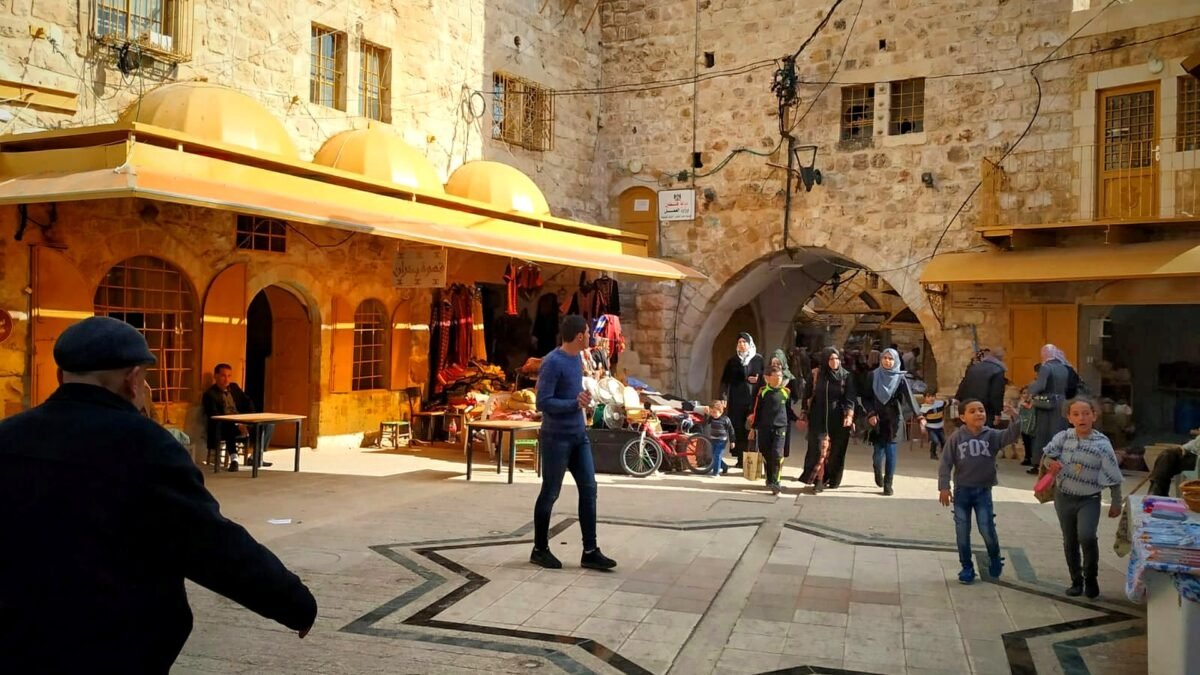
More than 2,670 Palestinians have been forced from their homes in Hebron as an Israeli military operation sealed the occupied West Bank city for a fourth consecutive day, according to the Palestinian prime minister’s office, citing data from Hebron Municipality. The office said on Sunday that most of those displaced were women, children and older people.
The operation began on Friday, after two Israeli soldiers were killed in a shooting at a checkpoint near the city. The two gunmen were also killed. Israeli forces then entered the Ein Deir Baha neighbourhood, where the attackers were reported to have lived, and ordered residents to leave, according to AFP and The Guardian.
By Monday, the Palestinian news agency WAFA reported that the siege had entered its fourth day, with more than 450 families displaced in the Hebron governorate, 500 homes searched and 70 people detained that day. WAFA also reported that Israeli forces had set up more than 240 checkpoints and gates across the governorate, and that Hebron’s governor, Khaled Dudin, put the number displaced from the Deir Bahha and al-Jalda areas alone at more than 2,300 people.
The figures have risen steadily since the weekend. The Guardian reported on Sunday that about 370 families, nearly 2,000 people, had been displaced by the sweep through Ein Deir Baha, while the municipality said it had opened community halls and children’s play areas to shelter some of those forced out. Other residents have sought refuge with relatives and friends. The differences between the counts reflect different reporting times and different definitions of the affected area, and this article attributes each figure to its source rather than treating any single number as a settled total.
Residents described being given only minutes to leave. The Guardian quoted Abdul Halim al-Tamimi, 77, as saying his family was given ten minutes to vacate their home in the early hours of Saturday, and that soldiers later turned the villa into a headquarters, festooning it with Israeli flags. Hebron imam Fahed Ahmaro told the newspaper he had rushed his frail mother and grandchildren to a daughter’s house elsewhere in the city, only to be told by a neighbour not to return because soldiers had blown up the gates to his home. Local shopkeeper Higazi al-Tamimi, speaking from a hospital bed, told AFP that soldiers beat him as he tried to reach his home, striking his legs, chest, shoulders and head before pushing him back towards a safe area.
The Israeli military has said the operation is aimed at searching for militants and weapons in the al-Jaladah and Ein Deir Baha areas, and that demolitions would also be carried out. In a written statement reported by The Guardian, the military said approximately 2,000 residents of the target area belonged to a clan it described as associated with Hamas and from which it said the attackers originated. The military has also said that civilians who wished to evacuate were permitted to leave the area temporarily. That account contrasts sharply with the accounts of residents quoted above, who said they were forced out at gunpoint and given minutes to gather belongings.
Prime Minister Benjamin Netanyahu, speaking from the attack site on Friday, said troops would move house to house and that Israel would, in his words, act to destroy the place. Defence Minister Israel Katz said the campaign would replicate earlier operations in Tulkarm and Jenin, where forces occupied neighbourhoods and displaced tens of thousands of Palestinians starting in early 2025. Finance Minister Bezalel Smotrich said he had ordered the immediate demolition of what he called a wide row of illegal Arab structures adjacent to the attack site, and called for a comprehensive military campaign, in his words, exactly like in Gaza and Lebanon.
Hebron’s mayor, Yousef al-Jabari, described the operation as collective punishment. He said soldiers had dragged people from their houses and prevented journalists from entering the district, and accused the prime minister of using Palestinian land and Palestinian displacement to pursue political goals. Palestinian civil rights activist Issa Amro, whose relatives were among those displaced, told reporters that hundreds of families had left homes with no connection to the attack. “We are being collectively punished for something we neither did nor supported,” he said.
The operation has effectively sealed a city of about 250,000 people. The Guardian reported that by Sunday evening all roads in and out of Hebron remained closed to cars, with heavy steel barriers swung across them, and that the only traffic was on foot. Journalist Jasper Nathaniel described parts of the city as a ghost town after residents were expelled. Israeli public broadcaster reports, cited by Trends MENA, said the military was preparing to conclude the Hebron operation within days, after searching about 500 buildings and finding two weapons. Thousands of residents had nevertheless already been displaced, and homes and vehicles had been destroyed.
Israel also announced that it would close land crossings with the occupied West Bank on Tuesday for its general election. Palestinian workers were to be barred from entering most areas from Sunday through Monday, followed by a full closure of crossings into and out of the territory on election day. The election, the first since the Hamas-led attacks of 7 October 2023, is widely seen as a referendum on Mr Netanyahu’s security record, with opinion polls reported as showing him running even with a bloc led by Gadi Eisenkot, a former military chief of staff.
The Hebron operation has unfolded alongside continued violence elsewhere. Trends MENA reported that Israeli attacks killed at least eight Palestinians across the Gaza Strip on Sunday, including three security guards at Gaza City’s Islamic University, which suspended in-person classes for the rest of the week. Gaza’s Education Ministry separately said Israeli attacks had killed ten students and one teacher between 18 and 24 October. Palestinian authorities also reported 482 attacks on farmers across nine West Bank governorates since the olive harvest season began on 3 October, according to the Palestinian Colonization and Wall Resistance Commission, restricting access to farmland at a critical time of year for rural incomes.
On Monday, United Nations-mandated investigators added a further dimension to the debate. AFP reported that the UN Independent International Commission of Inquiry said Israel had committed the crime against humanity of extermination in the West Bank, while continuing to commit genocidal acts in Gaza. The commission’s findings are its own assessment and are contested by Israel; they are reported here as the commission’s conclusions, not as an adjudicated legal verdict, and they form part of the international legal and political argument that now surrounds the Hebron operation as much as the operation itself.
Analysis: Why It Matters
A city sealed days before an election
The timing of the Hebron operation is impossible to separate from Tuesday’s vote. Mr Netanyahu has built his campaign around security credentials, and the operation, launched within hours of a deadly attack on soldiers, allows him to demonstrate force in the most visible way available: a sealed city, demolished buildings and soldiers occupying evacuated homes. Critics, including the city’s mayor and Palestinian activists, argue openly that the displacement is staged for the election. Whether voters reward or punish that display will be one of the first things Tuesday’s result reveals, and it will shape how Israeli governments calibrate force in the West Bank in the months that follow.
The gap between two accounts of the same streets
The most important unresolved question in Hebron is not the number of displaced people, which has moved from about 2,000 to more than 2,670 as counts have been updated, but the character of their departure. The military says civilians who wished to leave were permitted to do so temporarily. Residents describe loudspeakers ordering immediate evacuation, minutes to pack, homes turned into headquarters and, in at least one case reported by AFP, a beating. Both accounts cannot be fully true of the same streets, and the gap matters because it determines whether the operation is judged as a security sweep with civilian inconvenience or as a punitive displacement. Independent access for journalists and human rights monitors, which the mayor says has been restricted, is the only way that gap closes.
A model borrowed from the northern camps
Mr Katz’s statement that the campaign would replicate the Tulkarm and Jenin operations is a significant signal in its own right. Those operations, which began in early 2025, displaced tens of thousands of Palestinians and left neighbourhoods under prolonged military control. If Hebron becomes a third application of that model, the West Bank faces a pattern rather than an exception: large-scale displacement as a standard response to attacks, with return uncertain and homes repurposed for military use. Human rights organisations have already warned, through the Jerusalem Post, that forced displacement puts the health and wellbeing of civilians at risk, and one organisation, ACRI, has said it will use legal means to ensure families return home.
What displacement does to a city that cannot absorb it
Hebron is the largest Palestinian city in the West Bank and the only place where Jewish settlers live inside a densely populated Palestinian area under military protection. That geography makes any operation there unusually combustible: closures do not merely inconvenience a neighbourhood, they paralyse a regional centre of about 250,000 people, cut off workers days before an election closure, and strand farmers during the olive harvest. The municipality’s crisis response, opening halls and play areas, and the private generosity reported by residents, who opened their homes to the displaced, can absorb a weekend. They cannot absorb a prolonged occupation of homes, and every day the operation continues deepens the economic and social damage beyond the immediate security question.
The wider West Bank, not just one city
Hebron should not be read in isolation. The same weekend brought deadly strikes in Gaza, including at a university, and a continuing pattern of settler violence against farmers during the harvest. The UN commission’s Monday report, whatever its legal reception, ensures that the international argument about the West Bank will intensify rather than fade. The Hebron operation will therefore be cited, by both sides, as evidence in a much larger dispute: for its defenders, proof that Israel acts decisively after soldiers are killed; for its critics, proof that entire communities pay for attacks they did not commit. That framing will follow the operation into election-night analysis, into court challenges, and into the next round of diplomacy, whatever happens on Tuesday.
What to Watch Next
- Whether displaced residents are allowed to return once the military says the operation is complete, and in what condition they find their homes.
- Tuesday’s general election result, and whether the Hebron operation helps or hurts Mr Netanyahu’s security-focused campaign.
- Whether crossings with the West Bank reopen on schedule after election day, and whether Palestinian work permits are restored in full.
- Any legal challenge by Israeli human rights organisations, and any ruling on the families’ right to return.
- Whether the operation’s model spreads to other West Bank cities, or whether Hebron remains a one-off response to Friday’s attack.
Sources
- AFP via Malay Mail: Palestinian Authority says 2,670 displaced in Israel’s Hebron operation
- Trends MENA: Hebron siege displaces thousands as Israeli forces kill several Palestinians in Gaza
- The Guardian (via republication): ‘It’s collective punishment’ — nearly 2,000 Palestinians in Hebron displaced as Israeli forces take over homes
- SOFX, citing The New York Times, The Guardian and Associated Press: Israel launches massive Hebron sweep and demolitions after two troops killed

About the Author — Abdul Mannan
Related Articles

Trump Says US Could Strike Iran ‘Maybe Tomorrow’ as Tehran Claims It Downed an American Drone
President Donald Trump said on Saturday the United States could strike Iran as early as Sunday — or…
Riyadh Airport Reopens After Two-Week Houthi Shutdown as Rebels Warn It Will ‘Never Be Safe’
Riyadh's King Khalid International Airport resumed flights on Sunday after a two-week closure, hours before Yemen's Houthis renewed…

Houthis Say They Struck Saudi Oil Sites and Airports as Missiles Hit Aden
Yemen's Houthis said they attacked Saudi oil facilities and airports on Saturday, while Yemen's government said missiles also…