
Ebola Nurse Killed in Congo Attack as WHO Warns Violence Is Now Threatening the Response

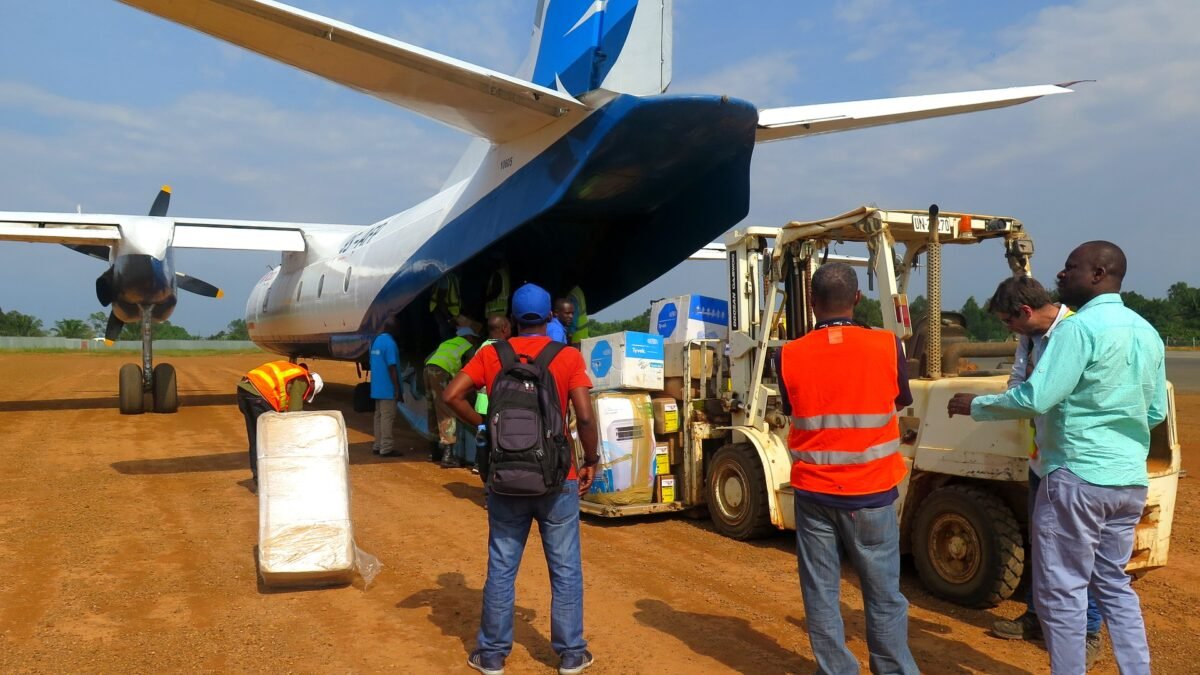
A nurse killed for doing his job
A nurse responding to an Ebola alert in the Democratic Republic of the Congo has been killed by protesters, and a colleague has been left severely injured in hospital, according to the World Health Organization and the United Nations. The attack took place in Bafwasende, a rural town in Tshopo province in the east of the country, and was reported by the WHO on Monday 26 October.
The nurse, who worked at the general hospital in Bafwasende, had spent his working life helping residents of the town understand Ebola and protect themselves from it, according to Reuters, which spoke to a local health official. He was attacked and killed while responding to the alert. A colleague survived the attack and was recovering in hospital, the official told Reuters.
Reports differ on the exact day of the attack — the United Nations account says it happened on Saturday, while Reuters reports Friday — but they agree on the place, on the victim’s role and on the outcome. That disagreement over a single day is a reminder of how difficult verified information is to obtain from remote outbreak zones, and this article does not present either day as settled fact.
The consequences for the response in Bafwasende were immediate. Other health workers in the town were sheltering at the general hospital under police guard, too afraid to go home, according to Reuters. The army also briefly deployed to the area, the local health official said. “None of the nurses have slept at their homes because they fear for their security,” the official added.
“We are shocked at how the population turned against this nurse,” the official told Reuters. “It is impossible to believe that he was mistaken for a stranger.”
The United Nations’ senior Ebola response coordinator, Julien Harneis, issued a statement extending condolences to the nurse’s family and colleagues. “I strongly condemn this attack and call for a thorough investigation,” he said. “I urge communities to protect health workers and allow them to carry out their work safely.”
WHO Director-General Tedros Adhanom Ghebreyesus expressed his condolences in a post on social media and wished the injured health worker a swift and full recovery. “Everyone working to protect communities from this deadly disease must be able to work in dignity and safety,” he wrote. “Healthcare must always be protected.”
Dr Mohamed Yakub Janabi, the WHO regional director for Africa, condemned the attack and said, according to WHO reporting, that misinformation and fear must never fuel violence.
The deadliest outbreak in the country’s history
The killing happened in the middle of an outbreak that is already the deadliest Ebola outbreak in the Democratic Republic of the Congo’s history. The outbreak, caused by the Bundibugyo species of Ebola virus, was declared on 15 May, according to the WHO, and has now reached eight provinces: Bas-Uélé, Haut-Uélé, Ituri, North Kivu, South Kivu, Sud Ubangi, Tshopo and Nord-Ubangi.
The scale is difficult to grasp, and the figures move with each reporting cycle, so they should be read with their dates attached. According to recent WHO figures cited by UN News, more than 9,760 cases and some 4,727 deaths have been recorded. The country’s public health institute reported on Friday, according to Reuters, 9,964 confirmed cases with a fatality rate of around 48.6 per cent. An earlier WHO update, dated 23 October and based on data to 20 October, put the total at 9,704 cases and 4,687 deaths across 66 health zones, with 2,595 patients recovered. Ituri remains the worst-affected province, according to that update.
One figure in the WHO’s 23 October update deserves particular attention. Of 482 deaths added since the previous update, 307 occurred in communities rather than in treatment facilities. That is a measure of how many patients are not reaching care at all — whether because facilities are too far away, because families are afraid, or because they do not trust what will happen inside.
UN agencies said on Friday that around 30,000 contacts were being monitored each day over a three-week period. Dr Catherine Smallwood, the WHO incident manager in the DRC, warned: “If we lift the foot off the pedal, the virus will resurge very quickly, will continue to spread to newly affected areas and pose a threat for the country, the region and the world at large.”
There is currently no approved vaccine for Bundibugyo Ebola virus disease, according to UN News. Candidate vaccines remain in testing, which means that, for now, the response rests almost entirely on the unglamorous work that the nurse in Bafwasende was doing: finding cases early, tracing contacts, isolating the sick safely, and persuading frightened communities to cooperate.
A pattern of violence, not an isolated incident
The Bafwasende attack is the latest in a series of assaults on the Ebola response, according to Reuters and the Associated Press. Reuters reported that attacks have targeted hospitals, vehicles and staff involved in the response. The local health official told Reuters that youths in the area had previously attacked another colleague, setting his house on fire, although no date was given for that incident.
Reuters has previously reported that the rapid spread of health misinformation posed a threat to health workers in eastern Congo even before Ebola began to spread, with multiple health workers killed in Tshopo after they were accused of spreading a fictitious disease. According to AP reporting, a Congolese politician was beaten to death in North Kivu in October after publicly backing the government’s response on a radio show, and in May angry residents set fire to tents at health centres in two attacks within a week. Some response team members have been held captive in certain health zones, and burial teams have been threatened, according to the same reporting.
The WHO’s regional office for Africa published a testimony on Monday from Bunia that shows, in one family’s story, how misinformation translates into death. A mother identified only as Jeanne said her six-year-old child developed fever and vomiting, and that she first treated him herself, believing it was malaria. Around her, she said, disinformation portrayed Ebola as a commercial scheme and claimed that patients received lethal injections in treatment centres. She then consulted a traditional healer her family had long relied on. By the time the child was taken to a health facility, his condition was already critical, and he died 48 hours later.
“I took my son to our healer. I had hope because he had treated our family for a long time,” she said. “It was truly painful to lose my child. I deeply regret not going quickly to the health centre.”
Salif Diarra, a social listening analyst at the WHO, said the story should not be seen as an individual fault. “This mother wanted to protect her child,” he said. “But rumours fueled fear that influenced her decision. When a family sees the treatment centre as a threat, they may hesitate to seek help, even as their loved one’s condition deteriorates.”
Elsewhere in the region: genuine, fragile progress
The same day brought genuinely encouraging news from elsewhere in the region, and the contrast is the story of this outbreak in miniature. In Kenya, 20 people were released from quarantine on Monday after completing 21 days of monitoring without developing symptoms, according to Reuters. Kenya’s director-general for health, Dr Patrick Amoth, said the release was a milestone in efforts to contain the country’s cases to a single infection cluster.
Kenya has reported nine Ebola cases so far, two of whom have died, according to Reuters. The remaining seven patients are stable and receiving treatment. A further 98 people remain in quarantine and will be released in four waves beginning on 3 November, Dr Amoth said. “This is a milestone worth celebrating,” he said. “It is also a reminder that the work is not yet done.”
The WHO has said that all nine Kenyan cases belong to one connected group and that there is no evidence the virus has spread into the wider community. Kenyan authorities traced and quarantined all 135 contacts of the first patient, and more than 709,000 travellers had been screened by 22 October, according to WHO figures.
In Nigeria, the first case — a woman who had travelled from Uganda — was medically evacuated to Switzerland on Monday morning together with her husband, according to the WHO. Both are Swiss citizens, and the patient is clinically stable, the WHO said. The Nigerian medical team successfully managed her through the acute phase of the illness and stabilised her condition, according to Dr Janabi.
Dr Janabi congratulated the Nigerian government, health workers, clinicians and emergency responders, calling the outcome a remarkable achievement. He also noted that the evacuation means Nigeria currently has no active Ebola cases, while stressing that vigilance remains critical. Nigeria will continue to monitor 52 contacts, and Switzerland will assume responsibility for the patient’s continued care and follow-up of her husband.
Some headlines on Monday declared Nigeria Ebola-free. The WHO has since clarified, through its official channels, that this is not a formal declaration: under international health rules, a country can only be formally declared free of an Ebola outbreak after a mandatory 42-day period — two full incubation cycles — has elapsed following the last confirmed case testing negative twice or following an evacuation, accompanied by heightened surveillance. Nigeria has no active cases today, but it is not yet formally Ebola-free, and the distinction matters because it determines how long surveillance must continue.
Uganda, which confronted a smaller outbreak, declared it defeated in August, according to UN News. France has also reported cases linked to the regional spread, according to the same UN account.
Analysis: Why It Matters
When the messenger becomes the target, the response itself is the casualty
The most important thing about the Bafwasende killing is not only that a man died, but what his death does to the work around him. Ebola control is not primarily a medical problem in the narrow sense. There is no approved vaccine for this species of the virus and no specific drug, so containment depends on human beings doing dangerous, unglamorous work in communities that may not trust them: visiting homes, listing contacts, persuading families to hand over a sick relative to strangers in protective suits, and conducting burials that conflict with grief and custom.
When those workers are killed, the damage is multiplicative. Colleagues shelter under police guard instead of visiting homes. Alerts go unanswered. Contacts go unmonitored. A single murder can close off an entire town’s surveillance for days, and in an outbreak where each missed case can seed a new chain of transmission, days are not a minor cost. The WHO’s warning that violence threatens containment is not rhetoric; it is a description of the mechanism by which outbreaks grow.
Misinformation is now an epidemiological variable
It is tempting to treat rumours as background noise, but in this outbreak they behave like a transmission route. The mother in Bunia did not refuse care out of indifference; she refused it because she had been told, by people she trusted, that the treatment centre would kill her child. The protesters in Bafwasende did not attack a stranger; according to the local health official, they turned on a nurse they knew. Fear, once it takes hold, rewrites who counts as a threat.
This has a practical implication that response planners have been slow to absorb. Countering misinformation cannot be a communications afterthought bolted onto a medical operation. The people best placed to counter it are the same local health workers now being attacked, which is why their protection is not a welfare issue but a control measure. Every community engagement session, every radio appearance by a local official, every visit by a nurse who is known and trusted, is part of the containment strategy — and every attack on those people degrades it.
The regional picture is genuinely mixed, and that is worth saying plainly
It would be wrong to describe this outbreak as uniformly out of control, and equally wrong to describe it as contained. Kenya’s experience shows what early, disciplined contact tracing can achieve: nine cases, one cluster, no evidence of community spread, and the first contacts now walking free after 21 days. Nigeria’s handling of its first case — rapid identification, stabilisation, evacuation, and 52 contacts under monitoring — shows a health system learning from its own 2014 experience.
But both of those successes sit downstream of the same Congolese outbreak, and both depend on surveillance continuing long after the headlines fade. Nigeria’s 42-day clock has barely started. Kenya’s remaining 98 contacts will not all be free until November. The DRC itself, where the outbreak began, is where the response is weakest and the violence worst — and it is the DRC that determines whether the region faces a contained incident or a rolling emergency.
No approved vaccine raises the stakes of every lost worker
In outbreaks of the better-known Zaire species of Ebola, a vaccine exists and can be deployed in ring vaccination around cases. For Bundibugyo, there is no such tool. Candidate vaccines are in early testing, but testing is not deployment, and deployment at scale is not imminent. That gap makes the human infrastructure — nurses, contact tracers, burial teams, community mobilisers — the only line of defence, and therefore makes each attack on that infrastructure strategically significant in a way that would not be true if a vaccine could substitute for trust.
It also sharpens a question that donors and governments tend to avoid: whether the world is prepared to fund a response that is mostly salaries, transport, protective equipment and community engagement, rather than a single technological fix. The DRC response needs more resources to fight the disease and to feed patients and families, UN agencies said on Friday. That is not a slogan; it is a budget line, and it is the one most likely to be cut when attention moves elsewhere.
What protection actually means
Calls to “protect health workers” are easy to issue and hard to honour. A thorough investigation of the Bafwasende killing, as the UN has demanded, is a start, but investigations do not protect the next nurse. Protection in this context means several concrete things: security assessments before teams enter volatile areas, police or community escorts where needed, rapid evacuation routes for staff, and — most difficult of all — sustained engagement with community leaders so that response teams arrive as guests rather than invaders.
It also means honesty from the international system about the limits of what it can guarantee. The WHO can condemn an attack, but it cannot police a town in Tshopo. The Congolese authorities, who bear that responsibility, are operating in a country where state authority is contested in precisely the provinces where Ebola is spreading. Pretending otherwise helps no one. The honest position is that health worker safety in this outbreak depends on a fragile bargain between communities, local authorities and responders — and that bargain has just been broken in Bafwasende.
What to Watch Next
- The investigation into the Bafwasende killing — whether suspects are identified and whether the UN’s call for a thorough probe produces any public accounting.
- Whether response work resumes in Bafwasende, and under what security arrangements, or whether the town becomes a blind spot in surveillance.
- Kenya’s staged release of its remaining 98 contacts in four waves from 3 November, and whether any develop symptoms after release.
- Nigeria’s 42-day surveillance clock and the monitoring of its 52 contacts, including whether the formal Ebola-free declaration follows in due course.
- The next WHO situation update on the DRC caseload — in particular, whether community deaths continue to make up a large share of new fatalities, which would signal that patients are still not reaching care.
Sources
- UN News — Ebola: UN officials condemn killing of nurse in DR Congo
- Reuters — Protesters kill longtime nurse treating Ebola patients in Congo
- Reuters — Kenya releases first Ebola contacts from quarantine, milestone in containment efforts
- WHO Regional Office for Africa — Ebola response: Disinformation kills, care saves lives

About the Author — Abdul Mannan
Related Articles
Kenya Records Second Ebola Death as Regional Outbreak Spreads to Four Countries
Kenya's health ministry has confirmed a second Ebola death, a 65-year-old close relative of the country's first patient,…

Deadliest on Record: Europe’s Summer Heat Killed an Estimated 50,000 People, Study Finds
A new study in Nature Health estimates 50,391 heat-related deaths across 854 European cities this summer — the…

FDA Approves GSK’s Hibsago, the First ‘Functional Cure’ for Chronic Hepatitis B
The FDA has approved GSK's Hibsago (bepirovirsen), the first antisense therapy for chronic hepatitis B — offering 19%…