
Flávio Bolsonaro Lands in Miami and Calls Himself Brazil’s ‘Elected President’ After Defying Passport Order

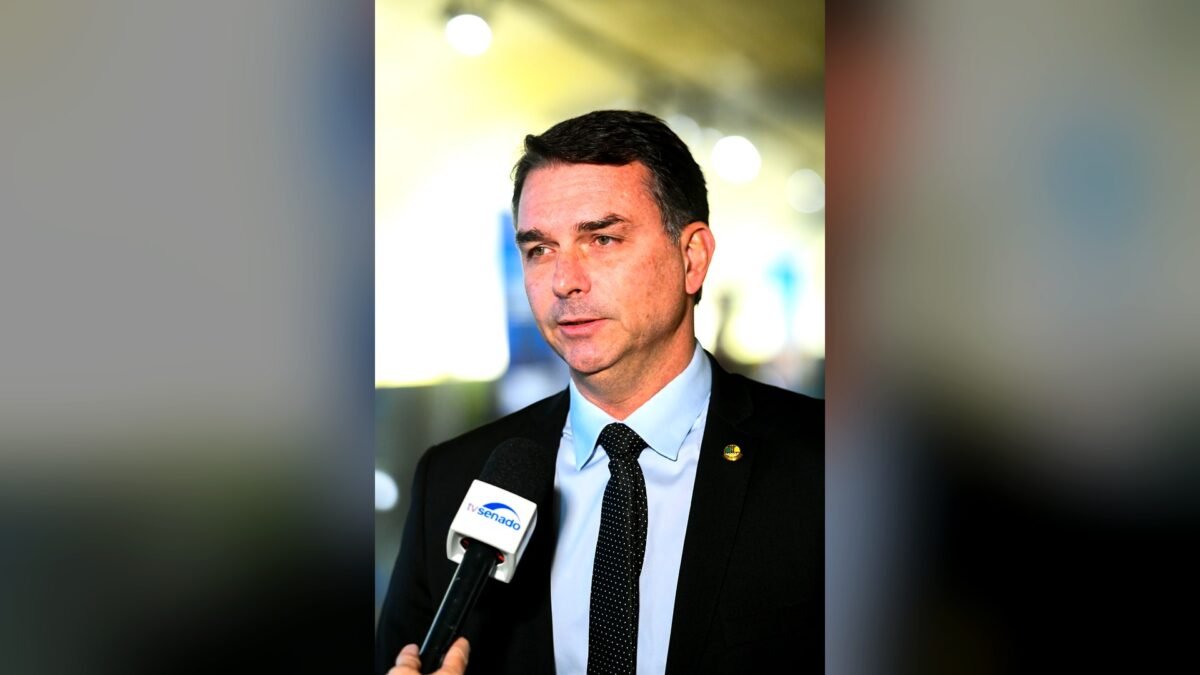
Flávio Bolsonaro arrived in Miami on Wednesday, 28 October 2026, three days after losing Brazil’s presidential runoff election, and used his first public statement from the United States to describe himself as Brazil’s “elected president” and to repeat allegations of electoral fraud for which no evidence has been presented. According to Reuters, television images showed the senator disembarking from a private jet at Miami’s Opa-locka Executive Airport with his wife and two daughters, ending more than a day of confusion about his whereabouts after he left Brazil in defiance of a Supreme Court order to surrender his passports.
The arrival closed a journey that took Mr Bolsonaro overland into Argentina and then by private aircraft through Ecuador to Florida, according to Reuters and the Associated Press (AP). It also opened a new phase in a dispute that had already moved well beyond an ordinary election defeat: a defeated candidate, now outside the country whose presidency he sought, is challenging the legitimacy of the result while his own party has recognised it, Brazil’s electoral court has confirmed it, and the government that will have to deal with him is the one he says stole the election. The United States, meanwhile, issued visas to Mr Bolsonaro and his family and allowed him to enter, a decision that President Donald Trump publicly endorsed even as Mr Trump said he would not become involved in Mr Bolsonaro’s claim to the presidency.
Mr Bolsonaro, 45, a senator for Rio de Janeiro and the eldest son of former President Jair Bolsonaro, lost Sunday’s runoff to the left-wing incumbent, Luiz Inácio Lula da Silva. According to final results from Brazil’s Superior Electoral Court (TSE) reported by multiple outlets, Mr Lula received 64,256,232 votes, or 51.79 per cent of valid ballots, against 59,826,041 votes, or 48.21 per cent, for Mr Bolsonaro, a margin of about 4.43 million votes. The result gave Mr Lula an unprecedented fourth non-consecutive presidential term and reversed the first round on 4 October, in which Mr Bolsonaro had finished ahead with 47.03 per cent against Mr Lula’s 45.16 per cent, according to Sky News. Reuters reported that Mr Bolsonaro had entered the runoff as the favourite after winning that first-round vote.
Mr Bolsonaro did not concede defeat. According to Reuters, he said he would seek the annulment of the election, arguing that a Supreme Court decision extending voting hours by two hours had affected the outcome. According to the BBC, the president of Brazil’s top electoral court, who was himself appointed by Jair Bolsonaro, said the extension had not affected the outcome. Sky News reported that fewer than 35,000 ballots, or 0.03 per cent of the total, were cast during the additional two hours. World leaders quickly recognised Mr Lula’s victory, according to Reuters, although Mr Trump and the Argentine President, Javier Milei, initially remained silent.
The dispute over the result was quickly overtaken by a second, legal dispute. On Monday, Mr Bolsonaro posted a video on social media saying federal police had asked him to turn in his passports following an order from Supreme Court Justice Alexandre de Moraes, according to Reuters. The order was connected with a money-laundering investigation in which Mr Bolsonaro denies wrongdoing, Reuters reported. The AP reported that he was under investigation by Brazil’s Supreme Court on allegations of corruption, money laundering and tax evasion, and that the court had ordered him to hand over his regular and diplomatic passports by noon on Tuesday. Mr Bolsonaro said in the video that he would comply with the order and rejected speculation that he planned to flee Brazil after the election, according to Reuters. “I have never thought about leaving the country,” he said, according to Reuters. “I will hand over my passports and defend myself against this travesty, which is a clear attempt to intimidate me.”
By Tuesday, that assurance was in doubt. According to the Reuters timeline of events, Argentine news site Infobae reported at 1 a.m. on Tuesday that Mr Bolsonaro had left Brazil for Argentina and planned to continue to the United States aboard a private jet waiting at Puerto Iguazú airport near the border. At 11.15 a.m., Argentine immigration authorities said they had no record of him entering the country, adding that inspectors had checked the aircraft and its crew and found no flight plan listing Mr Bolsonaro or his family, according to Reuters. At noon, Mr Bolsonaro missed the deadline to surrender his passports, and federal police sources told Reuters the documents had been cancelled, although his whereabouts were then unknown. The AP reported that it remained unclear whether he had complied with the order, and that allies said late on Tuesday that he also held an Italian passport. According to AFP reporting, Italian documents seen by the agency showed he had also held Italian nationality since 2023.
Later on Tuesday the picture changed. CNN Brasil reported, citing Mr Bolsonaro’s allies, that the senator had travelled to the United States, according to Reuters. An ally told Reuters he had already left Brazil and was heading to the United States, and a US official told Reuters he was on a plane bound for the country. At 6.05 p.m. Brasilia time, a senior US State Department official said Mr Bolsonaro and his family would be allowed to enter the United States and would receive visas, according to Reuters. Mr Lula described Mr Bolsonaro’s departure as “shameful”, Reuters reported.
Argentina’s migration authority subsequently confirmed the land crossing. According to Reuters, the authority said Mr Bolsonaro and his family had entered the province of Misiones late on 27 October using valid travel documents, had crossed the Tancredo Neves Bridge in Puerto Iguazú, and had later boarded a private Baires Fly flight bound for Guayaquil in Ecuador. The AP reported that the family crossed into Argentina at 10.50 p.m. on Tuesday via the Tancredo Neves International Bridge, a primary border checkpoint linking Brazil to Argentina’s north-eastern province of Misiones, and gave the names of his wife, Fernanda Antunes Figueira Bolsonaro, and daughters Carolina and Luiza. Reuters reported that the crossing point was about 19 hours by road from his home in Brasília. At 11.30 a.m. on Tuesday, before the crossing was confirmed, a spokesperson for Mr Milei had said Argentina had taken note of Mr Lula’s victory but did not plan to congratulate him, and had declined to comment on whether Argentina would consider an asylum request from Mr Bolsonaro, according to Reuters.
The flight itself was tracked in detail. According to Reuters and FlightAware data cited by Reuters, a Gulfstream G400 operated by Baires Fly, registration LV-JQW, departed Puerto Iguazú at 03:22 GMT on Wednesday and landed in Guayaquil at 08:46 GMT. The aircraft then departed for Miami’s Opa-locka Executive Airport, where it was scheduled to land at 13:18 GMT. According to the BBC, flight-tracking data verified by the BBC showed the jet had left Puerto Iguazú early on Wednesday, stopping briefly in Guayaquil before heading to Florida, and Mr Bolsonaro was pictured disembarking just before 9.30 a.m. local time, shielded from waiting photographers by umbrellas. Reuters reported that the family was given entry visas by the United States government. It was unclear how Mr Bolsonaro entered Ecuador, according to Reuters, and authorities there did not immediately respond to requests for comment.
Mr Bolsonaro’s first statement after landing rejected the characterisation of his departure that most reporting had used. “I did not flee Brazil; I left for the sake of Brazil,” he said, according to the BBC. In a statement distributed by the right-wing Brazilian influencer Paulo Figueiredo and posted on his X account, he thanked the presidents of Argentina and the United States and the American public, described himself as a victim of a coup d’état and political persecution, and said he had left to protect his family, according to the BBC and the AP. “It was never my intention to leave my homeland, but I know exactly where this is heading,” he said, according to the BBC. “I departed from a regime of exception so that I could become the leader my people deserve.”
The statement went further than a claim to opposition leadership. According to the AP, Mr Bolsonaro wrote: “I want to tell not only my 60 million voters but also the Brazilian people as a whole that I am the president-elect, and that the criminals who stole Brazil’s election are part of a criminal organization that has established a tyranny.” The Times reported a closely similar version: “I am the elected president and the criminals who stole Brazil’s election are part of a criminal organisation that has established a tyranny.” In a later version of the statement, he softened the wording, describing himself as the “leader” rather than the “president”, according to the AP and AFP reporting. The Times reported that he said: “On Sunday night I watched in horror as electoral fraud unfolded right before my eyes,” and added: “I will lead the opposition from here … I have not abandoned the Brazilian people.” He also said he would address the Brazilian people regularly and present a strategy to mobilise the opposition, using every peaceful and legitimate means available, to prevent Mr Lula from consolidating what he called a dictatorial regime, according to The Times. The BBC reported that he repeated unsubstantiated allegations of electoral fraud, claiming a “mathematical impossibility” had occurred. No evidence supporting the fraud allegation was presented in the statement, and the allegation has not been substantiated, according to the BBC.
Mr Lula responded directly to the departure. According to the BBC, the newly re-elected president criticised it, saying: “Those who have nothing to hide have nothing to fear.” Reuters reported that Mr Lula had accused Washington of colluding with the Bolsonaro family to help return them to power, and that, ahead of Sunday’s election, Reuters had reported on a US State Department campaign to restore the Bolsonaros to office. Mr Bolsonaro’s Liberal Party, by contrast, acknowledged the runoff result on Monday, according to Reuters, even as its candidate refused to concede and sought annulment.
Washington’s position was stated in stages, and the stages mattered. On Tuesday, the State Department said Mr Bolsonaro and his family would receive visas. Early on Wednesday, Mr Trump said he would have approved Mr Bolsonaro’s arrival in the United States and described Brazil’s election as “very strange”, according to the Reuters timeline. On Monday, Mr Trump had alleged, without presenting evidence, that the Brazilian election “looked like another rigged election”, according to Reuters. On Wednesday, after the arrival, Mr Trump told reporters: “We gave him a pass to come into the country,” according to the BBC. Asked about Mr Bolsonaro’s claim to be president, Mr Trump declined to discuss it. “I won’t get involved. It was a very strange election, that’s for sure,” he said, according to the BBC, adding that he thought Mr Bolsonaro and his family had been treated “very unfairly”.
The episode carries an obvious family precedent. According to Reuters, Jair Bolsonaro also travelled to the United States after refusing to concede defeat to Mr Lula in 2022, during Joe Biden’s presidency. He eventually returned but was later given a 27-year sentence for plotting a coup after his supporters stormed government buildings in Brasília, Reuters reported. Mr Trump has previously alleged that Jair Bolsonaro was a victim of judicial persecution in Brazil, according to Reuters. Flávio Bolsonaro visited the White House in May and is a close ally of Mr Trump, according to the AP. Reuters also reported that Flávio Bolsonaro loses his immunity from prosecution when his Senate term ends in February, a fact that gives the legal calendar around him a significance that goes beyond the election result itself.
What remains unknown is as important as what is now established. The BBC reported that Mr Bolsonaro’s ultimate destination and the length of his stay in the United States were not yet clear. No annulment filing, no formal asylum request, and no confirmed long-term immigration status had been established in the reporting reviewed for this article. The precise means by which he entered Ecuador, the full circumstances of the Argentine crossing, and whether any Brazilian passport was surrendered at any point remain, on the available reporting, either unconfirmed or subject to conflicting accounts that this article has left attributed rather than resolved. What is established, on the reporting of Reuters, the AP, the BBC and The Times, is the sequence itself: defeat on Sunday, a passport order on Monday, a missed deadline and a land crossing on Tuesday, visas from Washington, and an arrival in Miami on Wednesday followed by a claim to a presidency he did not win.
Analysis: Why It Matters
1. The concession that did not happen is the story, not a footnote to it
In most democracies, a concession speech does no legal work at all. It does political work that no court can do for a candidate: it tells supporters that the contest is over, that the institutions which counted the votes are the institutions that will now govern, and that disappointment must find its expression in the next election rather than in a parallel claim to power. Mr Bolsonaro withheld that act, and the consequences followed in a clear order. His party recognised the result, the electoral court confirmed it, and world leaders recognised Mr Lula, yet the candidate himself carried the dispute into a second arena — first a demand for annulment, then a departure, then a declaration from abroad. That sequence is worth separating from the ordinary rhetoric of a losing campaign. A candidate may criticise a court, dispute a rule change, and promise to fight on in parliament or at the next election without challenging the transfer of power itself. Mr Bolsonaro’s statement did something different: it presented the winner as the product of a crime and himself as the rightful holder of the office. The later softening of “president” to “leader” does not undo the first claim, because the first claim is the one that travels. In a polarised electorate, the distinction between leading an opposition and claiming a stolen presidency is not a matter of wording. It is the difference between accepting that one lost a contest and inviting supporters to believe that no contest fairly took place. Brazil’s institutions have so far held their line — court, party and electoral authority each in their own register — but the test of that line is not whether it survives a week of headlines. It is whether the claim finds an organisation, a funding base and a parliamentary vehicle willing to treat it as a programme rather than a grievance.
2. The passport order turned a political defeat into a legal clock
It would be a mistake to read the passport order as a mere detail of the journey, or the journey as a mere reaction to defeat. The order changed the incentives around Mr Bolsonaro in a way that a lost election alone would not have done. A defeated senator returns to parliament, keeps his immunity, and retains a platform from which to rebuild. A senator facing a criminal investigation, ordered to surrender his travel documents, and approaching the end of the term that confers immunity, faces a narrowing set of choices in which time itself becomes a pressure. Reuters reported that he loses that immunity when his Senate term ends in February. Nothing in the reporting establishes his motive for leaving, and this article does not presume it: he has denied wrongdoing, has described the proceedings as intimidation, and has said he left to protect his family and to lead. But the structure of the situation is visible without any claim about motive. The deadline on Tuesday, the reported cancellation of the passports, the reports of an Italian passport, and the land crossing on Tuesday night together describe a man moving while a legal window was closing. That is why the legal questions that follow will matter more than the travelogue. Whether annulment is pursued in court, whether the investigation proceeds with or without him, and whether immunity, extradition or any other legal process is engaged will determine whether Miami is a pause, a platform or a predicament. The flight data and the bridge crossing will fade from the news; the calendar of the investigation will not.
3. A visa is not a verdict, and Washington’s language showed the limit
The most consequential misunderstanding available in this story is the idea that admission to the United States amounts to American endorsement of Mr Bolsonaro’s claim about the election. The record does not support that reading, and the care with which Mr Trump’s words were drawn suggests the administration understood the distinction. The State Department offered visas and entry. Mr Trump said he would have approved the arrival, called the election “very strange”, repeated an allegation of rigging without evidence, and said the family had been treated unfairly. When asked directly about the claim to the presidency, however, he said: “I won’t get involved.” That sentence is the boundary of the American position as stated. It is generous to Mr Bolsonaro as a person seeking entry, sceptical about the Brazilian process in general terms, and silent on the specific proposition that Mr Bolsonaro is the elected president. That silence matters, because it leaves Mr Bolsonaro with shelter and a microphone but without the one thing his statement most needs: a foreign government willing to treat his claim as a diplomatic fact. At the same time, the visa decision cannot be treated as a neutral administrative act with no political meaning. Reuters reported that Mr Lula had accused Washington of colluding with the Bolsonaro family, and that Reuters had earlier reported on a State Department campaign to restore the Bolsonaros to office. Against that background, issuing visas to a defeated candidate who has just defied a court order will be read in Brasília as a political signal whatever Washington’s lawyers say about it. The United States has therefore bought itself a contradiction it will have to manage: hospitality that looks like partisanship, and partisanship that stops short of recognition.
4. Leading an opposition from exile is a weaker platform than it sounds
Mr Bolsonaro’s promise to lead the opposition from Florida should be judged against the practical conditions of opposition leadership, not against the applause a declaration can generate online. An opposition leader needs a parliamentary group that takes his direction, a party machine that raises money and selects candidates, a presence in the media of his own country, and a credible path back to power at the next election. Distance weakens every one of those things. It does not destroy them — modern communications, diaspora supporters and sympathetic foreign platforms can sustain a political brand from abroad — but it changes the nature of the leadership on offer. The leader abroad cannot attend the sessions, negotiate the amendments, or be seen in the constituencies where the next contest will be fought. He becomes dependent on intermediaries whose own ambitions will grow in his absence. The family precedent cuts both ways. Jair Bolsonaro went to Florida after 2022 and returned, which shows that such a departure need not be permanent; it also shows that return brought him back into the reach of the very institutions he had sought to escape, culminating, according to Reuters, in a 27-year sentence for plotting a coup. Flávio Bolsonaro’s position is different in one important respect: he is not a former president with a completed term behind him, but a sitting senator whose political future depends on remaining a plausible candidate. Every month spent abroad is a month in which another figure on the Brazilian right can present himself as the present, available alternative. The claim to be “leader” may therefore prove easier to announce than to hold.
5. The Brazil–United States relationship is now the dispute, not just its setting
Finally, this is no longer only a Brazilian story that happens to involve the United States. It is a story about the relationship between the two largest countries in the Americas, and it arrives at a moment when that relationship is already strained. The election itself was fought, in part, over Brazil’s relationship with Washington, and the reporting before the vote suggested active American interest in the Bolsonaro family’s return to power. The arrival in Miami, the visas, Mr Trump’s comments and Mr Lula’s accusation of collusion together convert a bilateral relationship into a domestic political argument in both countries. In Brazil, the government can present American hospitality as interference; the opposition can present American scepticism as vindication. In the United States, the episode will be absorbed into an existing argument about whether support for allied political movements abroad is legitimate statecraft or improper intervention. Argentina is the third point of the triangle, and its position is the least comfortable of all: a president who stayed silent on the result, a migration authority that confirmed the crossing, and a government that declined to say whether it would consider asylum. That combination — facilitation in fact, reticence in words — will invite questions in Buenos Aires as well as in Brasília. The durable consequence of this week may therefore be diplomatic rather than electoral. Even if Mr Bolsonaro’s claim fades, the precedent that a defeated candidate in a major American democracy can lose, defy a court order, cross two borders and be received in the United States with presidential sympathy will shape how future candidates, courts and governments calculate their moves. Precedents of that kind are rarely set deliberately, and they are rarely undone by statements.
What to Watch Next
- Whether an annulment case is actually filed, and how the courts answer it: a demand for annulment in a speech is not a legal filing. Watch for any petition to the electoral court, the evidence offered for the fraud allegation, and whether any court treats the two-hour voting extension as a ground for relief, given the reported scale of voting during the extra hours and the electoral court president’s reported view that it did not affect the outcome.
- The next steps in the criminal investigation and the passport question: whether prosecutors or the Supreme Court seek further orders, how the reported cancellation of the passports is treated, what role the reported Italian nationality plays, and what happens as the end of Mr Bolsonaro’s Senate term and the loss of immunity reported by Reuters approaches in February.
- How long Mr Bolsonaro stays, and on what terms: whether the visas are short-term entry documents or the start of a longer stay, whether he seeks any formal protection or asylum, and whether Mr Trump’s “I won’t get involved” position holds as Mr Bolsonaro addresses supporters regularly from the United States, as he has promised to do.
- Who leads the Brazilian right in his absence: whether the Liberal Party and its parliamentary group treat Mr Bolsonaro as their leader from abroad, whether a rival emerges in Brasília, and whether his claim to represent 60 million voters translates into an organisation or remains a statement.
- The Brazil–United States and Brazil–Argentina tracks: any formal Brazilian request concerning Mr Bolsonaro, any American clarification of his status, any Argentine explanation of the border crossing, and whether the episode affects trade, diplomacy or cooperation between governments that must continue working together regardless of this dispute.
Sources
- Reuters, A timeline of Brazilian Senator Flavio Bolsonaro’s wild journey to the United States
- Reuters, Flavio Bolsonaro expected to land in Miami shortly after Trump offers Brazil exit
- Associated Press (via TMJ4), Defeated Brazilian presidential candidate Flávio Bolsonaro and his family land in Miami
- The Times, Flavio Bolsonaro says he is ‘true elected president of Brazil’ after defeat
- The Financial District, Lula Defeats Flávio Bolsonaro by 4.4 Million Votes in Brazil’s Presidential Runoff (TSE results)

About the Author — Abdul Mannan
Related Articles

Hungary Keeps Orban-Era US Nuclear Deal as Magyar Government Seeks a New Footing with Washington
Hungary's Magyar government has asked parliament to make legally binding a US civilian nuclear cooperation agreement signed under…
Netanyahu Leads Partial Israel Count but Neither Bloc Reaches a Majority as Deadlock Deepens
Partial results put Netanyahu's bloc on 54 seats and Eisenkot's on 47, with Arab-led parties on 19 —…

At Least 30 Killed as High-Speed Trains Collide Near Toledo in Spain’s Second Rail Disaster This Year
At least 30 people were killed and about 80 injured when a Renfe high-speed train struck a stopped…