
Hungary Keeps Orban-Era US Nuclear Deal as Magyar Government Seeks a New Footing with Washington

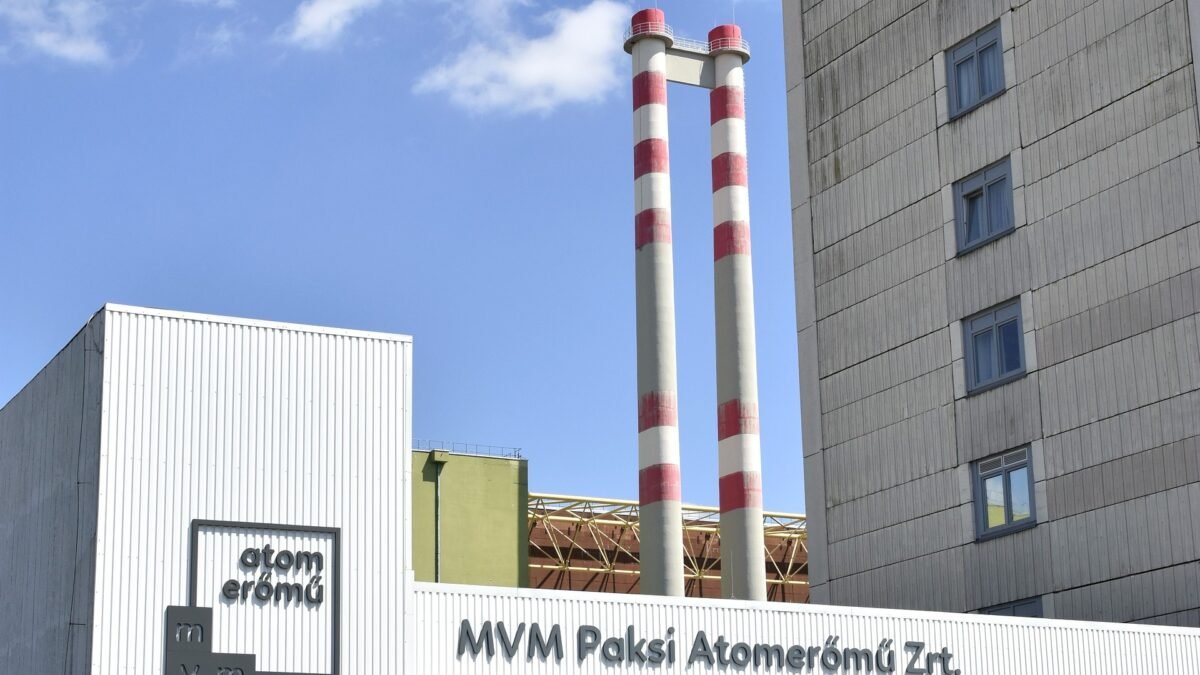
Hungary’s new government has asked parliament to give legal force to a civilian nuclear cooperation agreement with the United States that was signed under its predecessor, keeping alive a deal struck in the final months of Viktor Orbán’s long rule even though Washington had openly backed Mr Orbán in the election that removed him from office. According to Reuters, the government of Prime Minister Péter Magyar submitted the bill to parliament late on Tuesday, as Foreign Minister Anita Orbán — who is not related to the former prime minister — travelled to Washington to meet the United States Secretary of State, Marco Rubio.
The move, reported by Reuters on Thursday 29 October, is the clearest signal yet that Mr Magyar’s government intends to treat energy cooperation as the practical ground on which a new relationship with the Trump administration can be built. It does not settle the much larger question hanging over Hungarian energy policy: what happens to the Russian-built expansion of the country’s only nuclear power station at Paks. But it does show that a change of government in Budapest has not, so far, meant a rupture in the nuclear track that the previous government opened with Washington.
The agreement at the centre of the bill was signed on 16 February, during Mr Rubio’s visit to Budapest, by Mr Rubio and Hungary’s then foreign minister, Péter Szijjártó. According to Reuters, making it legally binding would put the civilian nuclear cooperation framework on a formal parliamentary footing. The bill was submitted as Ms Orbán arrived in Washington on Thursday to meet Mr Rubio and to sign memorandums of understanding on energy and law enforcement cooperation, according to Reuters.
Parliament is likely to approve the bill, according to Reuters, because Mr Magyar’s government holds a two-thirds majority. That expectation matters, because it means the decision is less about whether the agreement survives than about what Budapest hopes it will buy: continued access to American nuclear technology and financing, a credible alternative to Russian supply, and a working relationship with an administration that, only months ago, was campaigning for the other side.
Mr Rubio visited Hungary two months before the April election and offered what Reuters described as a robust endorsement of Mr Orbán, the nationalist leader who had held power for 16 years. Mr Orbán lost that election to Mr Magyar. The fact that the new government is now asking parliament to entrench an agreement signed in Mr Orbán’s final weeks in office is, on its face, a paradox. Looked at more closely, it is a familiar pattern in energy politics: governments change, but power stations, fuel contracts and construction sites do not, and the cost of discarding a framework can be higher than the cost of keeping it.
The bill before parliament
According to Reuters, the bill would make legally binding the agreement on civilian nuclear cooperation signed during Mr Rubio’s 16 February visit. The deal covers civilian nuclear energy, including small modular reactors, known as SMRs, and it encourages Hungary to select United States nuclear technology and companies as its main suppliers for new projects, according to Reuters.
Bloomberg’s reporting, summarised by Sightline U308, adds important detail about the limits of that encouragement. The text filed to parliament late on Tuesday says Hungary will “encourage” the selection of a United States nuclear design or company for any new nuclear investments, including SMRs, according to Bloomberg. The agreement stops short of committing Hungary to a specific American contract. It is, in Bloomberg’s characterisation, a roadmap rather than a purchase order: a framework that may provide an alternative to Hungary’s nuclear cooperation with Russia, and a basis for accommodation between Mr Magyar and President Donald Trump, who had endorsed Mr Orbán in April’s election.
The framework also addresses how a future deal might be paid for. According to Bloomberg, the United States would help facilitate the lining up of financing for a potential nuclear deal, including through its Export-Import Bank or other United States official lenders or financing institutions. The parties would conduct a market analysis for SMR technologies within a year of the agreement’s entry into force, according to Bloomberg.
That sequencing — framework first, market analysis second, contract later, if at all — is worth noting, because it guards against overstating what happened this week. No reactor has been ordered. No American supplier has been chosen. What has happened is that a government which might have been expected to distance itself from its predecessor’s American energy deals has instead chosen to put one of them into law.
The timing was deliberate. According to Reuters and Bloomberg, the bill was filed ahead of Ms Orbán’s meeting with Mr Rubio in Washington this week. According to Reuters, Ms Orbán was due to sign memorandums of understanding on energy and law enforcement cooperation during the visit. The parliamentary step therefore arrived in Washington not as a promise, but as evidence: a government willing to legislate, not merely to talk.
What the agreement does — and what it does not do
The February agreement was presented at the time as a broad, long-term commitment. The United States State Department said the deal would deliver decades of cooperation in nuclear energy and underscored the American commitment to making Hungary a hub for regional SMR development, according to Nuclear Engineering International’s report of the signing. Under the agreement, Hungary would purchase nuclear fuel from United States suppliers for the first time, and the American firm Holtec International would help Hungary manage its used nuclear fuel, according to the same report.
At the signing ceremony in Budapest, Mr Szijjártó said expanding Hungary’s nuclear capacity was a vital national interest, and the only way to ensure secure, environmentally sustainable, affordable and stable electricity supply amid growing demand, according to Nuclear Engineering International. He added that Hungary had “now entered into an alliance with the Americans in the field of nuclear energy”, and that the agreement would allow Hungary to benefit from new technologies being developed in the United States as quickly as possible.
The State Department’s own summary, reported by the American Nuclear Society, described both the Hungary agreement and a parallel agreement with Slovakia as concrete steps toward building nuclear power plants in Central Europe using American nuclear energy technologies and advancing mutual security interests in the region. The Hungary agreement, signed by Mr Rubio and Mr Szijjártó, underscored the United States commitment to making Hungary a hub for regional SMR development, according to the American Nuclear Society’s account of the State Department statement. During his meetings, Mr Rubio encouraged the Hungarian government to select United States SMR technology, and affirmed that the Florida-based firm Holtec International was ready to supply its dry-cask spent-fuel storage system in Hungary, according to the same account.
None of that, however, amounts to a construction contract. Small modular reactors are smaller than traditional reactors and are promoted as faster and cheaper to build, because many components would be manufactured in factories and assembled on site. According to Bloomberg, dozens of companies are developing the next wave of nuclear technology, many of them focused on SMRs, but the technologies remain unproven and the industry still needs to prove their commercial viability. A framework that encourages American suppliers, and a market analysis to be completed within a year, is therefore the beginning of a process, not its conclusion.
There were already American threads in Hungary’s nuclear planning before February. According to Reuters, Hungary took a step towards importing SMR technology last year by partnering with Poland’s Synthos Green Energy, which holds the rights to GE Vernova Hitachi technology in Central Europe. In November 2025, Hungary signed an agreement to buy American nuclear fuel and United States technology to store spent fuel at a Russian-built nuclear power plant, according to Reuters. According to Bloomberg, Westinghouse Electric Company has also signed a memorandum of understanding to supply nuclear fuel to Hungary’s Paks plant and to use its technology to extend the plant’s lifetime.
The previous Orbán administration had, according to Bloomberg, dangled larger energy deals for the United States in the months before the election, including the potential purchase of 10 American SMRs with an estimated value of 20 billion dollars. That figure was a possibility floated before an election, not a signed commitment, and it should be read as such. It does, however, show the scale of the ambition that the February framework was designed to channel, and the scale of the commercial prize that American suppliers see in Central Europe.
From endorsement to accommodation
The political context cannot be separated from the energy detail. Mr Rubio’s February visit was not a routine diplomatic stop. According to the Associated Press, reporting at the time, Mr Rubio enthusiastically endorsed Mr Orbán’s bid for a fifth straight term, emphasising the strong personal relationship between Mr Orbán and President Trump. Mr Orbán, who had led Hungary since 2010, was one of Mr Trump’s most vocal supporters in the European Union, according to the Associated Press report.
At the joint press conference in Budapest on 16 February, Mr Rubio was, by his own description, blunt. “The prime minister and the president have a very, very close personal relationship and working relationship, and I think it has been beneficial to our two countries,” Mr Rubio said, according to the State Department transcript of the remarks. Addressing Mr Orbán directly, he added: “President Trump is deeply committed to your success because your success is our success.” The nuclear agreement was signed at the same event.
Mr Orbán lost the April election after 16 years in power, according to Reuters. Mr Magyar’s government took office in May. The question since then has been whether the personal diplomacy of the Trump–Orbán relationship would survive the removal of one of its principals, and whether Washington would treat the new government as a partner or as an interruption.
The nuclear bill is Budapest’s answer to the first part of that question. By keeping the February agreement and giving it parliamentary force, Mr Magyar’s government is offering continuity where Washington might have expected disruption. It is also, in effect, testing whether American support was for Mr Orbán personally, or for a Hungarian energy orientation that any Budapest government might pursue.
Bloomberg’s reporting captures the calculation. “Energy cooperation is probably the most tangible way for the new Hungarian government to ground its relationship with the Trump administration,” Zsuzsanna Vegh, a researcher at the German Marshall Fund of the United States in Berlin, told Bloomberg. The remark, quoted by Sightline U308, frames the nuclear framework not as an end in itself, but as the most concrete available instrument for a new government that needs a working relationship with Washington while it reviews almost everything else.
That review is wide. According to Bloomberg, Hungary is conducting an energy-policy review that includes the possibility of extending the lifetime of the four reactor blocs at the country’s sole nuclear plant, and clarifying the future of its Russian-led expansion, which has suffered years of delay. The review, the Paks expansion decision and the American framework are therefore running in parallel, and each will shape the others.
There is also a second, more immediate negotiation running alongside the nuclear track. According to Bloomberg, the filing of the nuclear framework coincides with Hungarian lobbying to extend an exemption from United States sanctions for the continued purchase of Russian crude oil. Hungary remains dependent on Russian oil, and the exemption question is separate from the nuclear agreement, but the two are linked politically: Budapest is asking Washington for flexibility on Russian oil while offering Washington a larger role in Hungarian nuclear energy. How Washington weighs those two requests together will be one of the clearest tests of the new relationship.
Paks and the Rosatom question
At the centre of Hungarian energy policy stands Paks. The Paks Nuclear Power Plant, on the Danube about 100 kilometres south-west of Budapest, is Hungary’s first and only operating nuclear power station. Its four reactors, each of 500 megawatts, produced more than 45 per cent of Hungary’s electricity production in 2025, according to International Atomic Energy Agency data reported by EU Today, with all four operating reactors located at Paks. Any decision about Paks is therefore a decision about Hungarian electricity itself, not a marginal energy choice.
The expansion, known as Paks II, was awarded directly to Russia’s state nuclear company, Rosatom, by Mr Orbán’s government in 2014, without a public tender, according to reporting by Reuters and the Brussels Signal. The project was to build two 1,200-megawatt reactors using Russian VVER-1200 technology, at an estimated cost of 12.5 billion euros, underpinned by a Russian state loan facility of up to 10 billion euros, according to the Brussels Signal’s account of the arrangement. The original bilateral deal has undergone five formal amendments, while a drafted sixth modification was never signed, according to the same account.
Construction has been held up by regulatory disputes, design delays and scrutiny from Brussels, according to the Brussels Signal. On 11 September 2025, the European Court of Justice annulled the European Commission’s earlier approval of state aid for the expansion, in a case brought by Austria, ruling that Brussels should have examined whether the direct award to a Russian company complied with European Union public procurement rules, according to the Brussels Signal. The legal position is therefore more complicated than a simple choice between suppliers: the procurement history itself is now under a cloud.
On 21 October, Reuters reported exclusively that Mr Magyar’s government had begun reviewing the Paks II project and sounding out alternative suppliers, and was considering replacing Rosatom as the main contractor. According to Reuters, cited in subsequent reporting, two people familiar with the process said a decision could come by the end of 2026 or early in 2027. One source close to the administration said the government was leaning towards a conclusion that the Paks expansion was necessary, but that Rosatom should not be involved, according to the Newsbase account of the Reuters reporting. Those are the assessments of unnamed sources, not a government announcement, and they should be read as indications of direction, not as a decision.
The financial stakes of a change are large. According to reporting of the Reuters investigation, Hungary’s cumulative investment in the project had exceeded 2 billion euros by February 2026, when the first concrete pour for Unit 5 took place, and approximately 1.1 billion euros had already been paid to Rosatom. Walking away could therefore mean sunk costs and possible penalty costs, according to the same reporting. Rosatom has said construction and equipment production were continuing, and that it had received no formal notification of plans to terminate its contract, according to reporting of the company’s position. Rosatom’s director general, Alexey Likhachev, said the company hoped the Hungarian government would allow the Russian side to continue as main contractor, while respecting Budapest’s right to choose its contractor independently, according to reporting of his remarks on 23 October.
The review, according to the Brussels Signal, is assessing the legal, technical and financial feasibility of stripping Rosatom of its role, and a final decision is expected before the end of 2026 or in early 2027. The appraisal was initiated under Mr Magyar after his Tisza party took 141 of parliament’s 199 seats in April and he was sworn in on 9 May, according to the Brussels Signal. Government insiders indicated the administration was leaning towards removing Rosatom to align the project with European regulatory and foreign policy preferences, according to the same report. Again, those are attributed insider assessments, not a published government decision.
What is not in doubt is that Paks II is Rosatom’s most prominent project in the European Union since Finland cancelled its contract with the Russian company in May 2022, according to Newsbase’s account of the Reuters reporting. Dropping Rosatom would therefore be a blow to an export business that has otherwise continued to grow, and a conspicuous break in the pattern of Russian nuclear exports inside the Union. Rosatom has so far escaped European Union sanctions, according to Newsbase, and Russia supplied about 23 per cent of the Union’s enrichment deliveries and 16 per cent of its natural uranium in 2025, according to the World Nuclear Association figures cited there. The Hungarian decision, when it comes, will therefore be read well beyond Budapest.
The American framework does not answer the Paks II question directly. It encourages American suppliers for new projects, and it opens a path to American financing and SMR technology. It does not name a replacement contractor for two large VVER-1200 units already under construction, and no alternative supplier has been publicly named in the reporting on the review. A European supplier would simplify the foreign-policy and sanctions picture, one source told Reuters, according to Newsbase, but that is a consideration, not a selection. The gap between a framework for future SMRs and a half-built large-reactor project is precisely where the hardest decisions will have to be made.
Analysis: Why It Matters
The Hungary story matters beyond its immediate facts because it compresses several larger European questions into a single parliamentary bill: how a new government deals with its predecessor’s deals, how energy dependence constrains foreign policy, and whether the United States can convert personal diplomacy into institutional cooperation after the person at the centre of it has gone. The analysis that follows is original commentary grounded in the verified facts reported above. It is not a summary of any single outlet’s editorial position.
1. Continuity can be the boldest choice a new government makes
New governments are often expected to repudiate their predecessors, especially when the predecessor was defeated after a long and polarising tenure. Mr Magyar’s government has chosen, in this instance, to do the opposite on nuclear cooperation: to take an agreement signed by the government it replaced, in the company of a foreign secretary who had just endorsed that government’s re-election, and to ask parliament to make it law. That is not inertia. It is a decision, and it carries a political cost at home for a government whose mandate rests in part on change.
The reason is practical. Energy frameworks are not manifestos. They are the product of years of technical discussion, and discarding one means restarting discussions that Hungary may not have time to restart. The plant at Paks already supplies nearly half the country’s electricity. The expansion is already under construction, with concrete poured and equipment being manufactured. A new government that tore up every inherited energy arrangement would inherit not a clean slate, but a gap. Keeping the American framework preserves an option — American technology, American financing, American fuel — that Budapest may need whether or not it ultimately uses it. In that sense, continuity is not deference to Mr Orbán. It is the preservation of leverage for whoever governs next.
2. “Encourage” is a word that does a lot of quiet work
The most important word in the Bloomberg account of the bill may be the most modest: “encourage”. Hungary will encourage the selection of a United States design or company for new nuclear investments. It will not commit to one. That single verb protects Budapest from two opposite accusations: that it has sold its energy future to Washington, and that it has closed the door to Washington altogether.
For the United States, “encourage” is enough to keep American suppliers in the conversation, and to justify the financing facilitation and market analysis that the framework promises. For Hungary, it is enough to keep other suppliers — European and otherwise — in the conversation too. The Paks II review is sounding out alternative suppliers without naming one, and a binding commitment to an American contractor for the large-reactor expansion would have prejudged that review. The framework’s language therefore matches the state of Hungarian policy: open, exploratory, and deliberately uncommitted on the largest question. Readers should be wary of any account that presents this week’s bill as a reactor order. It is not. It is the creation of a lane in which an order might one day be placed.
3. Personal diplomacy does not automatically survive an election
Mr Rubio’s February remarks — “your success is our success” — were addressed to a particular prime minister, in a particular election campaign, in the context of a personal relationship between two presidents. Elections test whether such language was about a person or about a country. Mr Orbán’s defeat put that test in its sharpest form: would Washington’s enthusiasm for Hungary survive Hungary’s choice of a different leader?
The bill is Budapest’s attempt to answer that test on institutional terms. Instead of asking Washington to transfer its personal goodwill to a new prime minister, Hungary is offering Washington a parliamentary act, a financing framework and a meeting between foreign ministers. That is a different kind of assurance: not loyalty, but law. Whether the Trump administration accepts the substitution — whether it treats a Magyar government that keeps an Orbán-era deal as a partner, rather than as a government to be kept at arm’s length — will be revealed less by rhetoric than by the two pending decisions that sit alongside the bill: the Russian oil exemption, and the Paks II contractor review. If Washington extends flexibility on oil while Budapest moves towards American nuclear technology, the accommodation will look real. If one side withholds, the other will notice.
4. Paks II is where energy policy becomes foreign policy
It is possible to discuss SMRs in the abstract, as a technology choice. It is not possible to discuss Paks II in the abstract, because Paks II is a Russian-built, Russian-financed project in a European Union member state, under construction during a war in which Russia is the aggressor and the Union is Ukraine’s principal backer. Every technical decision about Paks II — contractor, financing, procurement compliance, equipment supply — is also a foreign-policy decision, and the European Court of Justice ruling on state aid has made the legal dimension explicit.
The review’s reported leaning — keep the expansion, drop Rosatom — would, if confirmed, be the most consequential Hungarian foreign-policy decision since the election. It would align Budapest more closely with European regulatory and foreign-policy preferences, as the Brussels Signal’s insiders put it, but it would also impose costs: money already paid, possible penalties, technical continuity risks, and a construction timetable that has already slipped by years. The alternative — keeping Rosatom — would preserve continuity on the building site but deepen the contradiction between Hungary’s European commitments and its energy dependence on Russia. Neither option is cost-free, and the American framework, for all its promise, does not remove the cost. It offers a different future, not a painless exit from the present one.
5. Europe’s energy winter is the backdrop, not the headline
Hungary’s decision is being made in a European energy market under strain. According to Reuters, reported by BusinessWorld, European Union energy ministers were due to meet on Thursday to discuss energy security ahead of the winter heating season, as the wars in Iran, Ukraine and Yemen sent oil and natural gas prices soaring. Fighting had damaged refineries and hampered flows through the Black Sea, the Red Sea and the Strait of Hormuz, according to the same report. The European Union was entering winter with gas stocks at only 75 per cent of available storage, against 83 per cent a year earlier, and wholesale gas prices had briefly touched 100 euros per megawatt-hour on Wednesday, for the first time since December 2022, according to Reuters.
That context does not determine Hungary’s choice, but it raises its stakes. A country that generates nearly half its electricity from a single nuclear site, and that is reviewing the expansion of that site, cannot afford a prolonged period of energy uncertainty. The American framework, the oil exemption request and the Paks review are all, in different ways, attempts to buy certainty: certainty of supply, certainty of financing, certainty of political backing. In a winter in which affordability is, in the words of the European Union’s energy commissioner Dan Jorgensen as reported by Reuters, as urgent as security of supply, certainty has a value of its own. Hungary’s bill should therefore be read not only as a diplomatic signal, but as a piece of winter preparation — a government trying to widen its options before it needs them.
What to Watch Next
- The parliamentary vote. Watch whether the bill passes as expected, given the government’s two-thirds majority, and whether any amendments narrow or widen the “encourage” language on American suppliers. The vote’s margin and any dissent will show how much domestic consensus exists behind the American track.
- The Rubio–Orbán meeting outcome. Watch for the energy and law-enforcement memorandums due to be signed in Washington, and for any public statement on the Russian oil exemption. A joint statement that mentions both nuclear cooperation and oil flexibility would confirm that the two tracks are being negotiated together.
- The Paks II decision. Watch for the government’s decision on the expansion, expected by the end of 2026 or early in 2027, including whether Rosatom is retained, replaced or kept in a reduced role, and whether any alternative supplier is named. The handling of money already paid to Rosatom will be a key detail.
- The SMR market analysis. Watch for the market analysis for SMR technologies due within a year of the agreement’s entry into force, and for any financing proposal involving the United States Export-Import Bank. The analysis will reveal whether American SMR technology is being assessed as a real near-term option or as a longer-term prospect.
- Brussels and the courts. Watch for the European Commission’s response to the Court of Justice ruling on Paks II state aid, and for any new procurement or state-aid procedure. The legal path for the expansion may constrain the political choices available to Budapest, whatever the review concludes.
Sources
- Reuters — Hungary to stick with Orban-era nuclear cooperation deal with US
- Sightline U308 (reporting Bloomberg) — Hungary Files US Nuclear Agreement to Anchor Post-Orban Ties
- Nuclear Engineering International — Hungary, US sign civil nuclear pact
- Brussels Signal — Hungary open to replacing Russia’s Rosatom in nuclear plans
- American Nuclear Society / Nuclear Newswire — State Department adds Hungary to Central European nations making US nuclear agreements

About the Author — Abdul Mannan
Related Articles

Flávio Bolsonaro Lands in Miami and Calls Himself Brazil’s ‘Elected President’ After Defying Passport Order
Flávio Bolsonaro arrived in Miami on Wednesday after losing Brazil's presidential runoff to Luiz Inácio Lula da Silva,…

Netanyahu Leads Partial Israel Count but Neither Bloc Reaches a Majority as Deadlock Deepens
Partial results put Netanyahu's bloc on 54 seats and Eisenkot's on 47, with Arab-led parties on 19 —…

At Least 30 Killed as High-Speed Trains Collide Near Toledo in Spain’s Second Rail Disaster This Year
At least 30 people were killed and about 80 injured when a Renfe high-speed train struck a stopped…