
The Empty Lecture Hall: Kenya’s KSh20 Billion University Deal and the Promise Education Still Owes

Have you ever stood outside a lecture hall and listened to nothing? Not the quiet of a holiday, when a building rests because it has earned its rest, but the other silence — the silence of a room that should be full and is not, because the people who give it meaning have walked out and the people who need it have been left standing at the gate. For four weeks, that silence has hung over thirty-five public universities in Kenya. The lecture halls were there. The students were there, or trying to be. The teachers were not. And this week, at last, a number was spoken aloud that may — may — break the silence. Twenty billion shillings. A verbal agreement. A signature promised for today, Friday, 30 October, and lectures promised for Monday, 2 November. You should hold those two promises in your hands for a moment before you celebrate either of them, because Kenya has heard promises like these before, and Kenya’s teachers have learned, at considerable cost, to count only what is actually paid.
I write this as a man who believes that a classroom is the one place where a nation tells the truth about itself. A parliament can lie for a decade and call it politics. A budget can lie for a year and call it arithmetic. But a classroom cannot lie for long, because the children grow up and walk out into the world the classroom prepared them for — or failed to prepare them for — and then the whole country has to live with the result. That is why I have always read a teachers’ strike not as a labour dispute but as a moral examination. When the teachers stop teaching, the nation is being asked a question it would rather not answer: what, exactly, do you think knowledge is worth, and who do you expect to pay for it?
The facts, as they stand this morning, are these. The strike began on 2 October, when the Universities Academic Staff Union, the Kenya Universities Staff Union and the Kenya Union of Domestic, Hotels, Educational Institutions, Hospitals and Allied Workers walked out together after talks with the universities’ negotiating body, the Inter-Public Universities Councils Consultative Forum, collapsed at Machakos. Their demand was not exotic. They wanted the 2025–2029 Collective Bargaining Agreement negotiated, signed and implemented — the agreement that governs the pay and allowances of the people who teach Kenya’s undergraduates, supervise its research and mark its examinations. On Wednesday, 28 October, after weeks of stalled talks, the Universities Academic Staff Union’s secretary-general, Constantine Wasonga, announced that the two sides had agreed on the money. “We have a deal on the financials,” he said. “Today we have agreed on a figure we have negotiated with the government. Not a figure imposed on the union.” Technical teams were to put the agreement into writing, the unions were to work through how much each member of staff would receive, and the formal signing was set for today, with the union due to call off the strike at three in the afternoon and teaching due to resume on Monday. I report the timetable as it was announced, not as a fact already accomplished, because the signature is the whole story. A verbal agreement in Nairobi is a beginning. A signed agreement, backed by money from the National Treasury, is an ending. Between the two lies the entire history of this dispute.
A University Built on a Promise
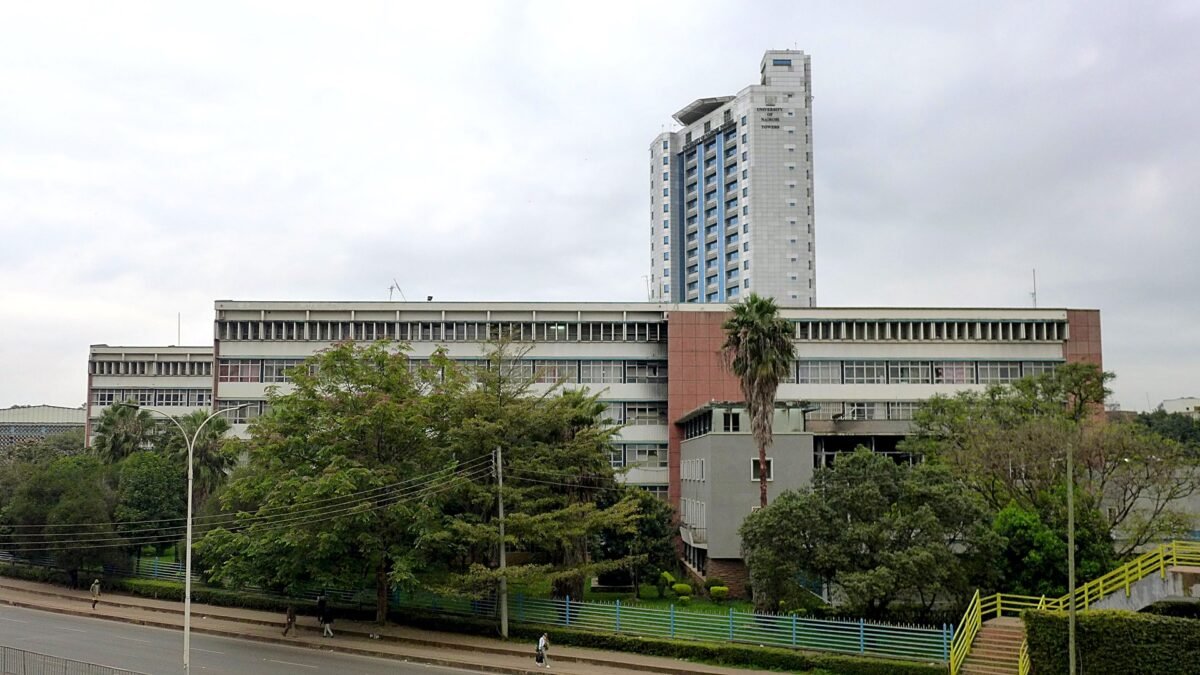
To understand why this strike cuts so deep, you must understand what the University of Nairobi was built to mean. Its history reaches back to 1956, to the Royal Technical College of East Africa, and on 1 July 1970 it became Kenya’s first national university, born from the dissolution of the University of East Africa alongside Makerere in Uganda and Dar es Salaam in Tanzania. I ask you to sit with that date. 1970. Seven years after independence. A young nation, still counting the cost of colonial rule, decided that its first great act of sovereignty would be to build a place where its own children could be taught by its own scholars, in its own capital, for its own future. The colonial system had rationed education the way an occupying power rations everything: enough schooling to produce clerks and interpreters, never enough to produce owners of the country’s destiny. Independence reversed the ration. The university was the promise made visible — that knowledge would no longer be something imported, permitted or withheld, but something Kenyan, grown on Kenyan soil.
History, as I have always told you, is a mirror, and this mirror is unkind to the present. The colonial administrator and the modern finance ministry do not resemble each other in uniform or in language, but they resemble each other in one habit: both have, at different moments, treated education as a cost to be contained rather than a seed to be watered. The East India Company, whose shadow falls across so much of our shared history in South Asia and East Africa alike, understood the same arithmetic perfectly. It did not need to forbid learning. It needed only to underfund it, to delay it, to promise it in one decade and postpone it in the next, until a generation grew up clever enough to serve the system and too starved of opportunity to challenge it. I am not saying that the Kenyan government is a trading company. I am saying that the pattern is old, and that patterns repeat wherever a state discovers that it is cheaper to sign an agreement than to fund one. The lecturers’ complaint, at its heart, is not that they were offered too little once. It is that they were offered too little, again and again, in a rhythm so regular that it began to look like policy.
Consider the rhythm. The previous nationwide strike began in September 2025 and lasted forty-nine days before a return-to-work formula was signed on 5 November 2025, providing for about 7.9 billion shillings in arrears and committing the parties to conclude the 2025–2029 agreement. The unions say the commitments in that formula were not honoured. The government, through Education Cabinet Secretary Julius Migos Ogamba, says all arrears under the 2017–2021 and 2021–2025 agreements have now been fully cleared, and on 5 October he urged the striking lecturers to obey court orders and return to work while negotiations continued. Both statements can be true at once, and that is precisely the tragedy: old debts settled, new agreement still unsigned, and a fresh generation of students watching the two sides argue over which promise counts. When a government clears yesterday’s arrears while delaying tomorrow’s agreement, it is not resolving a dispute. It is moving it one year down the road and charging the students interest on the journey.
The Arithmetic of Dignity
Now look at the numbers, because numbers are where dignity either survives or dies. The unions’ opening demands were large, and I will not pretend otherwise. The academic staff union sought basic pay increases of 36 to 68 per cent depending on grade, alongside a 57 per cent rise in house allowance and a commuter allowance of up to 60,000 shillings. The support staff union sought more. The universities’ forum offered an 8.25 per cent cumulative rise in basic salary over four years — about two per cent a year — with a three per cent rise in house allowance, and a proposed automatic annual increment of four per cent. The unions rejected the four per cent, and they were right to do so on the government’s own evidence, because inflation was running above six per cent. A pay rise below inflation is not a pay rise. It is a pay cut announced politely, and teachers, of all people, know how to read.
The government’s first figures for the new agreement were 3.1 billion shillings, then 9.76 billion, then, on Monday, 26 October, 11.96 billion from an inter-ministerial committee — an offer the unions rejected as barely different from the one before it, and the talks collapsed. Two days later the figure was 20 billion, and the unions accepted. The academic staff union had sought 98 billion for the four-year agreement. Twenty is a fifth of ninety-eight. Wasonga’s emphasis — that the figure was negotiated, not imposed — tells you what mattered most to the people in that room. It was not only the money. It was the manner. A profession that has been told for years to wait its turn wanted, at minimum, to be treated as a party to the bargain rather than a recipient of a decree. I understand that feeling. Every teacher I have ever known would rather be respected poorly paid than insulted well paid, and would rather be neither. But respect without money does not pay rent in Nairobi, and money without a signature does not pay it either. That is why today matters, and why Monday matters more.
There is a second set of numbers, and you must not look away from it, because it explains why twenty billion cannot be the end of the story. The Universities Fund has warned that scholarships for the 2026/2027 financial year will require about 47 billion shillings against an allocation of about 30.1 billion — a shortfall of roughly 16.9 billion — while the number of students expected to benefit rises to about 608,879. The student loans board faces a still larger gap: 56.3 billion allocated against 112.1 billion required. The vice-chancellors have spoken of more than 100 billion shillings in outstanding obligations across the public universities, and the University of Nairobi itself was reported this month to be technically insolvent in an Auditor-General’s report, with debts estimated at 20 billion shillings and an accumulated deficit of 8.8 billion. I cite these figures carefully, as reported, because they describe a system, not a single institution. A university system that cannot fund its students’ scholarships, cannot pay its lecturers’ agreed salaries and cannot balance its own books is not suffering a temporary embarrassment. It is suffering a structural choice, made year after year, to expand access faster than funding — to open the doors wider while quietly removing the floor.
The Students on Waiyaki Way
And the students? Ah, reader, the students are the ones this column is truly about, because they are the only party to this dispute who never sat at the negotiating table and yet paid every day of its cost. On 21 October, after a seventy-two-hour ultimatum from their association, University of Nairobi students took to the streets. On Tuesday, 27 October, hundreds of them blocked Waiyaki Way — one of Nairobi’s busiest highways — with stones, lit bonfires, and were dispersed with tear gas as traffic stood still. Their leaders vowed daily demonstrations until Friday unless learning resumed, and their association president, Ahmed Rashid Burrow, criticised both the government and the negotiators for failing to resolve a dispute whose consequences fell entirely on learners. Some of the students called for the Education Cabinet Secretary to resign. I do not endorse every demand made in anger on a blocked road, and I do not romanticise burning tyres. But I ask you to hear what those students were actually saying, beneath the smoke: we are not a party to your negotiation, so why are we the only ones serving the sentence?
Think of what a month means to a student. A month is a third of a semester. A month is an examination postponed, a graduation deferred, a landlord unpaid, a loan ticking, a younger sibling at home watching an elder’s degree recede and quietly revising their own ambitions downward. More than 600,000 students were reported to be out of lectures across the public universities. The University of Nairobi alone reported about 49,000 students in the 2023 academic year. These are not statistics. They are young men and women who did everything their country asked of them — passed the examinations, won the places, arrived in Nairobi with a suitcase and a plan — and were then told to wait in an empty corridor while adults argued over a collective bargaining agreement that should have been concluded before the academic year began. When students block a highway, the newspapers call it disruption. I call it a syllabus. It is the lesson the system taught them: that in this country, nobody is heard until the traffic stops.
There is a detail in the reporting that stayed with me, and I want to lay it before you plainly. The unions say no lecturer has been recruited since 2020, after employment was frozen as a cost-containment measure. I report that as the unions’ claim, and I note what it would mean if it is broadly true: a growing student population taught by a shrinking, ageing staff, in institutions whose debts grow faster than their incomes, under a funding model introduced in 2023 that sorts students by assessed need and then discovers, three years later, that the need exceeds the money by tens of billions. A university is not a building. A university is a relay. One generation of scholars hands the torch to the next, in a lecture hall, in a laboratory, in an office hour that nobody photographs. Freeze the recruitment for six years and you do not save money. You break the relay, and you discover the break ten years later, when there is nobody left to teach the teachers.
What a Signature Must Still Prove
So what should we watch, you and I, when the pens come out today? First, whether the signature actually happens, and at what hour, and whether the strike is formally called off as announced. Second, whether the money follows the signature — whether the Treasury’s commitment is written into the agreement in figures and dates, not merely implied by a handshake in front of cameras. The unions have insisted throughout that any agreement must carry a clear financial commitment from the government, and their fear — that the cost would be passed down to individual universities, and from there to students’ fees — is the fear that has kept this dispute alive through two strikes in two years. Third, whether the semester can be salvaged with honesty: compressed teaching, rescheduled examinations, and a plain statement to students about graduations, rather than a pretence that a lost month never happened. And fourth, whether the deeper funding crisis is finally named as what it is. Twenty billion settles a bargaining agreement. It does not settle a scholarship gap of nearly seventeen billion, a loans gap of nearly fifty-six billion, or a university debt mountain above one hundred billion. Those numbers will still be there on Monday morning, sitting in the front row of every lecture hall, waiting to be taught.
I have watched, this same week, students in Berlin blocking university buildings to protest education cuts and the return of conscription, ahead of nationwide demonstrations planned for Saturday with more than 145,000 young people registered. I mention Berlin not to dilute Nairobi’s story but to sharpen it. Across the world, the same generation is discovering the same truth at the same moment: that the promises made to them about education — that it would be funded, that it would be fair, that it would lead somewhere — are being rewritten after they have already paid the price of believing them. The Kenyan students on Waiyaki Way and the German students in Berlin do not share a language, a history or a grievance in detail. They share a calendar. They are the generation that was told education is the future, and then watched the future get postponed for budgetary reasons. A wise government listens to that generation before it has to block a road to be heard. A foolish one waits for the road.
Let me return, then, to the silence with which I began. On Monday, if all goes as announced, the lecture halls of Kenya will fill again. A lecturer will walk in, perhaps a little weary, perhaps a little wary, and begin to speak. Students will open notebooks that have been closed for a month. Somewhere a first-year student will hear, for the first time, the sentence that changes the direction of a life — the sentence that no funding formula can produce and no strike can replace. That moment is worth twenty billion shillings. It is worth a hundred billion. It is worth everything a nation has, because it is the moment a nation reproduces itself. But I warn you, and I warn Nairobi, in the plainest language I have: a signature is not a settlement, and a resumption is not a recovery. The last strike ended with a formula. This one must end with money, with recruitment, with a funding model that does not ask the poorest students to subsidise the richest institutions’ debts, and with a government that negotiates the next agreement before the lecturers have to walk out to be heard. Anything less is not peace. It is a pause between silences.
So I end with a question, as a column should end when the future is still unwritten and the ink on the agreement is still wet. When the lecturer returns to the hall on Monday and the student returns to the seat, who will keep the promise that brought them both back? The union, which must now show that twenty billion was a victory and not a surrender? The government, which must now show that a negotiated figure is a funded figure and not a photograph of one? Or you and I, the readers, the parents, the voters, who must refuse to forget this month the moment the traffic starts moving again on Waiyaki Way? A university, remember, is not kept alive by its towers. The towers of Nairobi will stand whether the halls are full or empty. A university is kept alive by the daily, unglamorous decision of a society to pay its teachers, fund its students and honour its signatures — today, and again next year, and again the year after that, until honouring a promise becomes a habit rather than a headline. Kenya has until Monday to prove that this time the habit has begun. The students are watching. History, as always, is taking notes.
Sources & References
People Daily, “UASU reaches new deal with govt to end lecturers’ strike”, 29 October 2026 (KSh20 billion deal, Wasonga quotations, signing 30 October, call-off at 3 p.m., classes 2 November, KSh98 billion demand, offer history). Nairobi Law Monthly, “Lecturers to resume work after Sh20bn deal to end strike”, 29 October 2026 (verbal agreement, inter-ministerial team, 35 universities, Sh12 billion and Sh11.96 billion offers). Capital FM, “Lecturers and University Staff Down Tools Over 2025–2029 CBA Dispute”, 2 October 2026 (strike start, Machakos talks collapse, demands of 36–68 per cent, 36–113 per cent and 75–193 per cent, 8.25 per cent offer, no recruitment since 2020 as stated by UASU, return-to-work formula of November 2025). Radio Generation, “Ogamba calls for end to lecturers’ strike as CBA talks stall”, October 2026 (Ogamba on cleared arrears, 49-day 2025 strike, 5 November 2025 agreement, Sh7.9 billion, proposed 36–68 per cent and 57 per cent house allowance). Hivi Leo, “University Lecturers End Four-Week Strike After Reaching Ksh20 Billion Deal With Government”, 28 October 2026 (signing 30 October, resumption 2 November, Ogamba court-orders appeal of 5 October). Education News Kenya, “UoN Students vow daily protests until Friday as lecturers’ strike disrupts learning”, 28 October 2026 (Waiyaki Way blockade, tear gas, Ojwang Obunde, Ahmed Rashid Burrow). Education News Kenya, “University of Nairobi students block Waiyaki Way in renewed lecturers’ strike protests”, 27 October 2026 (21 October protest, 72-hour ultimatum, call for Ogamba to resign). Capital FM, “Universities Fund Seeks Shared Database With Private Sponsors to Bridge Sh16.9bn Scholarship Gap”, 29 October 2026 (KSh47 billion requirement, KSh30.1 billion allocation, 608,879 beneficiaries, HELB KSh56.3 billion against KSh112.1 billion). People Daily, “How Ksh 16.9B scholarship gap exposes Ruto’s higher education funding crisis”, 29 October 2026 (pending bills KSh100.3 billion, student-centred funding model of 2023). People Daily, “Auditor-General declares the University of Nairobi technically insolvent amid Ksh20B debt”, 23 October 2026 (2021/2022 deficit, accumulated deficit KSh8.8 billion). Wikipedia, “University of Nairobi” (history from 1956, independent university 1 July 1970, University of East Africa split, 49,047 students in 2023; cross-checked against the University of Nairobi’s own history page). University of Nairobi, “UoN at 50: Our History” (first national university, 1 July 1970, Royal College Nairobi renamed 20 May 1964). MCI Group / Anadolu Ajansi, “Students Block University Buildings in Germany Over Budget Cuts, Conscription Plans”, 29 October 2026 (Berlin and Hamburg blockades, 31 October and 20 November protests, 145,000 registered). Kibra News Network, “University lecturers’ strike goes into its second full week”, 11 October 2026 (inflation 6.8 per cent in September, conciliator David Njagi, more than 600,000 students affected). Wikimedia Commons, “Category: University of Nairobi” (featured image source and licence; see caption).

About the Author — Abdul Mannan
Related Articles

The Dog That Barked in Chinese: What the Galgotias ‘Orion’ Scandal Teaches Us About Dishonest Universities
In February, a private Indian university stood before the cameras at the India AI Impact Summit and introduced…
The Lost Years: Why India Is Putting Its Five-Year-Olds in Class 1 Instead of Preschool
A five-year-old's fingers should be learning to hold a crayon, not bracing under the weight of a school…

The Law That Keeps Changing Its Mind: Who Owns America’s Classroom?
The US Department of Education has formally rescinded the Biden-era Title IX rule and restored the 2020 text.…