
Bodum Recalls 5.9 Million French Press Coffee Makers After 48 Burn Injuries as Glass Carafes Shatter

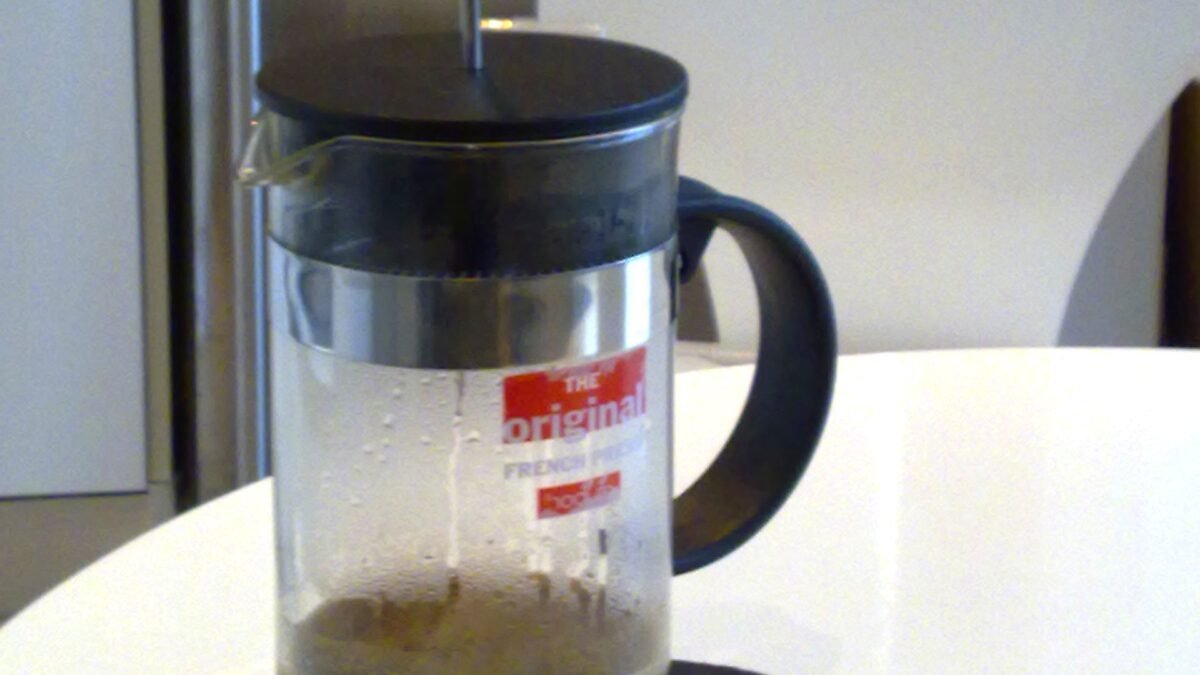
Bodum USA is recalling about 5.9 million French press coffee makers in the United States after dozens of reports that their glass carafes shattered during use and scalded the people holding them, the US Consumer Product Safety Commission (CPSC) announced on 29 October 2026.
The recall covers eight-cup and twelve-cup Bodum French presses with replaceable glass carafes sold over more than five decades, from 1974 through October 2026. According to the CPSC, the carafe can break without warning while coffee is being made if the glass has been damaged or cracked, including by stirring with a metal spoon, creating a risk of serious burn injuries.
Bodum USA has received 70 reports of carafes breaking during use, and 48 of those reports involved burns to consumers, the regulator said. No deaths have been reported in connection with the recall, and the CPSC notice does not describe the severity of the individual burn injuries beyond the count itself.
The affected models are the Bistro, Brazil, Caffettiera, Chambord, Crema, Java, Jesper and Kenya, in the eight-cup and twelve-cup sizes with replaceable glass carafes. The Bodum name appears on the frame and inner lid of most models, the CPSC said, and is engraved, along with product warnings, on the glass carafes themselves.
The coffee makers were sold at Target, Walmart and coffee and home goods stores across the United States, as well as online through Bodum.com, Amazon.com, Target.com, Walmart.com and other retailers, for about $15 to $65. Bodum USA, of New York, New York, imported the products, which were manufactured in Portugal and Thailand, according to the CPSC.
The recall is classified as a repair remedy rather than a refund. Owners are being asked to stop stirring coffee in the glass carafe with metal spoons or other metal utensils immediately, and to contact Bodum to receive a free plastic stirring spoon and a warning label. The label reminds owners not to use a cracked or damaged carafe and not to use metal spoons to stir the contents, in order to avoid damaging the glass in a way that can lead to breakage during use.
Consumers can reach Bodum USA toll-free on 888-879-8213 from 8 a.m. to 5 p.m. Eastern Time, Monday to Friday, or by email at Bodum3302@sedgwick.com, or through the dedicated recall website. The recall number is 27-055.
Bodum USA said in a statement: “While the rate of reported incidents involving carafe breakage during use is extremely low, especially considering that Bodum has sold millions of these products in the U.S. for decades, this recall will further encourage the safe use of our French Press Coffee Makers.”
A Bodum customer service representative told CBS News that the company is not offering refunds to affected shoppers, according to reporting of the recall. The remedy instead centres on changing how owners use the product they already have: a plastic spoon in place of a metal one, and a label reinforcing the warning.
What is recalled and how to tell
The recall is unusually broad in one respect and narrow in another. It is broad because it reaches back 52 years: any Bodum eight-cup or twelve-cup French press with a replaceable glass carafe bought between 1974 and October 2026 falls within its scope, provided it is one of the eight named models. It is narrow because it applies only to the glass-carafe versions of those models, not to Bodum presses made with other materials.
For owners, the practical check is straightforward. Look for the Bodum name on the frame and the inner lid, and the engraved name and warnings on the glass carafe itself. The CPSC notice includes photographs of the affected coffee makers, and additional model-identifying information is available on the recall website. Anyone unsure whether their press is covered can contact Bodum with the model details and ask.
The more important check, according to the regulator, is the condition of the glass. Owners should inspect the carafe for cracks, chips or other damage before every use, and should stop using any carafe that is cracked or damaged. The warning matters because the hazard is not visible in advance: a carafe that looks intact can fail during brewing if the glass has been weakened, and the failure happens while the vessel holds near-boiling liquid.
French press brewing uses water heated to between 92 and 96 degrees Celsius, or about 195 to 205 degrees Fahrenheit, according to Bodum’s own brewing guidance. Water at that temperature scalds skin on contact, and a carafe that breaks in the hand spills it across the hands, wrists and lap in a single moment. That is why a failure rate the company describes as extremely low still produced 48 reported burn injuries: the consequence of each failure is immediate and painful, even when failures themselves are rare.
The mechanism: how an ordinary spoon weakens glass
The CPSC’s account of the hazard is specific about the mechanism. A metal spoon used to stir coffee inside the glass carafe can scratch or crack the glass. Those small marks, sometimes too faint to notice, become weak points. Later, when the carafe is filled with near-boiling water, the glass can fail at the weakened spot and break apart during use.
The point is worth dwelling on, because stirring coffee with a spoon is not careless behaviour. It is what millions of people do every morning without thinking about it, often with whatever spoon is nearest. The recall therefore does not describe a product that fails when abused; it describes a product that fails when used in the ordinary way, with an ordinary kitchen tool, over a long enough period for small damage to accumulate.
Borosilicate glass, the material used in these carafes, is chosen precisely because it resists thermal shock better than ordinary glass. It is heat-resistant, not unbreakable, and its resistance depends on the glass being undamaged. A scratch does not just mar the surface; it concentrates stress at a single point. Under the combined load of hot liquid and the pressure of the plunger, that point can give way suddenly rather than gradually.
That suddenness is part of what makes the hazard serious. A carafe that cracks slowly gives its owner a chance to notice and set it down. A carafe that shatters during brewing gives no such chance, and the person holding it is, by definition, holding hot liquid at the moment of failure.
A kitchen fixture with a 52-year footprint
Bodum is a Danish-Swiss kitchenware company founded in Copenhagen in 1944 by Peter Bodum, and the French press remains its best-known product. Its son Jørgen Bodum took over the company in 1974, the same year the recall period begins, and launched the Bistro, Bodum’s first French press. The company moved to Switzerland in 1978 and still manufactures most of its high-volume products at its own factory in Tondela, Portugal.
The Chambord, the most famous of the recalled models, traces its design to the 1950s, when the French company Martin S.A. introduced the Melior coffee press. Bodum acquired the design rights in the early 1980s and launched the Cafetière Chambord, named after the Château de Chambord in France. The design has changed little since, which is part of its appeal: a chrome frame, a glass beaker, a plunger, and nothing else.
That longevity is exactly why the recall reaches so many homes. A product sold continuously for 52 years, at prices between $15 and $65, through the largest retailers in the United States, accumulates in kitchens, holiday homes, offices and student flats. Many of the 5.9 million units will have been thrown away, broken or replaced long ago, but a substantial number will still be in daily use, some of them bought so long ago that their owners may not think of them as products that could ever be recalled at all.
The scale also explains why the incident count looks small next to the unit count. Seventy reported breakages against 5.9 million units is a tiny fraction, and Bodum’s statement leans on that arithmetic. But the comparison is misleading in one important way: the denominator includes millions of presses that were never used with a metal spoon, never damaged, or discarded years ago. The relevant risk is not spread evenly across 5.9 million units; it concentrates in the presses that are still in use, still stirred with metal, and still carrying invisible damage.
Analysis: Why It Matters
1. A 52-year sales span puts the risk in kitchens that stopped thinking about it
Most recalls concern products bought recently, and the remedy reaches people who still have the receipt. This one is different. A French press bought in 1989, or 2004, or 2019, is the same product for recall purposes, and its owner may have used it thousands of times without incident. That history of safe use is precisely what makes the warning hard to absorb: nothing has gone wrong yet, so the press feels safe, and the habit of stirring with a metal spoon feels harmless.
The recall asks millions of people to change a habit they have never had reason to question, on the basis of 70 incidents they have never heard of. That is a difficult message to land, and it is the central challenge of the whole exercise. The CPSC and Bodum can publish the notice, but the people most at risk are the ones least likely to go looking for it: owners of a decades-old kitchen tool that has never given them trouble.
The practical consequence is that the recall will probably reach only a fraction of the affected presses, and the rest will keep being used as before. That is not a criticism of the recall itself, which is the correct response to the hazard; it is a realistic assessment of how far a notice travels when the product is old, cheap and familiar. The gap between the number of units recalled and the number of owners who ever hear about it is the real story here, and it is a gap that appears in almost every recall of a long-lived household product.
2. The failure mode is ordinary behaviour, not misuse
There is a temptation, when a recall involves a household object, to treat the hazard as the user’s fault: if only people had not stirred with metal spoons, nothing would have happened. That reading is unfair, and it misses the point of product safety regulation. A coffee maker is used in a kitchen, where metal spoons are the default tool, and the product was sold for half a century without the spoon warning being prominent enough to change behaviour.
The CPSC’s framing is careful on this point. It describes the metal spoon as the thing that damages the glass, but it places the remedy on the manufacturer: a plastic spoon, a warning label, and a public notice. The implicit judgement is that a product sold to the general public should tolerate the way the general public actually uses it, or should warn about the danger clearly enough that ordinary users understand it before they are hurt.
This matters beyond Bodum. The same logic applies to any product whose safe use depends on the owner avoiding a common, intuitive action. If the safe way to use a thing is also the unnatural way, the design or the warning has failed, not the user. The recall is, in that sense, a quiet admission that fifty years of selling a glass carafe alongside a metal-spoon habit was a combination waiting for a number of failures large enough to count.
3. A spoon and a sticker: the remedy invites scrutiny
The remedy Bodum is offering is modest: a free plastic stirring spoon and a warning label, with no refund and no replacement carafe. For a product that costs $15 to $65, a replacement programme for 5.9 million units would be enormously expensive, and the company is entitled to weigh that against a failure rate it describes as extremely low. But the modesty of the remedy raises a fair question about what a recall is for.
If the purpose is to stop future injuries, a plastic spoon and a label may be enough, provided owners actually receive them and change their habits. If the purpose is to make good the fact that people bought a product that can injure them, the remedy looks thin: the owner keeps a carafe that may already be damaged, and the company’s obligation ends with a spoon in the post.
The distinction matters because the people who were already burned get nothing from this remedy. Their injuries are recorded in the incident count, but the recall offers them no compensation and no replacement. That is normal for a CPSC repair remedy, and it is not unique to Bodum, but it is worth stating plainly so that readers understand what the recall does and does not do. It is a safety measure for the future, not redress for the past.
There is also a practical question about uptake. Owners must contact Bodum, wait for a spoon and a label, and then remember to use them. Each of those steps loses people. The remedy’s effectiveness depends on how many of the millions of owners take the trouble, and there is no mechanism in the recall to find out. The CPSC does not publish take-up rates for individual recalls, so the public will never know how many plastic spoons were actually sent.
4. The recall tests how safety regulation reaches legacy products
The CPSC was established more than fifty years ago to protect the public from unreasonable risk of injury from consumer products, and the agency notes that deaths, injuries and property damage from such incidents cost the United States more than $1 trillion a year. Its work is often invisible precisely because it deals with ordinary things: coffee makers, space heaters, children’s toys, household appliances.
This recall is a useful illustration of how that system works at its limits. The regulator depends on incident reports to identify a hazard, and incident reports depend on injured people, or the companies themselves, coming forward. Seventy reports accumulated before the recall was announced, and 48 of them involved burns. That is a slow fuse: each individual incident looks like bad luck, and only the accumulation reveals a pattern.
The 52-year sales span compounds the difficulty. The product changed hands, changed retailers, changed countries of manufacture, and outlived the marketing campaigns that sold it. Tracing 5.9 million units through that history is impossible, so the recall relies on publicity rather than direct contact. The notice goes to the press, the press reports it, and the hope is that enough owners hear about it through the news to make the exercise worthwhile.
That reliance on publicity is both the system’s strength and its weakness. It is cheap, fast and broad. But it also means the recall’s reach depends on how newsworthy the story is, and a coffee-maker recall competes for attention with everything else happening on the day it is announced. The Bodum recall was one of a batch of recalls and safety warnings the CPSC posted on 29 October, and most of the others will receive far less coverage. The system works, but it works unevenly, and the unevenness is built in.
5. Burns are the quiet cost of a familiar ritual
There is a reason this story resonates beyond the numbers. Almost everyone who drinks coffee has used, or watched someone use, a French press. The ritual is slow and tactile: coarse grounds, hot water, four minutes of waiting, the slow press of the plunger. It is a small daily ceremony, and the idea that it can end with a shattered carafe and scalded hands feels like a betrayal of something safe.
Scald injuries are also easy to underestimate. A burn from near-boiling water is not a minor kitchen accident; it can blister, scar and, in serious cases, require medical treatment and time away from work. The CPSC notice does not grade the 48 reported burns by severity, so the public record does not say how many were minor and how many were serious. That absence of detail is itself telling: the reporting system counts incidents, not suffering, and the human cost behind the number stays invisible.
The French press occupies a particular place in coffee culture, too. It is the low-technology alternative to machines and capsules, marketed as simple, honest and waste-free. Bodum’s own language calls it the simplest of all brewing systems, and the company’s slogan is “make taste, not waste.” A recall that turns on the fragility of its glass heart complicates that image, not fatally, but noticeably. The product is still simple and still waste-free; it is also, it turns out, breakable in a way that can hurt the person using it, and that fact now belongs to the brand’s story alongside the design awards.
What to Watch Next
- Whether owners actually claim the remedy: the recall’s success depends on owners contacting Bodum for the plastic spoon and label. Watch for any figures Bodum or the CPSC release about the number of remedies requested, which would show how far the notice travelled.
- Whether more incidents emerge: publicity about a recall often prompts owners who were previously injured to report their experiences. A rise in the incident count after the announcement would not mean the product has become more dangerous; it would mean the true scale of past failures is only now being counted.
- Whether the remedy changes: if further breakages are reported, or if regulators judge the spoon-and-label remedy insufficient, the CPSC could press for stronger action, including replacement carafes. Any change to the remedy would be announced through the CPSC.
- How retailers respond: Target, Walmart, Amazon and the other sellers named in the notice will need to check their own stock and listings. Watch for the affected models disappearing from sale, and for any retailer-specific notices to customers who bought the presses online.
- Whether other glass coffee makers face scrutiny: the hazard turns on damaged borosilicate glass, not on one brand’s design. If similar reports surface for other makers’ glass carafes, the Bodum recall could become the first step in a wider examination of glass French presses and pour-over brewers.
Sources
- US Consumer Product Safety Commission — Bodum USA Recalls 5.9 Million French Press Coffee Makers with Replaceable Glass Carafes Due to Risk of Serious Burn Injury (Recall 27-055, 29 October 2026)
- USA Today — 5.9 million French press coffee makers recalled. See affected items (29 October 2026)
- Daily Coffee News — Bodum Recalls 5.9 Million French Presses After Burn Reports (29 October 2026)
- Dispatch Times — Millions of Bodum coffee makers recalled over US burn risk, including Bodum statement and CBS News reporting on refunds (30 October 2026)
- Wikipedia — Bodum (company history, Bistro launch 1974, Chambord design origins)

About the Author — Abdul Mannan
Related Articles

Early H1N1 Wave Pushes US Flu Hospital Rate to Highest Mid-October Level Since 2010-11, CDC Data Show
The CDC says the estimated US flu hospitalisation rate for the week ending 17 October was the highest…

Ebola Nurse Killed in Congo Attack as WHO Warns Violence Is Now Threatening the Response
A nurse responding to an Ebola alert in Bafwasende, in eastern Congo, has been killed by protesters and…

Kenya Records Second Ebola Death as Regional Outbreak Spreads to Four Countries
Kenya's health ministry has confirmed a second Ebola death, a 65-year-old close relative of the country's first patient,…