
Burnham Unveils £700m Fund to Unlock Ten Industrial Sites in Reindustrialisation Drive

Prime Minister Andy Burnham has unveiled a £700 million government fund to unlock up to ten major industrial and commercial sites across the United Kingdom, in the centrepiece of a new push to rebuild manufacturing capacity and spread investment beyond London and the south-east.
The Strategic Sites Accelerator, which starts on Monday 2 November, will deploy around £700 million through a mix of loans, equity and targeted grants, alongside expert technical support, to get stalled developments moving. According to the government, the programme aims to crowd in up to £2 billion in private investment and could support tens of thousands of jobs over time.
The announcement, published by the government in the early hours of Monday, was described by The Independent as the latest step in Burnham’s devolution drive, and it places mayors and local leaders at the centre of the search for what officials call the country’s “top 10” biggest strategic investment sites.
Chancellor John Healey said local leaders understood their communities best, adding: “Only by trusting them with real power and resources will we see change.” He said the £700 million package would help break down the barriers to local growth, “so people can feel the benefits of a growing economy and love where they live”.
Business Secretary Jonathan Reynolds said Britain’s potential was spread across the whole country, but that the same obstacles kept appearing. “Britain’s potential is everywhere, but we hear the same old arguments all too often – outdated infrastructure, insufficient access to finance, and problems with planning,” he said. “These are barriers that hold back investment, block new jobs, and shackle our potential, and we need to do more to empower our local leaders and help drive the growth their communities deserve and expect.”
Reynolds added that the programme would “get the ball rolling for up to 10 of the UK’s most important potential sites, attract billions in investment, unlock tens of thousands of good-quality jobs in the years ahead, and bring good growth to every postcode”.
What the Accelerator will do
According to the government’s announcement, the Strategic Sites Accelerator is designed for places where there is already genuine investor demand, but where development is being held back by viability problems. The government says it will focus on commercially credible sites, and that individual investments will be subject to commercial assessment, due diligence and formal approvals.
The support on offer is deliberately broad. Sites can receive loans, equity stakes or targeted grant funding, as well as technical expertise, with the government, local partners and developers working together on the specific barrier holding each project back. The programme is run jointly by the Office for Investment and the National Wealth Fund, with the property firm CBRE as its national delivery partner. CBRE was appointed to the role in July 2026 as sole lead adviser for three years, working with Turner & Townsend as part of its delivery team.
The government’s stated ambition is to support between six and ten sites. The official formulation on jobs is conditional: if the sites overcome their viability constraints, tens of thousands of jobs could be created directly and through the wider economy over time. The £2 billion private investment figure is likewise an ambition rather than money already committed, and the government has been careful to describe the £700 million as funding that will be deployed alongside expert support, not as a single lump sum handed out on day one.
The Accelerator will target the sectors at the heart of the government’s Industrial Strategy: advanced manufacturing, digital and technology, defence, and life sciences. According to the government, jobs in technology and digital in particular can attract salaries upwards of £45,000, well above the national average, which ministers present as evidence that the programme is about secure, well-paid work rather than any job at any wage.
The announcement also underlines the scale of the sectors the government wants to grow. In life sciences, the government says £4 billion of investment has flowed into the sector since July 2025, while the UK technology sector is currently valued at more than £1 trillion. Those figures are the government’s own, and they are deployed in the announcement to argue that the Accelerator is backing industries that are already attracting capital, rather than trying to create demand from nothing.
The sites and regions in the frame
Work is already under way on potential sites in three places: Glasgow, Burgess Hill and Sheffield. The government says it is also exploring investment opportunities in Greater Manchester, West Yorkshire, the West Midlands, South Yorkshire, Liverpool City Region, the North East, Glasgow City Region and Cardiff Capital Region, building on the National Wealth Fund’s strategic partnerships in those areas.
The Accelerator will also be open to sites across every nation and region of the UK, from science parks and manufacturing sites to innovation districts held back by viability constraints. That breadth matters politically: the programme is being presented as a national scheme, not a fund for one region, and its backers in government are keen to avoid the impression that reindustrialisation means picking winners in a handful of favoured cities.
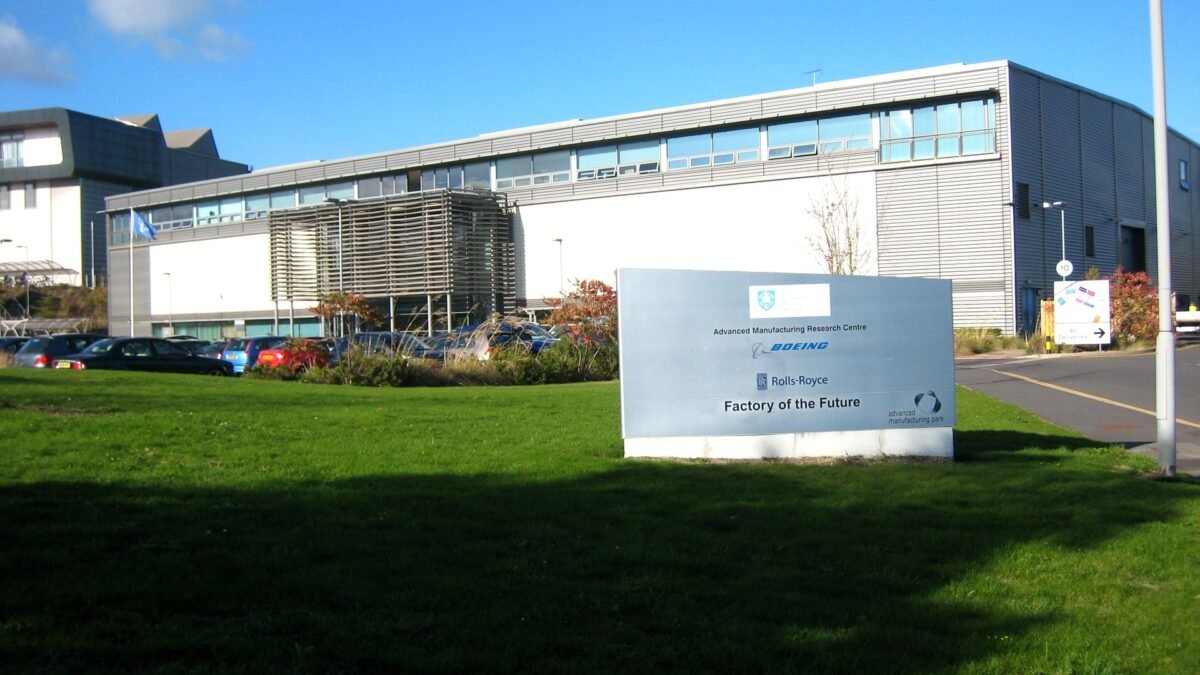
South Yorkshire offers the clearest example of the kind of site the programme has in mind. Oliver Coppard, the Mayor of South Yorkshire, pointed to the Don Valley Corridor, including Runway Park, and to the Advanced Manufacturing Research Centre, which is celebrating its 25th birthday this year. The centre is already home to companies including Boeing, Rolls-Royce and McLaren, all of which are growing their presence in the region, according to Coppard. “Government backing through the Strategic Sites Accelerator, alongside our new strategic partnership with the National Wealth Fund, will help us unlock the potential of Runway Park,” he said. “We can grow the industries of the future and create more good jobs, giving people across South Yorkshire the chance to stay near and go far.”
The Sheffield connection also illustrates the kind of barrier the Accelerator is meant to remove. Advanced manufacturing sites of this kind typically need large, serviced plots, reliable power, and planning consent that arrives on a timetable investors can trust. When any one of those is missing, a commercially attractive project can sit idle for years, and the government’s argument is that a relatively small amount of public money, applied at the right point, can unblock a much larger private investment.
Mayors at the centre of the plan
The announcement is as much about who decides as it is about how much is spent. Mayors and local leaders will help identify the opportunities, and No10 North — the government’s northern policy operation — will work alongside the programme and local leaders to support the wider drive to identify investment opportunities, including exchanging pipelines of priority projects in support of the National Economic Council.
Bev Craig, the Mayor of Greater Manchester, said the city region’s Good Growth Fund was already powering an integrated pipeline that would “turbocharge £10 billion of investment over the next decade” in sites supporting new investment across the whole city region. But she added that viable developments were too often held back by complex infrastructure, remediation or delivery challenges. “The Strategic Sites Accelerator is a welcome step in helping to address those barriers and support places across the UK to bring forward nationally significant opportunities more quickly,” she said.
Paul Bristow, the Mayor of Cambridgeshire & Peterborough, said viability remained “one of the most pressing concerns in the market”, and welcomed a programme that worked in partnership with regional mayors. Claire Ward, the Mayor of the East Midlands, said sites with strong development potential needed flexible support, and that the Accelerator “meets that mark”, adding that it would help bring forward strategic sites, create jobs and support “a more resilient, green industrial future”.
Richard Parker, the Mayor of the West Midlands, said his region’s Growth Plan and new Reindustrialisation Blueprint set out how it intended to create economic growth, but that major investment opportunities were too often held back by practical barriers, “whether that’s infrastructure, access to finance or getting sites ready for development”. He called the Accelerator “exactly the kind of partnership we need with Government to remove those barriers”.
Helen Godwin, the Mayor of the West of England, pointed to brownfield regeneration already under way in her region, including an old diesel depot in Bristol and a former gasworks in Bath, and said the Accelerator, together with a new Future Places Fund, could transform “what is already the country’s fastest-growing regional economy”. Tracy Brabin, the Mayor of West Yorkshire, said her region’s Local Growth Plan was unlocking sites for new homes and commercial development, backed by a £450 million capital fund made possible by devolution, and that the Accelerator would “help turbocharge our ambitions”.
Iain Jenkinson, head of UK public-private capital at CBRE, said it was “the first time in a generation that a UK Government has backed an industrial strategy with the funding and support needed to unlock strategic sites, especially those with prevailing viability challenges”. He added that “a fit-for-purpose real estate proposition is essential to drive productivity and support high-value business investment”.
The devolution backdrop
The Accelerator does not arrive in isolation. According to the government, it follows the Chancellor’s Budget last week and forms part of a wider push to give mayors new powers and resources to attract investment. The government is also giving mayors a greater stake in the growth they generate, with a share of business rates from 2027 and an assignment of income tax from 2028. A further £285 million will support areas moving towards devolution deals or Strategic Authority status, including £120 million of capital funding to help places develop and deliver investment opportunities.
According to The Independent, ten new devolution agreements are nearing completion, which would establish new mayoral authorities across a string of regions. The direction of travel is clear: more of England is to be covered by mayoral strategic authorities, and those authorities are to hold more of the levers — and more of the money — that determine whether investment lands in their area.
The devolution theme was on display three days earlier in Glasgow, where Burnham chaired the first meeting of the National Economic Council to include the leaders of the nations, on Friday 30 October. There, the Prime Minister offered a model of “deeper devolution” to Scotland and Wales, including devolving innovation funding and further employment support for young people. The warmest welcome came from John Swinney, the SNP First Minister, who said he would work with the Prime Minister “to devolve more powers from Westminster to Scotland”. No new powers were agreed on Friday, and Downing Street made clear the offer would not include a second independence referendum, but the meeting set the tone for the week that followed.
That context matters because the Accelerator is, in effect, the practical expression of the devolution argument: that decisions about industrial sites are better made by people who know the local land, the local grid and the local labour market, and that Whitehall’s role should be to supply the finance and the technical help that local leaders cannot conjure on their own. Whether that argument holds up in practice will depend on how quickly the first sites are actually chosen, funded and built on — and on whether the money follows the rhetoric.
Analysis: Why It Matters
1. Reindustrialisation is now the government’s central economic story
The word the government keeps using is “reindustrialisation”, and its choice is deliberate. Britain’s manufacturing share of the economy has shrunk for decades, and the towns and cities that once made things have spent a generation being told that services, finance and the knowledge economy would replace those jobs. The Accelerator is an attempt to reverse that story, at least in part, by treating industrial land as national infrastructure rather than a purely local planning matter. By naming advanced manufacturing, defence and life sciences as priority sectors, the government is also signalling that it sees industrial policy as security policy: the ability to make things at home, from medicines to military kit, is now framed as a matter of national resilience, not just regional prosperity.
2. The sums are modest — the test is leverage
Set against the scale of the UK economy, £700 million is not a large sum. Spread across six to ten sites, it amounts to roughly £70 million to £115 million per site, and much of it will arrive as loans or equity rather than grants. The government’s case is that this is precisely the point: the money is meant to be catalytic, removing the single obstacle — a grid connection, a contaminated plot, a planning delay — that stops a private developer from committing hundreds of millions of its own. If the £2 billion of private investment materialises, the leverage ratio will be roughly three to one, which would be a respectable return on public money. But if the sites stall, or if the private money never arrives, the programme will look like a modest fund dressed up as a transformation. The honest way to judge it is not by the announcement, but by the first three sites that actually break ground.
3. Grid connections and planning are the real battleground
Ministers name three barriers again and again: planning, grid connections and access to finance. Of the three, the grid is the most stubborn. Across the UK, developers of all kinds — housing, data centres, factories, wind farms — have waited years for a connection, because the queue for capacity is long and the network was built for a different era. Planning is the second front: large industrial sites need consent that can survive challenge, and the process is slow even when nobody objects. Money is, paradoxically, the easiest of the three to fix, because the government can lend it. The Accelerator’s design recognises this, pairing finance with technical support on planning and grid. But technical support is not the same as a reformed system, and the programme’s success will depend heavily on whether the parallel reforms to planning and grid connections, which the government has promised separately, actually arrive.
4. Devolution is being tested as an economic policy, not just a constitutional one
For years, English devolution was argued about mainly in constitutional terms: who governs, and where power sits. The Accelerator reframes it as an economic question. Mayors are being given a share of business rates from 2027 and an assignment of income tax from 2028, which means their budgets will rise and fall with the growth they generate. That is a powerful incentive, but it also carries a risk: places that grow will be rewarded, and places that cannot attract investment may fall further behind. The additional £285 million for areas moving towards devolution deals is meant to soften that edge, but the fundamental gamble is that local leaders, given real money and real responsibility, will make better choices than Whitehall. The Glasgow meeting on Friday, and the warm reception from a First Minister who wants to leave the United Kingdom altogether, suggests the offer has political traction. Whether it has economic traction is a question for the next two years.
5. The politics: a government looking for visible, buildable wins
There is a political logic to announcing a fund for physical sites. A factory, a science park or a manufacturing hub is visible in a way that a tax change is not, and it gives ministers somewhere to stand for a photograph with hard hats and hi-vis jackets. Burnham, who has spent his first months as Prime Minister opening debates on Europe, slavery and migration, is also building a record on the economy — and the Accelerator, arriving days after the Budget, is designed to show that the government has a plan for growth that people can see in their own town. The risk, as with any industrial strategy, is that the gap between announcement and delivery becomes the story. The government’s own language is careful — “could support”, “aims to crowd in”, “up to” — and that caution is wise, because the public will judge this programme by buildings, not by press releases.
What to Watch Next
- The first site selections. The government is already engaging on potential sites in Glasgow, Burgess Hill and Sheffield. The first formal announcements of which sites receive backing, and on what terms, will show whether the programme is moving at the pace ministers promise.
- The private money. The £2 billion figure is an ambition, not a commitment. Watch for named investors and signed deals at the first sites, and for whether the leverage ratio the government claims is actually achieved.
- Grid and planning reform. The Accelerator treats the symptoms of slow connections and slow consent. The deeper question is whether the government’s wider reforms to the grid queue and the planning system deliver the faster decisions that developers need.
- Home Secretary Shabana Mahmood’s settlement statement. Later on Monday, Mahmood is expected to set out the government’s final decision on indefinite leave to remain, including whether care workers already in Britain keep the five-year route to settlement. It is the other big domestic announcement of the day, and it will test the government’s handling of an issue that has divided its own backbenches.
- The Bank of England’s decision on Thursday. The Bank is expected to raise interest rates to 4.0 per cent from 3.75 per cent, its first increase since August 2023, according to Reuters. The decision will shape borrowing costs for the very developers and manufacturers the Accelerator is trying to attract, and Governor Andrew Bailey’s press conference will be watched for any signal about further rises.
Sources
Breaking Brexit News — Burnham’s Devolution Plan Wins SNP Praise (1 November 2026)

About the Author — advmannan1
Related Articles

Burnham Opens Door to Formal Slavery Apology but Rules Out Reparations as Commonwealth Summit Opens
Prime Minister Andy Burnham has said he is open to a formal British apology for the transatlantic slave…

Rachel Reeves Says Britain’s Future Lies in the EU as Brexit Made UK ‘Poorer, Weaker and Less Secure’
Former chancellor Rachel Reeves has said Britain should rejoin the European Union, declaring Brexit made the country 'poorer,…

Lewis Hamilton Claims His First Ferrari Pole at the Mexico City Grand Prix, Becoming the Oldest Pole-Sitter Since 1982
Lewis Hamilton took his first Grand Prix pole position for Ferrari in Mexico City on Saturday, edging George…