
UN Mission in Western Sahara Ends After 35 Years as Security Council Deadlock Leaves a Vacuum

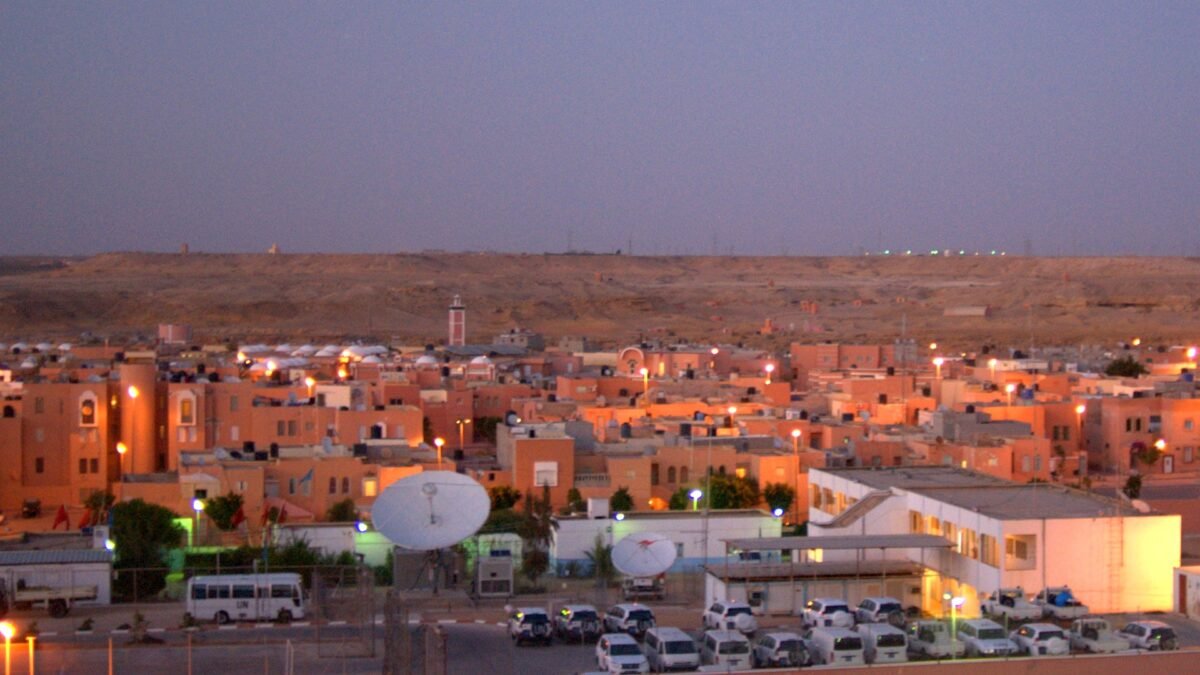
The United Nations peacekeeping mission in Western Sahara has come to an end after 35 years, closing one of the longest-running operations in the organisation’s history and leaving a disputed desert territory without the international monitors that have watched over its fragile ceasefire since 1991.
According to the United Nations, the mandate of the United Nations Mission for the Referendum in Western Sahara, known as MINURSO, expired at midnight on Saturday, 31 October. Sunday, 1 November, marked the start of a liquidation period in which a smaller team will oversee the disposal of United Nations equipment and the return of assets to troop-contributing countries, the UN said.
Secretary-General António Guterres said in a statement issued on Sunday that the mission’s departure “does not abrogate” the people’s “inalienable right to self-determination”, and he called on all parties “to respect and promote the rights of the people of Western Sahara”. He also said he remained concerned about the security situation throughout the territory and the risk of hostilities escalating, urging all concerned “to exercise maximum restraint and to refrain from actions that could further increase tensions or undermine regional stability”.
The end of the mission was not the result of a planned withdrawal. It was the consequence of a deadlock in the Security Council on Friday, when the Council failed to agree on the mission’s future. A draft resolution from the United States was vetoed by Russia, while a rival Russian text failed to win the nine votes needed for adoption, according to UN News.
Morocco, which claims Western Sahara as its own and controls most of the territory, welcomed the outcome. The Algeria-backed Polisario Front, which has sought an independent state since the former Spanish colony was abandoned in 1976, expressed concern. Algeria’s Foreign Ministry said on Saturday that it expressed “deep regret” over the non-renewal, blaming what it called the “excessive bias” of the United States towards Morocco’s position, according to Reuters.
The vote that ended it
The Council’s failure on Friday was the culmination of weeks of negotiation over two competing visions of the mission’s future. According to the Associated Press, the United States draft would have extended MINURSO for another year while cementing Morocco’s autonomy plan as the only basis for talks to settle the half-century-old conflict, and scaling back the mission’s military component.
The American text would also have gone further than any previous resolution. It would have removed the reference to a referendum from the mission’s name, renaming it the United Nations Mission in Western Sahara, or MINUSO, and it called for a census of the refugees living in camps in Algeria, the Associated Press reported.
Russia vetoed that draft. Explaining the veto, the Russian delegate said the text would have imposed one-sided solutions, describing the vote as “a life-saving veto, so to speak”, according to UN News. The Council then defeated a competing Russian resolution that proposed a straightforward one-year extension of the mandate to 31 October 2027. That draft received three votes in favour and one against, with 11 abstentions, falling short of the nine affirmative votes needed to pass, the Associated Press reported.
The United States delegate in the Council on Friday said the American draft would have supported the principle of self-determination and “moved the 50-year conflict forward”, calling the status quo unacceptable, according to UN News. Following the vote, US Ambassador Michael Waltz said a referendum had never taken place because of longstanding disagreements over voter eligibility, the Associated Press reported.
The outcome was all the more striking because the Council had dealt with the same question only a year earlier in the opposite direction. In October 2025, the Council adopted Resolution 2797, a US-drafted text that accepted Morocco’s plan to give the territory autonomy under Moroccan sovereignty as the “most feasible” solution to the conflict, according to Reuters. That resolution, adopted by 11 votes in favour with three abstentions while Algeria did not participate, extended MINURSO until 31 October 2026 and asked the Secretary-General to submit a review of the peacekeeping mission. Russia abstained in that vote last year; this year it vetoed.
What MINURSO did — and what disappears with it
MINURSO was established under Security Council Resolution 690 in 1991, in line with settlement proposals accepted in 1988 by Morocco and the Frente POLISARIO, according to UN News. Its original task was to organise and oversee a referendum in which the people of Western Sahara would choose between independence and integration with Morocco. The referendum never took place, stalled for decades by disputes over who would be eligible to vote, but the mission continued to carry out the tasks entrusted to it by the Council.
At its core, MINURSO monitored the ceasefire that ended 16 years of war. When its mandate ended, the mission was headquartered in Laayoune, the territory’s largest city, with nine team sites — four west of the berm and five east of it — and a liaison office in Tindouf, in Algeria, according to UN News. It had about 200 civilian staff, military observers and staff officers from more than 35 countries, and a dedicated mine action capability.
The berm is the defining physical feature of the conflict: a sand wall of more than 2,700 kilometres, heavily mined and guarded, built by Morocco during the 1980s to divide the territory. West of it lies the roughly 80 per cent of Western Sahara under Moroccan control, including Laayoune and the phosphate-rich coast. East of it lie the sparsely populated areas the Polisario calls the liberated territories, and beyond them the refugee camps near Tindouf where tens of thousands of Sahrawis have lived since fleeing the war in the mid-1970s.
The mission’s work went beyond watching a line on a map. Its observers investigated alleged ceasefire violations, its liaison officers kept channels open between the two sides, and its mine action teams cleared ordnance from a landscape sown with explosives during the war. Humanitarian organisations warned that losing those functions would carry real costs. Oxfam said the loss of MINURSO’s monitoring and de-escalation functions “risks undermining security and stability, with serious consequences to civilians and prospects of a peaceful resolution”, and warned that losing the mission could put refugees at risk, according to the Associated Press.
Mr Guterres recognised the “central role” MINURSO had played since 1991 in helping to monitor the ceasefire and in creating conditions for the pursuit of a political solution. He expressed his “deepest gratitude” to the mission’s personnel, including the Special Representative for Western Sahara, Alexander Ivanko, who led the mission through what the Secretary-General called a “particularly challenging period” after hostilities resumed in 2020. The UN chief also paid tribute to the 20 MINURSO personnel who lost their lives during the mission’s 35 years in the territory.
Although MINURSO’s operations have now ended, the United Nations will keep working towards a peaceful resolution through the Secretary-General’s Personal Envoy, Staffan de Mistura, according to UN News. In closing, the Secretary-General’s statement said that while MINURSO’s peacekeeping operations had concluded, “the United Nations stands ready to continue supporting efforts to advance dialogue and pursue a peaceful resolution of the conflict”.
Two capitals, two opposite readings
The reactions to the mission’s end could hardly have been more different, and they capture the two irreconcilable readings of what has happened.
Morocco’s royal palace welcomed the failure to renew the mission, calling the non-renewal a “significant development” and saying that the presence of the mission in what it calls the Kingdom’s southern provinces — including its personnel, vehicles, equipment and symbols — should come to an end in the coming days, according to the Associated Press. Morocco said it remained committed to the ceasefire in the territory.
Morocco’s Foreign Minister Nasser Bourita told state media that the mission’s reference to a referendum — the “R” in its name — was an “anachronism”, according to Reuters. Mr Bourita said Rabat had been informed that Russia was going to block the US-drafted resolution, but saw it as “an opportunity to review certain rules of the game”. The palace added that the non-renewal meant the Western Sahara issue should be withdrawn from consideration by the Security Council.
For Rabat, the sequence of events reads as vindication. A year ago the Council endorsed its autonomy plan as the most feasible path. Now the mission built around a referendum that never happened has been allowed to lapse, and the Council’s own text has moved decisively towards autonomy under Moroccan sovereignty as the framework for a settlement. The veto that killed the American draft, from Morocco’s perspective, merely removed the mission; it did not remove the political direction of travel.
The Polisario Front read the same events in the opposite way. Its representative, Sidi Omar, thanked Russia for vetoing the US-backed resolution, which he said would “torpedo the foundations of the UN peace process” and “threaten regional and international peace”, according to the Associated Press. In a statement, the Polisario said it was “concerned at the deadlock in the Security Council meeting”, according to Reuters.
Algeria, which hosts the Polisario leadership and the refugee camps and has backed the movement for five decades, expressed “deep regret” over the non-renewal and blamed what it called the “excessive bias” of the United States towards Morocco’s position, according to Reuters. For Algiers and the Polisario, the American draft was the problem, not the solution: a text that would have written the referendum — and with it the option of independence — out of the United Nations’ own vocabulary, while keeping the territory under Moroccan control.
A fifty-year dispute in brief
Western Sahara, a largely desert territory on Africa’s Atlantic coast between Morocco, Algeria and Mauritania, was a Spanish colony from 1884 until 1976, and it has remained on the UN Decolonisation Committee’s agenda since 1964. As Spain prepared to withdraw in 1975, the International Court of Justice issued an advisory opinion affirming the Sahrawi people’s right to self-determination and finding that neither Morocco nor Mauritania held a legal claim to the territory.
Morocco’s King Hassan II responded with the Green March, in which some 350,000 Moroccan civilians, escorted by troops, crossed into the territory in November 1975. The Madrid Accords, signed by Spain, Morocco and Mauritania, transferred administrative control to Morocco and Mauritania, although the accords were not recognised by the Sahrawi people or the United Nations. The Polisario Front, a Sahrawi nationalist movement founded in 1973 and backed by Algeria, proclaimed the Sahrawi Arab Democratic Republic in February 1976 and fought a guerrilla war against both occupying forces. Mauritania signed a peace agreement with the Polisario in 1979 and withdrew; Morocco immediately annexed Mauritania’s former sector.
The war reached a stalemate by the late 1980s, and in 1988 Morocco and the Polisario accepted UN settlement proposals. The 1991 ceasefire and the creation of MINURSO were meant to be followed by a referendum in early 1992. It never happened. The two sides could not agree on who was entitled to vote — Morocco sought to include settlers who had moved into the territory, while the Polisario insisted on the Spanish census of 1974 as the basis — and the voter identification process collapsed into decades of argument.
In 2007, Morocco put forward its Autonomy Proposal as a basis for negotiations. It envisages the territory as self-governing under Moroccan sovereignty, with elected legislative, executive and judicial authorities and local control over the economy, infrastructure and culture, while Morocco would retain defence, foreign affairs and religious affairs. The plan does not offer independence, and sovereignty would stay with Morocco. The Polisario has consistently rejected it, insisting that self-determination must include the option of independence.
International support for the autonomy plan has grown steadily in recent years. The United States recognised Moroccan sovereignty over Western Sahara in December 2020. Spain endorsed the autonomy plan in 2022 as the “most serious and realistic” solution, France declared in 2024 that the present and future of Western Sahara fell within the framework of Moroccan sovereignty, and the United Kingdom expressed support in June 2025, with Foreign Secretary David Lammy calling the plan the “most credible, viable and pragmatic” basis for a settlement. The Sahrawi Arab Democratic Republic, meanwhile, is recognised by more than 70 states and is a full member of the African Union.
The ceasefire held for nearly three decades, but it broke down in November 2020, when Moroccan forces moved into the Guerguerat buffer zone near the Mauritanian border and the Polisario declared the ceasefire over. Hostilities have persisted at low levels since then, according to Reuters, and it was in that deteriorating security environment that Mr Ivanko led the mission through its final years.
Analysis: Why It Matters
The UN has lost its eyes on the ground
The most immediate consequence of MINURSO’s end is practical, not symbolic. For 35 years, the mission’s observers were the one institution both sides accepted as a neutral witness along the berm. When shots were fired or patrols crossed a line, there was a UN team site nearby to investigate, report and, often, defuse the incident before it became a crisis. That machinery is now gone. The Secretary-General’s warning about the risk of escalation was not diplomatic boilerplate; it was an acknowledgement that the territory now lacks the early-warning system that kept a low-level conflict from becoming a larger one. In a region where a single miscalculation can cascade — as the Guerguerat episode showed in 2020 — the absence of neutral monitors raises the cost of every misunderstanding.
A referendum that never happened has finally been buried
MINURSO’s full name was always its founding promise: the United Nations Mission for the Referendum in Western Sahara. The referendum was the reason the mission existed, and for three decades the mission’s survival kept alive, at least formally, the idea that the Sahrawi people would one day vote on their future. The American draft would have removed that word from the mission’s name; the Council’s failure to renew the mission has removed the mission itself. Either way, the referendum is no longer the organising principle of international engagement with Western Sahara. That is a profound shift, and it is worth stating plainly: the international community has moved, over the course of a year, from a framework built around a vote to a framework built around autonomy under Moroccan sovereignty. Whether that is a realistic acceptance of facts on the ground or the abandonment of a people’s right to choose depends entirely on which side of the berm you stand on.
Russia’s veto was about more than Western Sahara
Moscow’s decision to veto the American draft — after abstaining on a similar text a year earlier — cannot be read as a sudden conversion to the Polisario cause. Russia’s delegate called the veto “a life-saving veto, so to speak”, a phrase that suggests Moscow saw the American text as a threat to something larger than the fate of one mission. The draft would have entrenched a US-led framework for the conflict, and Russia, which has spent the past years contesting American influence wherever it can, had little incentive to hand Washington a diplomatic victory in the Council. The result is a paradox: the veto was cast in the name of protecting self-determination, but its practical effect is to leave the territory with no UN presence at all. The Polisario thanked Russia, and understandably so — the veto blocked a text it regarded as fatal to its cause — but the movement now faces a future with neither a referendum nor a mission, and with its principal diplomatic shield being a great power whose interests in the dispute are instrumental rather than principled.
Morocco has won the argument — but not the peace
There is no disguising the scale of Morocco’s diplomatic success. In six years, the United States recognised its sovereignty, Spain, France and the United Kingdom endorsed its autonomy plan, and the Security Council itself described that plan as the most feasible solution. The mission built around the referendum has now been allowed to expire, and Rabat is openly arguing that the Western Sahara question should be withdrawn from the Council’s agenda altogether. Yet none of this resolves the underlying dispute. The Polisario has not accepted autonomy, Algeria has not changed its position, the refugee camps still exist, and low-level hostilities continue east of the berm. A political victory in New York does not translate automatically into acceptance on the ground. Morocco’s challenge now is the harder one: to show that the autonomy framework can deliver something the people of the territory — including those in the camps — can accept, rather than merely outlasting its opponents in the Council.
The people caught in the middle have the least to gain
Amid the diplomatic manoeuvring, the human reality of the dispute has barely changed in fifty years. Tens of thousands of Sahrawis remain in refugee camps in the Algerian desert near Tindouf, dependent on international aid, in settlements that were meant to be temporary and have become permanent towns. On the other side of the berm, Sahrawis in Laayoune and other Moroccan-controlled cities live under a sovereignty they did not choose. Oxfam’s warning that losing MINURSO could put refugees at risk was a reminder that the mission’s quiet work — monitoring, liaison, mine clearance — protected real people, not just a ceasefire line. Whatever framework replaces the mission, its first test should be whether it makes life safer and more dignified for the people who have waited longest for a resolution. On that measure, the Council’s deadlock is a failure, not a victory for anyone.
What to Watch Next
- The liquidation and the departure timetable: Morocco has said the mission’s personnel, vehicles and equipment should leave in the coming days. Watch how quickly the withdrawal proceeds, whether the parties cooperate with the smaller UN team overseeing it, and whether any incidents occur as the observers depart.
- Whether the ceasefire holds without monitors: The Secretary-General urged maximum restraint, but there is now no neutral body to investigate alleged violations. Any exchange of fire or movement across the berm in the coming weeks will be a first test of whether the ceasefire can survive without its referee.
- Staffan de Mistura’s next move: The Personal Envoy remains the UN’s channel for a political solution. Watch whether he can restart talks, and whether the Council gives him a mandate that reflects the new reality — autonomy as the framework, with the referendum off the table.
- Algeria’s response: Algiers has blamed American bias for the deadlock. Watch whether Algeria escalates diplomatically — in the African Union, where the Sahrawi republic is a member, or through the General Assembly — or whether it accepts the new framework and seeks leverage within it.
- The refugee camps and humanitarian funding: With the mission gone and Oxfam warning of risks to refugees, watch whether donors maintain support for the Tindouf camps and whether the UN’s humanitarian agencies can operate effectively without MINURSO’s logistical and security presence.
Sources
- UN News — “Western Sahara: UN ‘stands ready’ to keep supporting peace efforts as MINURSO mission ends”, 1 November 2026
- Reuters — “UN peacekeeping mission in Western Sahara ends after 35 years, UN chief says”, 1 November 2026
- The Business Standard (Associated Press) — “Competing US, Russia resolutions on Western Sahara defeated in UN Security Council”, 31 October 2026
- United Nations Mission for the Referendum in Western Sahara (MINURSO) — official mission page
- BusinessWorld (Reuters) — “UN peacekeeping mission in Western Sahara ends after 35 years, UN chief says”, 2 November 2026

About the Author — advmannan1
Related Articles

Fake Nuclear Alerts Hit Russian and Ukrainian Emergency Apps as Kherson Truce Ends
Fake nuclear and chemical alerts flashed across Russian and Ukrainian emergency apps on Sunday night, hours after a…
Caribbean Leader Says UK Tried to Block Reparations Debate at Commonwealth Summit as Foreign Office Denies Claim
Ralph Gonsalves says British officials warned Andy Burnham would skip the Antigua summit if reparations were formally listed…

Africa Welcomes the Olympics at Last: Dakar 2026 Youth Games Open in Historic First for the Continent
Senegal has opened the Dakar 2026 Youth Olympic Games, the first Olympic event ever held on African soil,…