
Iran Says Talks to End Eight-Month War Continue as Draft Deal Circulates and Mediators Head to Tehran

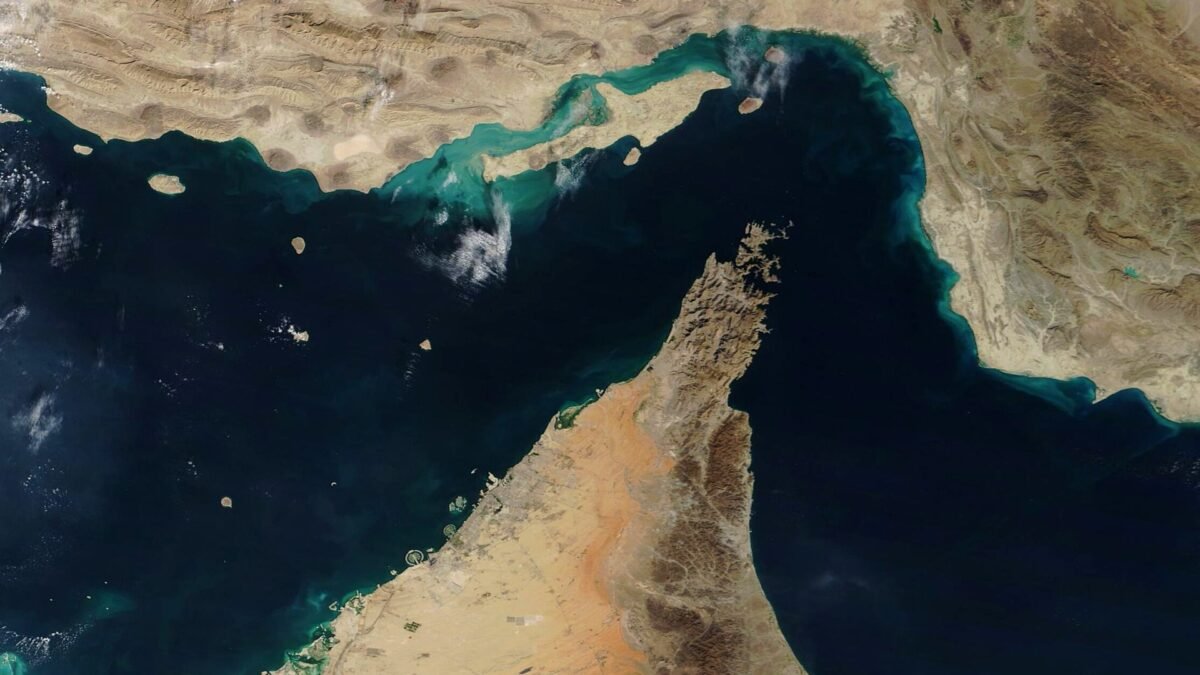
Contacts continue, but no breakthrough yet
Contacts between Iran and the United States aimed at ending their eight-month war are continuing, Iran’s foreign ministry said on Monday, after days of talks with Qatari mediators ended with altered proposals but no breakthrough, according to Reuters.
“I can tell you that the dialogues are continuing. However, the issue is complex,” Foreign Ministry spokesperson Esmaeil Baghaei said, according to Reuters, adding that the two sides were exchanging messages through mediators.
The Iranian delegation left Doha on Sunday, but its departure was not a walkout, an official briefed on the talks told Reuters. A draft proposal for a deal with the United States is now being circulated, and a follow-up meeting is under discussion, the official said.
Qatari mediators were travelling to Tehran late on Monday to discuss a version of the draft deal with Iranian Foreign Minister Abbas Araghchi, Reuters reported, citing an official. There was no official confirmation of the trip from either government, and no agreement has been announced.
The talks centre on a plan Iran submitted in September to end the war. The proposal, in its original form, called for the United States to end its naval blockade on Iranian ports, for Iran to reopen the Strait of Hormuz, for Washington to grant a waiver on Iranian oil sales and to cancel new sanctions, and for the two sides then to move on to talks on other outstanding issues. US President Donald Trump rejected that plan in September, according to Reuters.
What has changed is the timetable. Araghchi said on Saturday that the proposal could be shortened, and Baghaei confirmed on Monday that the seven-step plan had been condensed so that it could be implemented within two days. Under the compressed sequence described by Iranian officials, the United States would take initial measures on the first day and the strait would reopen to shipping on the second, according to reports of the proposal.
Baghaei stressed, however, that condensing the plan did not change Iran’s underlying position. A return to talks on the country’s nuclear programme could only happen after Tehran had verified that all of its conditions had been met, he said. Asked whether the possibility of transferring Iran’s stockpile of highly enriched uranium to another country had been raised in the talks, and whether Iran might agree to that, he said no. Iran has not yet reached the stage of discussing renewed inspections by the International Atomic Energy Agency, and it remains committed to the Nuclear Non-Proliferation Treaty, according to Iranian officials.
Deputy Foreign Minister Kazem Gharibabadi travelled to Doha to help pass messages to Washington through the Qatari mediators, Baghaei said. Araghchi, who was on a one-day visit to neighbouring Turkmenistan on Monday, has said the final outcome depends on the answers Washington gives to what he called the “Iranian questions”.
Iranian President Masoud Pezeshkian has said the country’s new supreme leader gave his government the authority to pursue negotiations with the United States, according to Radio Free Europe/Radio Liberty.
Markets react to hope — and to fear
Oil prices fell nearly 4 percent on Monday on hopes that the latest round of mediation could lead to a diplomatic solution, according to Reuters. Brent crude fell by more than 3 percent in early trading, after Iranian and Qatari officials held a third straight day of talks aimed at pushing for a deal to end the war.
Yet Iranian sources told Reuters they believed a new American attack was still more likely than a deal. That tension — falling oil prices on the one hand, and a belief in Tehran that war is more probable than peace on the other — captures the strange, suspended state of the conflict as the United States votes in its midterm elections on Tuesday.
Trump has repeatedly said there would be no new attack on Iran before Tuesday’s midterm elections, according to Reuters. Iran has said it will respond to any resumed attack aggressively, with plans to strike targets both within and outside the Middle East.
On Sunday evening, Trump told reporters he and Israeli Prime Minister Benjamin Netanyahu had a “very good” call on Saturday. He said they discussed Iran but gave no details, according to the Associated Press. There was no word from Netanyahu or his office about the call.
The call came against a shifting political backdrop in Israel. Even before Netanyahu and his bloc of allies lost their majority in parliament in last week’s election, there were growing fears that Netanyahu was pushing for new strikes against Iran in an effort to stay in power in an emergency government during renewed war, according to the Associated Press. Since last Tuesday’s election, the prime minister has publicly commented only on the vote.
Tehran’s warnings grow sharper
While the diplomacy has continued, Iran’s public messaging has hardened. The new supreme leader, Ayatollah Mojtaba Khamenei, met with Iran’s military chiefs and said the response to “any kind and level of threat” from the United States or Israel should be immediate and without “geographic limits”, and he urged an expansion of the list of potential targets, according to the Associated Press.
Khamenei has still not been seen publicly since the opening strikes by Israel and the United States on 28 February killed his father, the previous supreme leader, Ayatollah Ali Khamenei, according to the Associated Press.
Iran’s security chief, Mohsen Rezaei, warned on social media that any attack would bring “devastating blows on the aggressor using new weapons”. In an interview with state television, Rezaei said “the tone has completely changed” from the United States and called it a “very good sign”. He gave no details about the letter he received from US Vice President JD Vance, which Iran acknowledged last week, and said he had not responded, according to the Associated Press.
Rezaei also said no decision had been made to change Iran’s nuclear doctrine, though some Iranians had questioned whether it should change if the country were attacked again. Tehran has insisted its nuclear programme is peaceful. Washington seeks to prevent Iran from obtaining a nuclear weapon and wants to address the issue in any new talks. Iran wants to discuss it later.
Trump has continued to alternate between public comments about pursuing talks with Iran and threats to strike it hard. At a campaign rally, he again threatened to resume air strikes against Iran, according to Radio Free Europe/Radio Liberty.
A war that has reshaped the Gulf
The war, which the United States and Israel launched suddenly on 28 February, has led to Iran’s closure of the Strait of Hormuz, a US blockade on Iranian ports, repeated bouts of Iranian drone and missile fire on Gulf states, and renewed conflict in Yemen, according to Reuters.
The strait is the world’s most important oil chokepoint, and its closure has pushed shipping and energy costs sharply higher. Shipping through the waterway has fallen to roughly 70 percent below pre-conflict levels, according to figures from the United Kingdom Maritime Trade Operations cited in recent reporting. More attacks on commercial ships were reported in the Strait of Hormuz during October than in any month since March, during the war’s opening weeks, according to the Associated Press.
Underscoring the risks to global energy supply, a Qatari liquefied natural gas tanker was struck in the Gulf by unidentified objects on Friday, its operator Nakilat said on Sunday, according to Reuters. While attacks on oil tankers in the Gulf and the Red Sea have been common during the conflict, attacks on LNG carriers have been rare, with the last reported incident involving a Qatari tanker happening in early July.
The mood at the Manama Dialogue, the annual security summit in Bahrain organised by the International Institute for Strategic Studies, was grim, according to the Associated Press. United Arab Emirates presidential adviser Anwar Gargash told attendees that “the rules of logic” show the American and Iranian stances are far apart, and “if these positions are not bridged, then we have to worry about the worst”. Egypt’s Foreign Minister Badr Abdelatty told the gathering that the next escalation “will be more dangerous, more destructive, and it will lead to nowhere”. Gulf nations have spent billions of dollars to boost their defence capabilities since the war began.
China and Russia weigh in
Amid fears the conflict could reignite after Tuesday’s midterm elections, China and Russia both spoke out on Monday against the possibility of renewed military action, according to Reuters.
China’s Foreign Minister Wang Yi said all parties to the conflict should focus on political solutions rather than resorting to arms again, after a meeting with senior Iranian security official Ali Bagheri Kani in Beijing, according to Reuters. China will send a special envoy to Iran, Oman and Saudi Arabia in early to mid-November, Foreign Ministry spokesperson Mao Ning told reporters on Monday, according to the Associated Press. “The Middle East Gulf region should not become an arena for great-power rivalry and geopolitical conflict,” Chinese President Xi Jinping told Oman’s sultan, according to a readout from China’s Foreign Ministry. China and Oman called for a return to dialogue.
In Moscow, the Russian Foreign Ministry said reports of new military action against Iran were a cause for extreme concern and called for increased diplomatic efforts, according to Reuters. Russian Foreign Ministry spokesperson Maria Zakharova described reports of possible new strikes against Iran as “alarming”, according to the Associated Press.
Andreas Krieg, a professor at King’s College London, summed up the regional dynamic on social media: “The standoff in the Gulf between the U.S. and Iran is really between Qatar and Israel,” he wrote, according to the Associated Press. “Qatar is tirelessly working on a diplomatic offramp with the region’s backing while Israel is looking for military ways to throw the region under the bus.”
Analysis: Why It Matters
A negotiation conducted in the shadow of a deadline
The most striking feature of the Doha process is the clock hanging over it. Trump has said there will be no new attack before the midterm elections on Tuesday, and almost every actor in the region reads that as a promise with an expiry date. The Iranian delegation’s departure from Doha on Sunday, the circulation of a draft proposal, and the Qatari mediators’ journey to Tehran on Monday night all look like an attempt to build something concrete before that window closes. Whether the deadline concentrates minds or simply freezes them is the open question. Deadlines can force compromise, but they can also encourage each side to hold its best cards until the other side blinks — and in this case, both sides have powerful reasons to believe that time is on their side.
For Washington, the calculation is complicated by the election itself. A president who has staked much of his political identity on strength abroad does not want a new war breaking out on the eve of a vote, but he also does not want to be seen as having been outmanoeuvred by Tehran. For Iran, the midterm timing is a double-edged sword: it creates a brief period in which an attack is unlikely, which is useful for diplomacy, but it also means that whatever is agreed now could be re-examined, or abandoned, once the votes are counted.
The two-day offer is a signal, not just a timetable
Iran’s decision to compress its seven-step plan from seven days to two is worth reading as a political signal rather than a mere logistical adjustment. By offering to reopen the Strait of Hormuz within 48 hours of a deal, Tehran is telling Washington, the Gulf states and the oil markets that it can deliver a visible, immediate benefit. The strait is the one card Iran holds that affects every economy on earth, and offering to play it quickly is a way of making the cost of walking away from the table concrete and immediate.
But the offer is also carefully conditional. The strait reopens only if the United States moves first — ending the blockade, restoring oil waivers, releasing frozen assets and cancelling new sanctions. That sequencing matters enormously. Iran wants the relief before it gives up its leverage; Washington, which rejected the original plan in September, wants the nuclear question addressed from the start and is unlikely to accept a deal that postpones it indefinitely. The two-day timetable does not resolve that sequencing dispute; it sharpens it. Each side is being asked to trust that the other will follow through, and after eight months of war, trust is the scarcest commodity in the room.
Qatar has become the indispensable middleman
Qatar’s role in this process deserves attention in its own right. A small state with enormous energy wealth and a long habit of talking to everyone, Qatar has become the channel through which two governments that will not speak directly to each other can still negotiate. Its mediators have spent days shuttling between Tehran and Doha, and now they are carrying a draft proposal back to the Iranian capital. That is a remarkable position for a country that has itself been on the receiving end of Iranian missile fire during this war.
Qatar’s interest is straightforward: it is a major LNG exporter whose tankers must pass through the strait, and one of its own LNG carriers was struck on Friday. But its influence also reflects a broader regional reality. The Gulf states, which have spent billions on defence since February, have concluded that they cannot buy their way out of this conflict and that only a political settlement will protect their economies. The Manama Dialogue made that anxiety public. When the UAE’s most senior foreign-policy adviser warns that the two sides’ positions are so far apart that “we have to worry about the worst”, that is not diplomatic boilerplate. It is a region telling Washington and Tehran that it cannot absorb another round of war.
The nuclear question cannot be postponed forever
The hardest problem in the negotiations is the one both sides keep trying to defer. Washington wants Iran’s nuclear programme on the table from the beginning. Tehran insists that nuclear talks can only follow once it has verified that its conditions — the end of the blockade, sanctions relief, the release of frozen assets — have been met. Baghaei’s statement on Monday that the transfer of highly enriched uranium abroad was not even raised in Doha shows how far apart the two sides remain on this point.
This is not a technical disagreement. It is a disagreement about the nature of the deal itself. From Washington’s perspective, a settlement that leaves Iran’s nuclear programme untouched is no settlement at all, because the programme was the original justification for the February strikes. From Tehran’s perspective, giving up nuclear leverage before receiving sanctions relief would repeat what it sees as the mistake of earlier agreements — concessions first, relief later, or never. The fact that Iran’s security chief has said no decision has been made to change the country’s nuclear doctrine, even while some voices in Tehran have questioned whether it should change, suggests that this debate is live inside Iran as well. A deal that postpones the nuclear question may be the only deal available now, but it would leave the most dangerous issue unresolved — and therefore leave the war, in a sense, unfinished.
The regional picture is darker than the diplomacy suggests
It is worth stepping back from the Doha talks to look at the wider region, because the picture there is bleak. In Gaza, the ceasefire that took effect on 10 October 2025 has not stopped the killing: Gaza’s health ministry reported that 143 Palestinians were killed and 674 injured in October 2026 alone, bringing the toll since the ceasefire to 1,583 killed and 5,696 injured by the end of the month, according to the ministry’s figures. In Lebanon, Israel has continued airstrikes against what it says are Hezbollah targets, and a ceasefire that has held for about a year is under strain as a deadline for Hezbollah’s disarmament approaches. In Syria, Israel continues to hold positions inside Syrian territory after its move into the Golan Heights following the collapse of the Assad regime.
None of this is separate from the Iran question. The war with Iran, the Gaza ceasefire, the Lebanon front and the Syrian presence are all threads of the same regional crisis, and a deal on Hormuz would not, by itself, resolve any of the others. But it would remove the single most dangerous escalation risk — a full-scale return to war between the United States, Israel and Iran — and that is why the Doha talks matter beyond their immediate subject. If they fail, the region does not simply return to the status quo. It returns to a status quo in which every actor has been preparing for the next round.
What to Watch Next
- The Qatari mediators’ meetings in Tehran: What the mediators carry back from their late-Monday meetings with Araghchi — and whether a follow-up round is scheduled — will be the first real test of whether the circulating draft has a future.
- Washington’s response: The ball is, by Tehran’s own account, in the American court. Whether the Trump administration accepts, amends or rejects the condensed two-day plan will determine whether the draft becomes a deal or another rejected proposal.
- The midterm results: How the elections on Tuesday reshape the political incentives in Washington — and whether the promise of no attack before the vote holds into Wednesday and beyond — will set the tone for everything that follows.
- Oil and shipping markets: Brent crude fell sharply on Monday on hopes of a deal. Any sign of progress — or of renewed escalation — will move prices immediately, and the tanker traffic through Hormuz will be the most visible indicator of whether the waterway is genuinely reopening.
- China’s special envoy: Beijing’s decision to send an envoy to Iran, Oman and Saudi Arabia in early to mid-November signals that China sees an opening for a diplomatic role. Whether that helps or complicates the Qatari channel remains to be seen.
Sources
- Reuters — “Iran says contacts over ending war continue as talks end with no breakthrough” (2 November 2026)
- Associated Press — “Where Things Stand on Iran After Tense Weekend as Its Delegation Has Left Qatar” (2 November 2026)
- Reuters via The Business Standard — “Iranians have left Doha talks, draft proposal for US deal being circulated, official says” (2 November 2026)
- Clash Report — “Qatari Mediators Travel to Tehran to Discuss Draft US-Iran Deal” (2 November 2026, citing Reuters)
- Reuters via The Hindu BusinessLine — “Oil prices fall over 1% as Iran-Qatar talks raise hopes of diplomatic progress” (2 November 2026)

About the Author — Abdul Mannan
Related Articles
Iran Offers Two-Day Plan to Reopen Strait of Hormuz as Oil Slides and Washington Weighs Its Answer
Iran says the world's most important oil chokepoint could reopen within two days if the United States meets…
UN Demands Investigation After Rights Worker Dies in Houthi Custody in Yemen
The UN says Mohammad el Shami, a human rights officer held by the Houthis since June 2024, died…
Saudi Arabia Says It Shot Down Houthi Drones Over Makkah and Madinah as Holy-City Attacks Escalate
Saudi air defences intercepted Houthi drones over Makkah and Madinah on Friday and Saturday, the Saudi-led coalition said,…