
Yonsei University Brings IBM’s Nighthawk Quantum Processor Online in a World First Outside IBM

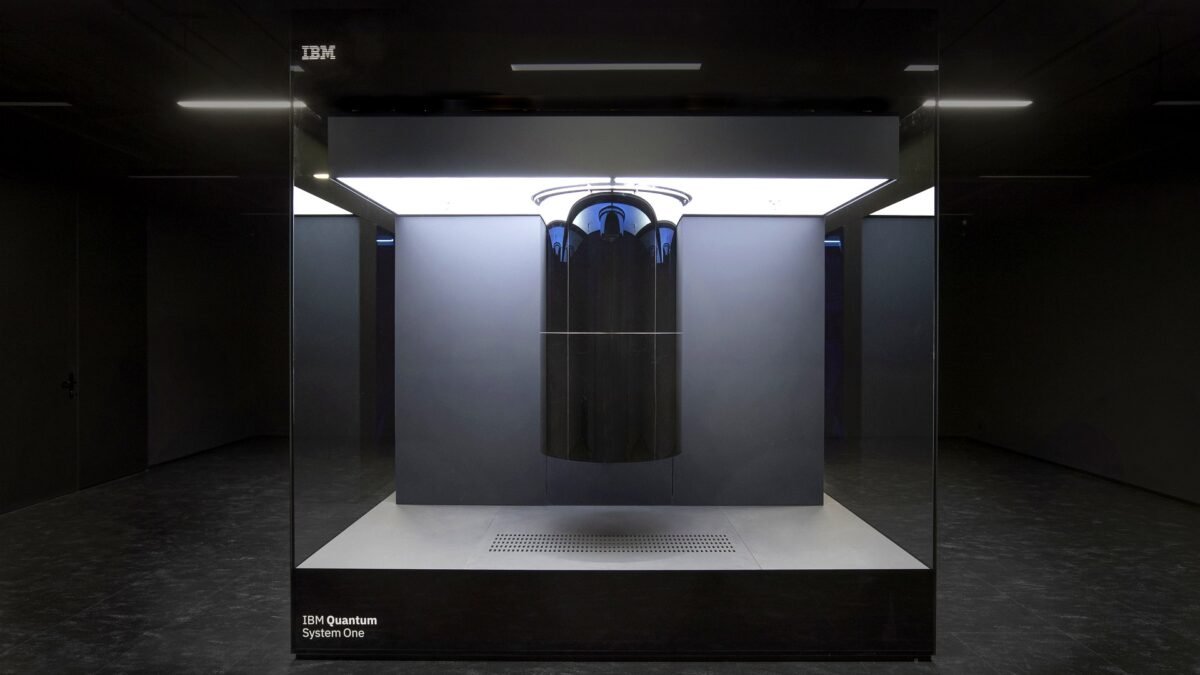
Yonsei University in South Korea has switched on IBM’s fastest quantum processor, the Nighthawk, in the first deployment of the chip outside IBM’s own facilities, in a move the university says could cut the time needed to identify new drug targets from up to two years to five months.
The university held a launch ceremony for its next-generation quantum computing platform on Tuesday, 4 November, at its International Campus in Songdo, Incheon, where it upgraded the quantum processing unit of the IBM Quantum System One it installed in 2024, according to the Seoul Economic Daily. The upgrade replaces the 127-qubit Eagle processor that has run at Yonsei for two years with the 458-qubit IBM Nighthawk R2, a chip IBM describes as its fastest quantum processor.
The new system can execute more than 100,000 quantum circuits per second, according to Jerry Chow, an IBM Fellow and the company’s chief technology officer for quantum-centric supercomputing, who attended the ceremony. That is 25 times the circuit throughput of IBM’s previous-generation Heron processor, according to Donga Science, and the chip’s two-qubit gate accuracy is about 99.7 per cent, meaning errors occur roughly three times in every 1,000 operations.
“Researchers will be able to obtain more computational results quickly and accelerate scientific discovery,” Chow said, according to the Seoul Economic Daily.
Yonsei is the first institution outside IBM to operate a Nighthawk processor, and the first university in the world to do so, according to Donga Science. The only other Nighthawk system in operation sits at IBM’s own facility in Miami, according to reporting from August, when the Yonsei upgrade was first announced.
The university plans to use the machine to study complex biological systems and to work on technology for detecting and correcting errors in quantum computers, according to the Seoul Economic Daily. Its headline goal is drug discovery: building an algorithm pipeline that combines quantum computing and artificial intelligence to shorten sharply the timelines of pharmaceutical research.
“We are building an algorithm pipeline that combines quantum computing and artificial intelligence, with the goal of cutting the time to identify drug targets from up to two years to five months, and the time to turn a compound into a drug from four years to two years,” Chung Jae-ho, head of Yonsei University’s quantum initiative, said at the ceremony, according to the Seoul Economic Daily. “Compared with AI algorithms used as standard in industry, we expect a 40% to 50% improvement in speed.”
The ceremony was attended by Yonsei University President Yoon Dong-sup, Chung, and Chow, according to Yonhap News Agency, which photographed the three men in front of the machine at the university’s Quantum Convergence Research Center.
A machine built for biology’s hardest problems
Yonsei’s first target for the upgraded machine is a rare and devastating disease. Working with RIKEN, Japan’s national institute for physical and chemical research, the university will use the Nighthawk system to study Leigh syndrome, a rare hereditary neuro-metabolic disorder in which dysfunction of the mitochondria, the cell’s energy-producing organelles, leads to degeneration of the central nervous system, according to Donga Science.
Leigh syndrome, also known as subacute necrotizing encephalomyelopathy, has no cure, and its median age of death is 2.4 years, according to Tech Times, which reported on the Yonsei upgrade plans in August. Yonsei’s team plans to connect its quantum computer to Fugaku, the supercomputer in Kobe, Japan, and run hybrid computations that combine the strengths of classical and quantum machines, according to Donga Science.
The strategy is to attack the complex computational steps that are cited as major bottlenecks in the pharmaceutical industry’s drug development process, according to Donga Science. Identifying the biological mechanism of a disease — the precise molecular target a drug must act on — is one of the slowest and most uncertain stages of developing a new medicine, and it is the stage Yonsei says its quantum-AI pipeline can compress from years to months.
Yonsei had already begun work on Leigh syndrome with its Eagle-based system, reviewing its first quantum-assisted computation results in August 2026 in discussion with RIKEN, according to reporting from August. The Nighthawk upgrade gives that programme a machine with far greater throughput and lower error rates, and the university is also launching Q-Bridge, a quantum-classical integration software platform with a repository of domain-specific algorithms, known as Q-Library, designed to let industrial partners feed in their own data and run hybrid algorithms without needing quantum expertise of their own, according to the Quantum Computing Report.
The university is also expanding its international cooperation. It has agreed to conduct joint research on treatments for intractable diseases with RIKEN, according to the Seoul Economic Daily, and it is in talks with the University of Cambridge in Britain about a reciprocal arrangement under which Cambridge would set up a quantum research institute at Yonsei’s international campus and Yonsei would place a branch of its quantum medicine institute on the Cambridge campus.
“Our goal is to use this for a wide range of purposes — not only challenges in biopharmaceuticals, but also space, climate change, the energy crisis and many of the problems of the AI era,” Chung said, according to the Seoul Economic Daily.
From Eagle to Nighthawk in two years
Yonsei’s quantum programme has moved quickly. In 2024, the university became the second university in the world to adopt an IBM Quantum System One, installing the 127-qubit Eagle processor at its Songdo campus, according to Donga Science. South Korea became the fifth country to host an IBM utility-scale quantum computer, after the United States, Canada, Germany and Japan.
IBM unveiled the Nighthawk processor at its annual Quantum Developer Conference in November 2025, alongside the experimental Loon processor, according to Tech Times. The Yonsei upgrade was announced in August 2026, when the university said it would replace Eagle with Nighthawk in November, making it only the second institution in the world — after IBM’s Miami facility — to operate the chip.
The upgrade itself did not incur additional costs for the university, according to Donga Science. Chung described it as a follow-up measure to the initial installation two years ago, and said the university administration had a duty to secure world-class infrastructure for its researchers and teachers. He pointed to this year’s Nobel Prize in Physics, awarded for work on neutrino-observation equipment in Antarctica, as an example of what access to the right instruments can make possible, according to Donga Science.
“If there are resources accessible to us for tackling grand challenges, I believe a university should secure them,” Chung said, according to Donga Science. “This is naturally something the university administration must do for professors who conduct research and provide education at the university.”
The machine is already a working research and teaching tool. Around 2,000 people have received training on Yonsei’s IBM quantum computer each year over the past two years, and more than 100 related papers have been published, according to Donga Science. Master’s and doctoral students in the university’s quantum information science programme will have access to the new processor, according to the Seoul Economic Daily, and the university jointly runs a voucher programme with the Korea Institute of Science and Technology to meet domestic startups’ demand for quantum computing time.
Yonsei is carrying out quantum projects backed by three South Korean government ministries — the Ministry of Science and ICT, the Ministry of Trade, Industry and Energy, and the Ministry of Health and Welfare — covering quantum advantage, an industrial innovation foundation for quantum computers, and drug development using quantum computers, according to Donga Science.
The launch coincides with Yonsei Quantum Week 2026, a global quantum science event the university is hosting from 2 to 10 November. The Yonsei Quantum International Conference runs from 4 to 6 November, with researchers from South Korea and abroad presenting their latest results, and an industry session featuring global quantum technology companies including IBM, D-Wave, Quantinuum, IQM, Pasqal, Quandela and IonQ, according to Donga Science.
Analysis: Why It Matters
Speed, not just qubits, is the story
Quantum computing announcements are usually framed in qubits, and Nighthawk’s headline numbers — 458 physically implemented qubits, of which 120 are programmable qubits that users can directly program — are impressive on their own. But the figure that matters most for working scientists is the one Jerry Chow emphasised: more than 100,000 quantum circuits per second, 25 times the throughput of the previous generation. Quantum algorithms do not run once and deliver an answer; they run thousands or millions of short circuits, and the results are combined and refined. A machine that runs circuits 25 times faster does not merely save time — it changes what experiments are feasible at all, because researchers can test more candidate molecules, run more error-mitigation routines, and iterate on their algorithms in hours rather than weeks. The 99.7 per cent two-qubit gate accuracy matters for the same reason: every error compounds, and a lower error rate means longer, more ambitious computations can complete before noise swamps the result. Nighthawk’s significance is that it advances all three measures at once — scale, speed and accuracy — rather than trading one against another.
A university, not a corporate lab, gets the flagship first
It is unusual for a cutting-edge chip to reach a university before any paying customer. IBM’s decision to place its fastest processor at Yonsei — the first deployment outside its own walls — says something about how the quantum industry now sees its path to usefulness. The machines are no longer only research objects inside IBM, Google or a national laboratory; they are instruments that universities can operate, teach with and open to industry. Yonsei’s record supports that reading: 2,000 people trained a year, more than 100 papers, a voucher scheme that lets small Korean startups buy time on the machine, and a software platform, Q-Bridge, built specifically so companies without quantum specialists can use it. The university is functioning as a national quantum utility, not just a research group. That model — a flagship machine embedded in a university, shared with industry and students — is one other countries are watching, because the scarcest resource in quantum computing is not hardware but people who know how to use it.
The drug-discovery test case is the right one
Drug discovery is the application quantum computing’s advocates have promised for longest, and also the one where the gap between promise and proof has been widest. Yonsei’s choice of Leigh syndrome as its flagship project is therefore shrewd. It is a disease with a known biological mechanism — mitochondrial dysfunction — a desperate unmet need, and a small, well-defined research question: identify the mechanism and the molecular targets a treatment would need to hit. If a quantum-AI pipeline can genuinely cut target identification from two years to five months on a problem like this, the result will be measurable, publishable and hard to dismiss as marketing. The hybrid approach matters too. Nobody expects a quantum computer to replace classical supercomputers; the realistic model is the one Yonsei and RIKEN are building, in which Fugaku does the heavy classical lifting and the quantum machine handles the specific calculations — molecular simulation, optimisation — where quantum mechanics gives it an edge. The first results from the Eagle-based Leigh syndrome work were reviewed in August; the Nighthawk upgrade is, in effect, the experiment’s second phase, and its results will be watched as a benchmark for the whole field.
South Korea is buying a seat at the quantum table
South Korea was the fifth country to host an IBM utility-scale quantum computer, and Yonsei’s upgrade keeps it in a small club. The three-ministry backing — science, trade and health — shows that Seoul treats quantum computing as industrial policy, not just academic research: the same machine is expected to serve drug development, industrial innovation and the training of a workforce. The Cambridge talks point in the same direction. A reciprocal institute arrangement between Yonsei and one of Britain’s oldest universities would give South Korea a permanent bridge into European quantum research, and give Cambridge access to a flagship machine and a clinical pipeline it does not have at home. In a field where progress depends on scarce hardware, scarce talent and scarce data, partnerships like these are how mid-sized countries stay competitive against the United States and China, which can afford to build everything themselves.
The road to fault tolerance runs through machines like this
Nobody at Yonsei or IBM is claiming that Nighthawk is the machine that will change the world on its own. It is, by IBM’s own roadmap, a stepping stone: the company aims to reach 500 qubits by 2027 and more than 1,000 by 2028, with the goal of a fault-tolerant quantum computer — one that corrects its own errors faster than they accumulate — by 2029, according to Donga Science. That is why Yonsei’s stated research agenda includes error detection and correction alongside drug discovery. The machines that eventually deliver on quantum computing’s promises will not be the ones with the most qubits, but the ones whose errors can be managed, and the techniques for doing that are being worked out now, on machines like Nighthawk, by the students and researchers who will build the next generation. Yonsei’s upgrade is therefore best read as an investment in the learning curve: every paper, every trained student and every startup that runs a job on this machine shortens the distance to the fault-tolerant era.
What to Watch Next
- First Leigh syndrome results on Nighthawk: Yonsei and RIKEN reviewed their first quantum-assisted results in August on the older Eagle chip. The first computations on Nighthawk — and whether the promised 40 to 50 per cent speed improvement over standard AI methods materialises — will be the earliest hard evidence for the university’s drug-discovery claims.
- Q-Bridge and industry uptake: The quantum-classical platform Yonsei is launching alongside the upgrade is meant to bring Korean companies onto the machine. Watch for announcements of industrial users, particularly in pharmaceuticals and materials, and for the first published results from the KIST startup voucher programme.
- The Cambridge talks: Yonsei said it is in discussions for Cambridge to establish a quantum research institute at its Songdo campus, with a Yonsei quantum medicine branch in Cambridge. A signed agreement would be the first of its kind between a Korean university and a British one in quantum computing.
- IBM’s next milestones: IBM has set targets of 500 qubits by 2027 and more than 1,000 by 2028, on the way to a fault-tolerant machine by 2029. The next Nighthawk deployments after Yonsei — and whether other universities or companies follow — will show how quickly the chip moves from a flagship to a standard.
- Yonsei Quantum Week outcomes: The university’s international conference runs until 6 November, with an industry session bringing together IBM, D-Wave, Quantinuum, IQM, Pasqal, Quandela and IonQ. Announcements or collaborations emerging from the event will indicate how Yonsei intends to use its new position in the global quantum community.
Sources
- Seoul Economic Daily — Yonsei Launches IBM’s Newest Quantum Computer to Speed Drug Discovery
- Donga Science — Yonsei University installs IBM Quantum Nighthawk processor capable of 100,000 ops per second
- Yonhap News Agency via K-VIBE — Launch of next-generation quantum computing platform
- Tech Times — IBM Nighthawk Reaches South Korea: First Deployment Outside IBM Targets Leigh Syndrome
- Quantum Computing Report — Yonsei University to Upgrade On-Premises IBM Quantum System One to Next-Generation Nighthawk QPU

About the Author — Abdul Mannan
Related Articles

Google Dismantles Botnet Hidden in 1.3 Million Android TV Boxes After Maker Accused of Baking In the Backdoor
Google says Shenzhen-based Videostrong built a backdoor into the firmware of more than 1.3 million Android TV boxes…
China Lays Out Four-Mission Plan to Land Astronauts on the Moon Before 2030 as New Space Race With US Takes Shape
China has published its most detailed schedule yet for landing astronauts on the Moon, with uncrewed test flights…

Hubble Finds Nearby Dwarf Galaxies Have Lost Nearly 90% of the Oxygen Their Stars Made
A Hubble census of 37 nearby dwarf galaxies finds they retain only about 11 per cent of the…