
Dow Soars 1,569 Points in Best Post-Midterm Rally Since 1982 as Democrats’ Sweep Sends Oil Plunging

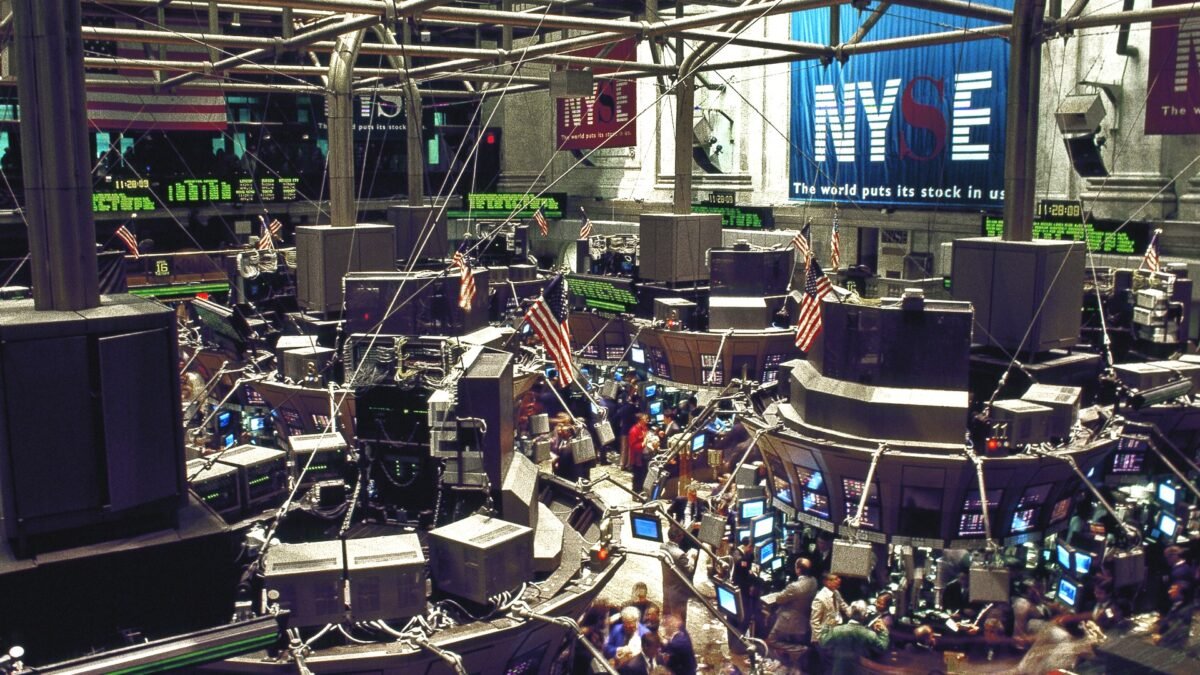
Wall Street staged one of the most dramatic relief rallies in its history on Wednesday, as the Dow Jones Industrial Average surged 1,569 points after voters handed Democrats control of both chambers of Congress in the midterm elections, a result traders read as a brake on the war with Iran, on runaway oil prices and on the political uncertainty that had hung over markets for months.
The Dow climbed 3 per cent to close at 53,356.12, according to CNN, its best single day since April 2025 and its biggest gain on the day after a midterm election since 1982, according to data from CFRA Research cited by CNN. Investopedia reported that the 1,569-point jump was the fifth-largest one-day points gain in the history of the blue-chip index, topping the 1,500-point rise recorded the day after President Donald Trump won a second term in November 2024.
The rally was broad. The S&P 500 rose 1.58 per cent to close at 7,689, its second-biggest single-day gain after a midterm election since 1982, behind only the rally that followed the 2018 midterms, according to CNN. The Nasdaq Composite gained 1.44 per cent, its biggest one-day post-midterm rise since 2018. Barron’s reported that the Dow was on track during the session for its best post-midterm performance since 1982, rising 3.1 per cent, or 1,623 points, at one stage.
Behind the surge lay a simple calculation. Investors had spent months pricing in two risks at once: a war in the Middle East that had pushed energy prices sharply higher, and an election whose outcome, and whose acceptance by the losing side, were both uncertain. On Wednesday, both risks appeared to recede at the same time. Stock futures had initially fallen on Tuesday night as results came in, but they erased those losses and gained overnight as the scale of the Democratic victory became clear and as Mr Trump signalled that he would accept the result, according to CNN.
“The most important thing was the result was very clear,” David Kelly, chief global strategist at J.P. Morgan Asset Management, told MarketWatch. “A week ago, there was uncertainty” around interference with ballots and whether the president would accept the result, he said. “There’s been a significant reduction in uncertainty over the past couple of hours.”
Oil plunges as traders bet on an end to the Iran war
If the stock market’s rally was striking, the move in oil was just as dramatic, and the two were closely linked. Brent crude fell almost 8.7 per cent on Wednesday and settled at $94.62 a barrel, its lowest settlement since 31 August, according to CNN. MarketWatch reported that global oil prices plunged more than 8 per cent to settle at the same level.
Reuters, reporting on Thursday morning in Asia, said Brent had dived nearly 9 per cent overnight and fallen below $100 a barrel, and that it had dropped by about 20 per cent so far in the week. If that decline is sustained through Friday’s close, Reuters reported, it would be the largest weekly drop in oil prices since a week in April 2020, when United States crude briefly fell into negative territory. In early Asian trading on Thursday, Brent was testing its overnight lows at $93.50, according to Reuters.
The trigger was political. Vice President JD Vance wrote on X that the war was the reason Republicans had lost, and Mr Trump himself acknowledged on Wednesday that the conflict had played a role in the Republican defeat, according to Reuters. Mr Vance’s post was blunt: “The reason we lost is the war,” he wrote, adding, according to CNN, that “the president himself said so last night”. Oil prices accelerated their declines after the vice president’s comments, CNN reported.
Traders took the message to mean that a president facing a Democratic Congress, and hurt by the high energy prices the war had caused, would be less likely to escalate the conflict with Iran, according to Reuters. “This is really a broad relief rally that I’d put at the feet of oil — and on the hope for a closer end of the Iran war,” Rob Haworth, senior investment strategist at U.S. Bank, told MarketWatch on Wednesday afternoon.
Not everyone agreed. “Traders are betting that the administration is going to quit this war because the [midterms] shellacking was bigger than anyone expected,” Bob McNally, president and founder of Rapidan Energy Group, told CNN. “We’re not buying it. We think escalation is more likely.” That caution is worth remembering: the war has been running since late February 2026, when the United States and Israel attacked Iran, and a single election result does not end it.
Still, the market’s verdict on the day was unmistakable. A resolution of the conflict could push oil prices lower still, alleviating inflation pressure and reducing the likelihood of future interest rate rises, Reuters reported. That prospect helped send bond yields lower and the dollar to a one-month low of $1.1273 per euro, according to Reuters. The yield on the benchmark 10-year US Treasury fell 6 basis points overnight and by a further basis point in early Tokyo trade to 4.87 per cent, while two-year yields fell about 2 basis points to 4.56 per cent.
Gridlock, welcomed by Wall Street
The second force behind the rally was the prospect of divided government itself. With Democrats set to control the House of Representatives and the Senate, and Mr Trump remaining in the White House with his veto power, investors warmed to the idea that Washington would find it harder to deliver sharp policy shifts in either direction.
“The combination of a large Democratic majority in Congress and President Trump’s statement that he is willing to work with the opposition should act as a break on extreme policy outcomes and bring down risk premia,” George Saravelos, global head of foreign exchange research at Deutsche Bank, said in a note cited by CNN.
Deutsche Bank analysts wrote in a note cited by CNN that divided government “has generally made it harder for fiscal stimulus to be passed”, adding: “So, that’s eased concerns on the fiscal trajectory a bit.” Expectations that the election outcome could keep a lid on excessive government borrowing and spending bolstered US government bonds, sending yields lower, according to CNN.
Charu Chanana, chief investment strategist at trading platform Saxo, said in a note on Wednesday cited by CNN that a Democratic-controlled Congress “would significantly constrain Trump’s legislative agenda, particularly on taxes, fiscal stimulus and spending”. But she added that Democrats “would not have a free hand to rewrite policy either, because Trump retains veto power.”
The scale of the Democratic victory caught many traders off guard, even though Wall Street analysts had expected a strong Democratic performance. “The magnitude of the victory is what has caught markets off guard,” Chris Weston, head of research at brokerage Pepperstone in Melbourne, told Reuters. Democrats won by 13 points nationwide, according to Libby Cantrill, PIMCO’s head of public policy, cited by Barron’s.
Mr Trump, speaking on camera on Wednesday for the first time since the midterms, said he “probably” would work with Democrats in Washington, according to MarketWatch. He also suggested that voters had opposed high oil prices rather than the war itself. The bulk of his comments, MarketWatch reported, were focused on ballroom renovations at the White House.
History was also on the market’s side. The S&P 500 has risen by an average of 15.5 per cent in the six months after the last 14 midterm elections, dating back to 1970, according to figures from investment firm Edward Jones cited by CBS News. “That rhymes with history,” Kevin Gordon, head of macro research and strategy at Charles Schwab, told MarketWatch, noting that markets tend to do better once election results are known. The Cboe Volatility Index, Wall Street’s “fear gauge”, tumbled sharply on Wednesday, according to MarketWatch, while CNN reported that it sank by almost a fifth.
Winners and losers: solar soars, data centres sink
Not every part of the market joined the celebration, and the split between winners and losers told its own story about what investors think the new Congress will do.
Solar power companies and other renewable energy stocks jumped the most, according to Reuters, in anticipation that Democrats would boost support for renewables. Shares of dollar stores and hospital owners also led some of Wednesday’s gains, according to the JournalArta report of the session, as investors assessed which businesses could benefit from the election results.
Microsoft rose 7.2 per cent and was on track for a new record high, according to Barron’s, one of the strongest performances among the Dow’s components. Most of the index’s 30 stocks took part in the rally, Barron’s reported.
On the other side, shares of semiconductor chipmakers and companies involved in building data centres fell, as investors weighed what Democratic victories could mean for the artificial intelligence trade that has powered US markets. Nvidia fell 3 per cent, while an exchange-traded fund tracking AI infrastructure stocks dropped 9 per cent, according to CNN. Shares of CoreWeave and Nebius, two so-called neocloud companies that rent out computing power for the AI boom, sank roughly 10 per cent and 6.7 per cent respectively, CNN reported.
The reason was politics as much as economics. The rapid spread of AI data centres became a critical issue in many campaigns, and Democratic candidates who campaigned in part on moratoriums on data centre construction won striking victories in Texas and Georgia, according to Reuters. Investors are now asking whether there will be more moratoriums or restrictions that could slow the data centre buildout, CNN reported. Wall Street analysts had expected a strong Democratic performance, but the extent of the sweep caught some traders off guard, CNN noted, pointing out that on the prediction market Kalshi, odds for Gina Hinojosa to win the Texas governor’s race had been pinned at less than 20 per cent for most of the year.
The reaction spread to Asia on Thursday. South Korea’s chipmaker-heavy KOSPI slid 4 per cent and was not far from hitting a seven-month low in morning trade, according to Reuters. Taiwan’s benchmark index fell 1.8 per cent, while tech equipment suppliers dragged Japan’s Nikkei down 0.5 per cent. “To be sure, most analysts think it ultimately won’t dent demand for artificial intelligence, data centres or computer chips but do now expect at least a temporary slowdown,” Reuters reported.
Shares of Elon Musk’s Tesla and SpaceX fell about 3.3 per cent and 3.9 per cent respectively, according to CNN. Mr Musk has made Texas the home for his companies, and the Democratic victories in the state’s gubernatorial and Senate races are casting uncertainty over his future relationship with the state, CNN reported. Trump Media & Technology fell nearly 25 per cent, according to the JournalArta report. Elsewhere, shares of CVS Health dropped 12.5 per cent after the healthcare giant announced it would split into two companies, according to CNN.
“While a blue wave could spark volatility in certain sectors, such as tech and AI, given growing public opposition to the buildout of data centers, we believe markets can grind higher regardless of the outcome as investors applaud falling uncertainty,” Justin Buell, chief investment officer at Continuity Group, wrote in a note cited by CNN.
The context: eight months of war, inflation and dear money
To understand why one election day moved markets so violently, it helps to recall what the previous eight months had done to them. Since the United States and Israel attacked Iran in late February 2026, surging crude prices had pushed the 10-year Treasury yield to a 24-year high in October, according to MarketWatch, feeding hotter inflation and raising the cost of capital for businesses and consumers alike.
The pressure was visible across the Atlantic as well. Euro zone inflation hit a three-year high of 4 per cent in October, driven by energy costs, putting a December rate rise by the European Central Bank firmly in sight — a story this site reported earlier on Thursday. The US Federal Reserve, for its part, held its benchmark rate at 3.75 to 4.00 per cent at its most recent meeting, with officials watching the same energy-driven price pressures.
Against that backdrop, a sharp fall in oil prices does more than lift share prices for a day. Cheaper energy feeds directly into lower inflation, which in turn eases pressure on central banks to keep interest rates high, which lowers borrowing costs for households and companies. That chain of cause and effect is why bond yields fell and the dollar weakened on Wednesday, and why the rally reached well beyond the United States: European shares notched a two-month high, according to Reuters.
The midterm result itself was historic. Democrats swept both chambers of Congress, flipping seven Senate seats and 32 House seats, according to the USA Today report of the results, and won a majority of governorships for the first time in 16 years. The new Congress will not be seated until 3 January 2027, so the market’s reaction on Wednesday was a bet on the future, not a response to any law already passed. As Mr Haworth of U.S. Bank told MarketWatch, market participants were trying to look ahead, including to the possibility that the White House might take the midterm results “as a signal to wind down the conflict as expediently as possible”.
Democrats are now set to control “the purse” of the US government, Mr Kelly of J.P. Morgan Asset Management noted, which means Mr Trump’s ability to pursue the Iran war could be significantly reduced. That is a powerful claim, but it comes with a caveat that investors would do well to remember: the president retains the veto, and the power to conduct foreign policy, and the Democrats’ majority, however large, does not by itself end a war.
Analysis: Why It Matters
1. Relief, not euphoria — and the difference matters
Wednesday’s rally was, above all, a relief rally. Markets had spent months carrying two discounts at once: one for the war, and one for the election. The war discount showed up in oil prices and in bond yields; the election discount showed up in the volatility index and in the cautious positioning of traders who did not know whether the result would be accepted. When both discounts lifted on the same day, the rebound was always going to be violent. That is why the Dow’s 3 per cent gain, large as it is, should be read as the market removing a penalty rather than awarding a prize. Relief rallies are real and they can last, but they are built on the absence of bad news, not on the arrival of good news, and they can reverse quickly if the bad news returns.
2. Oil is now the market’s peace dividend — and its tripwire
The most important number of the day was not the Dow’s 1,569 points but Brent crude’s fall to $94.62. Oil has been the transmission belt between the war and everything else: it drove inflation higher, pushed bond yields to a 24-year high, raised the cost of capital and squeezed household budgets. A 20 per cent weekly fall in Brent, if it holds, reverses much of that damage in a single stroke. But the same logic works in reverse. If the ceasefire hopes prove premature — and Rapidan Energy’s Bob McNally warned explicitly that escalation is more likely than de-escalation — oil can snap back just as fast, and with it the inflation and rate pressures that have haunted markets all year. Investors have effectively placed a large bet that the war is winding down; the next few weeks will show whether that bet was wise.
3. Divided government is Wall Street’s comfort zone — until it is not
There is a long tradition on Wall Street of welcoming gridlock. A divided government, the argument goes, cannot do anything rash: it cannot spend recklessly, cannot raise taxes sharply and cannot rewrite the rules of business overnight. Wednesday’s rally was a textbook expression of that faith, with Deutsche Bank’s analysts explicitly crediting the prospect of gridlock for easing concerns about the fiscal trajectory. Yet gridlock has a price, and it is paid later. A Congress that cannot pass a budget, cannot raise the debt ceiling smoothly or cannot respond to a crisis is a risk in itself. The market’s enthusiasm for a Congress that does nothing may look different the first time something needs doing.
4. The AI trade has acquired a political risk it did not have before
For two years, the artificial intelligence boom has been treated by markets as a story about technology and capital spending: chips, data centres, power and scale. Wednesday showed that it is now also a story about politics. Voters in Texas and Georgia backed candidates who campaigned against the data centre buildout, and shares of the companies that build and supply that infrastructure fell sharply, in the United States and across Asia. The underlying demand for computing power has not changed, and most analysts expect only a temporary slowdown. But the episode is a reminder that the AI trade’s biggest vulnerability may not be a shortage of chips or a bubble in valuations, but the willingness of communities to host the vast, power-hungry buildings on which it depends. That is a new risk, and markets have only just begun to price it.
5. The result resets the argument about who pays for the war
Perhaps the most consequential shift of the day is the least visible in the market data. The midterm campaign turned, in the end, on a question that had been simmering for months: whether the war with Iran was worth its cost in energy prices, inflation and household budgets. Mr Vance’s blunt admission — “the reason we lost is the war” — and Mr Trump’s own acknowledgement that the conflict played a role in the defeat, amount to a public concession that the war has become a political liability for the administration that started it. That changes the incentives. A president who believes a war is costing him elections is a president with reason to wind it down, and markets have priced in exactly that reasoning. Whether the reasoning holds, and whether the war’s supporters in Washington accept it, will shape not only oil prices and interest rates but the politics of the next two years.
What to Watch Next
- Oil through Friday’s close: If Brent’s roughly 20 per cent weekly fall holds through Friday, it will be the largest weekly drop since April 2020. Any sign of escalation in the Iran conflict could reverse the move just as quickly.
- The Bank of England’s decision on Thursday: With euro zone inflation at a three-year high of 4 per cent and the Bank of England due to announce its own rate decision later on Thursday, traders will watch whether the oil-driven relief reaches European central bankers too.
- US jobs data on Friday: Non-farm payrolls and the unemployment rate for October are due on Friday, and a strong labour market reading could temper hopes of easier financial conditions.
- Data centre politics in Texas and Georgia: Watch for the first concrete steps — moratorium proposals, local council votes or state legislation — from the newly elected Democratic administrations, and for the response from chipmakers and cloud companies.
- Trump’s first moves toward the new Congress: The president said he would “probably” work with Democrats. His first substantive outreach, and the Democrats’ first demands on war funding, will show whether Wednesday’s optimism was justified.
Sources
- CNN — “Dow posts best post-midterm elections day in 44 years as Democrats take control of Congress”
- MarketWatch — “Dow scores its best day in 18 months in a broad relief rally after Democrats sweep to power in Congress”
- Reuters — “Oil and data centre stocks sink after US midterms”
- Barron’s — “Dow Heads for Best Post-Midterm Performance in Decades”
- Investopedia — “Markets News, Nov. 4, 2026: Dow Jumps Nearly 1,600 Points as Stocks Soar After Democrats’ Decisive Win in Midterms; WTI Oil Slides 8%”

About the Author — Abdul Mannan
Related Articles

Euro Zone Inflation Hits Three-Year High of 4% as Energy Costs Surge, Putting December ECB Rate Rise in Sight
Euro area inflation rose to 4.0 per cent in October, its highest in three years, as energy prices…

Data Centres Lose the US Midterms as Texas Governor’s Defeat Puts 13 Gigawatts of AI Projects at Risk
Gina Hinojosa's victory in Texas — on a promise to halt new data centres — capped a night…

Wall Street Futures Slide as Democrats Surge in Midterms, but AMD’s Blockbuster Forecast Steadies the AI Trade
US stock futures fell as early midterm results pointed to a strong Democratic night, but AMD's record quarter…