
China Blocks SoftBank’s $5.4 Billion Takeover of ABB’s Robotics Unit in Blow to Son’s Physical AI Ambitions

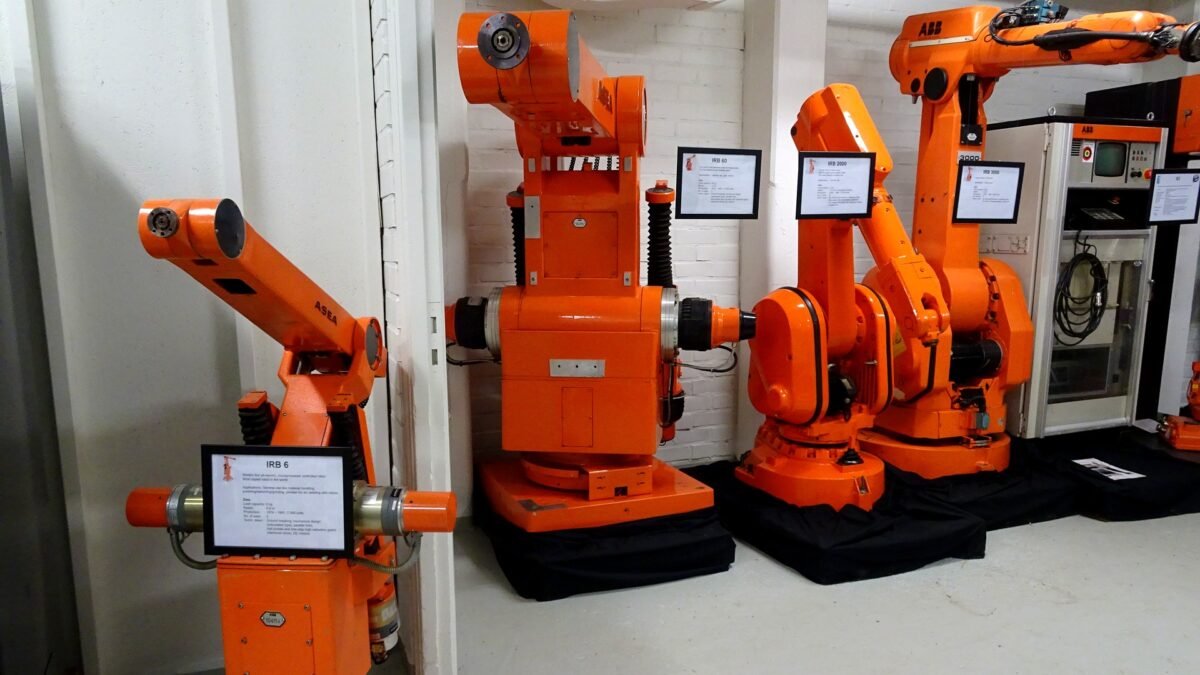
China has told SoftBank Group it will not allow its $5.4 billion acquisition of ABB’s robotics division to go ahead, ABB confirmed on Thursday, dealing a sharp setback to Masayoshi Son’s push into what he calls physical AI. The decision, first reported by the Financial Times, was confirmed by the Swiss engineering group, which said it had been informed by SoftBank that Chinese regulators had blocked the planned purchase of its robotics business in China.
The block lands on one of the most closely watched cross-border deals of the year. SoftBank agreed in October 2025 to buy the whole of ABB’s robotics business for $5.375 billion, a deal Son described as the centrepiece of his ambition to fuse artificial intelligence with machines that move in the real world. China is the biggest single market for ABB’s robots, accounting for around 30 per cent of the unit’s business, and without Beijing’s approval the transaction cannot close in its agreed form.
SoftBank’s shares ended Thursday down 6.8 per cent in Tokyo, according to Reuters, capping a bruising day for the Japanese investor. The stock was already down about 5 per cent before the Financial Times report crossed, weighed down by a slide in its chip designer Arm and a broader sell-off in artificial intelligence stocks after the Democrats’ sweep of both chambers of Congress in the United States midterm elections. The China block added a regulatory overhang to a session that was already going badly.
SoftBank declined to comment when contacted by Reuters. China’s National Development and Reform Commission, the state planner that delivered the decision, did not immediately respond to a request for comment. ABB said it was in close dialogue with SoftBank and that the two companies were working constructively on the transaction, leaving open the possibility of a restructured deal — but offering no timetable and no detail.
What China Blocked — and Why
According to the Financial Times report, cited by Reuters, SoftBank was informed by the National Development and Reform Commission that the acquisition would not be approved. The commission reviews foreign investment that might have national security implications, and its concern, according to the report, was that data generated by ABB’s robots operating in China could be transferred overseas and used to train artificial intelligence models — including those developed by OpenAI, in which SoftBank is a major investor.
That framing matters. The objection is not about the price, the buyer’s finances or competition in the robotics market. It is about data — the streams of operational information that modern industrial robots generate as they weld, assemble, paint and pack on factory floors — and about who gets to learn from it. ABB operates about 30 local companies in China with around 15,000 employees in nearly 130 cities, and its engineering centre in Shanghai is the global headquarters of its robotics business and an important research-and-development and production base. In Beijing’s view, the data those operations produce is a strategic asset, not a by-product of a commercial sale.
SoftBank had expected the deal to be approved until last week, the Financial Times reported, when it was told the commission would prohibit the acquisition. The company is now trying to establish what went wrong and whether it can seek approval again. ABB’s own statement was more narrowly worded than the newspaper’s account: it said Chinese regulators had blocked the acquisition of its robotics business in China, a formulation that leaves room for the two companies to discuss a deal restructured around the Chinese operations — for example, a carve-out, limits on cross-border data transfers, or a ring-fenced local operation. Whether Beijing would accept such a compromise is not known, and neither company has said what form it might take.
The distinction is important. A blanket refusal to approve the whole transaction and a prohibition confined to the Chinese business are different things, and the public record so far contains elements of both. What is not in doubt is the practical effect: the deal as signed in October 2025 cannot close without a Chinese approval it does not have, and China is far too large a part of the business to be treated as a footnote.
A Deal a Year in the Making
SoftBank and ABB signed their agreement on 8 October 2025. Under its terms, ABB would carve out its robotics division into a newly established holding company, and SoftBank would buy all of its shares for a total purchase price of $5.375 billion. The transaction was approved by SoftBank’s board, with the final decision on terms delegated to Son and to chief financial officer Yoshimitsu Goto, and was expected to close in mid-to-late 2026, subject to regulatory approvals in the European Union, China and the United States.
Two of the three approvals had already been secured. The European Commission cleared the transaction without conditions in March 2026, and the deal passed China’s antitrust review in February. It was the national security and supply-chain assessment phase, run by the National Development and Reform Commission, where the transaction ran into trouble. The United States review had not concluded as of late October, adding a second open question to a deal that was already a year old.
For ABB, the sale was the end of a long internal debate about what to do with its robotics arm. In April 2025 the company had announced plans to spin the division off as a separately listed business. SoftBank’s offer changed that plan: a cash sale at an enterprise value of $5.375 billion, which ABB said would produce a pre-tax book gain of about $2.4 billion and net cash proceeds of roughly $5.3 billion after transaction costs. From the fourth quarter of 2025, the robotics division has been reported as discontinued operations in ABB’s accounts — a business already mentally sold, even as its legal ownership has not changed.
ABB’s robotics unit is not a marginal asset. It employs around 7,000 people, generated about $2.3 billion in revenue in 2024 — roughly 7 per cent of ABB’s group total — and has more than 500,000 robots installed worldwide, working for customers that include the carmaker BMW. It is one of the world’s largest industrial robot businesses, with a lineage that runs back to ASEA, the Swedish engineering company that built some of the first computer-controlled industrial robots in the 1970s and merged into ABB in 1988.
Why ABB’s Robots Matter to Son
For Masayoshi Son, the ABB deal was never just an acquisition. It was the hardware for a strategy. “SoftBank’s next frontier is Physical AI,” he said when the deal was announced. “Together with ABB Robotics, we will unite world-class technology and talent under our shared vision to fuse Artificial Super Intelligence and robotics — driving a groundbreaking evolution that will propel humanity forward.”
The language is characteristic of Son, who has built SoftBank’s identity around a succession of vast, conviction-driven bets on the next technological era. But the logic behind it is straightforward. SoftBank’s artificial intelligence holdings are overwhelmingly in software and chips: a cumulative $64.6 billion investment in OpenAI, worth a stake of about 13 per cent after a $30 billion follow-on investment completed on 1 October 2026; the $6.5 billion acquisition of the American chip designer Ampere, agreed in March 2025 and completed that November; and the $3.1 billion purchase of the digital infrastructure manager DigitalBridge, completed on 30 September 2026. In total, SoftBank has committed nearly $80 billion to artificial intelligence since 2024. What it has not had, until now, is a machine that moves.
ABB’s robots would have supplied that. Industrial robots are the physical interface between an AI model and the factory floor: they take instructions generated by software and turn them into welding, assembly, handling and inspection. Whoever controls a large installed base of such machines controls both the data they generate and the channel through which AI reaches manufacturing. That is precisely why the deal appealed to Son — and precisely why it alarmed the regulator in Beijing.
The Chinese concern, as reported by the Financial Times, is that robotics data collected in China could be sent abroad and used to train competing AI models. It is the same anxiety that has driven Washington’s own investment screening for years, now applied in the other direction. Robots, in this reading, are not just factory equipment. They are sensors, and their data is a raw material for the next generation of AI systems.
The Manus Precedent
The ABB block is the second major deal China has stopped this year, according to Reuters, and the pattern is now unmistakable. On 27 April 2026, the same commission — the National Development and Reform Commission — ordered Meta to unwind its acquisition of the artificial intelligence startup Manus, a deal worth more than $2 billion that had closed four months earlier.
Manus was founded in Wuhan in 2022 and launched an AI agent in March 2025 that went viral and drew comparisons with DeepSeek. In mid-2025 the company moved its headquarters and about 40 core technical staff to Singapore, laying off roughly 80 China-based employees in the process. Meta announced the acquisition in December 2025 and closed it shortly afterwards, without seeking Chinese regulatory approval. China’s Ministry of Commerce opened an investigation in January 2026, the company’s co-founders were summoned to Beijing in March and barred from leaving the country, and in April the commission issued its formal prohibition order, requiring the parties to withdraw the acquisition. By June, Meta had begun dismantling the deal, halting data sharing and completing an operational separation. Manus later relaunched as an independent company and in October raised more than $500 million in new funding led by Chinese private equity firms.
The Manus case was the first publicly confirmed use of China’s foreign investment security review mechanism to reverse a completed cross-border artificial intelligence transaction. The commission’s reasoning, as set out in a client alert by the law firm Shumaker, looked through the company’s Singapore structure to the substance of what had been transferred: where the technology was developed, where the engineering team had accumulated its expertise, and how intellectual property had moved out of the original Chinese entity. The message, as the firm put it, was that technological nationality does not follow corporate domicile. It follows the technology, the talent and the data.
The ABB case applies the same logic to a far larger and more conventional transaction. ABB is a Swiss-Swedish company, SoftBank is Japanese, and the deal was negotiated openly, with regulatory filings in three jurisdictions. None of that protected it. The commission’s objection is not to the nationality of the buyer or the seller, but to the destination of the data — and that makes the precedent harder for dealmakers to plan around, because it can in principle be applied to almost any transaction involving a business with substantial operations in China.
A Bad Day for SoftBank Shares
SoftBank’s shares ended Thursday down 6.8 per cent in Tokyo, according to Reuters, with market data showing the stock closing at ¥3,980 against a previous close of ¥4,269. The decline had more than one cause, and the ABB news was only the last of them.
The session began badly. Arm Holdings, the chip designer in which SoftBank holds its most valuable listed asset, slid after its quarterly guidance underwhelmed investors, despite beating expectations on the quarter itself. Arm’s shares fell about 5 per cent in after-hours trading in New York. At the same time, a broader rotation out of artificial intelligence and chip stocks was gathering pace across Asia, driven by the Democrats’ midterm victories in the United States and the expectation of tougher scrutiny of data-centre and AI investment. South Korea’s Kospi index fell 4.63 per cent, Taiwan’s benchmark dropped 2.54 per cent, and Japan’s Nikkei 225 lost 1.42 per cent.
SoftBank was down about 5 per cent in Tokyo morning trade before the Financial Times report crossed during the lunch break. The shares changed little immediately after the report, according to Reuters’ early account, but ended the day down 6.8 per cent as the scale of the setback sank in. The fall leaves SoftBank nursing a difficult month: the stock is down about 37 per cent over the past year, and the AI-fuelled rally that carried it to record highs earlier in 2026 has given way to a sharp reassessment of how much of the artificial intelligence boom is real, and how much is borrowed.
ABB’s shares, by contrast, were not the focus of the day’s trading. The Swiss company keeps the robotics business and its cash flows if the deal fails, and it keeps the option of reviving the spin-off it had planned before SoftBank’s offer arrived. Whether investors will reward that outcome is another question: the robotics division has been treated as a business on its way out for more than a year, and ABB’s management will now have to explain what it intends to do with it instead.
Analysis: Why It Matters
Data is now the deal-breaker
For a generation, merger control was about market share: would the combined company dominate a market, raise prices, or shut out rivals? The ABB block turns on a different question entirely — what happens to the data. The National Development and Reform Commission’s concern is not that SoftBank would own too many robot factories, but that the operational data those robots generate in China could be transferred overseas and used to train AI models that compete with Chinese ones. That is a new kind of merger objection, and it is much harder for companies to answer, because it cannot be fixed by selling a factory or promising not to raise prices. It goes to the heart of what the acquired business is for. As AI systems become more capable, the data generated by machines in the physical world — in factories, warehouses, ports and hospitals — becomes one of the most valuable inputs to the next generation of models. Whoever controls that data controls a share of the AI future, and regulators on both sides of the Pacific now understand that. The ABB deal is the clearest case yet of a transaction being stopped not because of what the buyer would own, but because of what the buyer would learn.
Beijing’s new veto has teeth
The Manus order in April could have been dismissed as a one-off — a startup that had tried to slip out of China’s jurisdiction without asking, and was punished for it. The ABB block cannot be dismissed so easily. This was a mainstream, openly negotiated, multi-billion-dollar deal between two of the world’s best-known companies, cleared without conditions by the European Commission and passed through China’s own antitrust review. It was stopped anyway, by the same commission, on the same national-security grounds, and the buyer had expected approval until a week before the decision. That combination — a large deal, a reputable buyer, a late reversal — is what makes the precedent so consequential. It tells every company planning a cross-border acquisition involving Chinese operations that antitrust clearance is no longer the hurdle that matters, and that the security review can arrive late, without warning, and without a published rationale. The Financial Times reported the grounds; the commission itself has said nothing in public. Companies are left to infer the rules from the outcomes, and the outcome here is that a deal can be blocked for reasons that were never formally explained.
Son loses the hardware for his AI dream
Masayoshi Son’s strategy has always been to buy the future before it is obvious, and to buy it at scale. The ABB deal was the physical half of that bet: the machines that would give SoftBank’s AI investments a body. Without it, SoftBank’s artificial intelligence portfolio remains what it was — stakes in other people’s models, chips designed by its own subsidiary, and data centres built by its infrastructure arm. None of those is trivial, but none of them puts a SoftBank machine on a factory floor, generating the data that would feed the next generation of models. The company can try again: it can reapply, it can propose a restructured deal, or it can look for another robotics target. But the obvious target has just been taken off the table, and the obvious reason — that Beijing will not let robotics data leave China — applies to any other target with a large Chinese footprint as well. Son’s “physical AI” may have to be built somewhere else, or bought at a higher price, or assembled from smaller pieces. None of those options is as clean as the ABB deal was, and the market’s verdict on Thursday — a 6.8 per cent fall — suggests investors understand that.
ABB is left holding a business it tried to sell
For ABB, the block is a different kind of problem. The company spent a year preparing to part with its robotics division: it announced a spin-off, then accepted SoftBank’s cash offer, then reclassified the unit as discontinued operations and began counting a $2.4 billion book gain and $5.3 billion of net cash proceeds that would not now arrive on schedule, if at all. A business that has been managed as a disposal is a difficult business to run. Investment decisions are deferred, managers wonder about their future, and customers ask whether the supplier will still be there in five years. ABB must now decide whether to revive the spin-off plan it abandoned in October 2025, to seek another buyer, or to keep the division and reinvest in it. Each option has a cost. A spin-off would take months and would leave ABB’s shareholders with shares in a smaller robotics company instead of cash. Another sale would face the same Chinese review that has just stopped this one, unless the buyer is Chinese or the deal is structured to exclude the Chinese operations. Keeping the division means reversing a strategic decision the company has already explained to its investors. None of these is a disaster — the robotics business is profitable, growing and well regarded — but all of them are worse than the clean exit ABB thought it had secured.
The China–Japan chill now has a price tag
The ABB block does not exist in a diplomatic vacuum. China and Japan have been engaged in a sharp diplomatic dispute since comments by Japanese Prime Minister Sanae Takaichi on Taiwan last November, after which China severely limited exports of critical minerals to Japan, according to Reuters. Against that background, a decision by China’s state planner to block a flagship Japanese acquisition — even one whose stated grounds are about data — will inevitably be read in Tokyo as part of a wider pattern. That reading may be unfair to the commission, whose concern about robotics data is a genuine one and would apply to any foreign buyer. But in commercial diplomacy, perception is a form of reality, and the perception in Japan will be that Chinese approval can no longer be assumed for Japanese deals, even when the buyer has done everything by the book. The practical consequence is that Japanese companies will price that risk into future transactions, or avoid Chinese exposure altogether — and that, in turn, is likely to deepen the very decoupling that both governments say they want to avoid.
What to Watch Next
- Whether SoftBank reapplies or restructures. The company is assessing what went wrong and whether it can seek approval again, according to the Financial Times. Watch for a proposal that keeps the Chinese operations ring-fenced — a local subsidiary, a data firewall, or a sale of some assets to Chinese owners — and for whether Beijing treats such a proposal as a genuine compromise or a way of evading the review.
- The United States review. Washington’s assessment of the deal had not concluded as of late October. If the transaction is restructured, the American review will have to be revisited too, and the United States has its own concerns about AI, robotics and China that could prove just as decisive as Beijing’s.
- ABB’s next move on the robotics division. The company must choose between reviving the spin-off it planned in April 2025, finding another buyer, or keeping and reinvesting in the business. Its next set of results, and any statement from its chief executive, will show which path it has taken — and how much of the $2.4 billion book gain it still expects to realise.
- Whether other deals get caught. The ABB block is the second this year after Manus. Watch for the next transaction to be delayed or restructured on data grounds, and for advisers to start treating a Chinese security review as a standard closing risk on any deal with a substantial Chinese footprint, rather than an exception.
- SoftBank’s search for another robotics target. Son has committed nearly $80 billion to artificial intelligence since 2024, and the ABB deal was the physical centrepiece of that programme. Watch whether he turns to a smaller robotics company, a humanoid startup, or a domestic Japanese target with less exposure to Beijing — and whether investors are willing to fund another attempt.
Sources
- Reuters, “China blocks SoftBank’s $5.4 billion takeover of ABB’s robotics division, FT reports”, 5 November 2026
- Dow Jones Newswires via Morningstar, “ABB Confirms China Blocked SoftBank Deal for Robotics Unit”, 5 November 2026
- SoftBank Group, “Acquisition of ABB Ltd’s Robotics Business”, 8 October 2025
- Investing.com via InvestingLive, “China blocks SoftBank’s $5.4 billion ABB robotics deal, FT says, in blow to Son’s AI push”, 5 November 2026
- Bloomberg via Zubiqo, “China Blocks SoftBank’s Nearly $5.4B Deal for ABB Robotics Unit, FT Reports”, 5 November 2026

About the Author — Abdul Mannan
Related Articles

Dow Soars 1,569 Points in Best Post-Midterm Rally Since 1982 as Democrats’ Sweep Sends Oil Plunging
Wall Street staged its biggest post-midterm rally since 1982 as the Dow surged 1,569 points and Brent crude…

Euro Zone Inflation Hits Three-Year High of 4% as Energy Costs Surge, Putting December ECB Rate Rise in Sight
Euro area inflation rose to 4.0 per cent in October, its highest in three years, as energy prices…

Data Centres Lose the US Midterms as Texas Governor’s Defeat Puts 13 Gigawatts of AI Projects at Risk
Gina Hinojosa's victory in Texas — on a promise to halt new data centres — capped a night…