
Democrats Vow ‘Lawyer Up’ Era of Trump Investigations as Garcia Outlines Four Probes and Jeffries Launches Speaker Bid

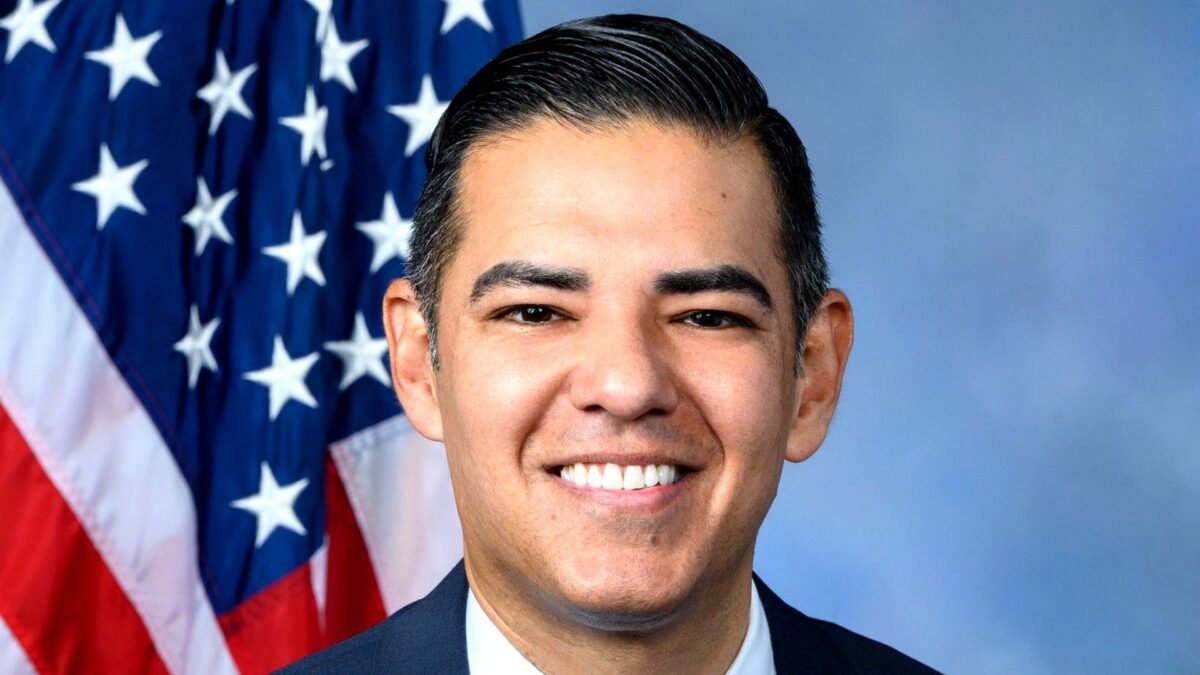
Democrats will turn the full investigative machinery of Congress on President Donald Trump, his family’s business empire, his immigration enforcement agencies and the government’s handling of the Jeffrey Epstein files when they take control of the House of Representatives in January, the party’s incoming oversight chief announced on Wednesday, in the clearest signal yet that the final two years of Mr Trump’s presidency will be dominated by subpoenas, hearings and public confrontations.
Representative Robert Garcia of California, who is set to chair the House Oversight and Government Reform Committee, issued the warning in two words on the night of the midterm elections — “Lawyer up” — and then laid out four lines of inquiry at a news conference on Wednesday: alleged corruption involving the Trump family, alleged abuses by Immigration and Customs Enforcement and the Department of Homeland Security, corporate corruption, and what Democrats describe as a cover-up of the Epstein files.
“No. 1 is going to be Trump family corruption,” Mr Garcia told NBC News earlier this autumn, according to reporting on his plans, and his office confirmed on Wednesday that the family’s business dealings would be the committee’s first priority. The announcement came hours after Hakeem Jeffries, the Democratic leader, formally launched his bid to become Speaker of the House, a post that would make him the first Black Speaker in American history, and promised that the new majority would act in its first 100 days to reverse Medicaid cuts, restore food assistance funding, extend health insurance tax credits, “eradicate the Trump tariffs” and stop what he called the reckless war of choice in Iran.
According to Reuters, Democrats have chosen investigations over an immediate attempt to impeach Mr Trump, a course the news agency had previously reported the party had settled on. But the scale of what is planned is vast. In interviews with around a dozen lawyers, members of Congress, congressional aides and political consultants, Reuters reported that the technology chief executive and Republican mega-donor Elon Musk, Mr Trump’s sons and a swath of other Republican donors and contractors are likely to be swept up in investigations that, in the agency’s words, could dominate the second half of Mr Trump’s term.
The White House pushed back on Wednesday. “If Democrats choose to pursue sham investigations and radical left policies, they are choosing to work against the American people,” said White House spokesperson Lauren Bis, according to Reuters. Another White House official, speaking on the condition of anonymity, told the agency: “They should be reminded that we still control the federal government and all of its powers.” The Trump administration has denied any wrongdoing.
The confrontation is the direct consequence of Tuesday’s midterm elections, in which Democrats swept both chambers of Congress. According to Reuters, the party flipped seven Senate seats — in Iowa, Kansas, Maine, North Carolina, Ohio, South Carolina and Texas — for a majority of at least 54 to 44, with two races, in Alaska and Mississippi, still uncalled and capable of extending that margin to 56 to 44. In the House, Democrats gained at least 30 seats, with projections putting their majority at 250 seats or more; NBC News estimated as many as 258. It will be the first time Mr Trump has had to govern with Democrats controlling both chambers of Congress.
The Four Investigations
Mr Garcia, a former mayor of Long Beach who has represented California’s 42nd Congressional District since 2023, is currently the ranking Democrat on the Oversight Committee, which was chaired in the outgoing Congress by the Republican James Comer. When the new Congress convenes on 3 January 2027, he is expected to take the gavel, becoming the first LGBTQ immigrant to chair the committee, according to NBC Los Angeles. The committee is the House’s main investigative body, with broad powers to call hearings, demand documents and issue subpoenas compelling testimony.
According to NBC Los Angeles, Mr Garcia announced on Wednesday that the committee would be “focused like a laser” on four issues. The first, and the one he has described as his leading objective, is the business dealings of the Trump family. In a statement released on Tuesday evening, his office said the committee would take on “the Trump Crime Family, corporate corruption, DHS and ICE abuses, and the cover-up of the Epstein files.” That language is the Democrats’ own political characterisation, not a legal finding, and no court has found the family guilty of the conduct the committee intends to examine.
Reporting by Punchbowl News, published on 3 November, said Mr Garcia had already convened members of his senior oversight team to plan investigations and prepare for the opening months of a Democratic majority, with public hearings and inquiries into the Trump family’s business arrangements, immigration enforcement, corporate interests and the Epstein matter all under preparation. According to other reporting, Mr Garcia has identified business activities involving Donald Trump Jr and Jared Kushner among the matters he wants examined, and has previously said he intends to investigate Mr Musk’s role in the Department of Government Efficiency, the cost-cutting body known as DOGE.
The second investigation will examine the Department of Homeland Security and Immigration and Customs Enforcement. Mr Garcia told the Long Beach Post before the elections that he intended to investigate both immigration agents for alleged abuses and the officials responsible for policy decisions. Democrats have accused the agencies of abuses during the administration’s mass deportation drive, which Mr Jeffries, in his letter to colleagues, described as a “violent mass deportation machine” and said House Democrats had refused to fund. The agencies and the administration have repeatedly said their enforcement operations are lawful.
The third line of inquiry concerns corporate corruption. Mr Garcia has argued that chief executives and large corporations are making record profits through systems that exploit consumers, including what he has called surveillance pricing, in which prices vary according to data collected about individual customers. According to NBC Los Angeles, he told reporters on Wednesday that the committee would examine how corporations benefit from their relationships with the federal government and from taxpayer money.
The fourth investigation concerns the federal government’s handling of records connected to Jeffrey Epstein, the late sex offender whose case has become one of the most politically charged subjects in American public life. Mr Garcia has championed the release of the Epstein files for two years without much progress while Republicans controlled the committee, according to NBC Los Angeles, and his earlier request to the Commerce Secretary, Howard Lutnick, about Epstein produced no results. More than 1,000 people have come forward as survivors in the Epstein case, according to reporting on the committee’s plans, and Democrats say the files will be examined for what they call a “horrific injustice” suffered by numerous women and girls.
Mr Garcia is not the only Democrat preparing to use the gavel. Senator Ron Wyden of Oregon, who is expected to lead the Senate Finance Committee, wrote “Subpoenas” on X an hour after Mr Garcia’s post on Tuesday night, and told Reuters on Wednesday that he planned to scrutinise agreements between the Trump administration and pharmaceutical companies on drug pricing. Representative Delia Ramirez of Illinois added her own warning in a post addressed to several Trump administration officials: “Clear your schedule.”
Jeffries Launches His Bid for Speaker
Mr Jeffries formally announced his candidacy for Speaker on Wednesday in a “Dear Colleague” letter to members of the incoming 120th Congress, released by his office. “I write to humbly request your support in connection with my candidacy to serve as the next Speaker of the House of Representatives,” he wrote, closing the letter by seeking their backing “to serve as the 57th Speaker of the United States House of Representatives.”
If elected, the 56-year-old New Yorker would become the first Black Speaker in the 237-year history of the House, and the second person in the presidential line of succession. Mr Jeffries, who represents a Brooklyn district and was first elected to Congress in 2012, has led the House Democratic caucus since Nancy Pelosi stepped down in 2022. According to ABC News, the party’s leadership elections will be held behind closed doors on 18 November, and Mr Jeffries will need the support of a simple majority of House Democrats to secure the nomination before requiring 218 votes on the House floor when the new Congress convenes in January.
He is widely expected to secure the post without serious opposition, according to multiple Democratic aides cited by Reuters, although some incoming progressive and red-district Democrats have declined to commit their support. Late on Wednesday, Mr Jeffries posted on X that “House Democrats are on track to win at least 255 seats.” An online petition opposing his automatic elevation to the speakership, launched in September by Nicole Whitted and calling for a competitive leadership election, has attracted more than 425,000 signatures, according to the St. Louis Argus, which reported that the petition does not endorse an alternative candidate.
The letter set out an ambitious governing programme. “America is back!” it began, before listing ten achievements Mr Jeffries said House Democrats had delivered in the minority during the 119th Congress, including exposing the harm of what he called the One Big Ugly Bill, which he described as the largest cut to Medicaid in American history; establishing a litigation task force that he said helped win court cases upholding birthright citizenship and the right to vote by mail; leading the fight for transparency over the Epstein files; winning the healthcare battle in a 43-day government shutdown that set the stage for a three-year extension of Affordable Care Act tax credits; and repeatedly using the discharge petition to force votes on restoring protected status for Haitian migrants and repealing an executive order banning collective bargaining for more than a million federal workers. He also wrote that Democrats had “aggressively opposed the reckless and costly war of choice in Iran” and kept pressure on cabinet officials, asserting that Kristi Noem and Pam Bondi had been forced to resign, a characterisation that reflects the Democrats’ own account of those departures.
For the new Congress, Mr Jeffries said his goal was to empower every member of the majority to act decisively in three areas: affordability, accountability and American values. On affordability, he wrote that Mr Trump and House Republicans had promised to lower costs on day one and had failed, and that “toxic GOP policies like the Trump tariffs and war in Iran have done the exact opposite.” During the first 100 days, he wrote, House Democrats must act to reverse the Medicaid cuts, restore funding for the Supplemental Nutrition Assistance Program, extend the Affordable Care Act tax credits, eradicate the Trump tariffs and stop the war in Iran. On accountability, he wrote that “the days of the House functioning like a wholly owned subsidiary of the Trump Administration are over,” and that Congress would root out corrupt price gouging, “clean up the mess at the Supreme Court” and ban members of Congress from trading stocks. “Anyone who is stealing from the American people, ripping off the American people or screwing over the American people can no longer hide,” he wrote. “We are going to hold the crooks accountable.”
Mr Jeffries’ senior leadership team is similarly expected to run without opposition, according to reporting on the leadership contests. Minority Whip Katherine Clark of Massachusetts is expected to seek the post of majority leader, Democratic Caucus Chair Pete Aguilar of California is expected to seek the post of majority whip, Democratic Caucus Vice Chair Ted Lieu of California is expected to seek the caucus chairmanship, and Assistant Leader Joe Neguse of Colorado is expected to seek the post of assistant speaker.
The Senate Side: Wyden and the Finance Committee
Winning the Senate gives Democrats a broader field on which to conduct oversight than the House alone would have provided, according to lawyers interviewed by Reuters. The Senate Finance Committee, which Mr Wyden is expected to chair, has jurisdiction over taxation, trade, health programmes and the Treasury, giving it reach into the administration’s agreements with drug companies and its handling of tariffs and trade.
Mr Wyden’s stated focus on pharmaceutical pricing agreements reflects a campaign in which Democrats repeatedly accused the administration of cutting deals with drug companies while ordinary Americans paid more for medicines. The details of those agreements, and of the administration’s broader trade and tax arrangements, are likely to be among the first documents Democrats demand.
The Senate majority also matters for a second reason: it gives Democrats the power to block presidential nominees and to shape the confirmation process for judges and senior officials. Analysts cited by Reuters said the party would have to walk a fine line between using that power to expose what it calls unprecedented corruption and addressing voters’ concerns about higher prices for consumer goods and gasoline, the issue that dominated the campaign.
According to a Reuters/Ipsos poll conducted nationwide from the Thursday before the election through Monday, 48 per cent of registered voters said the cost of living was the top issue determining their vote. In an August Reuters/Ipsos poll, 69 per cent of Americans said they thought Mr Trump’s private business interests were influencing his presidential decisions. Those two numbers, taken together, explain the shape of the Democrats’ programme: an affordability agenda wrapped around an accountability campaign, with each intended to reinforce the other.
The White House Pushback
Mr Trump spent his first post-election appearance showing off the ballroom he is building at the White House, calling in reporters on the morning after his party’s sweeping defeat, according to Reuters. He has said he will accept the midterm results and work with Democrats, but has also pledged to veto Democratic bills that come across his desk. He told CNBC that he can work with Democrats on “many more things than people understand,” according to reporting on his remarks.
Vice President JD Vance openly blamed the war with Iran for the Republican losses, according to the same reporting, a judgement that sits at the centre of the Democrats’ argument that the war drove up the cost of living. Mr Trump has acknowledged that the Iran war played a part in the defeat, according to earlier reporting by CBS and the BBC.
The administration’s defenders argue that the investigations will backfire. “Voters are more concerned about affordability,” said Republican consultant Ron Bonjean, according to Reuters. “If the vengeance that Democrats are seeking overwhelms their legislative agenda then they’re likely to have a very short legislative majority.” The White House’s position, as stated by Ms Bis, is that the probes are “sham investigations” pursued at the expense of the American people.
Democrats face a further practical obstacle. Even with majorities in both chambers, they cannot override a presidential veto without 67 senators and 290 House members, and they would still need some Republican votes to overcome the 60-vote threshold needed to defeat a Senate filibuster, according to Reuters. With at least 235 House seats, according to the agency’s latest projections, and 54 Senate seats, with up to two more depending on Alaska and Mississippi, the party can pass tariff-repeal legislation in the House but cannot force it into law. Greta Peisch, who served as general counsel at the US Trade Representative’s office during the Biden administration and is now a trade partner at Wiley Rein, told Reuters that a veto override remained a stretch, although she said it was “a question that should be asked.”
Trade experts told Reuters that the election result was very unlikely to change Mr Trump’s trade agenda in the near term, because so much trade authority has been delegated by Congress to the executive branch. “The swing in Congress, the results of the election, are very unlikely to have a significant impact on the president’s trade agenda and the tariffs that are in place,” said Blake Harden, managing director for trade policy at Ernst & Young’s Washington Council office. The major focus for Democrats, she said, would be oversight investigations and hearings on the trade committees that will come under Democratic control.
Why the Investigations Matter Beyond Washington
The midterm results were seismic by any measure. In Texas, the biggest Republican-led state before Tuesday, Democrats ended a decades-long losing streak, winning their first Senate seat there since 1988 and ousting three-term Governor Greg Abbott, according to Reuters. Kansas elected its first Democratic senator since the Great Depression, nearly a century ago, and in South Carolina, a state Mr Trump carried by nearly 18 points in 2024, Democrats turned aside his hand-picked Senate candidate. According to tallies compiled by Reuters and USA Today, Republicans lost ground in 99 per cent of the approximately 2,100 counties where most votes had been counted as of Wednesday morning.
The scale of the defeat has already reshaped the politics of 2028. Newt Gingrich, an adviser to the Trump administration’s Pentagon and a former Republican House speaker, called the race for the Republican presidential nomination “wide open” after the sweep, saying the “bloom” was off Vice President Vance, according to USA Today. The Democrats’ investigations are, in part, a weapon in that contest: by tying alleged corruption to the whole administration and ultimately to the entire Republican Party, they hope to erase a political path for Trump administration officials seeking higher office, according to Sarah Longwell, a former Republican strategist and longtime Trump critic, interviewed by Reuters.
Ms Longwell also told Reuters that Democrats could benefit politically from probing how Republicans handled information around Epstein. “Even if it’s more political theater than anything else, any time we’re talking about Epstein, Trump’s popularity is suffering,” she said. The Epstein files have proved uniquely damaging to Mr Trump’s standing with parts of his own base, and the Democrats’ decision to make them one of four formal lines of inquiry ensures the subject will remain in the headlines for the next two years.
The corporate investigations carry their own political logic. Data centre and artificial intelligence stocks fell after the Democratic sweep, according to USA Today, as investors worried about tougher rules on industry expansion. In Texas, the newly elected Democratic governor, Gina Hinojosa, has promised tougher rules for data centres, and Mr Musk spent a record 224 million dollars backing the Republican Ken Paxton in the Senate race that James Talarico won. A committee with subpoena power examining corporate relationships with the federal government, surveillance pricing and the influence of big companies on tariff exemptions will find no shortage of material, according to William Reinsch, a non-resident trade adviser at the Center for Strategic and International Studies, who told Reuters that “it’s not hard to find small businesses that will come in with sad stories about how the tariffs are putting them out of business.”
Analysis: Why It Matters
1. Oversight is the one power a new majority can use on day one
Legislation needs the president’s signature, and Mr Trump has already promised his veto. Investigations need nothing from the White House at all. A committee chairman can issue subpoenas, schedule hearings and publish findings with only a majority vote of his own committee, which means the Democrats’ oversight agenda is the one part of their programme that cannot be blocked by a veto pen. That is why Mr Garcia’s announcement matters more than the legislative promises in Mr Jeffries’ letter: the first 100 days agenda — reversing Medicaid cuts, restoring food assistance, extending health tax credits, erasing tariffs, ending the Iran war — is a statement of intent that requires Republican votes in the Senate and the president’s signature, while the four investigations require only the gavels Democrats now hold. The lesson of past divided governments is that the party out of the White House uses oversight to set the terms of debate, and the party in the White House discovers that a hostile committee can consume its calendar, its lawyers and its news cycle. What is striking here is how early, and how openly, the Democrats have declared their targets: there was no pretence of a honeymoon, no period of studied ambiguity, just two words on election night.
2. The corruption case is also an affordability case
The Democrats’ central political gamble is that voters will see the investigations not as revenge but as an explanation for why life is expensive. The polling gives them reason to think the gamble might work: nearly seven in ten Americans told Reuters and Ipsos in August that they believed Mr Trump’s private business interests were influencing his decisions, and almost half said the cost of living was the issue that decided their vote. The argument the party intends to make, in hearing after hearing, is that the two are connected — that a presidency in which the family’s crypto and property ventures flourished while tariffs pushed up prices at the checkout and the war in Iran pushed up prices at the petrol pump was a presidency that served itself before it served the public. Whether that argument lands depends on the evidence the committees can produce. Voters punished the Republicans for the cost of living; they will judge the Democrats on whether the investigations produce documents and testimony that feel like proof, rather than theatre. The risk, as Mr Bonjean warned, is that the pursuit of accountability overwhelms the pursuit of affordability, and that a public which voted for cheaper groceries concludes it has been given a courtroom drama instead.
3. The Epstein files are the investigation with the sharpest edge
Of the four inquiries, the Epstein files carry the greatest political charge and the greatest unpredictability. The subject has already damaged Mr Trump with parts of his own coalition in ways that conventional scandals have not, and the Democrats know it: Ms Longwell’s observation that any time the conversation turns to Epstein, Mr Trump’s popularity suffers, is the bluntest statement of why the files are on the list. But the subject is also the hardest to control. The files concern a dead man, a network of powerful associates across party lines, and a series of Justice Department decisions made under administrations of both parties. A committee that opens the files looking for a weapon against one man may find material that embarrasses many, including figures its own side would rather not discuss. Mr Garcia’s two-year record of pressing the issue gives the inquiry credibility, but credibility cuts both ways: the public will expect disclosure, not selectivity, and any appearance that the files are being mined for partisan advantage rather than published in full would damage the very accountability case the Democrats are trying to build.
4. The veto wall makes the tariff promise the hardest to keep
Mr Jeffries’ pledge to “eradicate the Trump tariffs” in the first 100 days is the most popular promise in his letter and the least deliverable. The arithmetic is unforgiving: repealing tariffs requires either the president’s signature, which will not come, or a veto override requiring 67 senators and 290 representatives, numbers the Democrats do not have and cannot plausibly assemble from a Republican Party that, for all its divisions, still largely supports the tariff policy. Even the more modest step of rescinding the archaic trade laws Mr Trump has used — including the nearly century-old Section 338 of the Tariff Act of 1930, never before used to impose duties — faces the same wall. What the new majority can do is investigate: the influence of big companies on tariff exemptions, the effect of tariffs on small businesses, the agreements with drug companies. That is real power, but it is not the same as repeal, and the gap between the promise and the achievable will be the first test of the new majority’s credibility with the voters who elected it on affordability. The debt ceiling fight expected in 2027 may give Democrats their one genuine lever, since a default would be catastrophic and the party could demand concessions in exchange for its votes, but using the debt ceiling as a bargaining chip is a tactic both parties have denounced when the other side has tried it.
5. The 2028 race has already begun, and the investigations are part of it
Every decision the new majority makes will be read through the lens of the next presidential election, and the investigations are no exception. The Republican field is, in Mr Gingrich’s words, “wide open,” with the vice president’s standing diminished by the defeat, and the Democrats’ strategy, as described to Reuters, is to tie alleged corruption not merely to Mr Trump but to the whole administration and the entire Republican Party, closing off a political path for officials who might seek the nomination. That is a legitimate use of oversight, and it is also a campaign strategy, and the two will be impossible to disentangle. The danger for the Democrats is the one that has undone opposition majorities before: that the investigations become an end in themselves, consuming the oxygen the affordability agenda needs, and that voters who handed them power to lower the cost of living conclude after two years that the price of eggs has not moved but the hearings have not stopped. The opportunity is the opposite: that a disciplined, evidence-led programme of oversight, paired with visible legislative effort on prices, healthcare and wages, presents the party as a government in waiting rather than a prosecution service. Which of those two stories the public believes will decide not only the 2028 election but whether this majority lasts beyond a single term.
What to Watch Next
- The leadership elections on 18 November. House Democrats will gather behind closed doors to choose their candidate for Speaker. Mr Jeffries is expected to win without serious opposition, but the size of his margin, and whether the petition signed by more than 425,000 people produces a challenger, will show how united the new majority really is.
- The first subpoenas. Mr Garcia has already convened his senior team, according to Punchbowl News, and lawyers expect early pressure to issue subpoenas. Watch who receives the first ones — the Trump family’s businesses, the drug companies, the immigration agencies or the Justice Department’s Epstein files — because the choice will reveal the committee’s true priorities.
- The Alaska and Mississippi Senate races. Both remain uncalled, and if Democrats win them their majority would grow to 56 to 44, easing the path for confirmations and for the 60-vote threshold on legislation. The final tallies may take days.
- The debt ceiling fight in 2027. Analysts already warn that the Democrats’ main bargaining chip could be a fight over the debt ceiling, which markets dislike. How the party uses that leverage — and whether it demands tariff relief, healthcare funding or an end to the Iran war — will be the first real test of its governing strategy.
- Mr Trump’s response. The president has pledged vetoes and his White House has warned Democrats to remember that it still controls the federal government. Watch for executive action on trade, including new duties under the Section 301 investigation into excess industrial capacity, and for any attempt to resist subpoenas on executive privilege grounds, which would set up the court battles the lawyers interviewed by Reuters expect.
Sources
- Reuters — Democrats to investigate Trump deals, with eye on 2028 race
- Office of Congressman Hakeem Jeffries — Dear Colleague Announcing Candidacy for Speaker of the House
- Reuters via BusinessWorld — Democrats gain influence over trade agenda, but tariff repeals to hit Trump veto wall
- USA Today — Midterm results live updates: Alaska, Mississippi Senate races still neck-and-neck
- The Bull Post — Democrats to probe Trump family, corporate America, Jeffrey Epstein crimes
- Reuters via Hi99 — Democrats vow to rein in Trump as he shows off White House ballroom

About the Author — Abdul Mannan
Related Articles

Federal Judge Permanently Blocks Trump Administration From Tying Police Grants to Immigration Enforcement
Chief Judge John J. McConnell Jr. permanently barred the Justice Department from tying police grants to immigration cooperation,…

Speaker Mike Johnson Steps Aside After Midterm Wipeout as Scalise and Jordan Race to Lead House Republicans
House Speaker Mike Johnson told staff on Wednesday he will not seek the minority-leader post after the Republicans'…

US Private Payrolls Beat Forecasts as 86,000 Jobs Added in October and Openings Jump to 7.5 Million
US private employers added 86,000 jobs in October, beating forecasts, as job openings jumped to 7.52 million and…