
Newsom Empties California’s Death Row in Largest Mass Commutation in US History as 548 Sentences Become Life Without Parole

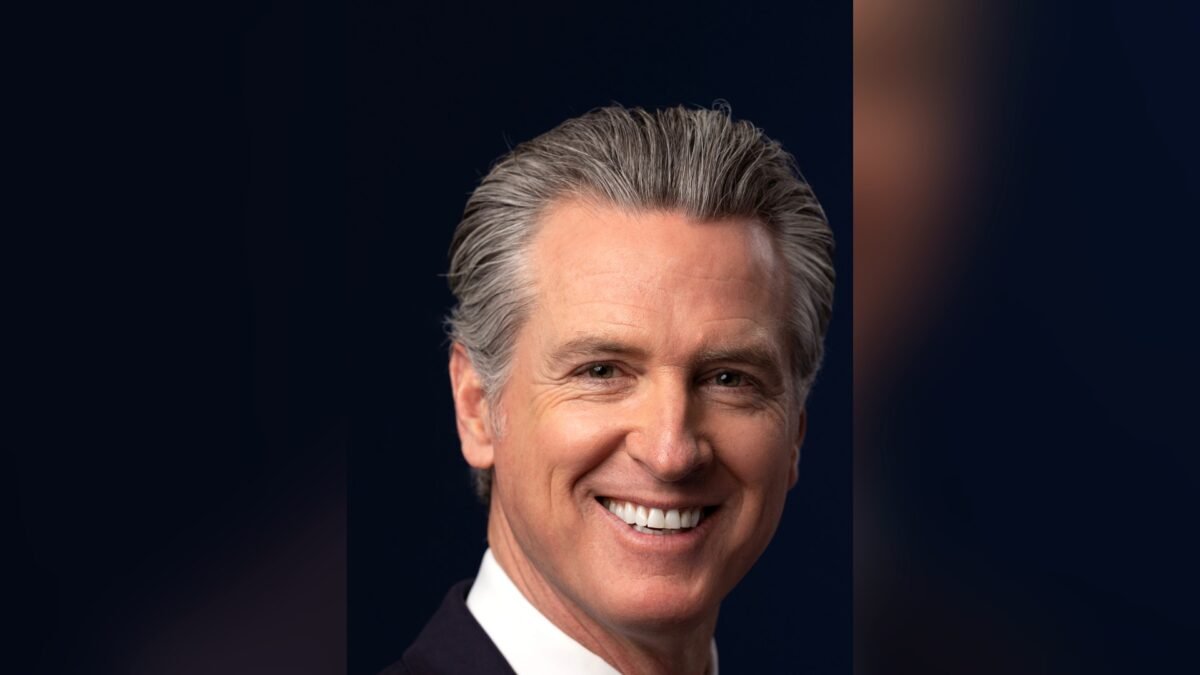
California Governor Gavin Newsom announced on Thursday that he will commute the death sentences of all 548 people on the state’s death row, converting every one of them to life in prison without the possibility of parole in what the Death Penalty Information Center described as the largest mass commutation in American history.
The decision, announced in a three-page open letter addressed “to all Californians”, empties the largest death row in the Western Hemisphere. According to Reuters, the 548 condemned prisoners account for more than a quarter of the nearly 2,000 people on death row across the United States, and the Death Penalty Information Center said the single action reduces the national death-row population by nearly 30 per cent.
“I take this action because I firmly believe that state-sanctioned killing is incompatible with California’s values, undermines the foundations of our legal system, and diminishes each of us,” Newsom wrote in the letter. “These offenders will die in prison, but not by our hand.”
The governor called the decision “among the most difficult” of his career, not because he doubted it, he said, but because of the memories it would stir for the families of victims. He acknowledged that the men and women on death row had caused “indescribable suffering” and that many Californians believe those who commit brutal crimes deserve to die. “But as governor, I have concluded the state cannot morally kill them,” he wrote.
The commutations do not repeal the death penalty in California. Capital punishment remains on the books as a sentencing option, prosecutors can still seek it in new cases, and a future governor could in principle resume executions. What Newsom has done is remove the death sentence from every person currently condemned to die in the state, in one stroke, weeks before he leaves office.
What Newsom announced
Under the clemency grant, the death sentences of all 548 condemned prisoners — 529 men and 19 women, according to the governor’s office — will be commuted to life imprisonment without eligibility for parole. Newsom said those whose sentences are commuted will not be eligible for new Board of Parole Hearings commutation and resentencing regulations, a provision aimed at answering the fear expressed by prosecutors and victims’ groups that the newly sentenced prisoners might one day find a route out of prison.
Not every commutation takes effect at once. The California Constitution requires the state Supreme Court to review clemency granted to any offender convicted of more than one felony, and 382 of the 548 prisoners fall into that category, according to the Wall Street Journal. For those cases, at least four of the court’s seven justices must sign off before the commutation becomes final. The Death Penalty Information Center said the grants take effect immediately for about one-third of the people on death row, while the other two-thirds await court review, and no timeline for that review has been announced.
The legal challenge has already been promised. Anne Marie Schubert, chief executive of the Criminal Justice Legal Foundation and a former Sacramento County prosecutor, said her organisation intends to challenge the commutations before the California Supreme Court. She said victims’ families were not notified of the proposed commutations in advance. “I find it atrocious and disrespectful and the most grotesque violation of victims’ rights I’ve ever seen,” Schubert said, according to CalMatters. “There’s 548 people on death row. That’s no less than 548 families that have been destroyed by what these people have done to their loved ones.”
Newsom said in his letter that he had considered commuting only some of the sentences and rejected the idea. Attempting to distinguish among crimes and offenders, he wrote, would “inadvertently create two classes of murder victims — those whose perpetrators deserve the death penalty and then the rest”. The all-or-nothing character of the decision is precisely what his critics object to and precisely what his supporters say gives it moral force.
The governor made the decision without his political team, according to Dan Newman, a Democratic strategist who works with anti-death-penalty groups and also advises Newsom. Anti-death-penalty groups have already released an advertisement invoking Martin Luther King Jr. that praises the move as “rooted in justice, guided by conscience and made with courage”. Newman said Newsom did not know about the advertisement.
A decision seven years in the making
Newsom’s announcement was the endpoint of a course he set two months into his first term as governor. In March 2019 he signed an executive order imposing a moratorium on executions, declaring that the death penalty system had been “by all measures, a failure”. He later dismantled the execution chamber at San Quentin State Prison, the oldest operating state prison in California, and refashioned San Quentin as a hub for rehabilitation.
“The intentional killing of another person is wrong, and as Governor, I will not oversee the execution of any individual,” Newsom said in his March 2019 statement, according to USA Today. “Our death penalty system has been, by all measures, a failure. It has discriminated against defendants who are mentally ill, black and brown, or can’t afford expensive legal representation. It has provided no public safety benefit or value as a deterrent. It has wasted billions of taxpayer dollars. Most of all, the death penalty is absolute. It’s irreversible and irreparable in the event of human error.”
The moratorium was imposed only three years after California voters had gone the other way. In November 2016, voters rejected Proposition 62, which would have abolished the death penalty, and approved Proposition 66, a measure designed to reform and speed up the execution process. Voters had also rejected abolition in 2012. Newsom’s 2019 moratorium therefore overrode, by executive action, a punishment that voters had twice chosen to keep — a tension that runs through every criticism levelled at him this week.
Even before the moratorium, California’s death penalty had effectively stopped functioning as a punishment. The state has not executed anyone since January 2006, when Clarence Ray Allen, 76, was put to death by lethal injection at San Quentin. Allen had been sentenced to death in 1982 after being convicted of orchestrating a triple murder in 1980 while already serving a life sentence inside Folsom Prison. Since California voters reinstated the current death penalty statute in 1978 through Proposition 7, the state has carried out just 13 executions — a small fraction of the 602 carried out in Texas, the nation’s leading state for executions, according to the Death Penalty Information Center. The centre says California has spent $6 billion on the death penalty since 1978 while carrying out those 13 executions.
California authorised capital punishment in 1851, a year after it became the nation’s 31st state, according to the California Department of Corrections and Rehabilitation. Executions were originally carried out by county sheriffs, before the state moved them to prisons and changed methods from hanging to the gas chamber and then to lethal injection. The death penalty has faced major legal and voter actions that have produced long periods in which capital punishment was halted and later reinstated.
Since 2024, death row has been, in CalMatters’ phrase, a metaphorical place. The male prisoners were cleared out of their individual cells at San Quentin and distributed among 24 other facilities, while the female prisoners condemned to death were moved into general population at the Central California Women’s Facility. Newsom inherited a prison system with a rapidly decreasing incarcerated population, and he has moved to close five prisons so far, including a facility in Norco that was shut in October.
The racial pattern of who ends up condemned has been central to Newsom’s argument. A University of Miami study of California death sentences between 1987 and 2019 found that the person most likely to be sentenced to death is a Black or Latino person who kills a white person, and that racial disparities were fairly consistent across counties, with some counties’ juries more likely than others to hand down a death sentence. Riverside County hands down a disproportionate share of the state’s death sentences, according to the study. The Death Penalty Information Center counts eight death-row exonerations in California, all of them men of colour, and says that since 1973 at least 203 people wrongly convicted and sentenced to death in the United States have later been exonerated.
Those findings were cited by the state public defender, which in 2024 filed a writ asking the state to stop pursuing the death penalty in court or carrying out executions. One notable person filed a brief supporting that case: Gavin Newsom. “California is not immune from the invidious influence of racial bias in its application of the death penalty,” Newsom wrote in the 2024 brief, according to CalMatters. “The nation’s capital punishment system is inextricably linked to the legacy of slavery and racial terror.”
The court hurdle that could still slow it down
The most consequential question now is not whether Newsom meant what he said but whether the California Supreme Court will let two-thirds of it stand. The state constitution’s requirement of court review for clemency granted to anyone twice convicted of a felony was designed as a check on exactly this kind of sweeping executive act, and it gives the court a genuine decision to make in 382 cases.
Four of the court’s seven justices must approve each of those commutations. There is no announced timeline for the review, and the Criminal Justice Legal Foundation’s promised challenge will give the justices a vehicle to examine whether a blanket commutation of this scale is a legitimate exercise of the clemency power or an attempt to abolish the death penalty by executive order — something the constitution reserves to the legislature and the voters.
Los Angeles County District Attorney Nathan Hochman made that argument directly. He said Newsom’s constitutional power does not extend to eliminating the death penalty, and that Californians have voted against ballot initiatives that would abolish it. “Until the law is changed, my office will continue to evaluate every death penalty-eligible case with the rigor, care and restraint these decisions demand,” Hochman said in a statement. “As always, we will be guided by the facts, the law and the evidence. If the Legislature or the voters remove the death penalty, we will follow that law just as faithfully.”
The timing adds pressure. Newsom leaves office in January after being term-limited, and his successor, Governor-elect Xavier Becerra, has committed to extending the execution moratorium when he takes office. But a moratorium is not a commutation. If the Supreme Court has not ruled by the time Newsom hands over power, the fate of the 382 cases will rest with a court that must decide them on their legal merits, without the governor who issued them in office to defend them.
There is also the question of what happens to the roughly one-third of commutations that take effect immediately. Those are final. For the rest, the uncertainty itself becomes part of the story: for months, possibly longer, hundreds of condemned prisoners will live in a legal limbo in which their death sentences have been commuted by the governor but not yet confirmed by the court.
The notorious names on the list
The scale of the commutation is inseparable from the names on it. Newsom’s order covers prisoners convicted in some of California’s most notorious killings, and the reaction of victims’ families has split along lines that make the politics of the decision unusually raw.
Richard Allen Davis, 72, was sentenced to death after being convicted in 1996 of kidnapping and murdering 12-year-old Polly Klaas, who was taken from a slumber party at her home in Petaluma in 1993 and strangled. The case received nationwide attention and led to increased penalties for repeat offenders under California’s Three Strikes law. Davis had prior convictions, and his case is among those Newsom is submitting to the Supreme Court for approval.
Polly Klaas’s father, Marc Klaas, said before the decision was made that the prospect of the commutations “upsets me terribly”. He said he had already given up the expectation that Davis would one day be executed, after years of appeals and the 2019 moratorium. “But I was still secure in my mind that he and the rest of them would be on death row for the rest of their lives,” he said, according to CalMatters. “It’s so discouraging. It makes me feel terrible and it regurgitates all my personal feelings.”
Polly’s sister, Jess Nichol, feels differently. In a statement issued after the announcement, she called the death penalty a “distraction” and said she had come to realise that whether Davis is executed has nothing to do with her recovery or with public safety. “The system tells survivors that execution matters to our healing. It doesn’t. It’s a distraction from what we actually need,” Nichol said.
Charles Ng was convicted of killing 11 people in the Sierra Nevada foothills during the 1980s, in torture-killings that remain among the most depraved in the state’s history. Scott Peterson was convicted of murdering his pregnant wife, Laci, in Modesto, a case that drove tabloid headlines for years. Randy Kraft, 81, known as the “Scorecard Killer”, was convicted of 16 murders and sentenced to death in 1989; investigators believe he may be responsible for more than 60 murders.
Daniel Wozniak was convicted of two counts of first-degree murder in 2015 and sentenced to death in 2016 for murdering Sam Herr and his friend Julie Kibuishi in Costa Mesa in 2010. His is also among the sentences commuted. Sam Herr’s father, Steve Herr, told USA Today he felt “extreme anger” after the announcement and called Newsom a “coward”. “If he went case by case and said, ‘Steve I’m commuting Dan Wozniak because I don’t believe in the death penalty,’ I would be pissed, I wouldn’t agree with him but at least I would respect him to face the families he’s doing this to,” Herr said. “This blanket commutation is a cowardly way out. There’s no other way to describe it.” He said Newsom’s office did not contact his family before the announcement.
The divide between the Klaas family members — a father who feels the decision reopens his grief and a sister who says execution would not help her heal — captures the argument in miniature. There is no single victims’ voice on this question, and Newsom’s letter acknowledged that directly, saying he deeply respected the views of those who would strongly disagree, “including some families of victims who have suffered the worst possible loss”.
A nation divided: praise, fury and the victims’ families
The reaction broke along the familiar lines of America’s death-penalty debate, but with an intensity that matched the scale of the act. The California District Attorneys Association said it “strongly condemned” the decision, calling it a “profound disregard for the decisions of juries and judges, the rights of crime victims and the repeatedly expressed will of California voters”. Its president, Monterey County District Attorney Jeannine M. Pacioni, said the sentences “were not handed down lightly”, with Californians sitting through weeks of testimony, weighing evidence and deciding on an appropriate punishment. “With the stroke of a pen, Governor Newsom has disregarded the decisions of hundreds of jurors and judges, and the anguish of families who lost loved ones to the worst crimes imaginable,” Pacioni said.
Orange County District Attorney Todd Spitzer, who has criticised Newsom’s execution moratorium and the refusal of other district attorneys to seek capital punishment, said the commutation “is mercy for the wolves” and inflicts “the ultimate act of cruelty on the sheep”. “Today, the voices of criminals are louder than the cries of victims, and the governor should be ashamed of himself for twisting the knife into the hearts of victims who have already suffered the most unimaginable pain,” Spitzer said. He argued that the death penalty has been upheld by California voters and that prosecutors should represent the will of the people.
Riverside County District Attorney Mike Hestrin criticised the decision and said his office was not contacted about the commutations before the announcement. “Rather than undertake a careful, case-specific review of the evidence, legal proceedings, and circumstances of each case, the Governor once again chose to inject politics into California’s criminal justice system,” Hestrin said. Sacramento County District Attorney Thien Ho said the decision disregarded the years of legal proceedings behind each conviction and stood “in direct conflict with the will of California voters, who have twice rejected efforts to abolish the death penalty and, in 2016, reaffirmed through Proposition 66 that capital punishment should remain an option for the state’s most notorious and vile offenders”. Yolo County District Attorney Melinda Aiello apologised to the families of Andrew Stevens and Antonio Diaz for the decision and said her office would not stop fighting for victims.
The Trump administration weighed in through Bill Essayli, the Trump-appointed US attorney in Los Angeles, who decried Newsom’s move as “a major blow to Californians and the families of victims murdered in horrific circumstances”, according to Reuters. Although the clemency has no bearing on federal cases, the condemnation underlined how sharply Newsom’s stance contrasts with that of President Donald Trump, who resumed federal executions after a 20-year gap near the end of his first term, putting 13 federal prisoners to death by lethal injection in his final few months in office.
Not every prosecutor objected. Santa Clara County District Attorney Jeff Rosen, who has moved to end capital punishment locally by petitioning the court to resentence death-row inmates to life imprisonment without parole, supported the decision. “We will remain safer from crime and injustice as long as we believe that we can and should change outdated practices and beliefs,” Rosen said. “We must work toward a safer, fairer criminal justice system. We will be a safer community if we never lose faith in human dignity, including our own.”
Anti-death-penalty groups hailed the decision. Abraham Bonowitz, co-founder of Death Penalty Action, told USA Today the announcement left him “breathless”, and added: “We acknowledge that not everyone will be happy about this, and continue our work for a day when society offers victim families more than the false promise of vengeance at some unknown date in the future.” The Rev. Jeff Hood, an anti-death-penalty activist who has witnessed 14 executions as a spiritual adviser, called the commutations “the height of moral leadership”. “The silence after the very breath of a human being is violently wrestled out of them during an execution is deafening,” Hood said. “Today, Governor Newsom has courageously chosen to break that silence.” Both the California Public Defenders Association and the National Association of Criminal Defense Lawyers commended the decision, with the latter’s executive director, Lisa M. Wayne, saying the question for other states “is no longer whether you will follow California’s lead, but how many more lives you are willing to risk before you do”.
Topo Padilla, president of Crime Victims United, had argued in the weeks before the announcement that no governor should undo a sentence rendered by a jury and signed off by a judge “because of his personal beliefs or feelings”. That objection — that the decision substitutes one man’s conscience for the verdicts of hundreds of juries — is likely to be the centrepiece of the legal challenge as well as the political attack.
The same day America executed three men
Newsom’s announcement arrived on a day that threw the national divide over capital punishment into sharp relief. On the same Thursday, executions were carried out in three other states. Jeffrey Weisheit, 50, was pronounced dead by lethal injection at 1:45 a.m. Eastern time in Indiana for the 2010 murders of his girlfriend’s two children, 8-year-old Alyssa Lynch and her 5-year-old brother, Caleb. Jesse Guardado, 64, was executed by lethal injection in Florida for the 2004 stabbing and beating death of 75-year-old community activist Jackie Malone, and was pronounced dead at 6:13 p.m. Eastern. Alabama executed Michael Shannon Taylor, 55, by lethal injection for the 1991 beating deaths of an elderly couple, 83-year-old Ivan Moore and 79-year-old Lucille Moore. He was pronounced dead at 7:10 p.m. Eastern.
In a news release following the execution, Alabama Governor Kay Ivey, a Republican, took a swipe at Newsom’s decision. “California may let their criminals escape justice, but not Alabama. Here, we enforce the law and always will,” Ivey said, according to USA Today.
It was the second time the United States has seen three executions in a single day this year, reflecting an overall increase in the use of the death penalty since the beginning of 2025. Experts attribute the rise to the political climate under President Trump and to Florida’s recent record-breaking execution pace. Since January 2025, 11 states have put 79 inmates to death — more than in any other two-year period in well over a decade, according to USA Today.
The debate has also been inflamed by two recent episodes. In Tennessee, the state botched the execution of Christa Pike on 30 September, when she survived two attempts to inject her with lethal drugs. Witnesses heard her gasping, crying, whimpering and breathing loudly through much of the procedure, according to Reuters. She was hospitalised afterwards and sent back to prison on 10 October. And US Defense Secretary Pete Hegseth announced plans to livestream the planned firing-squad execution of Nidal Hasan, who was convicted of killing 13 people and wounding more than 30 others in a shooting at the Fort Hood military base in Texas on 5 November 2009. President Trump later ruled out a livestream, but Hasan is still scheduled to be executed by firing squad on 3 December.
Public opinion sits uneasily between the two poles. A Reuters/Ipsos poll conducted weeks after the botched execution in Tennessee found that 55 per cent of Americans support the death penalty for people convicted of the most serious crimes, down from 63 per cent in 2017, while 31 per cent said they opposed capital punishment altogether. In the same poll, a third of respondents said they believed the government should try a second time to put a condemned criminal to death if a first execution attempt fails. The death penalty remains on the books in 27 US states, although executions are concentrated in a handful of them, and more than 20 states have abolished capital punishment altogether. About 15 countries still actively execute people, according to Amnesty International.
Newsom is the latest of more than half a dozen US governors to have granted mass clemencies in their states in recent years, according to Reuters, but his reprieve ranks as the largest yet. Then-President Joe Biden commuted the sentences of 37 of the 40 federal death-row prisoners in 2024. In 2003, Republican Illinois Governor George Ryan commuted 167 death sentences, eight years before the death penalty was abolished in that state. The Death Penalty Information Center said Newsom’s grant of clemency to 548 people has more than doubled the total number of clemencies granted in capital cases in the last 50 years, and that it marks the eighth time in the modern era of the death penalty that a governor has granted clemency to all death-sentenced people in their state. “Governor Newsom’s announcement marks a decisive moment in the history of the death penalty in the United States. Though other governors have granted universal clemencies, none have been at this scale,” said Robin Maher, the centre’s executive director. “By bookending his time as governor first with a moratorium and now this mass clemency, Governor Newsom has irrevocably changed California’s relationship with the death penalty.”
Analysis: Why It Matters
A single stroke that changes the national arithmetic
The most immediate significance of the commutation is numerical. California held more than a quarter of America’s condemned prisoners, and a single governor’s signature has cut the national death-row population by nearly 30 per cent. That is a change of a kind that no legislature, no court and no ballot measure has produced in the modern era. It also means that the geography of capital punishment in the United States has shifted overnight: the death penalty is now, more than ever, a punishment concentrated in a small number of southern and midwestern states, while the country’s most populous state has removed itself from the practice entirely in substance, even though the law remains on the books. The national debate will now be conducted with California as an example rather than a participant, and both sides will cite it — supporters as proof that a large state can walk away, opponents as proof that the decision was imposed from above rather than chosen by voters.
The moratorium was reversible; this is much harder to undo
Newsom’s 2019 moratorium always had a built-in fragility. An executive order can be reversed by the next governor with a stroke of the same pen, and the history of California’s death penalty is full of reversals imposed by courts, voters and governors in turn. A commutation is different. Once the California Supreme Court approves the commutations for the prisoners with multiple felony convictions, and once the one-third that take effect immediately are final, those sentences cannot be restored. A future governor who wanted to resume executions would have to start again with new prosecutions, new trials and new death sentences — a process that in California has historically taken decades and produced almost no executions. That permanence is the point. Newsom has spent his final weeks in office converting a policy preference into a legal fact that will outlast him, and his successor’s promise to extend the moratorium matters less now than it would have a week ago, because the thing the moratorium was protecting — the lives of the condemned — no longer depends on it.
The democratic objection is real and will not go away
The strongest argument against what Newsom has done has nothing to do with whether the death penalty is right or wrong. It is that California’s voters have twice rejected abolition, most recently in 2016, and that hundreds of juries sat through weeks of testimony and chose death as the punishment. A governor who sets all of that aside by executive action is, in the critics’ phrase, substituting his conscience for the verdicts of the people. That objection deserves to be taken seriously, because it goes to the legitimacy of the act rather than its wisdom. If the California Supreme Court upholds the commutations, it will be saying that the clemency power is broad enough to cover a blanket grant of this size — a proposition that has never been tested at this scale. If it narrows or rejects them, it will be saying that there are limits to what clemency can do, and that a governor who wants to end the death penalty must persuade the legislature or the voters instead. Either way, the court’s answer will shape the clemency power for every governor who follows.
The victims’ families are the argument neither side can win
Both sides of this debate claim to speak for victims, and the commutation has shown why neither claim holds. Marc Klaas feels the decision reopens his grief; his daughter Jess Nichol says execution would do nothing for her recovery. Steve Herr calls the governor a coward for acting without facing the families; the families who signed the statement supporting the commutation say the system has offered them only “the false promise of vengeance at some unknown date in the future”. The truth is that there is no single victims’ perspective, and the attempt to enlist victims as a bloc has always been a political convenience rather than a fact. What the families’ reactions do establish is something narrower and more important: that the death penalty, as actually practised in California, delivered almost nothing to anyone. In the two decades since the state’s last execution, victims’ families waited through appeals that outlasted the prisoners’ natural lives in some cases, and the punishment that juries imposed existed mainly as a sentence on paper. Newsom’s decision ends the pretence that those sentences were ever going to be carried out. Whether that is a mercy or a betrayal depends, irreducibly, on which family you ask.
A legacy move with 2028 written all over it
It would be naive to ignore the politics. Newsom leaves office in January, term-limited, and is widely expected to seek the Democratic presidential nomination in 2028. The commutation sits alongside his early recognition of same-sex marriages as mayor of San Francisco in 2004 as a signature act that defines him to Democratic primary voters as a politician willing to take a bold, unpopular stand on a liberal cause. It will also be used against him. In a general election, a Republican opponent will have no difficulty explaining to voters that the governor of California spared the lives of the men who murdered Polly Klaas and Laci Peterson, and the Reuters/Ipsos finding that 55 per cent of Americans still support the death penalty suggests that attack will find an audience. The gamble Newsom is making is that the Democratic Party of 2028 will reward moral clarity more than it fears the general-election cost, and that a party that has watched executions accelerate under the Trump administration wants a candidate who has done something concrete rather than merely held the right opinions. The commutation is therefore both a governing act and a campaign document, and it will be read as both for the next two years.
What to Watch Next
- The California Supreme Court’s review of the 382 cases. Four of the seven justices must approve the commutations for prisoners with multiple felony convictions. Watch for the court’s timetable, whether it considers the cases together or individually, and how it responds to the Criminal Justice Legal Foundation’s promised challenge.
- Whether any commutation is blocked. If the court rejects some grants — or the challenge succeeds in narrowing the clemency power — it would create a two-tier death row and a fresh round of litigation. The one-third of commutations that take effect immediately are final, but the rest are not.
- The reaction in the 2028 race. Watch whether other Democratic presidential contenders praise the commutation, stay silent or distance themselves, and whether Republican candidates make it a central attack. Newsom’s own statements in the coming weeks will show how much of his national pitch he intends to build on it.
- Other governors and the copycat question. The Death Penalty Information Center framed the decision as a challenge to every other state that still authorises executions. Watch whether governors in states with large death rows — particularly those with Democratic governors and moratoriums already in place — face pressure to follow California’s lead.
- The execution calendar elsewhere. The contrast drawn on Thursday — California emptying its death row while Alabama, Florida and Indiana carried out executions on the same day — will sharpen in December, when Nidal Hasan is scheduled to die by firing squad at Fort Hood. The national argument over capital punishment is accelerating, not settling, and California has just chosen its side in the most emphatic way available.
Sources
- Reuters, “California governor to grant clemency to all 548 death row inmates in state”, 5 November 2026 (via SRN News)
- USA Today, “Newsom commutes California death sentences for 548 people”, 5 November 2026
- Death Penalty Information Center, “Governor Gavin Newsom Grants Largest Mass Commutation in U.S. History to Death-Sentenced Prisoners in California”, 5 November 2026
- CalMatters (via Lassen News), “Newsom seeks to clear death row, commutes sentences for hundreds of prisoners”, 5 November 2026
- The Wall Street Journal, “California Gov. Newsom to Commute Sentences for 548 People on Death Row”, 5 November 2026
- Workers Rights News, “California empties death row: Newsom swaps 548 death sentences for life without parole”, 5 November 2026

About the Author — Abdul Mannan
Related Articles
Harmeet Dhillon Resigns as Justice Department Civil Rights Chief in First Senior Exit After Democrats’ Midterm Sweep
Harmeet Dhillon has resigned as head of the Justice Department's Civil Rights Division, becoming the first senior Trump…
Democrats Vow ‘Lawyer Up’ Era of Trump Investigations as Garcia Outlines Four Probes and Jeffries Launches Speaker Bid
House Democrats will launch four investigations — into the Trump family's business dealings, immigration enforcement, corporate corruption and…

Federal Judge Permanently Blocks Trump Administration From Tying Police Grants to Immigration Enforcement
Chief Judge John J. McConnell Jr. permanently barred the Justice Department from tying police grants to immigration cooperation,…