
At Least 30 Killed in Attack on Market in Yemen’s Taiz as Houthis and Government Trade Blame

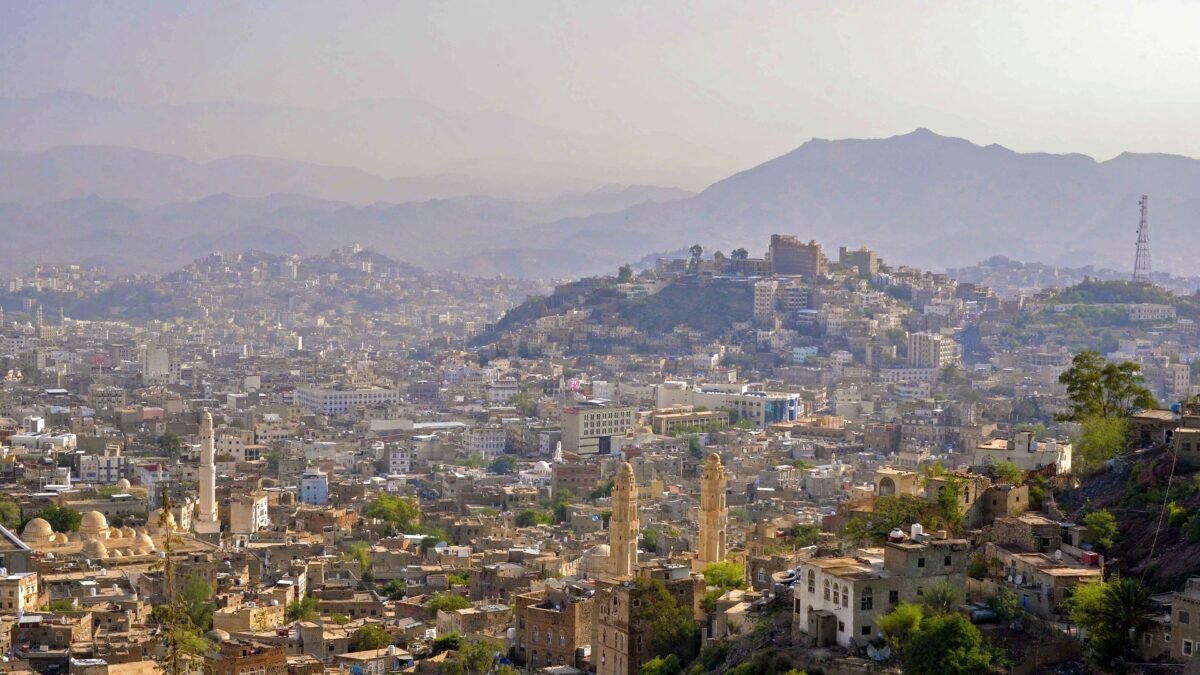
At least 30 people were killed and eight more were wounded when strikes hit a crowded market in Yemen’s southwestern Taiz province on Friday morning, in one of the deadliest attacks on civilians since fighting between the Houthis and Saudi-backed government forces flared again this year. Within hours, the two sides in Yemen’s war were blaming each other for the bloodshed — and, as of Saturday, neither account had been independently verified.
According to the Associated Press, the strikes hit the al-Hadara market in the al-Waziiya district of Taiz governorate at about 7 a.m. local time on Friday, 6 November. The toll was reported by Anees al-Sabahi, a spokesperson for the Houthi-run health ministry, who said the dead and wounded were civilians shopping at the market. The ministry’s first count put the dead at 20, with 15 wounded; the toll later rose to at least 30 killed, and the spokesman said it was expected to rise further as rescue teams searched the wreckage.
What is not in dispute is that a busy market was hit and that dozens of people were killed or injured. Almost everything else — who fired, from where, and with what weapon — is contested, and that contest is itself part of the story of this war.
Two Sides, Two Stories
The Houthis, the Iran-aligned movement that holds the capital Sanaa and much of northern Yemen, say Saudi Arabia carried out the attack. Brigadier General Yahya Saree, the spokesman for the Yemeni Armed Forces aligned with the Houthis, said in a statement published on Telegram on Friday afternoon that an F-15SA fighter jet belonging to the Royal Saudi Air Force had taken off from King Khalid Air Base near Khamis Mushait in southwestern Saudi Arabia earlier that morning and carried out three airstrikes on the market, before leaving Taiz airspace at about 8 a.m. and returning to base.
“These brutal crimes will not go unanswered or unpunished,” Saree said, according to the statement. The Houthi-run Ministry of Health and Environment in Sanaa called the attack a “horrific crime” and urged the international community to open an independent inquiry into what it described as Saudi Arabia’s “systematic targeting” of civilians. Mohammed Ali al-Houthi, a member of Yemen’s Supreme Political Council, also condemned the strike and warned that the Yemeni Armed Forces retained the right to retaliate.
The Houthis provided no evidence for their claim that a Saudi jet carried out the attack, the Associated Press reported. Saudi Arabia’s information ministry did not immediately respond to a request for comment from the Associated Press, and there was no immediate response from the Saudi-led coalition forces backing Yemen’s government.
Yemen’s internationally recognised government offered a wholly different account. Authorities in Taiz loyal to the government blamed the Houthis for the incident and said no airstrike had taken place in the area at all. Colonel Majed al-Nazili, the military spokesperson for the government forces, said the Houthis had hit the market with ballistic missiles, inflicting numerous civilian casualties in what he called a war crime.
Taiz province’s government media office acknowledged in a statement on Facebook that the busy market had been attacked and that there were casualties, but it did not give a figure. Al Jazeera, reporting from Sanaa, said fighting had been continuing in the al-Waziiya district where the market is located, an area controlled by the Houthis.
Both the Associated Press and Al Jazeera said they could not independently verify either side’s claims about who was responsible. Footage broadcast by Yemen’s al-Masirah television showed the aftermath of the attack, with bodies and human remains scattered across the market area, according to Press TV, which carried the Houthi account. No independent footage or verification of the strike had emerged by the time of publication on Friday, and no United Nations agency or international aid group had issued a statement on the incident as of Saturday.
A Market at the Height of the Morning Trade
The al-Hadara market sits in the al-Waziiya district, in the west of Taiz governorate, an area that has become one of the fiercest front lines of the renewed fighting. Markets in Yemen typically fill with shoppers after Friday prayers, and the attack came at about 7 a.m., as the popular bazaar was at the height of its commercial activity and crowded with shoppers and traders, according to local sources cited by Al Mayadeen television. It was unclear how many people were at the market at the exact moment of the strikes.
This was not the first market to be hit in Taiz in the past week. Four days earlier, at least eight people were killed and dozens more injured when Saudi-led forces attacked the al-Makh’af market in the al-Misrakh district of Taiz province, according to the same Houthi sources. That attack, too, was disputed. The pattern — a crowded civilian market, a disputed weapon, competing claims of a war crime, and no independent investigation — has repeated itself across Taiz for years, and it is repeating now with greater frequency as the fighting intensifies.
The Houthi-run health ministry said the death toll from the broader, recent Saudi escalation had reached 981 casualties, including 306 people killed and 675 injured, according to its own figures, which have not been independently verified. The ministry separately said Saudi attacks over the previous 24 hours had killed 30 people and wounded 21 in total, a tally that overlaps with the market toll and illustrates how difficult it has become to establish clean, separate casualty figures in a war where each side counts the dead through its own institutions.
For the people of Taiz, the dispute over who fired matters less in the moment than the fact that the firing continues. The city and its surrounding governorate have absorbed some of the heaviest fighting of the renewed war, and the markets — the places where ordinary Yemenis buy food, trade goods and try to keep a semblance of normal life — have become some of the most dangerous places in the country.
The Wider Offensive: Operation Dawn of Yemen
The market attack came a month into a major new government offensive. Operation Dawn of Yemen was launched on 5 October by Rashad al-Alimi, the head of Yemen’s Presidential Leadership Council, the internationally recognised government. Its stated aim is to recapture areas under Houthi control and liberate the capital city of Sanaa, which has been under the rebels’ control since September 2014.
The operation has relied on air support from the Saudi-led coalition, as well as ground operations carried out by government military units, to weaken the Houthis’ military capabilities, according to Al Jazeera. In the Red Sea corridor, breaking the Houthis’ maritime chokehold and securing the Bab al-Mandeb strait has been an essential goal, after the group captured the strategic port city of Mocha, also known as Mokha, in September.
After launching the operation, the government said its forces recaptured positions around Dhubab and Bab al-Mandeb the same day, though the extent of their gains could not be confirmed. It also said they captured mountain positions in Haifan, western Taiz and around al-Waziiya. By 13 October, fighting had spread to Marib, where government forces claimed gains around the Maas camp and north of Harib. On Friday, the government forces said they had recaptured many areas in Taiz governorate, including al-Nidani village, Shaab al-Sarari, large parts of the Sanamat area and the Ribat al-Qarn area in Dhi al-Barh. Government troops and coalition fighters also secured the Tavat Wathib and Habil al-Saram hills along the al-Aqroud front, and announced the execution of 1,211 operations against Houthi positions on the different battlefronts, as well as control over new positions on the Tur al-Bahah front in Lahij governorate.
The Yemeni Presidential Leadership Council announced on Thursday that the armed forces had carried out 40,761 military operations since the beginning of Operation Dawn of Yemen. The council also said the attacks had resulted in the “neutralisation” of about 20,000 Houthi leaders and fighters, and more than 5,000 vehicles. Previous announcements from the military command said they conducted 17,000 targeting operations during their first weeks, with daily figures ranging between 951 and 1,272 operations throughout the month. Last month, the Yemeni government also said its forces had killed or wounded 1,540 Houthis in 24 hours. Last week, the government said 16,100 Houthi operatives and commanders had been killed or wounded since 5 October. Al Jazeera noted that it had not been able to verify these figures.
The Houthis, for their part, said the total number of attacks the group had been subjected to since the beginning of the escalation had reached 3,930 raids and missiles up until early November. They have also struck back. The Houthis, who are also known as Ansar Allah, Arabic for Supporters of God, have caused hundreds of casualties since the beginning of the escalation, according to Al Jazeera. One of their latest deadly attacks killed at least 70 government security recruits in Shabwah.
Yet for all the government’s claims of momentum, analysts caution that the offensive is far from a decisive campaign. Thomas Bonnie James, an assistant professor in politics and international relations at Aberdeen University in the United Kingdom, told Al Jazeera that government forces were far from being able to take back Sanaa. “Defeat won’t happen if it means taking back Sanaa and ending Houthi rule. Not any time soon,” he said. “The government’s forces look big on paper, but they are spread across too many fronts and use old equipment. Sanaa is surrounded by mountains, which makes it easy to defend. A much stronger Saudi-Emirati coalition tried from 2015 and never came close.”
James told Al Jazeera that Operation Dawn of Yemen was better understood as a way to apply pressure than as a bid for total victory. “The aim is to make the war more costly for the Houthis and to give Saudi Arabia a stronger position before any peace deal,” he said. “What happens in the next three months matters more than the slogans.”
A City Under Siege
As the government and the Houthis continue fighting, the humanitarian situation in Yemen is heading towards catastrophe, with hundreds of thousands of people displaced in a matter of weeks. More than 323,000 people have been displaced in Yemen since the escalation began in August, with Taiz governorate taking in most of them, the United Nations Office for the Coordination of Humanitarian Affairs, known as OCHA, reported on Friday.
More than two in five of the internally displaced people in Yemen are in Taiz, where the Houthi blockade continues to encircle the city, cutting off supplies to about 800,000 people. The UN Human Rights Office has reported 281 civilian casualties since August, with 69 people killed and 212 injured. Children make up more than one-third of the casualties.
In Taiz, Salah Ahmed Ghaleb al-Majidi, acting director of the governorate’s Siege Affairs Department, described the situation to Al Jazeera as “catastrophic”. Essentials, including medical supplies, food, fuel and water, are unable to reach the governorate because of the Houthi blockade. An Al Jazeera report found that the remaining diesel stocks in the city had dwindled and had less than 48 hours left to run. Hospitals are warning that once they run out of fuel, departments and medical centres will have to shut down, including emergency services. Taiz’s deputy governor for health affairs, Ilan Abdul Haw, told Al Jazeera that about 40 percent of hospitals had closed, while those still open were operating at 50 percent capacity because of the lack of fuel.
James told Al Jazeera that as winter approaches in Yemen, and the siege on Taiz tightens, conditions will only worsen for Yemenis caught in the conflict. “The biggest worry is the people of Taiz. More than 800,000 of them have been cut off from aid since the Houthis surrounded the city in early October,” he said. “Winter is coming, aid money is short, and the city is under siege. That is what more fighting will mean for ordinary Yemenis.”
A War That Never Really Ended
To understand why a market in Taiz can be hit on a Friday morning with no one able to say with certainty who fired, it helps to understand how long this war has been running, and how many times it has been declared nearly over.
The Houthis, a Zaidi Shia movement from Yemen’s northern highlands, seized Sanaa in September 2014, driving the internationally recognised government into exile. In March 2015, Saudi Arabia assembled a coalition of Arab states and intervened with a bombing campaign, backed by the United States and others, to restore the government. What was expected to last weeks has lasted more than a decade.
The war has killed hundreds of thousands of people, directly and indirectly, through fighting, disease and hunger, and has left Yemen, the poorest country in the Arab world, in one of the worst humanitarian crises on the planet. A truce brokered by the United Nations in April 2022 brought the longest period of relative calm in years, with fighting reduced and commercial flights and fuel shipments resuming into Houthi-held areas. That truce held, in weakened form, for years, even as the Houthis launched attacks on shipping in the Red Sea from late 2023, in what they described as solidarity with Palestinians during the war in Gaza, drawing retaliatory strikes from the United States, Britain and Israel.
The truce collapsed in September 2026. Fighting in Yemen has intensified again since then, the Associated Press reported, and Taiz has become one of the main front lines of the civil war. The government’s October offensive, backed by Saudi air power, was the most ambitious attempt in years to roll back Houthi control by force. The Houthis, meanwhile, have continued to strike at Saudi airports and oil sites, and their increasingly long-range missile strikes have allowed them to reach many areas across Saudi Arabia and even Israel, according to Al Jazeera.
“The Houthis are firing at Saudi almost every day. Saudi Arabia is now openly bombing inside Yemen again for the first time since 2022,” James told Al Jazeera. “Both sides are hitting where it hurts most, and that is how wars get bigger.”
The war has also spread beyond Yemen’s borders in other ways. Saudi Arabia signed a new defence pact with Syria’s government this week, a sign of how Riyadh is rebuilding its regional security architecture at the very moment it is escalating its military role in Yemen. And the conflict in Yemen is increasingly tied to the wider confrontation over Iran: the Houthis are backed by Tehran, and the United States and Israel remain locked in a standoff with Iran over its nuclear programme and its regional network. “Yemen is now tied to the wider conflict with Iran. If the US strikes Iran again, Iran will want to use the Houthis to put more pressure on Saudi Arabia,” James told Al Jazeera.
Analysis: Why It Matters
The market attack is a test of whether anyone is still watching
Thirty people killed in a market should be a major international story. In Yemen, it risks becoming a footnote, because the war has gone on so long that the world has learned to look away. That is precisely why the attack matters beyond its immediate toll. When civilian deaths in a market can be reported, disputed and then forgotten within a news cycle, the incentive for restraint on all sides falls away. The Houthis demanded an independent international investigation. No such investigation has been announced. Without one, the next market attack will follow the same script: competing claims, no verification, no accountability, no consequence.
Disputed attribution is not a detail — it is the war
The most striking feature of the al-Hadara attack is not the casualty figure but the fact that two warring parties can look at the same smoking market and describe two entirely different events: three Saudi airstrikes, or one Houthi ballistic missile. Neither the Associated Press nor Al Jazeera could verify either version. That verification gap is not an accident of this one incident. It is the structural condition of the Yemen war in 2026: a conflict fought in areas where independent journalists, investigators and aid workers have limited or no access, where each side controls its own casualty counts, and where the truth about any single strike is often unknowable in real time. For readers, the honest response is not to pick a side’s version but to hold both as claims, and to insist on the one fact that is certain — that civilians shopping for food were killed.
Taiz is where the war’s human cost is concentrated
The numbers from the United Nations tell the story more plainly than any battlefield claim. More than 323,000 people displaced since August. About 800,000 people encircled in Taiz city, cut off from food, fuel, water and medicine. Forty percent of hospitals closed, the rest running at half capacity, diesel stocks measured in hours rather than days. Children making up more than a third of civilian casualties. These figures describe a siege, not a battle — a slow strangulation of a city of nearly a million people, unfolding alongside the daily fighting. The market attack is the sharp end of that siege, but the siege itself is the larger crime against the people of Taiz, and it is being carried out in full view of a world that has the figures and still does very little.
Operation Dawn of Yemen is pressure, not victory — and pressure has a price
The government’s offensive has produced impressive-sounding numbers: more than 40,000 operations, 20,000 Houthis “neutralised”, territory recaptured in Taiz and Marib. But the analysts’ judgement, echoed by Aberdeen University’s Thomas Bonnie James, is that this is a campaign designed to strengthen Saudi Arabia’s hand before a peace deal, not to end Houthi rule. That distinction matters, because a pressure campaign still kills people. Every week it continues, markets are hit, hospitals run out of fuel, and more families are displaced. If the offensive’s real purpose is leverage at a negotiating table, then the question for its sponsors is how much Yemeni blood that leverage is worth, and for how long they intend to keep paying for it.
The regional stakes are rising, not falling
Yemen no longer sits apart from the region’s other conflicts. The Houthis fire at Saudi Arabia almost daily. Saudi Arabia is openly bombing inside Yemen again for the first time since 2022. The United States and Israel remain in a standoff with Iran, the Houthis’ backer, and any renewed strike on Iran would, in the judgement of analysts, push Tehran to use the Houthis to put more pressure on Riyadh. At the same time, Saudi Arabia is signing new defence pacts across the region, including with Syria this week. The danger is not only that the Yemen war gets worse on its own terms, but that it becomes a trigger — or a theatre — for a wider regional war that nobody involved can fully control.
What to Watch Next
- An independent investigation — or its absence. The Houthi-run health ministry has called for an independent international inquiry into the market attack. Watch whether the United Nations, or any international body, takes up that call, and whether either side permits investigators access to al-Waziiya. Silence on this point will be an answer in itself.
- The casualty toll. The Houthi health ministry said the toll from the market attack was expected to rise. Watch for updated figures, and for whether any independent source — a hospital, an aid agency, a UN office — is able to confirm them.
- Saudi Arabia’s response. The Saudi-led coalition had not commented on the attack as of Saturday. Whether Riyadh acknowledges any role, denies involvement, or stays silent will shape how the incident is understood — and whether it becomes a diplomatic issue or is left to fade.
- The siege of Taiz city. With diesel stocks reported at less than 48 hours and hospitals closing, the coming days will show whether fuel and medical supplies can reach the city’s 800,000 encircled residents, or whether the siege tightens further as winter approaches.
- The next three months of the offensive. Analysts say what happens in the next three months matters more than the slogans of Operation Dawn of Yemen. Watch whether government forces can sustain their advance towards Sanaa, whether the Houthis’ retaliatory strikes on Saudi Arabia escalate, and whether the pressure campaign produces a negotiating table — or simply more markets hit on Friday mornings.
Sources
- Associated Press — Airstrikes on a market in southwestern Yemen kill at least 30
- Al Jazeera — Dozens killed as humanitarian crisis mounts in Yemen: What next for war?
- Al Jazeera — Yemeni gov’t forces, Houthis trade blame for deadly strikes on Taiz market
- Deutschlandfunk — Viele Tote nach Angriffen auf Markt im Jemen
- Crisis Zone — Taiz market attack: Houthis and Yemen government trade blame
- Press TV — Yemeni official condemns Saudi strike on crowded market, vows retaliation

About the Author — Abdul Mannan
Related Articles

Europe Rejects Trump’s ‘Big, Beautiful’ Security Deal With Russia as Zelensky Warns Against a ‘Yalta 2.0’
Europe has rejected President Trump's proposal for a sweeping security deal with Russia, with the EU's Kaja Kallas…
Hormuz on a Knife’s Edge: Trump’s Looming Iran Decision and the Strait the World Cannot Lose
President Trump says a decision on further military action against Iran is coming soon. Qatar says a deal…
ANC Crashes to 32% in South Africa’s Local Elections as Voters Punish the Liberation Party and Coalition Talks Begin
South Africa's ruling ANC has crashed to about 32% in local elections — its worst result ever —…