
Europe Rejects Trump’s ‘Big, Beautiful’ Security Deal With Russia as Zelensky Warns Against a ‘Yalta 2.0’

Europe has delivered a blunt and unusually united answer to President Donald Trump’s proposal for a sweeping new security arrangement with Russia: no deal about Europe without Europe. Within a day of Mr Trump suggesting that a “big, beautiful agreement” with Moscow could extend beyond Ukraine to cover “all of Europe”, the European Union’s foreign policy chief, Poland’s foreign minister and Ukraine’s foreign minister each rejected the idea in public, while President Volodymyr Zelenskyy warned that negotiating a new continental order before ending the war in Ukraine would be dangerous and could revive the sphere-of-influence politics of the 1945 Yalta conference.
The pushback, delivered in Warsaw on Friday, 6 November, and in a CNN interview the same day, has exposed one of the sharpest transatlantic disagreements of Mr Trump’s second presidency. According to Euronews, European leaders “firmly rejected any attempt by the United States and Russia to reshape the continent’s security architecture without their involvement”, and, according to POLITICO, which spoke to 12 NATO diplomats, EU envoys and European government officials, most of those officials expressed reservations about the American proposal, with three alliance diplomats saying NATO members had not even been briefed about it in advance.
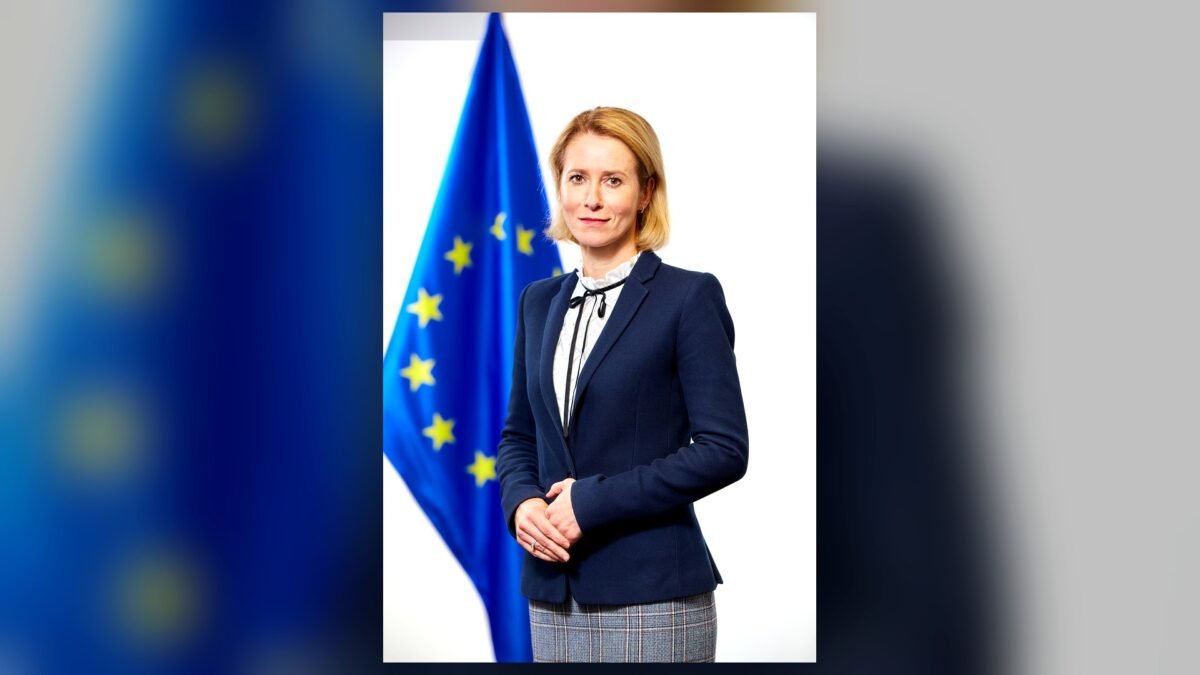
“We already have a European security architecture in place,” the EU’s foreign policy chief, Kaja Kallas, told journalists in Warsaw on Friday, according to Euronews. “The problem remains that Russia keeps breaking the treaties that underpin it. NATO posed no threat to Russia in 2021, and it poses no threat to Russia at the moment. Putin does not have a veto over European security.” Ms Kallas added that any agreement would require the European Union to be part of it if it was to be implemented at all.
Her position was echoed in stronger language by Poland’s foreign minister, Radoslaw Sikorski, who warned that any agreement concerning Ukraine and Europe’s future reached without European participation would be both politically unacceptable and practically impossible. “An arrangement about the future of Ukraine and of Europe above our heads would not just be unwise. It is actually impossible,” Mr Sikorski said, according to Euronews.
Ukraine’s foreign minister, Andriy Sybiha, speaking after meeting Ms Kallas in Warsaw, said Moscow could not be regarded as a guarantor of European security. “We have to talk about protecting ourselves against Russia, not talking with Russians about spheres of influence in Europe,” Mr Sybiha said. He added that neither Ukraine’s future nor Europe’s security could be decided without the direct involvement of both.
Zelenskyy: ‘We don’t want to have Yalta 2.0’
The most pointed warning came from Mr Zelenskyy himself. In an interview with CNN’s Jake Tapper on Friday, the Ukrainian president said that discussing a new European security framework before ending Russia’s war against Ukraine could be dangerous, particularly for the European Union. “We don’t want to have Yalta 2.0,” he said, referring to the 1945 conference at which the Allied leaders discussed Europe’s post-war order, according to reports of the interview.
“When they do not want to speak about how to end this war, I mean Russia, they want to start with a new security infrastructure in Europe. It’s dangerous,” Mr Zelenskyy said. He added that Ukraine supported a ceasefire and de-escalation but had seen no signals from Russia that it was ready to act. “We support a ceasefire. We support the de-escalation. We haven’t seen any kind of demonstration and signals from the Russian side yet that they are ready to do something,” he said.
Mr Zelenskyy also rejected territorial concessions despite Mr Trump’s previous suggestions that a settlement could involve land exchanges. “We are not ready to leave Donbas, to give our territory,” he said. He insisted that negotiations must first focus on ending Russia’s war, followed by security guarantees for Ukraine, before any broader arrangements between Europe and Moscow are considered. He warned that any rollback of NATO would be “a sign of weakness for the alliance”, and said answers to Russia’s security questions could form part of a settlement only with Europe’s involvement.
His warning carried particular weight because Ukraine, although geographically part of Europe, remains outside both the European Union and NATO, a point Mr Zelenskyy himself underlined. “We are not a part of the EU. We are on the way, but we are not a part of the EU. We are not a member of the EU, and also we are not a member of NATO,” he said.
How the proposal emerged
The dispute began on Thursday, 5 November, when Mr Trump met Kirill Dmitriev, the Russian president’s special envoy, at the White House. Mr Dmitriev had earlier attended an event hosted by First Lady Melania Trump with Ukrainian officials to mark a local ceasefire in the Russian-occupied Ukrainian city of Oleshky, which she helped broker. After the meeting, Mr Trump told reporters that a major agreement could be close.
“I can’t tell you what I discussed. But I’m just telling you, it’s going to be an agreement, it’s going to be a big agreement,” Mr Trump said, according to reports of his remarks. “It’s going to involve more than Ukraine, and I could even say it might involve all of Europe. It’s going to be a big, beautiful agreement, and everyone’s going to be thrilled,” he added, without providing details. Asked whether he had raised Russian attacks on civilians, Mr Trump said: “I always bring it up, and I also bring it up the other way because the other way they kill too. It is a bloodbath, and it has to end.” He said he did not meet the Ukrainian delegation.
Soon afterwards, Mr Trump’s son-in-law and special envoy, Jared Kushner, said Washington was working on a broader European security architecture. Writing on social media after discussions in Brussels with Ukrainian, NATO and European officials, Mr Kushner said United States officials had held “productive and substantive discussions” on security guarantees and “a broader European security architecture”.
Mr Kushner set out five goals for the framework: permanent security consultations, reliable crisis communications, greater military transparency, reciprocal measures to reduce escalation risks, and “an enduring framework for long-term European security and stability”. He said Washington’s objective was “to develop practical arrangements that address the security concerns of all sides, reduce the risk of future conflict, and create a more stable and predictable security environment”.
Mr Kushner added that any arrangements “must fully respect the sovereignty, territorial integrity, and independent decision-making of every nation”, and that “NATO will remain central to European collective defense”. He said the United States would consult European partners on the sidelines of the forthcoming talks in Abu Dhabi and, if progress was made, move towards a broader format with their direct participation.
Europe was not consulted first
For many European officials, the problem was not only the substance of the proposal but the way it was announced. According to POLITICO, three alliance diplomats said NATO allies had not been briefed about the American plans in advance, and many remained sceptical of the idea. One NATO diplomat told POLITICO: “It is a bit obscure what Kushner meant. The general sentiment in Europe is that any discussion with Russia on the future architecture at the moment will just be used by Moscow to legitimize their arguments … it will not fly with the European allies.”
One European official who spoke to the Financial Times called Mr Kushner’s social media post a “complete surprise”. “There will be no simultaneous negotiations on European security until the war [against Ukraine] is over. Besides, we know what the Russians mean by that, and it will not happen,” the official told the newspaper. “There has been absolutely no talk about the future of NATO, and everyone is unanimous that any changes to NATO or reduction of its presence are out of the question,” the official added.
A senior European official told POLITICO: “Literally, there’s nothing to find fault with, but we know there’s something else going on.” Kristi Raik, director of the International Center for Defense and Security, said the United States’ plan to link Ukraine peace talks to European security was a concession to Russia.
Some allies also fear the new initiative may be tied to an upcoming review of American troop levels in Europe, expected in December. “That’s the elephant in the room,” a second NATO diplomat told POLITICO.
The European Commission has begun consultations with member states following the announcement, and its chief spokesperson, Paula Pinho, said on Friday that considerable work remained before a peace agreement could be reached and stressed that the European Union would determine its own security matters. “It’s up to the European Union to decide on matters that affect its security,” a European Commission spokesperson said.
EU leaders are expected to discuss a more coherent approach at an informal summit in Dublin next week, after Italy’s prime minister, Giorgia Meloni, criticised their “disjointed, uncoordinated” efforts, which she said risked “condemning Europe to irrelevance in the negotiation process”. “All these negotiations are very unstructured, jumpy and chaotic,” a European official told the Financial Times.
The Kremlin welcomes the opening
Moscow, by contrast, welcomed the development. Kremlin spokesman Dmitry Peskov said Russia viewed the White House meeting in a positive light. “We certainly view the meeting in a positive light,” Mr Peskov said. He added that Russia had received no European proposals on security guarantees. “They haven’t even been able to decide yet who is authorized to speak on their behalf,” he said.
On Friday, 6 November, President Vladimir Putin confirmed that the next round of United States-mediated talks between Russia and Ukraine would take place in Abu Dhabi on 10 and 11 November, during a meeting with permanent members of Russia’s Security Council and members of the Russian delegation, according to the state news agency TASS. “Trilateral talks on the issue of Ukraine will take place in the United Arab Emirates next Tuesday,” Mr Putin said.
On Saturday, 7 November, the Kremlin named its delegation for the talks, according to a statement from Mr Peskov to the news agency Interfax. The team will again be led by Vladimir Medinsky, a Kremlin adviser who led the Russian team in earlier rounds. Deputy foreign ministers Sergei Ryabkov and Mikhail Galuzin will also join, with Mr Ryabkov part of the negotiating group for the first time. The military side includes Igor Kostyukov, head of Russian military intelligence, and Yuri Zhigarlovsky, a senior General Staff officer, alongside other senior diplomatic and military officials.
United States special envoy Steve Witkoff announced the new round of talks on Monday, saying the discussions would focus on “post-war security arrangements, de-escalation, humanitarian efforts, and next steps toward peace”. The talks will be the first of their kind since February, and are due to last two days. Ukraine’s delegation is expected to be led by Rustem Umerov, according to David Arakhamia, a senior Ukrainian official. Ukraine has not formally published the composition of its delegation, and the American line-up has not been announced either.
Zelenskyy looks to a leaders’ meeting
Speaking in Berlin on Tuesday alongside German Chancellor Friedrich Merz, Mr Zelenskyy said he hoped the adviser-level talks in Abu Dhabi would open the way to a three-way meeting of leaders that included President Putin. “We are counting on the fact that work in this format and our other diplomatic steps will open the way to a trilateral format at the level of leaders,” Mr Zelenskyy told reporters, according to Al Jazeera.
Mr Merz, asked about the Abu Dhabi talks, said it was “important that Russia finally and seriously engages in negotiations about a ceasefire and a subsequent peace agreement”. “I do not see that happening so far,” the chancellor said. Mr Zelenskyy’s visit to Berlin was not announced in advance for security reasons. On landing, he said on X that diplomatic coordination, strengthening air defences and supporting Ukraine’s energy sector would top the agenda.
Mr Zelenskyy has said Ukraine needs an additional 70 billion euros, about 77.5 billion dollars, from European countries next year. European governments have insisted on being involved in the negotiations but are unlikely to be at the table in Abu Dhabi. Instead, United States envoys are due to meet representatives from Germany, France, the United Kingdom, NATO and the European Union in Brussels this week to discuss security guarantees for Ukraine and Europe’s post-war security architecture.
The build-up to next week’s talks follows one of the most notable displays of cooperation between the warring sides since Russia launched its full-scale invasion in February 2022. Last week, human rights ombudsmen from Russia and Ukraine oversaw a local ceasefire in the Russian-occupied Ukrainian city of Oleshky to evacuate residents and deliver aid, in a mission brokered by Mrs Trump. Mr Putin and Mr Zelenskyy have had no direct contact since the invasion, and their representatives have held only a handful of rounds of talks.
Several summits are planned before the end of the year. Mr Trump, Chinese President Xi Jinping and Mr Putin may hold three-way talks on the sidelines of the Asia Pacific Economic Cooperation summit in Shenzhen, China, on 18 and 19 November. Around the same time, the so-called Coalition of the Willing, a group of about 35 countries backing Ukraine, is due to meet in Berlin. The Group of 20 summit follows in Florida from 13 to 15 December, where it remains unclear whether Mr Putin will attend for the first time since the invasion.
What Russia wants, and what Ukraine fears
Russia’s demands, meanwhile, are unchanged: the Donbas, limits on Ukraine’s army, and an end to its NATO ambitions. Mr Putin has demanded that Ukraine surrender the rest of the Donbas as a precondition for a ceasefire. According to the Financial Times, which cited people familiar with his position, Mr Putin intends to keep attacking Ukrainian infrastructure until Kyiv accepts Moscow’s terms. Two people involved in back-channel efforts told the newspaper that a meaningful ceasefire was unlikely, saying Mr Putin was focused on a winter air campaign against Ukraine’s energy infrastructure and saw the shift to security guarantees as a way to drag out talks. “I will destroy all your infrastructure until you agree,” one relayed as Mr Putin’s position.
That assessment is consistent with the pattern of recent weeks. Russia carried out its biggest attack on Ukraine’s energy grid of the year overnight on 3 and 4 November, hitting ten regions and forcing emergency power cuts including in Kyiv. On 2 November, a Russian strike on an aid distribution centre in Komyshuvakha killed dozens of people, in one of the deadliest single attacks on civilians in recent months. Missile explosions struck Kyiv again on Saturday, wounding at least five people, according to the Associated Press, as Ukraine prepared for the new talks.
For Kyiv and its European partners, that is precisely why the sequencing of any negotiation matters so much. Their argument, repeated in Warsaw, Brussels and Berlin this week, is that a discussion about Europe’s future security architecture cannot run in parallel with a war in which one of the parties to that discussion is bombing the other’s cities and power grid. A framework negotiated while the fighting continues, they argue, would reward the aggressor with a seat at the table where the continent’s rules are rewritten, while the victim of the aggression waits outside.
That is the fear behind Mr Zelenskyy’s reference to Yalta. At the Yalta conference in February 1945, the leaders of the United States, Britain and the Soviet Union, Franklin Roosevelt, Winston Churchill and Joseph Stalin, met in Crimea to discuss Europe’s post-war order. The decisions taken there, and at Potsdam months later, helped shape a continent divided into spheres of influence for the next four decades. For Ukrainians and for the countries of central and eastern Europe, Yalta has long stood as shorthand for great powers deciding the fate of smaller nations over their heads, a memory that still shapes how Warsaw, Kyiv and the Baltic states hear any proposal for a new continental bargain struck without them.
Analysis: Why It Matters
1. The argument is about who writes Europe’s rules
The deepest question raised by this week’s row is not whether Europe needs a new security framework. It is who gets to write it, and on whose terms. The existing architecture, the one Ms Kallas invoked in Warsaw, was built over decades: NATO as the collective defence anchor, the European Union as the political and economic community, the Helsinki Final Act of 1975, which committed states to respect sovereignty, refrain from the threat or use of force, and honour the inviolability of frontiers, and the NATO-Russia Founding Act of 1997, which sought to build a cooperative relationship after the Cold War. Russia signed those documents. It then violated them, first with the annexation of Crimea in 2014 and then with the full-scale invasion of Ukraine in 2022. That history is why European officials insist the problem is not the absence of an architecture but the breach of the one that exists. A new framework negotiated with Moscow while the war continues would, in their view, treat the rule-breaker as a co-author of the rules, and that is a precedent no European capital is willing to set.
2. Trump’s ‘big, beautiful agreement’ tests the alliance itself
Mr Trump’s instinct is to deal directly, leader to leader, and to treat a grand bargain as the fastest route to peace. His supporters would say that is how the war ends: by bringing Moscow into a settlement generous enough to make stopping worthwhile. But the reaction in Europe shows the political cost of that approach. When NATO allies learn of a proposal affecting their own security from a presidential remark rather than a briefing, trust frays, and when the proposal appears to echo Moscow’s long-standing demands, limits on NATO, recognition of spheres of influence, a veto over neighbours’ choices, suspicion hardens into open opposition. The irony is that the framework Mr Kushner described, permanent consultations, crisis communications, transparency, de-escalation measures, sounds unobjectionable in the abstract. It is the context, the timing, the exclusion of the Europeans, and the identity of the other party, that turned a bland list of diplomatic objectives into a political crisis. Washington now faces a choice it has avoided for months: either bring the Europeans inside the process, which slows it down, or press ahead without them, which risks a public rupture with its closest allies.
3. Zelenskyy’s ‘Yalta 2.0’ warning is aimed at Washington as much as Moscow
Mr Zelenskyy’s choice of words was deliberate and aimed in two directions. To Moscow, it was a refusal: Ukraine will not trade territory for a seat at a table where its future is decided by others. To Washington, it was a reminder that the United States itself once helped build the order that forbids such bargains. The Helsinki principles, the Budapest Memorandum of 1994, under which Ukraine gave up its nuclear weapons in exchange for security assurances from Russia, the United States and Britain, and the repeated American commitment to the principle that borders cannot be changed by force, all stand in the way of a settlement that rewards conquest. Mr Zelenskyy’s warning also serves a domestic purpose: after a midterm election in the United States that weakened Mr Trump’s party, and with American aid to Kyiv a live political question, the Ukrainian president is signalling to Congress and to the American public that his country will not accept a deal imposed from above. The reference to Yalta is, in that sense, both history and strategy.
4. The Abu Dhabi talks will test whether the framework idea helps or harms
The immediate test comes on Tuesday, when the Russian, Ukrainian and American delegations sit down in Abu Dhabi. The presence of senior military intelligence officers on the Russian side, including the head of the GRU, suggests Moscow is treating the talks seriously, but the composition also signals that Russia’s demands remain maximalist. If the talks produce a ceasefire, even a limited one covering energy infrastructure or maritime operations, Mr Trump will be able to claim that his broader approach is working, and the framework discussion will gain momentum. If they collapse, or if Russia uses them to press its demand for the Donbas while continuing its winter campaign against Ukrainian power plants, the European argument will look vindicated, and the framework idea will be seen, in the words of one European official, as a way for Moscow to drag out talks while the bombs fall. Either way, the talks will not settle the architecture question. They will merely decide whether it is discussed as part of a peace, or as a substitute for one.
5. The December troop review hangs over everything
Behind the public argument sits a harder, unspoken question: the future of the American military presence in Europe. Several European officials have linked the security framework proposal to the review of United States troop levels in Europe expected in December, and one NATO diplomat called it “the elephant in the room”. If Washington were to use the prospect of withdrawing troops as leverage to push European capitals into accepting a new arrangement with Moscow, the dispute would move from the realm of diplomacy into the realm of coercion, and the alliance itself would be at stake. That is why the Europeans have responded so firmly and so publicly. They are not only rejecting a proposal. They are drawing a line before a negotiation in which they fear their own security could become the bargaining chip. The Dublin summit next week, and the December review, will show whether that line holds.
What to Watch Next
- The Abu Dhabi talks on 10 and 11 November: whether the trilateral format produces any concrete commitment, a ceasefire, a prisoner exchange, or even an agreed agenda for the next round, and whether the Russian delegation’s military heavyweights signal flexibility or inflexibility on the Donbas.
- The Dublin summit next week: whether EU leaders can agree on a single, coherent position on the security framework, and whether Ms Meloni’s criticism of “disjointed, uncoordinated” efforts produces a genuinely common European voice.
- Washington’s next move: whether Mr Trump and Mr Kushner bring European representatives into the process before Abu Dhabi, as Mr Kushner promised, or whether the Europeans continue to learn of American proposals from public remarks.
- Russia’s winter campaign: whether the attacks on Ukraine’s energy infrastructure intensify in the days around the talks, which would confirm the assessment, reported by the Financial Times, that Mr Putin intends to bomb until Kyiv accepts his terms.
- The December troop review: whether the United States signals any change to its force posture in Europe, and how European capitals respond if the review is used as leverage in the security framework debate.
Sources
- Euronews – EU Rejects Trump’s ‘Big Beautiful’ Security Deal With Russia and ‘All of Europe’, 6 November 2026
- POLITICO – Jared Kushner’s European Security Plan Isn’t Convincing Europe, 6 November 2026
- Europe Pushes Back as Trump Eyes Russia Deal ‘Involving All of Europe’, 7 November 2026
- Zelenskyy Warns Europe Security Deal Without Ending War Is Dangerous, 7 November 2026
- Al Jazeera – Ukraine’s Zelenskyy Hopes Abu Dhabi Talks Will Open Path to Putin Meeting, 7 November 2026
- Russia Names Negotiators for Abu Dhabi Talks on Ukraine, 7 November 2026

About the Author — Abdul Mannan
Related Articles

At Least 30 Killed in Attack on Market in Yemen’s Taiz as Houthis and Government Trade Blame
At least 30 people were killed when strikes hit a crowded market in Yemen's Taiz province on Friday,…
Hormuz on a Knife’s Edge: Trump’s Looming Iran Decision and the Strait the World Cannot Lose
President Trump says a decision on further military action against Iran is coming soon. Qatar says a deal…
ANC Crashes to 32% in South Africa’s Local Elections as Voters Punish the Liberation Party and Coalition Talks Begin
South Africa's ruling ANC has crashed to about 32% in local elections — its worst result ever —…