
Russia, Ukraine and US Resume Trilateral Peace Talks in Abu Dhabi for the First Time Since February

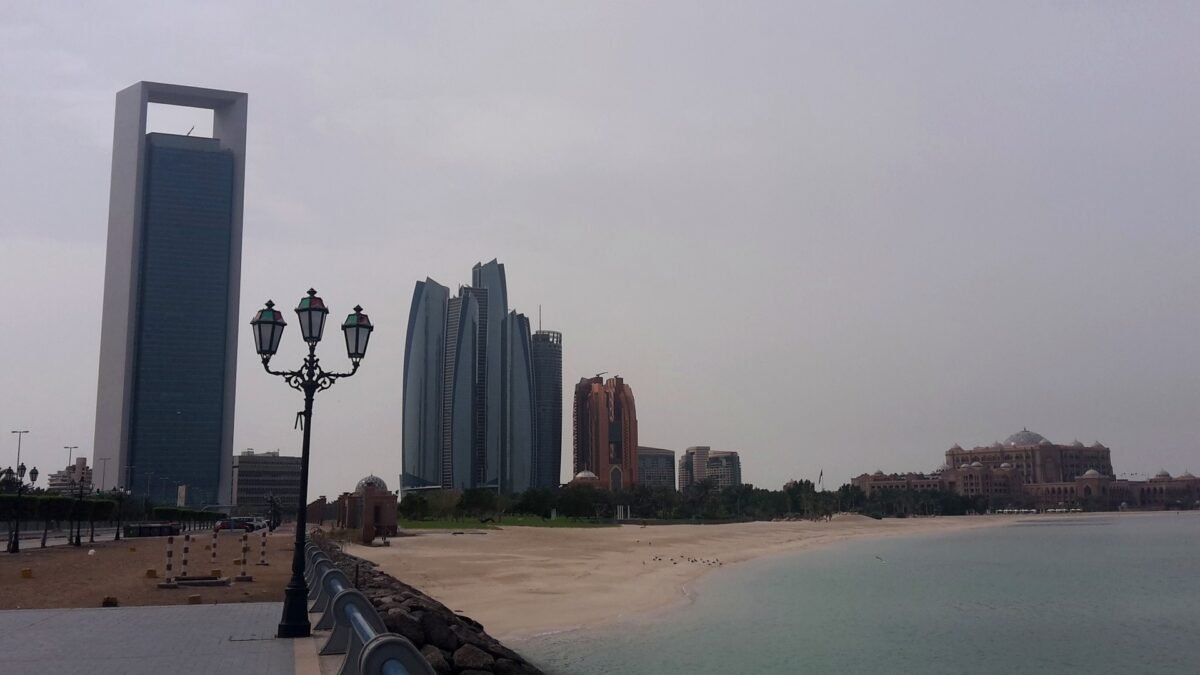
Russia, Ukraine and the United States have resumed trilateral peace talks in Abu Dhabi, the first time negotiators from the three countries have sat down together since February, in a renewed attempt to end a war that is approaching its fifth year. The two-day meeting, which opened on Tuesday, 10 November, puts the question of postwar security guarantees and the fate of Ukraine’s eastern Donetsk region at the centre of the agenda, even as both sides continue to strike each other’s energy infrastructure at home.
The talks are being mediated by Washington. The United States delegation is led by special envoy Steve Witkoff and Jared Kushner, the son-in-law of President Donald Trump, according to Reuters. Russia’s team is headed once again by Kremlin aide Vladimir Medinsky, and includes Deputy Foreign Minister Sergei Ryabkov, who is taking part in this format for the first time, along with Deputy Foreign Minister Mikhail Galuzin, military intelligence chief Igor Kostyukov and army general Yury Zhigarlovsky. Ukraine’s delegation is led by Rustem Umerov, and includes intelligence chief Kyrylo Budanov and parliamentary faction leader Davyd Arakhamia, according to reports of the talks.
The discussions were scheduled to begin at around 06:30 GMT on Tuesday, officials in Kyiv told Reuters, and are set to run through Wednesday. The format is deliberately narrow. Russia has made clear that it does not want European governments at the negotiating table, and the Kremlin said the talks themselves would remain trilateral, although European officials are in Abu Dhabi for separate meetings on the sidelines.
Expectations are being managed carefully on all sides. A United States official, briefing reporters on the eve of the talks, said Moscow and Kyiv had shown “a little bit of flexibility, privately” over who would control Ukraine’s eastern regions after the war, according to the BBC. The same official stressed that the territorial question would not be settled until the two sides knew what postwar security arrangements would look like. Kushner, writing on X, said an important part of the process was encouraging all parties to begin thinking seriously about what comes after the war, and cautioned that the talks could at most “build momentum toward the next phase of negotiations.”
President Trump, who has repeatedly said a deal was close without one emerging, told reporters last week that he saw a “very strong inclination” to end the war and that both sides were “tired of fighting.” In an interview with the CBS programme 60 Minutes broadcast on Sunday, 8 November, he said the two sides were “very close” to a deal. “It’s going to be a big agreement, and it’s going to involve more than Ukraine … I could even say it might involve all of Europe,” he said, according to Reuters.
The delegations and the agenda
The Abu Dhabi meeting is a working-level session, not a summit, and its agenda reflects that. Witkoff announced on 3 November that the talks would cover postwar security arrangements, de-escalation, humanitarian aid and next steps toward peace. According to the BBC, the structure includes two tracks running in parallel. A military working group, led by the commander of United States European Command, General Alexus Grynkewich, is expected to deal with ceasefire monitoring and security arrangements. A political working group will focus on the territorial demands that have blocked every previous round.
The American side has spent weeks preparing the ground. Witkoff and Kushner held daily telephone calls, at times several in a day, with Russian and Ukrainian officials over the previous two weeks, United States officials told the Axios news organisation. On 4 November, President Volodymyr Zelenskyy spent ninety minutes on the telephone with the two envoys, a call he described as the longest sustained dialogue with the American channel since February. He said the conversation covered Kyiv’s negotiating proposals, Ukraine’s air defence emergency and the continuation of the bilateral “Drone Deal” framework with Washington.
Zelenskyy said on Monday that his team was already in the United Arab Emirates. “Our negotiating team is already in the United Arab Emirates. The first meeting is tomorrow,” he wrote on X on 9 November. “At the meetings in Abu Dhabi, our team will propose de-escalatory steps, and there must be an understanding of how to arrange a trilateral meeting at the leaders’ level to bring this war to an end fairly and for real. Peace is needed. Security guarantees are needed. Real resources for Ukraine’s postwar recovery are needed.”
The Ukrainian president has set out Kyiv’s priorities for the talks: security guarantees, an energy ceasefire, the reopening of the Black Sea, expanded prisoner exchanges and preparations for a meeting between the Ukrainian, American and Russian leaders. A senior Ukrainian official told Reuters that the question of territory could be discussed only at a leaders’ level and only in the context of appropriate security guarantees for Ukraine, and strongly denied that the government would consider territorial concessions at the working level.
The composition of the Russian delegation is itself a signal. Medinsky has led Moscow’s negotiating team in every round, but the inclusion of Ryabkov, a deputy foreign minister who handles arms control and relations with the United States, and Kostyukov, the head of military intelligence, points to a delegation built to discuss the security architecture of a settlement rather than only the lines on a map. Putin convened a meeting of Russia’s Security Council on Friday to review the negotiations with members of the team, according to reports of the talks.
Donetsk: the question neither side will settle first
At the heart of the talks sits the same dispute that has defeated every earlier attempt at a settlement: the Donbas, and in particular the part of the Donetsk region that remains under Ukrainian control. Russia has publicly insisted that Ukraine surrender the entire eastern region of Donbas before a peace deal can be struck, and there has been no public sign that President Vladimir Putin is willing to drop that demand, according to Reuters. Zelenskyy has staunchly refused to hand over land that his forces have died defending.
Most of Donetsk is already occupied by Russia. Kyiv wants the current line of contact to become the boundary, arguing that the remaining Ukrainian-held towns and the fortified belt around them matter to its future security. Moscow wants the whole region, including territory its forces have not taken. The gap between those positions is the reason the American briefing ahead of the talks mattered: the United States official said the two sides had shown “a little bit of flexibility, privately” over who would control the eastern regions, while adding that the territorial issue and the security architecture would have to be settled together. “They will not solve the Donetsk issue and the territorial issue until they know what the security architecture is going to be after the war,” the official said, according to the BBC. “And keep in mind, we’re not going to be able to finalise one without the other.”
Under the framework the Americans have discussed, Ukraine would receive an end to the war, security guarantees and a roadmap to accession to the European Union, a United States official told Reuters. American officials have also said they discussed with Russia security guarantees for Ukraine similar to Article 5 of NATO’s founding treaty, the alliance’s collective defence clause, and raised the possibility of reviving the NATO-Russia Council, which has been largely dormant since 2022. They have also floated the lifting of sanctions on Russia as part of a deal, and a framework that could include security consultations, crisis communications hotlines and “reciprocal de-escalation measures” between Russia and Ukraine. None of these proposals has been agreed by the parties.
Zelenskyy has argued that Ukraine’s hand is strengthening. In his nightly video address on Monday, he said Ukrainian forces were “genuinely strengthening Ukraine’s negotiating position” as a result of recent battlefield performance, including retaking some territory in Donetsk, and claimed Russia was suffering “record losses”, a claim Moscow disputes. Russian front-line advances have slowed to a virtual halt this year, according to Reuters, although that has not translated into Ukrainian advances of a scale that would change the map.
The human cost behind the territorial argument is staggering. Figures obtained by The Guardian from leaked data from Russia’s state statistics agency, Rosstat, indicate that more than 400,000 Russians have died during nearly five years of fighting, with 412,576 death certificates explicitly connected to the conflict through official cause-of-death codes or written references to military operations. Ukraine does not publish comparable figures for its own military dead, and the true toll on both sides remains a matter of dispute and estimate rather than settled record.
Europe’s seat — or lack of one
The most conspicuous absence from the negotiating room is Europe. Officials from Britain, France, Germany and Italy, as well as from NATO and the European Commission, are in Abu Dhabi, but Russia has insisted that the negotiations themselves remain trilateral, with the United States acting as mediator. Instead, Ukrainian delegates will meet separately to brief their European allies on the progress of the discussions, and Umerov said Kyiv would hold coordination meetings with European partners alongside the talks.
European governments have been pressing for a role in any settlement that shapes the continent’s security, and the American talk of a broader deal has sharpened their anxiety. Trump’s suggestion that an agreement “might involve all of Europe” prompted a backlash from some European officials, who said that any negotiations on European security needed the direct involvement of the governments concerned, and that Russia should not be involved in setting European security policy, according to Reuters.
The European Commission president, Ursula von der Leyen, said on Monday that NATO allies and European Union members should take part in “meaningful discussions about Europe’s security architecture.” At the meeting of G7 foreign ministers in Paris on Monday, the European Union’s foreign policy chief, Kaja Kallas, put the European objection bluntly. “We already have a European security architecture in place,” she said. “The problem is that Russia is not respecting these agreements.”
Washington has responded by saying it will propose broadening the process into a multilateral format that includes European countries, and wants a separate track between Europe and Russia on ways to reduce tensions and prevent conflict. That proposal has drawn concern from some European governments, which fear it could weaken NATO or reinforce Moscow’s claim that Europe threatens Russian security. The United States officials told Axios that Witkoff and Kushner may travel to Moscow and Kyiv after the Abu Dhabi meetings to speak directly with Putin and Zelenskyy.
The G7 gathering in Paris, which runs into Tuesday, is the other half of the week’s diplomacy. The foreign ministers of Britain, Canada, France, Germany, Italy, Japan and the United States are meeting for the first time since the American midterm elections, and Ukraine is on the agenda for the second day, with Ukraine’s Foreign Minister Andrii Sybiha due to join. Secretary of State Marco Rubio said before departing for France on Sunday that there had been “advances” in what Europe’s post-conflict security architecture could look like. The Americans held talks in Brussels last week with NATO, the European Union and major European powers about security guarantees, according to Reuters.
Zelenskyy has voiced hope that the Democrats’ victory in last week’s midterm elections could increase support for Ukraine from Washington. Since Trump took office, the United States has slashed direct aid to Kyiv, while Europe has become the main foreign funder of Ukraine’s budget and military purchases, according to Reuters. That shift is one reason European capitals are determined not to be presented with a finished deal they had no part in shaping.
There is also scepticism in Kyiv about the American approach. Oleksandr Merezhko, the Ukrainian lawmaker who chairs parliament’s foreign affairs committee, told the BBC he was concerned that Trump wanted “a quick deal at the expense of Ukraine,” which Kyiv would reject. He argued that stronger sanctions and long-range strikes were needed to bring Putin to genuine negotiations, saying: “While Putin has a war machine up and running, he has no incentives to negotiate.”
A war that has not paused for the talks
The talks open against a backdrop of some of the heaviest fighting of the autumn. A truce on striking energy targets announced by Trump last month quickly fell apart, according to Reuters, and both sides have escalated their long-range campaigns in the days before the delegations arrived in Abu Dhabi.
Russia has spent the past week pounding Ukraine’s electricity infrastructure as winter approaches. More than 600,000 people were left without power in the Dnipropetrovsk region after the weekend barrage, and Kyiv’s roughly three million residents have been living with only two to three hours of electricity a day, with no heating and intermittent water, according to reports of the attacks. Russia’s Defence Ministry said it had targeted four electrical substations in the Kyiv, Dnipropetrovsk, Cherkasy and Vinnytsia regions. Overnight into Monday, Russia launched 317 drones, including 105 jet-powered models, and more than 30 ballistic missiles, according to Ukrainian officials, with strikes reported at 31 locations.
Ukraine has answered with its own campaign against Russian oil refining. Ukrainian long-range drones set fire to the KINEF refinery at Kirishi, near St Petersburg, one of Russia’s largest, about 800 kilometres from the Ukrainian border. The governor of the Leningrad region, Alexander Drozdenko, said 113 Ukrainian drones had been shot down over the region during the attack and that the fire had been contained. Russia’s Defence Ministry said it had intercepted 430 Ukrainian drones overnight. Ukraine claimed in early October that more than half of Russia’s refining capacity had been neutralised, a figure that has not been independently verified.
The human cost of the fighting was underlined again this week by a CNN investigation into the deadliest Russian strike on Ukraine this year. On 2 November, Russian aircraft bombed a school in the village of Komyshuvakha, in the Zaporizhzhia region, that had been converted into a community aid centre and shelter. Footage obtained from Ukrainian authorities and analysed by CNN shows that the attack was a “double tap”: two smaller bombs hit the school grounds first, and after emergency workers arrived and villagers had sought shelter in the underground school, at least nine FAB-3000 bombs, each weighing more than 6,000 pounds, struck the site. More than 50 people were killed, according to CNN, making it the deadliest Russian strike on Ukraine in 2026. Russia, which consistently denies targeting civilians, has not commented on the strike itself, although its Defence Ministry said it had attacked Ukrainian military units in the area that day. On 8 November, a drone again targeted rescue workers at the site, according to Ukraine’s State Emergency Service.
A report published on Tuesday by Human Rights Watch added another dimension to the picture. The organisation said escalating Russian drone attacks on passenger trains and railway infrastructure in Ukraine had killed and injured civilians, including railway workers, and increasingly threatened a transport network that millions of Ukrainians rely on to escape danger and reach essential services. The United Nations human rights office documented a sharp increase in such attacks: 78 verified Russian attacks on railway infrastructure between June and November 2025, 142 between December 2025 and May 2026, and another 130 between June and September 2026. On 27 January this year, a Russian drone struck a passenger train carrying 292 people in the Kharkiv region, killing five civilians and injuring two others, according to Ukrainian authorities. Human Rights Watch said attacks on civilian trains and railway infrastructure violate international humanitarian law and may constitute war crimes.
The contrast between the diplomacy in Abu Dhabi and the war at home is the central tension of the week. The delegations are meeting to discuss the security architecture that would follow a war, while the war itself is being fought harder than at any point in months. That is not an accident. Both sides have long treated the battlefield as the place where negotiating leverage is made, and the strikes of the past week look designed to shape what is said in Abu Dhabi as much as what happens on the front line.
How the talks came back
The road to Abu Dhabi runs through a long series of false starts. The last round of trilateral talks, held in Geneva on 18 February, ended without a breakthrough. Further discussions then stopped as the United States-Israel war on Iran diverted Washington’s attention, according to the BBC. It was not until late October that the process began to move again.
The turning point came when Witkoff flew to St Petersburg for a three-hour meeting with Putin at the Constantine Palace, his ninth meeting with the Russian president, according to the BBC. After the talks, Kremlin foreign policy aide Yuri Ushakov said a new round could be held around 10 November in Abu Dhabi, and a United States official said Witkoff and Kushner had proposed “a trilateral meeting at the technical level between the US, Russia, and Ukraine,” which had been accepted by the Ukrainians in Oslo the previous day and by the Russians in St Petersburg that day. Kushner had been due to join the St Petersburg meeting remotely because of illness. The day before, Witkoff had held talks in Oslo with Zelenskyy, the Norwegian prime minister, Jonas Gahr Store, and the Finnish president, Alexander Stubb.
Since then, the American envoys have worked the phones almost daily. Zelenskyy’s ninety-minute call with Witkoff and Kushner on 4 November covered Kyiv’s proposals, air defence and the drone deal. A second meeting on security guarantees was held in Brussels on 5 November. Putin convened his Security Council on Friday to review the negotiations. Trump met privately with Putin’s envoy at the White House last week, and afterwards predicted that a peace deal could emerge soon.
The history matters because it explains why expectations are so low and why the talks are happening at all. Every previous round has produced working groups and statements but no breakthrough, and Trump has frequently said an agreement was close without a deal emerging. Yet the fact that the three sides are meeting again, at working level, with a military track and a political track and with senior figures on both delegations, is itself a development. Negotiations have picked up again in recent weeks after months in which Washington’s attention was focused on the war in Iran, according to Reuters, and the American side describes itself as cautiously optimistic, with one official telling Axios there was “a shot to make significant progress towards a deal and to try and bridge the gaps.”
There is also a calendar pressing on the talks. The fifth anniversary of Russia’s full-scale invasion, which began on 24 February 2022, is approaching, and the coming winter will be the war’s fifth. Ukraine’s energy system is being degraded faster than it can be repaired, and Russia’s refining industry is under sustained attack. Both economies are paying a price that neither government can ignore indefinitely, even if neither is yet willing to pay the political price of a compromise.
Analysis: Why It Matters
The talks are about the day after, not the ceasefire
The most revealing detail of the Abu Dhabi agenda is what it is not about. The delegations are not meeting to negotiate a ceasefire first and a settlement later. They are meeting to discuss postwar security arrangements, and only in that context to discuss territory. That sequencing is deliberate, and it is the one thing the American briefing and the Ukrainian position agree on: territory cannot be settled until the security architecture is known. The logic is straightforward. Ukraine will not give up land in exchange for promises that have failed before. The Budapest Memorandum of 1994, in which Ukraine gave up its nuclear weapons in exchange for security assurances from Russia, the United States and Britain, is the ghost at every table in Abu Dhabi. Any deal that asks Kyiv to surrender territory must answer the question of what stops Moscow from coming back for more, and no Ukrainian leader can accept an answer that amounts to trust. The talks are therefore, in substance, a negotiation about guarantees, with territory as the price and the prize. That is why the American discussion of Article 5-like guarantees and a revived NATO-Russia Council matters more than the choreography of who sits where. If the guarantees are real, the territorial conversation becomes possible. If they are not, it does not.
Private flexibility is real, but it is also the cheapest thing to offer
The American official’s phrase, “a little bit of flexibility, privately,” deserves careful reading. Private flexibility is the currency of diplomacy, and it costs nothing to offer in a briefing. It is also genuinely significant, because in a war in which both leaders have staked their authority on maximalist public positions, any private movement is a signal that a deal is being imagined rather than merely performed. But the history of these talks counsels caution. The February round in Geneva also produced talk of progress on the military track, and it ended without a breakthrough. The pattern of this war’s diplomacy has been that working-level movement dissolves when it reaches the leaders, because the leaders are the ones who must sell a compromise to publics that have paid for the war in blood. Zelenskyy’s senior official was quick to deny that Kyiv would consider territorial concessions, and Putin has shown no public sign of dropping the demand for the whole of Donbas. Private flexibility matters only if it survives contact with those two facts.
Europe is being asked to guarantee a deal it did not negotiate
The exclusion of Europe from the negotiating room is the week’s most consequential structural fact, and it may also be its most dangerous. The settlement being discussed is, in large part, a European security settlement: it would redraw the security architecture of the continent, decide the future of sanctions, and determine whether NATO’s eastern members sleep more or less soundly. Yet the governments that would have to live with it, and in large part pay for it, are being briefed on the sidelines. Von der Leyen’s insistence on “meaningful discussions” and Kallas’s reminder that the architecture already exists and Russia is not respecting it are not diplomatic niceties. They are warnings that a deal imposed on Europe will not hold. Europe is now the main funder of Ukraine’s budget and military purchases, and any security guarantee worth the name will require European troops, European money and European political will. A guarantee negotiated without Europe is a guarantee Europe may not honour, and a guarantee Europe will not honour is no guarantee at all. The American proposal to broaden the format into a multilateral one is an acknowledgement of this problem, but it is a proposal for later, not for this week.
The energy war is the negotiation by other means
The timing of the strikes is not coincidental. Russia’s campaign against Ukraine’s power grid and Ukraine’s campaign against Russian refineries are both, in part, arguments made in Abu Dhabi by other means. Moscow’s message is that Ukraine’s winter will be dark and cold, and that the cost of continuing the war rises every week. Kyiv’s message is that Russia’s war economy is not invulnerable, and that the refineries that fund it can be reached. Both messages are aimed as much at Washington as at each other: at convincing the Americans that their side’s leverage is growing and the other side’s is shrinking. The danger is that this logic has no natural stopping point. The energy truce Trump announced last month fell apart within days, and each round of strikes makes the next round more likely. The talks in Abu Dhabi are supposed to interrupt that cycle. But if the delegations leave without even a limited agreement, on energy targets or on prisoner exchanges, the cycle will simply continue, and the next round of talks will open against an even darker backdrop.
What “very close” has meant before
Trump’s claim that the two sides are “very close” to a deal should be weighed against his own record. He has said an agreement was close many times, and no deal has emerged. He vowed to end the war when he took office in January 2025, and the war has continued for almost two more years. That does not mean the claim is empty. The American channel has been more active in the past two weeks than at any point since February, the delegations are senior, and the structure of the talks, with separate military and political tracks, suggests serious preparation rather than theatre. But closeness in diplomacy is not measured in the optimism of the mediator. It is measured in the distance between the two sides’ bottom lines, and on the central question, the Donbas, that distance has not visibly narrowed. What has narrowed is the distance between the two sides and the table. That is progress of a kind, and it is worth reporting as such, but it is not a deal.
What to Watch Next
- Whether the two days produce any joint statement, or even an agreed readout, and what it says about security guarantees and territory. Silence would itself be an answer.
- Whether the military working group led by General Grynkewich makes progress on ceasefire monitoring, which Axios reported had advanced significantly during the February talks even as the political track stalled.
- Whether Witkoff and Kushner travel to Moscow and Kyiv after Abu Dhabi, as American officials have suggested, to speak directly with Putin and Zelenskyy.
- Whether the delegations agree on any limited, practical step, such as an energy ceasefire or an expanded prisoner exchange, that would show the talks can deliver something concrete.
- What European officials in Abu Dhabi report back to their capitals, and whether von der Leyen’s demand for a meaningful European role is met with a concrete American proposal to broaden the format.
- Whether the fighting eases or intensifies while the talks are under way, and in particular whether Russia’s campaign against Ukraine’s power grid pauses or continues through the week.
- What happens at the G7 foreign ministers’ meeting in Paris on Tuesday, where Ukraine is on the agenda and Foreign Minister Andrii Sybiha is due to join the discussions.
Sources
- Reuters: Russia, Ukraine to meet for US-backed talks after Trump says broad deal possible
- AAP: Russia, Ukraine to meet for US-brokered talks in UAE
- The Daily Flare: Ukraine, Russia and US set to resume peace talks in Abu Dhabi
- The Insight International: Russia, Ukraine and US meet in Abu Dhabi for first peace talks since February
- Today News Brief: Ukraine peace talks resume in Abu Dhabi, US cites flexibility
- Human Rights Watch: Ukraine — Russian Drone Attacks Endanger Rail Travel

About the Author — Abdul Mannan
Related Articles
France Blames Iran’s Revolutionary Guards for Supermarket Fridge Cyberattack and Vows EU Sanctions
France has formally blamed Iran's Revolutionary Guards for the October cyberattack that turned supermarket fridges into ovens across…

Russia and Ukraine Trade Blows on Energy Targets Hours Before Abu Dhabi Talks as Kyiv’s Lights Dim Again
Russia fired 317 drones and more than 30 ballistic missiles at Ukraine's power grid overnight while Ukrainian drones…
Russia’s Weekend Barrage Leaves 850,000 Ukrainians Without Power as Winter Nears — and Rescuers Are Struck Again at Komyshuvakha
Russian strikes on Ukraine's power grid left consumers without electricity in 12 regions on Monday, as rescue workers…