
Russia and Ukraine Open First Trilateral Peace Talks in Nine Months in Abu Dhabi as US Pushes a Wider European Security Deal

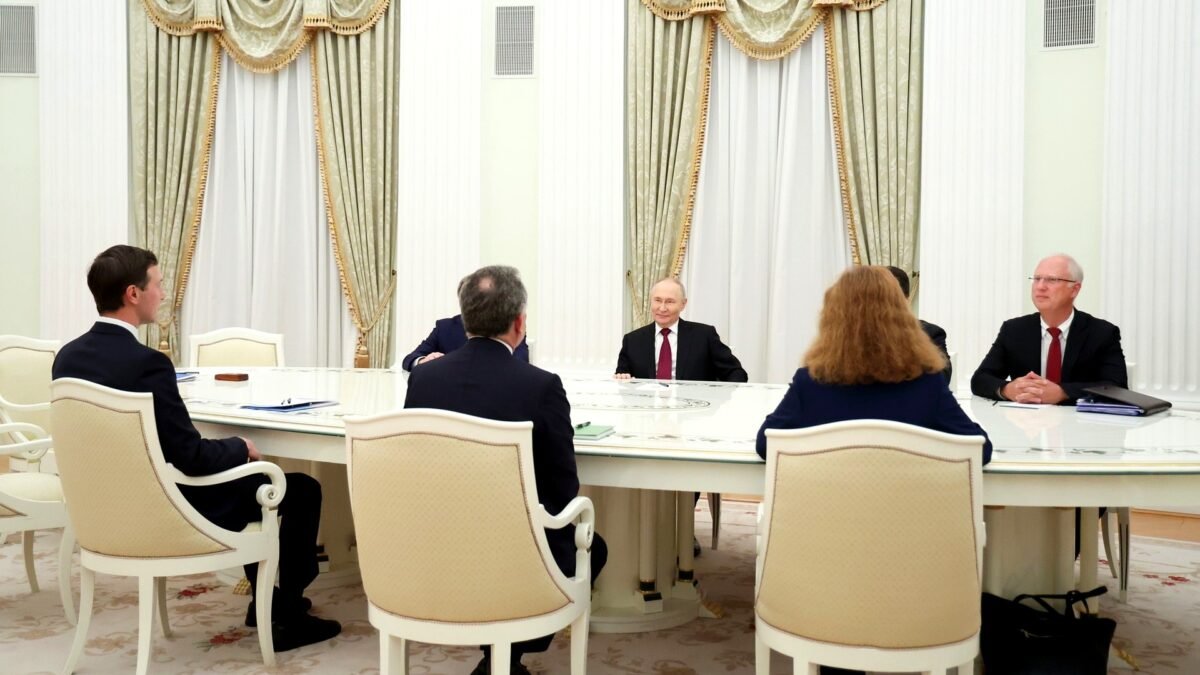
Russian, Ukrainian and American negotiators opened two days of talks in Abu Dhabi on Tuesday, the first three-way meeting between the warring sides and the United States in nine months, as Washington renewed its push to end a war that has now run for nearly five years.
The session, which is due to run into Wednesday, brings the three governments back to the same table for the first time since talks in Geneva in February. According to Reuters, the discussions will focus on security guarantees for Ukraine and on the wider European security architecture that President Donald Trump has said should form part of any settlement. The White House has described itself as cautiously optimistic, while officials on all sides have been careful to say that no breakthrough is expected.
President Trump’s son-in-law and special envoy Jared Kushner, who is leading the American effort alongside Middle East envoy Steve Witkoff, opened the meeting by telling delegates that the goal was to build something new from the wreckage of past diplomacy. “We take what’s worked, we try to identify what’s failed, why we’re in this position and hopefully create a new framework that leads us for decades, if not centuries, of peace,” Kushner said, according to the Associated Press. He added that the hope for the day was “not only to discuss the bilateral issues between the countries, and how do we end the war and bring some good humanitarian relief, but it’s also how do we create the right security relationships between Ukraine and Russia and Europe.”
Kushner said on X before the talks that he and Witkoff were working on “a negotiated solution that can deliver lasting peace and create the conditions for a sovereign, secure, and prosperous Ukraine within a more stable European security environment.” He told reporters that recent contacts with both sides had “narrowed the gaps” and that there were “some good ideas how to bridge” the differences, the Associated Press reported.
Rustem Umerov, the head of Ukraine’s Foreign Intelligence Service who is leading Kyiv’s delegation, thanked the United States for its efforts and said his country was ready to work. “Our people are waiting to end this war. And we hope that we will achieve the lasting peace for Ukraine,” he said, according to the Associated Press. Vladimir Medinsky, the Kremlin aide who is again leading the Russian delegation, said his team had “become bigger and more professional” and expressed hope that the meeting “will allow us to advance on the path towards peace in the interests of the people of Russia and the people of Ukraine.”
The talks opened against a backdrop of continued fighting. Overnight, Russia launched 162 drones and a ballistic missile at Ukraine, according to Ukraine’s air force, while Russia’s defence ministry said its forces had shot down 155 Ukrainian drones over eight Russian regions and Crimea. Reuters reported that Russian strikes hit five major electrical substations across ten Ukrainian regions, leaving homes without power in six regions, including Kyiv, Kharkiv and Dnipropetrovsk, and killing two people in the Vinnytsia region. Ukrainian Prime Minister Sergiy Koretskyi said on Telegram that substations had been hit in the Poltava, Dnipropetrovsk, Vinnytsia and Kirovohrad regions, and the state grid operator Ukrenergo said energy infrastructure had been struck in eight regions.
Who is at the table
The American delegation is led by Kushner and Witkoff, the two envoys President Trump has entrusted with the mediation. Ukraine’s team is headed by Umerov, and according to the Associated Press it also includes President Volodymyr Zelenskyy’s chief of staff Kyrylo Budanov, his deputy Sergiy Kyslytsya, and Davyd Arakhamia, the parliamentary faction leader of Zelenskyy’s Servant of the People party.
Russia’s delegation is led by Medinsky, who has headed Moscow’s negotiating team since the first direct peace talks with Ukraine in Istanbul in March 2022. According to Reuters, the eleven-person Russian delegation also includes deputy foreign ministers Sergei Ryabkov and Mikhail Galuzin, military intelligence chief Igor Kostyukov and Yuri Zhigarlovsky, a deputy chief of the General Staff’s operational department. Ryabkov is attending for the first time. The Russian delegation’s size and seniority have been read by some observers as a sign that Moscow is taking the round seriously; others note that large delegations have accompanied earlier rounds that ended without result.
European officials are in Abu Dhabi too, but not in the main room. Representatives of the so-called E4 group — the United Kingdom, France, Germany and Italy — as well as officials from NATO and the European Commission, are in the Emirati capital for separate meetings. Umerov said the day began with a meeting between the Ukrainian team, the American envoys and the European and NATO representatives, before the trilateral format began. Witkoff said on X that he and Kushner had met Ukrainian and European partners to continue “close coordination on efforts to end the war in Ukraine and establish the conditions for a durable peace, including support for robust security guarantees as part of any settlement.”
“The participants reaffirmed their shared commitment to a strong post-war European security architecture and arrangements, and were clear that a strong NATO will remain central to Euro-Atlantic collective defense,” Witkoff wrote.
Moscow has insisted that the main negotiations remain strictly trilateral. Kremlin spokesman Dmitry Peskov said on Monday that Europe had its own channels of communication with Kyiv and Washington, while reaffirming that the talks were “a trilateral negotiation — involving Russia and Ukraine — with the United States acting as mediator,” according to CNN. Russia has objected to European participation in the three-way talks, though it has said European representatives could join at a later stage. A source in the Russian delegation told Reuters that Moscow believed the main thrust of the talks would be hammering out the key elements of a new post-war security framework for Europe, including mechanisms to prevent threats and strengthen regional stability, and the creation of what the source called “a comprehensive and indivisible security architecture for the entire continent.”
The gap between the two sides
Despite the diplomatic activity, the two sides remain far apart on the central questions of any settlement, and both have restated their positions in the run-up to the talks.
President Vladimir Putin wants Ukraine to pull its troops back from the four regions of eastern and southern Ukraine that Moscow claimed to annex in September 2022 but has never fully captured — Donetsk, Luhansk, Zaporizhzhia and Kherson. He also demands that Ukraine abandon its bid to join NATO, accept strict limits on the size of its armed forces, and drop restrictions on the Russian language and on the Moscow-affiliated Orthodox Church in Ukraine. According to the Associated Press, Putin wants a comprehensive peace deal on those conditions and will not agree to a general halt in hostilities, arguing that a ceasefire would only allow Ukrainian troops to rest and replenish their weapons.
President Zelenskyy, who was visiting Denmark on Tuesday, rejects those demands. He has repeatedly refused to cede territory voluntarily, rejects any limits on Ukraine’s military or on its arrangements with Western partners, which Kyiv sees as essential security guarantees to prevent Moscow from invading again, and argues that an immediate ceasefire is the necessary first step towards negotiating a wider settlement. He has also said that a direct meeting between him and Putin is the only way territorial issues can be settled, a suggestion Putin has so far spurned.
A senior Ukrainian official told Reuters that the government would not consider territorial concessions, and that the issue of territory could be discussed only at leaders’ level and only in the context of appropriate security guarantees for Ukraine. Umerov said on Monday that Ukraine was “doing everything we can to ensure that Europe is a participant in the diplomatic process,” according to CNN.
There is, however, one cautiously encouraging signal. A United States official who briefed reporters ahead of the talks told Reuters on Monday that both Russia and Ukraine were showing some flexibility privately on the possible exchange of territory, and that security guarantees for Ukraine would be a major topic of the discussions, including the potential for a NATO-style Article 5 defence commitment for Kyiv. Any territorial agreement would probably come at the end of negotiations, once other items had been agreed, the official said, including a post-war security architecture. The official also said it was possible that the American envoys would travel to Russia at some point after the talks to meet Putin.
Russian Foreign Minister Sergey Lavrov sounded a more sceptical note. He said Russia would not agree to an immediate ceasefire without knowing what would happen next, according to Reuters, and he welcomed the American proposal to put collective security at the top of the agenda. “We can only welcome the (U.S.) negotiators on President Donald Trump’s request proposing to put the issue of collective security on top of the agenda of the talks on a Ukrainian settlement,” Lavrov said, according to the Associated Press.
A wider deal on European security
What makes this round different from the three earlier rounds of trilateral talks this year is the scope of what Washington is now discussing. Last week, Trump declared that some kind of grand deal about European security was in the works, describing it as “a big agreement” that was “going to involve more than Ukraine.” Kushner said last week that the Abu Dhabi meeting would focus on “security guarantees for Ukraine and a broader European security architecture,” according to The Times, and he wrote on X on Monday that “a comprehensive and lasting settlement will also require direct engagement between Russia and our European partners on the broader security arrangements that affect them.”
That framing has alarmed some in Europe, where officials fear that a deal struck over their heads could trade away Ukrainian territory and European security interests in exchange for an agreement with Moscow. The European Union’s foreign policy chief, Kaja Kallas, said on Monday that she saw little sign Russia was willing to negotiate in good faith, according to CNN. The Elysée Palace said on Tuesday before the talks began that France and its partners were working “hand in hand with the Ukrainians” and that their objective was to assert “a fundamental principle: the pursuit of peace in Ukraine and security in Europe are inextricably linked.”
German Chancellor Friedrich Merz was blunt about the prospects. “I don’t have overly high expectations” for the talks, he said in an interview with ZDF television on Monday night, according to the Associated Press. John Herbst, a former United States ambassador to Ukraine who is now a senior director at the Atlantic Council’s Eurasia Center, said expectations should be “very modest” and wrote last week that the talks were only taking place because Putin wanted “to give Trump a reason to continue to distance himself from Ukraine,” according to CNN. The Times reported that there was almost no chance of a deal in Abu Dhabi to end the war.
The parallel diplomacy in Paris underlines how much is at stake for Europe. Foreign ministers of the Group of Seven leading industrialised nations are meeting in the French capital, and their second day of talks on Tuesday is focused on Ukraine. Ukrainian Foreign Minister Andrii Sybiha was scheduled to meet United States Secretary of State Marco Rubio in Paris before joining the wider G7 discussion, according to The Business Standard. The discussions were expected to focus on defence and security assistance for Ukraine, which has been scaled back by the Trump administration, raising concerns in Kyiv and in European capitals including Paris, Berlin, Rome and London.
The road to Abu Dhabi
This is the fourth round of trilateral talks between the three sides. All three earlier rounds ended without significant breakthrough. The most recent, in Geneva in February, fell short of Ukraine’s goals, Zelenskyy said at the time, adding that “sensitive political matters, issues of possible compromises and the necessary meeting of leaders have not yet been sufficiently worked through,” according to CNN. The United States later postponed a round that had been expected to take place in March, because of the war in Iran.
The backdrop to the talks is a long and bitter diplomatic history. The two sides first sat down together in Istanbul in March 2022, weeks after Russia’s full-scale invasion, with Medinsky already leading the Russian team. Those talks collapsed. Since then, the war has ground on through nearly five years of fighting, with the front line largely deadlocked and both sides escalating long-range strikes against each other’s cities and infrastructure.
One document that continues to shape the discussion is the 28-point peace plan drafted last year by Kirill Dmitriev, the head of Russia’s sovereign wealth fund, and Witkoff. According to The Times, the plan called for Ukraine to cede land to Moscow and renounce its ambitions to join NATO. A senior Ukrainian official has strongly denied that the government would consider any such concessions. The plan’s existence, and the fact that it was drawn up by an American envoy and a Russian official, remains one of the most sensitive facts in the diplomacy, and it is one reason European governments have pressed so hard to be included.
The war in Iran, which began in late February 2026, has also reshaped the diplomacy around Ukraine. It postponed the March round of talks, it drove up energy prices, and it changed the political calculations in Washington. Trump has said that a renewed military campaign against Iran is now unlikely, and he has tied his Ukraine diplomacy to a broader bargain on European security. The conflict in the Middle East also explains why the American mediation is now led by Kushner and Witkoff, the two envoys who have handled the administration’s Middle East diplomacy, rather than by officials from the traditional Ukraine policy world.
Winter, the grid and the cost of waiting
Whatever happens in Abu Dhabi, the war is not pausing for the diplomacy. The overnight strikes on Ukraine’s power grid are part of a renewed Russian air campaign as winter approaches, and they follow a pattern seen in previous years, only harder and earlier, according to CNN. Russian drones and missiles are already hitting Ukraine’s energy infrastructure, and analysts say the attacks are more intense than in earlier winters.
The human cost is rising. At least 55 people were killed last Monday when Russia dropped several bombs on a school building used as a shelter and aid centre in Zaporizhzhia, one of the deadliest single incidents of the war to date, according to CNN. Civilian deaths in Ukraine are at their highest point since the start of the war, with more than 2,700 killed in Russian strikes so far this year, according to ACLED, a global conflict monitor cited by CNN. On Sunday night, Russian attacks on the power grid left more than 600,000 people in the Dnipropetrovsk region without electricity, Zelenskyy said, as temperatures plummet and winter draws in.
Ukraine’s defences are under strain. Over the past few months, Russia has deployed faster, jet-powered Shahed drones, which are harder to shoot down, and more missiles are slipping through Ukraine’s air defences as Kyiv grapples with a chronic shortage of United States-made Patriot interceptors, one of the few defensive weapons capable of shooting down ballistic missiles, according to CNN. Moscow has also expanded its attacks to strike Ukrainian businesses, consumer logistics and other economic targets in a bid to weaken Kyiv’s war effort, Reuters reported, citing the pattern of recent strikes.
The war has already killed hundreds of thousands of soldiers and thousands of civilians, according to analysts and humanitarian organisations cited by the Associated Press. The two armies remain largely deadlocked on the front line, and there are no signs that the fighting is abating.
Analysis: Why It Matters
The first real test of Trump’s second-term Ukraine diplomacy
The Abu Dhabi talks are the first serious test of whether the Trump administration’s approach to Ukraine can produce anything more than the stalemate that has defined the diplomacy so far. Three rounds of trilateral talks this year ended without a breakthrough, and the February meeting in Geneva was judged a disappointment even by Ukraine’s own president. The question now is whether the addition of a broader European security bargain changes the arithmetic, or whether it simply gives both sides a bigger table on which to repeat the same positions.
The administration has bet heavily on the idea that a grand bargain is possible. Trump has spoken of a deal that goes beyond Ukraine, Kushner has spoken of a new framework for decades or centuries, and the American envoys have spent the past week in Brussels talking to NATO, the European Union and the major European powers about security guarantees. That is a far more ambitious agenda than the ceasefire-first approach that dominated earlier rounds. Ambition can be a strength in diplomacy, because it gives both sides more to trade. It can also be a weakness, because every additional issue is another point on which the talks can fail.
The honest reading of the evidence is that the two sides are not close. Putin’s demands — the four regions, no NATO, a smaller Ukrainian army — have not changed since the invasion. Zelenskyy’s red lines — no territorial concessions, no limits on his military, a ceasefire first — have not changed either. The American official’s claim that both sides are showing private flexibility on territory is the most hopeful signal to emerge from the run-up to the talks, but it is also the kind of claim that officials make before negotiations to create momentum, and it sits awkwardly alongside the public statements from both capitals. The test will be whether anything concrete emerges on Wednesday, when the session ends.
Europe’s fear of a second Yalta
The most revealing word in the coverage of these talks is the one Ukraine’s supporters keep using: Yalta. The fear, as The Times reported, is that the United States and Russia will settle the future of Europe between themselves, with Ukraine and its European allies as spectators. It is a fear with deep roots. When Russia demanded the withdrawal of NATO forces from the alliance’s eastern flank in the build-up to its invasion in 2022, the Biden administration’s response was an unequivocal rebuff. Almost five years on, the Trump administration appears far more accommodating of Putin’s ambitions, both on NATO and on Ukraine.
That shift is the single most important change in the diplomacy, and it explains why the European presence in Abu Dhabi matters so much. The E4, NATO and the European Commission are in the city, meeting the Ukrainians and the Americans before the trilateral session, and pressing for a seat at the main table. Russia has refused. The compromise — separate meetings, briefings on progress, a promise of later involvement — is the kind of arrangement that can work if the Americans genuinely keep their allies informed, and that can fail badly if they do not. Umerov’s statement that Ukraine is doing everything it can to ensure Europe is a participant in the process is a polite way of saying that Kyiv does not trust a deal made without Europe.
The Elysée’s insistence that peace in Ukraine and security in Europe are “inextricably linked” is the European position in a sentence. It is also a warning. Any settlement that leaves Ukraine weak, or that trades Ukrainian territory for a Russian promise, will not be accepted in Paris, Berlin or London, and a settlement that Europe does not accept will not hold, because Europe will be the party paying to rebuild Ukraine and guaranteeing its security. The Americans know this. Whether they act on it is the open question of the week.
The security guarantee at the heart of everything
Strip away the rhetoric and the Abu Dhabi talks come down to one question: what, if anything, will stop Russia from invading Ukraine again? That is what Kyiv means by security guarantees, and it is what makes the question so difficult. Ukraine wants a commitment that is as close as possible to NATO’s Article 5, the collective defence clause that treats an attack on one ally as an attack on all. The American official’s mention of a NATO-style Article 5 guarantee is significant, because it suggests that Washington is at least willing to discuss a commitment of that kind. But it is far from clear what such a guarantee would mean in practice, who would enforce it, and whether the United States itself would sign it.
Trump has refused to say whether he trusts Zelenskyy or Putin more, and in a “60 Minutes” interview that aired on Sunday he suggested that Ukraine might have to cede some of its territory, saying “they’re gonna end up with a little bit different shape, Ukraine,” according to CNN. That is not the language of a mediator who has decided to underwrite Ukraine’s security at any cost. It is the language of a president who sees territory as negotiable. For Kyiv, that is precisely the danger: a guarantee that is strong on paper and weak in practice, traded for land that can never be recovered.
The history here is discouraging. Ukraine gave up its nuclear weapons in 1994 in exchange for security assurances from Russia, the United States and the United Kingdom under the Budapest Memorandum. Russia invaded anyway, twice. Every Ukrainian leader since has understood that paper promises are worthless without enforcement, and every negotiation since has foundered on the same rock. The Abu Dhabi talks will be judged, in the end, not by whether they produce a ceasefire, but by whether they produce a guarantee that a future Russian leader would be afraid to break.
The war does not wait for the talks
Perhaps the most striking fact about Tuesday is how little the fighting changed because the talks opened. Russia struck five major electrical substations the night before the session began. Ukraine’s air force reported 162 drones and a ballistic missile. Two people were killed in Vinnytsia. The message, whether intended or not, is that Moscow will negotiate while it continues to degrade Ukraine’s ability to survive the winter. That is a familiar Russian tactic: pressure on the battlefield to improve the position at the table.
It is also a reminder of what is at stake in the timing. The talks are scheduled for two days. The winter is months long. If the diplomacy fails, Ukraine faces another winter of grid attacks with a shortage of Patriot interceptors and a United States administration that halted financial aid at the beginning of 2025 and has scaled back defence assistance. The G7 discussion in Paris is, in part, about whether Europe can fill the gap. The answer so far is that it is trying, but that it cannot fully replace American support, particularly for air defence.
There is a political clock in Washington too. The Democrats won both chambers of Congress in last week’s midterm elections, and the new Congress will be seated in January. Zelenskyy has said publicly that he hopes the “blue wave” can bolster American support for Ukraine, since the Democratic Party “speaks very clearly about supporting Ukraine and providing assistance to Ukraine,” according to CNN. But it remains unclear whether the midterms will substantively change American policy, and the Trump administration has shown a willingness to strike business deals with Moscow, including one to supply markets with Russian diesel, and to pressure Zelenskyy to accept a short-lived “energy ceasefire.” The Abu Dhabi talks are taking place in the narrow window between an election that weakened the president’s party and a new Congress that may constrain him. That window will not stay open for long.
What success would actually look like
It is worth being clear about what a successful outcome in Abu Dhabi would be, because the word “breakthrough” is doing too much work in the coverage. A breakthrough is not expected, and the experienced voices — Merz, Herbst, Kallas — have all said so. What would count as progress is more modest: agreement on a framework for security guarantees, a commitment to a further round of talks with European participation, a limited humanitarian step such as a prisoner exchange or a pause in strikes on energy infrastructure, or an agreement that the American envoys will travel to Moscow to meet Putin. Any one of those would be a genuine step forward from the February round, which ended with Zelenskyy saying that the sensitive questions had not even been worked through.
The danger is the opposite outcome: a round that ends with a joint statement so vague that it conceals the absence of agreement, followed by a resumption of the same arguments in a different city. That has been the pattern of this war’s diplomacy, and it is the pattern that has left Ukraine facing its fifth winter of war. The talks in Abu Dhabi deserve to be taken seriously, because they are the first in nine months and because the people in the room are senior enough to make decisions. But they should also be judged by their results, not by their existence. A meeting is not a peace process. A peace process is what happens when the meeting ends and the hard choices begin.
What to Watch Next
- Wednesday’s close: Whether the two-day session ends with a joint statement, an agreed framework, or only a commitment to meet again — and whether the American envoys travel to Moscow to see Putin afterwards, as the United States official suggested was possible.
- The territory question: Whether the private flexibility on territory reported by the American official becomes public, and whether either side puts a territorial proposal on the table.
- European participation: Whether the E4, NATO and the European Commission are brought into the main talks, or remain in the separate meetings that Russia has insisted on.
- The G7 in Paris: What the foreign ministers agree on defence and security assistance for Ukraine, and whether Secretary of State Marco Rubio’s meeting with Foreign Minister Andrii Sybiha produces any new commitment.
- The grid: Whether Russia pauses its strikes on Ukraine’s energy infrastructure while the talks continue, or whether the attacks intensify as winter approaches.
- Zelenskyy and Putin: Whether either leader moves towards the direct meeting that Kyiv says is the only way to settle territorial questions.
- The 28-point plan: Whether the Dmitriev-Witkoff plan resurfaces in the discussions, and how Ukraine and its European allies respond if it does.
Sources
- Associated Press, “US-mediated talks on ending Russia-Ukraine war begin in Abu Dhabi”
- CNN, “Ukraine peace talks restart after 9 months. What makes them different this time?”
- Reuters, “Russia pounds Ukraine’s power grid as talks open in Abu Dhabi”
- Reuters, “Russia, Ukraine to meet for US-backed talks after Trump says broad deal possible”
- Reuters, “Russia and Ukraine showing flexibility on territory, US official says”
- The Times, “Ukraine warns of ‘second Yalta’ as US-brokered talks open in Abu Dhabi”

About the Author — Abdul Mannan
Related Articles

Houthi Missiles Intercepted Over Riyadh for the Second Time in Three Days as Saudi Strikes Hit Sanaa
Saudi air defences intercepted a ballistic and a cruise missile aimed at Riyadh early on Tuesday, the second…

Russia, Ukraine and US Resume Trilateral Peace Talks in Abu Dhabi for the First Time Since February
Russia, Ukraine and the United States have resumed trilateral peace talks in Abu Dhabi, the first such meeting…
France Blames Iran’s Revolutionary Guards for Supermarket Fridge Cyberattack and Vows EU Sanctions
France has formally blamed Iran's Revolutionary Guards for the October cyberattack that turned supermarket fridges into ovens across…