
Houthi Missiles Intercepted Over Riyadh for the Second Time in Three Days as Saudi Strikes Hit Sanaa

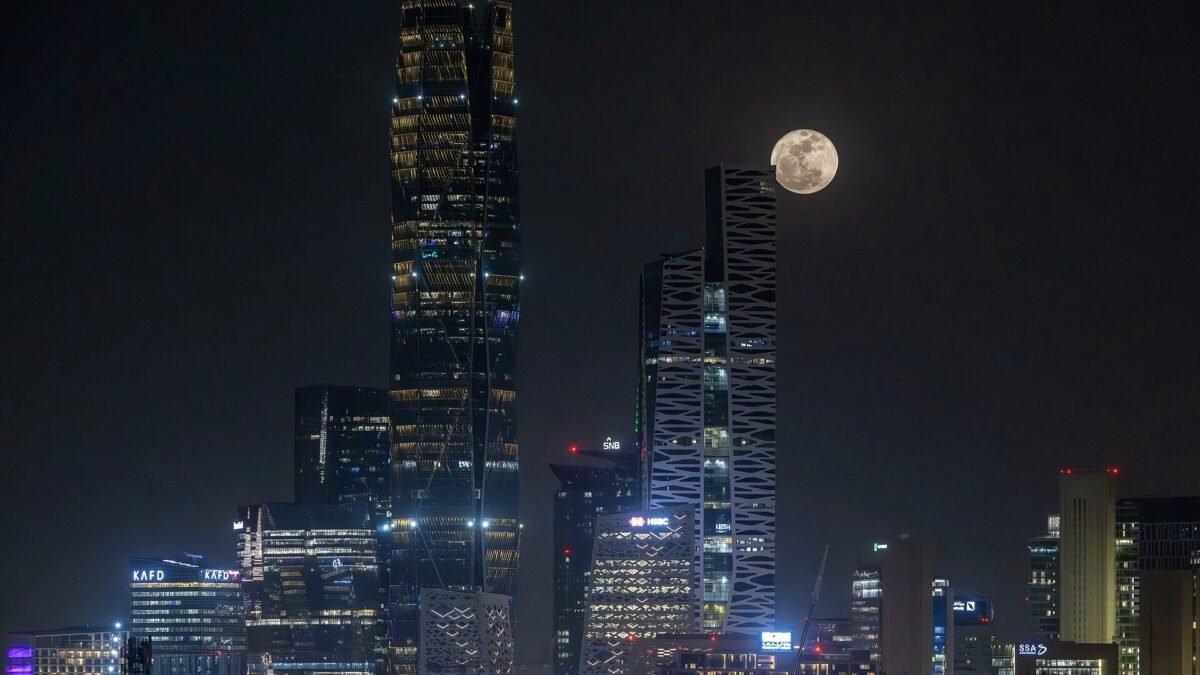
Saudi air defences intercepted missiles fired towards the capital, Riyadh, in the early hours of Tuesday, in the second attack on the city in three days and the latest exchange in a rapidly escalating confrontation between the Saudi-led coalition and Yemen’s Houthi movement. According to Reuters, the coalition said its air defences destroyed a ballistic missile and a cruise missile aimed at Riyadh, a second ballistic missile fired towards the kingdom’s southern region, and a drone over the oil-rich Eastern Province. No casualties were reported.
The interceptions, announced by coalition spokesman Major General Turki al-Maliki in posts on the social media platform X, came hours after Saudi Arabia reported an attack on its strategically important East-West oil pipeline in the Medina region on Monday. That sequence, a strike on energy infrastructure followed within hours by missiles aimed at the capital, underlined how quickly the conflict has moved from Yemen’s battlefields to the heart of the world’s largest oil exporter.
Residents of Riyadh heard several explosions in the early hours of Tuesday, AFP reported, and received text alerts from the civil defence agency instructing them to take shelter from an aerial threat. The agency later said the danger had passed. Warnings were also issued for the south-western cities of Abha and Khamis Mushait before being lifted. Saudi authorities reported no material damage or fatalities from the interceptions.
The Houthi-run Saba news agency reported that Saudi warplanes carried out air strikes on Yemen’s Houthi-controlled capital, Sanaa, hitting the al-Mufazir gas station in the Jadar district, north of the capital, and a building belonging to the state oil company in southern Sanaa. Saba later said civil defence teams were working to extinguish a fire in gas trailers at the al-Mufazir station. Saudi authorities did not immediately confirm the reported strikes, and the Houthis did not immediately claim responsibility for the missile and drone launches against Saudi Arabia.
What happened overnight
The first coalition statement was posted at 4.02am Saudi time on Tuesday, according to reports of the announcement, and named Riyadh as the direction of the launches without identifying a specific intended target. A later statement added the interception of a drone over the Eastern Province. The coalition attributed all of the launches to Yemen’s Ansarullah movement, widely known as the Houthis, although the group itself issued no immediate claim of responsibility.
The pairing of a ballistic missile and a cruise missile against the capital is significant. Ballistic missiles travel at great speed on a high arc and are designed to overwhelm defences by sheer velocity, while cruise missiles fly low and slow, hugging the terrain in an attempt to slip beneath radar coverage. Firing both types at the same target in the same salvo forces defenders to fight two very different threats at once, and it is a tactic the Houthis have refined over years of long-range strikes. Riyadh sits more than 1,000 kilometres from Sanaa, which makes the capital a demanding target and a deliberate choice: a strike there is aimed as much at the message it sends as at any physical damage it might cause.
Saudi Civil Defence used the National Early Warning Platform to send alerts to phones in Riyadh, warning of a potential danger and asking residents to follow safety instructions. The agency later published a further statement confirming that the danger had passed in the city, while urging people to remain cautious, avoid gatherings and refrain from recording video of the scene for security reasons. Similar warnings for Abha and Khamis Mushait, in the south-west near the Yemeni border, were also lifted.
According to Reuters, the Eastern Province, Saudi Arabia’s economic powerhouse, contains the majority of the kingdom’s oil and gas reserves and is home to the headquarters of the state oil giant Aramco, which suffered extensive damage in an attack in October. The province has been subject to multiple attacks in the past few weeks. Southern Saudi Arabia, which borders Yemen, has also repeatedly been hit by Houthi missile and drone attacks targeting military sites and energy infrastructure.
The capital under fire, again
Tuesday’s interceptions were the second time in three days that missiles were fired at Riyadh. On the night of 8 November, the coalition said it intercepted four missiles over the capital, and falling debris damaged the Aramco Tower in the King Abdullah Financial District, shattering windows. No casualties were reported in that incident either, but the damage to a landmark tower in the kingdom’s financial centre brought the war visibly into the heart of the capital’s business district.
That earlier salvo was part of a wider wave. On 8 November, the Houthis claimed six missile and drone operations against Saudi targets, including King Khalid International Airport, the Khurais oil field, the Abqaiq processing facility and a pumping station at Dawadmi, according to reports at the time. The coalition said it destroyed two launchers in Sanaa in response. Fifteen or more missiles and drones were reported intercepted during November before Tuesday’s launches, a tempo that suggests the air-defence battle over Saudi Arabia is now being fought almost nightly.
The attacks on Riyadh form part of a broader campaign against Saudi energy infrastructure. On Monday 9 November, Saudi Arabia said its East-West pipeline had been targeted in the Medina region, causing a limited fire that was extinguished, with no injuries and no effect on pipeline operations. Saudi authorities did not name any party responsible for that attack and gave no details of the weapon or method used. The pipeline runs about 1,200 kilometres from Abqaiq in the east to the Red Sea port of Yanbu, and it has become the kingdom’s most important strategic asset in recent weeks: with the Strait of Hormuz disrupted, it is the main route by which Saudi crude can still reach world markets without passing through the strait.
That was not the first attack on the pipeline. In September, satellite imagery showed a smoke plume at the pipeline, which was shut for several days after three of its eleven pumping stations were damaged. An Iraqi investigation attributed drones used in that attack to Iranian-backed groups, and the pipeline was restarted on 22 September. In late October, the Houthis twice claimed drone attacks on pumping stations within 48 hours, although Saudi Arabia did not confirm damage on those occasions.
Strikes on Sanaa
The reported Saudi strikes on Sanaa followed the pattern of the past few weeks: an attack on Saudi territory answered by air strikes on Houthi-held targets in Yemen. According to the Houthi-run Saba news agency, the strikes hit the al-Mufazir gas station in the Jadar district and a building belonging to the state oil company in southern Sanaa, and civil defence teams were working to put out a fire in gas trailers. Neither the coalition nor Saudi authorities immediately confirmed the strikes, and no casualty figures were given in the reports.
The exchange came days after a far deadlier episode. On 7 November, air strikes hit al-Shariya village in the Bani Hushaysh area, east of Sanaa. The Houthi-run health ministry said the toll had risen to 44 people killed, including 21 children and 10 women, with 40 wounded. That toll has not been independently verified, and the coalition has said it is investigating the incident. A separate reported attack on a market in Taiz on 6 November was said to have killed 30 people, again according to reports that have not been independently confirmed. The fog around casualty figures in Yemen is a long-standing feature of this war: access for independent journalists is severely restricted, and both sides have strong incentives in how they present the human cost.
The targets reported in Sanaa, a gas station and a state oil company building, fit the logic of the campaign as it has developed on both sides. The Houthis have concentrated their fire on Saudi oil infrastructure, airports and ports; the coalition has answered by striking the fuel and energy infrastructure that sustains the Houthi war effort. Each side is trying to raise the cost of the other’s campaign while protecting its own ability to keep fighting, and civilians caught between the two are paying the price.
A war that has widened in weeks
According to Reuters, the latest launches come amid an escalation in hostilities between the Houthis and the coalition backing Yemen’s internationally recognised government, after the group advanced in September towards the Bab el-Mandeb Strait, the strategic shipping chokepoint at the southern entrance to the Red Sea. The Houthis have since stepped up strikes on Saudi airports, ports and oil facilities, while Saudi Arabia has carried out air strikes on Houthi targets in Yemen.
The timing matters. A truce between the two sides collapsed in July, and the weeks since have seen near-daily attacks across the border. The Houthi advance towards Bab el-Mandeb in September raised the stakes sharply: the strait is one of the world’s most important shipping lanes, and a Houthi presence astride it would give the group leverage over traffic between the Red Sea and the Indian Ocean, on top of the pressure it already exerts through its long-range missile and drone campaign.
The confrontation also sits inside a much larger regional crisis. The Strait of Hormuz, through which about a fifth of the world’s oil and liquefied natural gas passed before the current crisis, has been disrupted since late October, when Iran’s Islamic Revolutionary Guard Corps declared it closed. Shipping through the strait has fallen to a trickle: according to IMF PortWatch data cited in recent reporting, only one vessel passed through on 1 November, against a normal flow of about 85 ships a day. Iran has said three tankers exploded or caught fire near the strait, and the United States has disabled a commercial ship in the area. Iranian state media reported American strikes on Qeshm Island overnight on Sunday, saying no vital infrastructure was damaged.
Oil markets have been whipsawed by the crisis. Brent crude settled at 92.57 dollars a barrel on Monday, down 5.9 per cent, and West Texas Intermediate at 86.85 dollars, down 4.4 per cent, according to Bloomberg data reported by Rigzone, in a slide driven partly by diplomatic signals. Prices remain far above where they stood for much of the year, having risen above 115 dollars in late October and gained more than 50 per cent during 2026. The market’s sensitivity to each new incident, whether a missile over Riyadh or a fire on a pipeline, shows how thin the margin for error has become.
The diplomacy around the crisis is moving at the same time. President Donald Trump said on Monday that a renewed American military campaign against Iran was, in his words, quite unlikely and did not seem necessary, adding that Washington wanted a long-term solution. He was due to meet the Prime Minister of Qatar, Sheikh Mohammed bin Abdulrahman Al Thani, in Washington on Monday, and the Qatari leader later described his talks with Mr Trump and Vice President JD Vance about Iran as positive. According to reports, Iran has proposed an end to the American blockade and the lifting of some sanctions in exchange for an end to its blockade of Hormuz, although the United States has described Tehran’s conditions as outrageous. Meanwhile, American, Russian and Ukrainian negotiators opened trilateral talks in Abu Dhabi on Tuesday, the first such meeting since February, in a separate diplomatic effort that Washington has tied to a wider bargain on European security.
Analysis: the war over Saudi skies
The first thing Tuesday’s events establish is that the air war over Saudi Arabia has become a nightly contest, and that neither side is winning it outright. Saudi air defences have intercepted missile after missile, including every projectile fired at Riyadh in the past three days, and no one was killed or injured in the capital on either night. That is a considerable technical achievement: defending a city against a mixed salvo of ballistic and cruise missiles, launched from more than 1,000 kilometres away, is one of the hardest tasks in modern air defence. But interception is not the same as deterrence. The Houthis keep firing, and each salvo forces the kingdom to spend interceptors, sound alerts across its capital, and absorb the disruption and anxiety that comes with them, even when nothing gets through.
The economics of this exchange favour the attacker, and that is the central problem for Riyadh. A ballistic missile or a long-range drone costs a fraction of the interceptor fired to destroy it, and the Houthis have shown they can rebuild damaged launch positions and resume fire within hours of coalition air strikes. The coalition’s answer, striking fuel infrastructure in Sanaa, is aimed at the same logic from the other side: choke the supply of fuel and funds that keeps the missile campaign going. But after a decade of war, the Houthi movement has proved remarkably resilient to exactly this kind of pressure, and there is little evidence so far that the current round of strikes has degraded its ability to launch.
The choice of targets tells its own story. The Houthis are not firing at random. The East-West pipeline, the Aramco headquarters, the Khurais field, Abqaiq, King Khalid airport, the financial district: these are the arteries and symbols of the Saudi state, and each attack is designed to demonstrate that no part of the kingdom is beyond reach. The pipeline matters most of all, because it is the kingdom’s insurance policy against the closure of Hormuz. If the pipeline can be hit repeatedly, the insurance looks thinner, and the leverage that comes from being able to bypass the strait diminishes. That is why the limited fire in the Medina region on Monday, modest as it was in physical terms, carried such weight: it showed the Houthis can reach the very asset Saudi Arabia is relying on most.
There is also a message in the timing. The missiles over Riyadh came on the same day that American, Russian and Ukrainian negotiators sat down in Abu Dhabi, and a day after President Trump played down the prospect of new American strikes on Iran. The Houthis, and their backers in Tehran, have every reason to demonstrate that they remain a force to be reckoned with while diplomacy proceeds elsewhere. The war in Yemen has always been entangled with the wider confrontation between Iran and its rivals, and the current escalation cannot be understood without that frame: the Houthis’ missiles are Yemeni weapons, but they are also, in the eyes of Riyadh and Washington, an Iranian instrument.
For Saudi Arabia, the dilemma is acute. The kingdom has spent years trying to extricate itself from the Yemen war, which has cost it heavily in money, reputation and, in the early years, civilian lives from cross-border attacks. The truce that collapsed in July was part of that effort, and its failure has dragged Riyadh back into a conflict it had hoped to leave behind. At the same time, the kingdom cannot allow its capital to be targeted night after night without responding, and each response risks deepening the cycle. The reported strikes on Sanaa’s fuel infrastructure are calibrated, hitting the war effort rather than the leadership, but calibrated responses have a way of escalating when the other side refuses to stop.
The civilian dimension deserves to be stated plainly. In Riyadh, families were woken by phone alerts and the sound of explosions, and told to take shelter. In Sanaa, civil defence teams fought a fire in gas trailers at a filling station. In al-Shariya, east of Sanaa, dozens of people were reported killed days earlier, including many children, in an incident whose toll cannot be independently confirmed. This is what the escalation looks like from the ground: not a contest of missiles and interceptors, but a spreading pattern of fear and fire in two capitals, with the people who live in them paying for decisions made by armed men far from their streets.
Why it matters
The stakes reach well beyond Saudi Arabia and Yemen. The kingdom is the world’s largest oil exporter, and the security of its infrastructure is a matter of direct concern to every oil-importing country. The East-West pipeline is now the principal alternative route for Saudi crude while Hormuz is disrupted, and repeated attacks on it raise the risk premium on every barrel that leaves the Gulf. Oil prices have already swung violently in recent weeks, and a successful strike on a major facility, the kind that has happened before in this conflict, could send them sharply higher again, with immediate consequences for inflation and growth in economies that are already fragile.
The escalation also complicates the diplomacy around Iran. Washington has been trying to manage two crises at once: the confrontation with Tehran over Hormuz, and the war in Ukraine. President Trump’s reluctance to order new strikes on Iran reflects a calculation that diplomacy still has room to work, but the Houthi campaign tests that calculation daily. Each missile over Riyadh strengthens the argument of those in Washington and Riyadh who say Iran’s network of allied armed groups must be confronted rather than negotiated with, and each night of interceptions without a political answer makes the diplomatic path harder to sustain.
There is a regional dimension too. The Houthi advance towards Bab el-Mandeb, combined with the pressure on Hormuz, means that two of the world’s most important shipping chokepoints are now contested at the same time. The Bab el-Mandeb carries traffic between the Red Sea and the Indian Ocean, and Hormuz carries the oil of the Gulf. If both were seriously disrupted together, the consequences for global trade and energy supply would be severe. That prospect is what gives the Houthis leverage far beyond their size, and it is what makes the current escalation a matter of concern well beyond the Arabian Peninsula.
For Yemen itself, the renewed war is a catastrophe layered on a catastrophe. The country was already enduring one of the world’s worst humanitarian crises before the truce collapsed, with millions dependent on aid and the economy in ruins. The return of cross-border warfare, the strikes on fuel infrastructure, and the fighting around the Red Sea coast will make it harder to move food, fuel and medicine to the people who need them. The reported toll in al-Shariya, if confirmed, would be a reminder that the cost of this war is measured first in Yemeni lives.
What to watch next
The most immediate question is whether Tuesday’s salvo is followed by more. The pattern of recent weeks suggests it will be: the Houthis have launched attacks on most nights, and the coalition has answered with strikes on Sanaa. The tempo, rather than any single incident, is the story now, and the watch is on whether the launches grow in size or shift to new targets, particularly the Eastern Province’s oil facilities or the Red Sea export hub at Yanbu, where danger alerts have already been issued.
The second question is whether the reported strikes on Sanaa mark a change in the coalition’s targeting. Hitting a gas station and a state oil company building is a step towards the fuel infrastructure that sustains the Houthi war effort, and if that becomes a sustained campaign, the humanitarian consequences in Houthi-held Yemen could be serious. The coalition has not confirmed the strikes, and the absence of confirmation is itself worth noting: it leaves open whether this was a deliberate escalation or a routine retaliation that the Houthis have chosen to publicise.
The third question is diplomatic. The meeting between President Trump and the Qatari prime minister, and the parallel talks in Abu Dhabi, show that diplomacy is active, but it is not yet clear whether any channel exists that can address the Yemen escalation directly. Qatar has historically played a mediating role in the region, and its involvement is worth watching. So is the position of Iran, whose proposal to trade an end to the Hormuz blockade for sanctions relief has been dismissed by Washington as outrageous, but which remains the only framework on the table for de-escalating the wider crisis.
Finally, watch the oil market. The muted price reaction to Monday’s pipeline attack suggested traders believe the disruption is manageable, but that confidence rests on the assumption that the pipeline and the Eastern Province’s facilities remain largely intact. A successful strike on a major installation would test that assumption quickly, and the history of this conflict, including the 2019 attacks on Abqaiq and Khurais, shows that the Houthis and their backers have been able to hit such targets before.
Tuesday’s events, taken together, describe a conflict that is widening rather than narrowing. Missiles over the Saudi capital, a pipeline attacked in the Medina region, air strikes on Sanaa, a strait closed and a shipping lane contested: these are not isolated incidents but the parts of a single, connected crisis. Until a political route is found to address it, the nights over Riyadh are likely to stay loud.
Sources
- Reuters, via SRN News: Saudi-led coalition reports Houthi missile, drone interceptions; Saba reports Saudi strikes on Sanaa
- News Central TV (AFP): Riyadh: Explosions Amid Missile Interception
- The Insight International: Saudi air defenses intercept Houthi missiles fired at Riyadh
- Today News Brief: Saba reports unconfirmed air strikes on Sanaa after Riyadh missile interceptions
- The Chronicle: Saudi-led coalition intercepts three Houthi missiles targeting Saudi Arabia

About the Author — Abdul Mannan
Related Articles
Russia and Ukraine Open First Trilateral Peace Talks in Nine Months in Abu Dhabi as US Pushes a Wider European Security Deal
Russian, Ukrainian and American negotiators opened two days of talks in Abu Dhabi on Tuesday, the first three-way…
Russia, Ukraine and US Resume Trilateral Peace Talks in Abu Dhabi for the First Time Since February
Russia, Ukraine and the United States have resumed trilateral peace talks in Abu Dhabi, the first such meeting…

France Blames Iran’s Revolutionary Guards for Supermarket Fridge Cyberattack and Vows EU Sanctions
France has formally blamed Iran's Revolutionary Guards for the October cyberattack that turned supermarket fridges into ovens across…