
Escitalopram Tops Major Analysis of Antidepressants for Keeping Depression at Bay, Lancet Psychiatry Study Finds

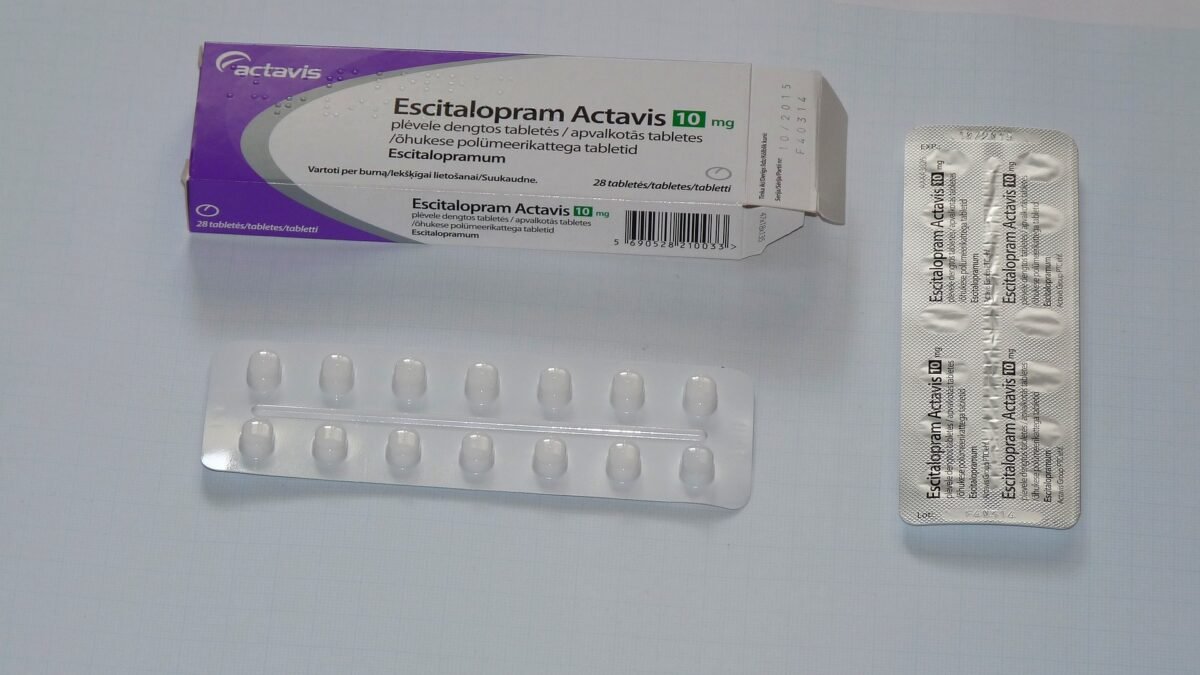
Escitalopram is the most effective antidepressant for keeping people free of depression once they have recovered, according to a major new analysis published in The Lancet Psychiatry, which compared the long-term performance of 20 commonly prescribed drugs. The study, the first large-scale comparison of antidepressants for both short-term recovery and long-term relapse prevention, found that people taking escitalopram were more likely to see their symptoms improve and stay improved than people taking other medicines, including fluoxetine, the drug better known as Prozac.
Two other medicines also performed well in the long term, according to the researchers: agomelatine, an atypical antidepressant, and duloxetine, a drug from the SNRI class. Fluoxetine ranked just below them, and other widely used medicines, including sertraline, were no better than fluoxetine at keeping depression at bay, the BBC reported.
The findings will be read closely by the millions of people who take antidepressants every day, and by the doctors who prescribe them. Depression affects around one in six people in the United Kingdom at some point in their lives, according to the BBC, and the World Health Organization estimates that about 322 million people around the world were living with depression in 2023, including 5.2 per cent of all adults. Yet for all the scale of prescribing, one of the most basic questions in psychiatry has gone unanswered until now: once a drug has helped someone get better, which one is most likely to keep them well?
The researchers behind the new analysis say their work finally answers that question, at least at the level of populations. But they, and independent experts who were not involved in the study, were quick to add a caution that matters as much as the headline. The differences between the drugs were modest, they said, and no single result can tell a doctor which medicine will work best for any one patient. People who are doing well on their current antidepressant should not switch because of these findings, the experts stressed.
What the study found
The analysis, titled “Comparative efficacy and acceptability of antidepressants in the long-term treatment of major depressive disorder: a systematic review and network meta-analysis”, was published in The Lancet Psychiatry in November 2026. It drew together evidence from 115 previously conducted randomised clinical trials involving more than 30,000 participants in total, and compared 20 antidepressants with one another and with fluoxetine, the best-known drug in the class, according to MedicalXpress.
The headline comparison at the centre of the BBC’s report covered nearly 10,000 people who were prescribed different medications for up to a year. Within that group, escitalopram came out on top for preventing relapse, the return of depressive symptoms after a person has recovered. Agomelatine and duloxetine came next, while fluoxetine ranked just below them.
Compared directly with fluoxetine, the researchers found that people on escitalopram were more likely to see their symptoms improve and stay improved, and less likely to stop taking their medication altogether, the BBC reported. That second point matters a great deal in real-world treatment. A drug can look strong in a trial and still fail in practice if patients abandon it, whether because of side effects or because they feel it is not helping. Staying on treatment is part of what makes a medicine effective, and escitalopram scored well on both counts.
The three drugs at the top of the ranking work in different ways. Escitalopram belongs to the SSRI class, the selective serotonin reuptake inhibitors, which increase the availability of serotonin, a chemical messenger linked to mood. Duloxetine is an SNRI, a selective noradrenaline reuptake inhibitor, which acts on a different chemical messenger as well as serotonin. Agomelatine is an atypical antidepressant with a different mechanism again, acting on melatonin receptors involved in the sleep-wake cycle.
That three different kinds of drug should cluster at the top is itself a useful finding. It suggests there is no single chemical route to lasting recovery, and it gives prescribers more than one option when the first choice does not suit a patient. But the researchers also drew attention to the trade-offs. Agomelatine works well, first author Paul van Haaren said, according to MedicalXpress, but one of its side effects is a risk of liver failure, which means it requires monitoring and is not suitable for everyone. Duloxetine, he added, is less well known and is prescribed less frequently as a first-line treatment.
Escitalopram, by contrast, is already widely used, van Haaren said, which means doctors have long experience of prescribing it and patients are familiar with it. That familiarity, combined with its performance in the analysis, is part of why the result is likely to influence practice.
How the researchers reached their verdict
The study used a method called network meta-analysis, which allows researchers to compare treatments that have never been tested directly against each other by combining the results of many separate trials into a single network of evidence. It is a technique that has become central to modern medicine because head-to-head trials of every drug against every other drug would be impossibly expensive and slow. Instead, the network approach uses the trials that do exist, including trials in which each drug was tested against a placebo or against a common comparator, and calculates the relative performance of all the drugs at once.
What makes this analysis different from earlier ones is its focus on the long term. Most antidepressant trials run for only a few weeks, long enough to show whether a drug lifts symptoms, but too short to show whether it keeps them away. This study was designed to look at both, comparing the drugs on their ability to get patients well and to keep them well, which the researchers describe as sustained response.
It is, according to MedicalXpress, the first large-scale study to compare different antidepressants for both short-term and long-term use. The 115 trials it pooled covered 20 antidepressants, making it one of the most comprehensive evaluations of the class ever conducted. The work was led by researchers at Radboud University Medical Center in the Netherlands, including Professor Eric Ruhé, a professor of difficult-to-treat depression, and first author Paul van Haaren.
The scale matters because the differences the study was looking for are small. When drugs in the same class are compared, none of them is dramatically better than the others, and only a very large pool of evidence can separate them reliably. The researchers were able to show that antidepressants can indeed keep people well during long-term use, and that there are real differences between the various medications, even if those differences are modest.
That modesty is not a weakness of the study. It is the finding. The drugs are more alike than different, and the ranking should be read as a guide to a small but real advantage, not as a verdict that one drug is right and the others are wrong.
The cautions the experts insist on
Every expert quoted in the coverage of the study made the same point, in different words: this is population evidence, and it cannot predict what will happen to any individual patient.
Professor Eric Ruhé, one of the study’s researchers, said the choice of medication can vary for each individual, according to the BBC. “As a prescriber, you consider the balance between a medication’s benefits and side effects. That balance differs from person to person,” he said, according to MedicalXpress. “Therefore, the choice of medication may vary for each individual patient. Nevertheless, our study can help inform the decisions that prescribers and patients make together: if you start an antidepressant, choose one that not only helps you to get well, but also keeps you well.”
Ruhé also stressed that the findings do not mean that everyone with severe depression should now receive escitalopram. The drug that keeps one person well may not suit another, and the decision must weigh the benefits against the side effects for that person, at that point in their life.
Dr Sameer Jauhar, a psychiatrist at Imperial College London who was not involved in the research, made the same argument more bluntly, according to the BBC. He said the research provided useful information but could not tell which antidepressant would work best for any individual patient, and he would not interpret the findings as a reason for someone who is responding well to their current antidepressant to change treatment.
Professor Allan Young, from the Royal College of Psychiatrists, agreed. He said that while some medicines appear to have a small advantage over others for longer-term outcomes, the differences are modest and are unlikely to outweigh individual factors such as side effects, previous response and patient preference when a doctor and patient decide on treatment together, the BBC reported.
The mental health charity Mind added a further caution, saying people need access to clear information about the potential benefits and side effects of antidepressants, as well as other forms of support, including talking therapies and mindfulness. It is common, Mind said, for people to need to try more than one medication before finding the right treatment, and what works may change over time.
The message running through all of this is consistent and important. The study is a guide for the first prescription, not a reason to disturb a treatment that is already working. Anyone taking an antidepressant who is considering a change should discuss it with their doctor, not act on a headline.
Why staying well is the hard part
To understand why this study matters, it helps to understand what depression does over time. The condition is not a single episode that ends when the symptoms lift. For many people it returns, sometimes more than once, and each return can be harder to treat than the last. Preventing relapse is therefore as important as achieving recovery in the first place, and it is the part of treatment about which doctors have had the least evidence.
That is why medical guidelines already advise people to stay on antidepressants for at least six months after their depression has lifted, and then to taper off gradually rather than stopping suddenly, according to the BBC. The new analysis gives that advice a firmer foundation. It confirms that continued treatment does keep people well, and it begins to answer which drugs do that job best.
The scale of the problem is enormous. The World Health Organization’s fact sheet on depressive disorder, updated in September 2026, estimates that about 322 million people around the world were living with depression in 2023, roughly 4 per cent of the world’s population. Among adults, the figure was 5.2 per cent, with 4.1 per cent of men and 6.2 per cent of women affected, and 5.4 per cent of adults aged 70 and over. The WHO also records that an estimated 727,000 people lost their lives to suicide in 2021, and depression is one of the leading causes of disability worldwide.
In the United Kingdom, depression affects around one in six people, according to the BBC. With the right treatment and support, the BBC noted, people can make a good recovery, although for some the depression can return. That return is the gap this study addresses.
Relapse is also the reason the economics of treatment are so finely balanced. A decision-analysis model published in 2026, cited in coverage of the new study, estimated that patients who had suffered four or five previous episodes of depression needed only about 1.5 additional years of medication to prevent one month of depression, while patients who had suffered only one mild episode needed an estimated 11.8 years of continued treatment to prevent the same single month. In other words, the value of staying on medication depends heavily on a person’s history. Someone who has been ill repeatedly has far more to gain from long-term treatment than someone who has had a single mild episode. That is the kind of individual judgement no ranking of drugs can replace.
A question doctors have asked for decades
The new study is the latest chapter in a debate that has run for almost forty years, since fluoxetine, sold as Prozac, reached the market in the late 1980s and transformed the treatment of depression. Before the SSRIs, the main drugs available were the older tricyclic antidepressants, such as amitriptyline, which were effective but carried heavier side effects and were dangerous in overdose. The SSRIs were safer and easier to tolerate, and they quickly became the standard first choice, a position they still hold in most international guidelines.
But the arrival of many similar drugs created a problem of its own. With more than a dozen antidepressants on the market, doctors had little solid evidence to choose between them. That began to change in 2018, when a landmark network meta-analysis published in The Lancet, led by Andrea Cipriani at the University of Oxford, compared 21 antidepressants for the acute treatment of adults with major depressive disorder. That study, which pooled 522 trials involving 116,477 participants, found that all antidepressants were more effective than a placebo, and that in head-to-head comparisons escitalopram was among the more effective drugs and also among the more tolerable ones. After factoring in both efficacy and acceptability, three drugs emerged as preferable: agomelatine, escitalopram and vortioxetine.
The 2018 study, however, looked only at the first eight weeks of treatment. It could say which drugs got people better, but not which ones kept them better. That is the gap the new analysis fills. It is no coincidence that two of the three drugs that came out best in 2018, escitalopram and agomelatine, are also at the top of the new long-term ranking. The consistency between the two studies strengthens both, and it suggests that the advantage of these drugs is real rather than a quirk of one dataset.
There is also a longer history behind the drugs themselves. Escitalopram is the refined form of an older drug, citalopram, and it has been prescribed for more than two decades. Fluoxetine, the comparator against which the new study measured the other drugs, is the oldest SSRI still in wide use, and the one against which every newer drug has been judged since the 1990s. Sertraline, another SSRI that the BBC noted was no better than fluoxetine in the new analysis, is one of the most widely prescribed antidepressants in the world. The fact that such familiar drugs still produce new findings shows how much remains to be learned about medicines that are taken by hundreds of millions of people.
Like all medicines, escitalopram can cause side effects, the BBC reported, including sleep problems, constipation and weight gain, although not everyone experiences them. The NHS advises that if escitalopram or a similar SSRI is ineffective or not suitable, doctors may suggest a different type of antidepressant, such as an SNRI. Older tricyclic antidepressants, such as amitriptyline, are now less commonly prescribed.
Analysis: Why It Matters
1. It fills the evidence gap that mattered most
For years, doctors have had good evidence about which antidepressants work in the first weeks of treatment and almost none about which ones keep working over months and years. That is a strange gap, because the long term is where treatment succeeds or fails. A drug that lifts symptoms for eight weeks and then loses its effect, or that patients abandon because of side effects, has not really done its job. This study is the first large-scale attempt to measure the thing that actually counts, sustained recovery, and that alone makes it important. It moves the conversation from “does this drug work?” to “does this drug keep working?”, which is the question patients actually ask.
2. Modest differences, multiplied across millions, are not small
It is tempting to dismiss a “modest” difference as unimportant. That would be a mistake. When a treatment is taken by tens of millions of people, a small advantage repeated across a whole population prevents a very large number of relapses. If escitalopram keeps even a few more people in every hundred well for a year than the next best drug, the total across a country the size of Britain, or a world of 322 million people with depression, runs into hundreds of thousands of avoided episodes. Each avoided episode means a person who stays at work, stays with their family, and does not slide back into the worst weeks of their life. The experts are right to insist that the differences are modest for any one patient. They are also right that, at population scale, modest is enough to change guidelines and prescribing habits. Both things are true at once, and holding both in mind is the key to reading this study correctly.
3. The first prescription is where the study will bite
The most practical consequence of this research will be felt at the first prescription, not the tenth. Professor Ruhé’s own framing points that way: when starting an antidepressant, choose one that not only helps a person get well but also keeps them well. Guidelines in many countries already recommend SSRIs as the first choice, and this study suggests that within that class, escitalopram now has the strongest claim to be the default starting point. That is a significant shift, even if it is a quiet one. It does not require any new drug, any new spending or any new infrastructure. It simply asks doctors to reach for a different bottle on the shelf, one they already know well. Changes of that kind, small in themselves and easy to adopt, are often the ones that actually happen.
4. The agomelatine paradox shows why rankings are not prescriptions
Agomelatine’s position near the top of the ranking, alongside a warning about liver failure, is a useful reminder that no league table of drugs can be read as a prescription. A drug can be highly effective and still be the wrong choice for a particular patient, because of a side effect, an interaction with another medicine, or a condition that makes it unsafe. Duloxetine’s lower profile as a first-line drug is a similar reminder: a drug’s place in the ranking is only one of the things a prescriber weighs, alongside familiarity, cost, availability and the patient’s own history. The study’s authors understand this, and so do the independent experts. The ranking is information, not instruction, and it will be most useful in the hands of doctors who already know how to weigh it against everything else they know about their patient.
5. What the study cannot answer is the next frontier
The most important limitation of this research is also the most important direction for future work. A network meta-analysis averages across thousands of people, and in doing so it washes out exactly the thing that matters most to a patient sitting in a consulting room: which drug will work for me? Dr Jauhar’s warning that the study cannot tell which antidepressant will work best for any individual patient is not a polite caveat. It is the central unanswered question in the field. The future of depression treatment lies in prediction, in finding the biological, psychological or social markers that tell a doctor in advance which drug suits which person. Until that science arrives, studies like this one are the best guide available, and they should be used as such: a good starting point for a conversation between a doctor and a patient, not a substitute for one.
What to Watch Next
- Guideline updates: Watch for the major prescribing guidelines, including those from NICE in the UK and the World Health Organization, to consider the new analysis when they next revise their recommendations on first-line antidepressants.
- Prescribing data: National prescription figures over the next year will show whether doctors shift towards escitalopram for new patients, and whether that shift is fastest where guidelines change first.
- Longer trials: The researchers and independent experts alike say longer studies are still needed, with follow-up beyond a year, to confirm that escitalopram’s advantage holds over the full course of maintenance treatment.
- Agomelatine monitoring: If agomelatine’s strong performance draws more use, regulators and prescribers will watch its liver safety profile closely, including whether monitoring requirements change.
- Individual prediction research: Studies that try to match patients to drugs using genetics, brain imaging or clinical history are the next frontier, and this analysis sharpens the case for funding them.
- Access and cost: Escitalopram is available as a low-cost generic in most countries, so a shift towards it should not raise treatment costs, but access to any antidepressant remains uneven, with the WHO noting that more than three quarters of people in low- and middle-income countries receive no treatment at all.
Sources
- BBC News — Antidepressant escitalopram more effective at preventing relapse, analysis finds
- MedicalXpress — Study identifies antidepressants that get patients well and keep them well
- The Lancet Psychiatry — Comparative efficacy and acceptability of antidepressants in the long-term treatment of major depressive disorder: a systematic review and network meta-analysis (DOI: 10.1016/S2215-0366(26)00326-3)
- World Health Organization — Depressive disorder (depression) fact sheet
- PubMed — Cipriani et al., Comparative efficacy and acceptability of 21 antidepressant drugs for the acute treatment of adults with major depressive disorder, The Lancet (2018)
- The UK Pulse — Escitalopram proves most effective at stopping depression relapse, major analysis shows

About the Author — Abdul Mannan
Related Articles
FDA Approves Sunharbo, the First Factor XIa Blood Thinner, to Cut the Risk of Repeat Strokes
The FDA has approved Sunharbo (asundexian), the first Factor XIa inhibitor, to cut the risk of a second…

Bangladesh Measles Death Toll Reaches 1,284 as Outbreak Becomes the Country’s Deadliest in Decades
Two more children have died in Bangladesh's measles outbreak, taking the death toll to 1,284 as the country…

Johnson & Johnson’s Once-Daily Pill Eases Psoriatic Arthritis in Late-Stage Trial, Offering Hope of an Injection-Free Option
Johnson & Johnson says its once-daily pill ICOTYDE met its main goal in a 552-patient Phase 3 trial,…