
When the Young Refuse to Pay for the Guns: Europe’s Students Rise Against the Great Betrayal

What does a country owe its children? Not charity. Not pity. A promise. And what happens when that promise is broken in broad daylight, by the very hands that swore it?
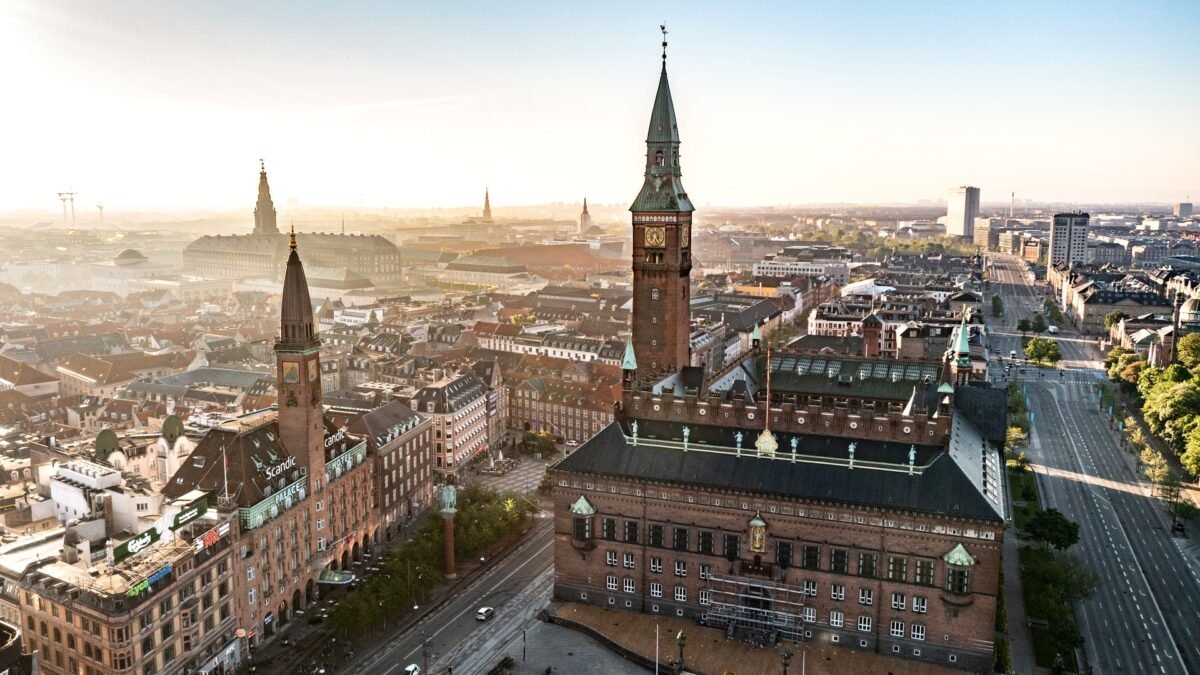
On a grey Wednesday in Copenhagen, thirteen thousand young people walked from the city hall square to the parliament building, carrying their answer on cardboard: “Broken Promises.” “Save SU.” “Less Support, Less Educated.” “Don’t Cheat the Young.” Forty thousand more stayed away from fifty-seven schools that day, on strike, under a banner that said simply, “Enough is Enough.” I have read that phrase in many languages, and I have learned what it means. It is the sound a generation makes when it stops asking and starts judging.
Reader, stay with me. What happened in Denmark is not a Danish story. It is a European story. And if you listen closely, it is your story too.
“Enough Is Enough”: The Day Copenhagen Walked Out
The quarrel is over two letters: SU. Since 1970, Denmark has paid a monthly allowance to every student over eighteen, regardless of what their parents earn. It is the quiet heart of the Danish promise: no young person should have to choose between learning and eating. A student living with their parents receives 1,154 kroner a month, about $173. A student living alone receives 7,426 kroner, about $1,116. It is not luxury. It is survival with dignity.
Now the government of Prime Minister Mette Frederiksen proposes to take it away from students whose parents earn more than 700,000 kroner a year, about $105,248, and to stagger it down for families earning between 419,589 and 700,000 kroner. The Higher Education Ministry itself says around 14,000 students would lose their stipends altogether and some 8,000 more would see them reduced. Twenty-two thousand young lives, recalculated on a spreadsheet. The government would also pay unemployment benefits to recent graduates only if they worked during eighteen of the last twenty-four months of their studies, as if a student were a factory hand clocking in between lectures.
And why? The money, the government says, must be freed up for defence spending. The guns must be fed, and the classroom must go hungry.
Listen to the young themselves, because they said it better than any editorial could. Oscar Tonsberg Hoffmann, president of the Danish High School Students Association, said it would be wrong to dismantle “one of the world’s strongest educational systems”. Kieran Hindshaw, a twenty-three-year-old agronomy student, said he felt betrayed by a supposedly left-wing government that cuts welfare “whilst they’re funding corporate tax reductions and warfare”. Industry Minister Martin Lidegaard did not pretend otherwise. The cuts, he said, “are not pleasant decisions.” No, Minister. They are not pleasant. They are a choice. And choices have authors.
A Promise Made in 1970
History is a mirror, and I ask you to look into it with me. In 1970, when Denmark created the SU, Europe was still building the world the Second World War had taught it to build. The lesson of the rubble was simple: a nation that invests in its children’s minds will never again have to bury them in its wars. The welfare state was not generosity. It was insurance, the solemn vow of a generation that had seen what ignorance and humiliation could breed, that never again would a child’s future depend on the size of their father’s wallet.
For fifty-six years that vow held. Danish students paid no tuition and did not beg for bread while they studied. It was one of the finest achievements of the modern state, and the Danes were proud of it. “In Denmark, we get funding and economic support for getting an education, and we’re very proud of this,” one protester said.
So what has changed? Not the Danish character. Not the Danish economy. What has changed is the order of priorities. A state that could afford the promise for half a century suddenly cannot afford it in the very years when its defence budget is rising faster than at any time in living memory. The money has not vanished. It has moved, from the desk to the depot, from the lecture hall to the armoury. And the young have noticed, because the young always notice first when the adults start lying to themselves.
The Fire Spreads: Paris, Berlin, Rome
Copenhagen did not happen alone. That is what makes this moment historic. Across Europe, the same fire is burning in different languages.
In France, the revolt began in the high schools. Students blockaded hundreds of schools against missing teachers, classes of thirty-five pupils, and buildings left to crumble. France’s own Education Ministry confirmed that more than 330 high schools were affected, and Reuters counted four to five hundred schools closed or partly closed on some days. The government pledged three thousand substitute teachers and a 1.2 billion euro increase for education in 2027, but the students did not go home, because a concession offered in fear is not the same as a promise kept in good faith. By the fifth of November the students were marching with the workers: the Interior Ministry counted 575,000 demonstrators that day, the unions 1.6 million. Whatever the true number, the streets of France were full of the same question Copenhagen asked.
In Germany, on the thirty-first of October, a youth movement calling itself “Gen Z regelt”, Gen Z sorts it, rallied in more than thirty cities. Nearly 180,000 people had signed up to take part, gathering at the Brandenburg Gate to demand investment in education and housing and to oppose any return of compulsory military service. Days earlier, students had blocked university buildings in Berlin and Hamburg. Sean Baker, a student at the Technical University of Berlin, described his lecture rooms in words that should shame any government: “When you go inside and enter the rooms, it looks like an abandoned building.” An abandoned building, in the richest country in Europe, while its military budget climbs.
In Italy, tens of thousands marched on the thirtieth of October in a twenty-four-hour general strike. Spain’s El País counted at least 177 demonstrations in twelve European countries between mid-September and the twenty-third of October. A TUI Foundation study published in June found that more than half of young Europeans aged sixteen to twenty-six believe their generation will live worse than their parents did. Do you see the pattern, reader? This is not a riot. This is not a fashion. This is a generation reading the ledger and finding its name on the wrong side of it.
Guns and Butter: The Arithmetic of Betrayal
Now the numbers, because numbers do not flatter and they do not lie, even when politicians do. The Stockholm International Peace Research Institute reported in April that world military expenditure reached $2.887 trillion in 2025, the eleventh consecutive annual increase, the highest total ever recorded: two and a half percent of the entire global economy, about $350 for every person on Earth. Europe’s military spending surged fourteen percent in a single year to $864 billion. Germany’s rose twenty-four percent to $114 billion, crossing two percent of GDP for the first time since 1990. The United States spent $954 billion, China $336 billion, Russia $190 billion, India $92 billion. At NATO’s summit in The Hague in June 2025, the alliance raised its spending target to five percent of GDP by 2035.
Set that beside the other ledger. The United Nations’ Sustainable Development Goals Report 2025 records that 272 million children and young people were out of school in 2023. Two hundred and seventy-two million. While the world found $2.887 trillion for weapons, it could not find schoolrooms for them.
The old economists had a phrase for this: guns versus butter. It was supposed to be a tragic dilemma. But what Europe is witnessing is not a dilemma. It is a decision, made quietly in budget papers, to feed the gun and starve the school, and then to act surprised when the students walk out of the classroom and into the street. The Danish students are not protesting arithmetic. They are protesting morality. You have told us there is no money for our education, they are saying, and in the same breath you announce endless money for our conscription. You cannot be poor and rich in the same sentence.
1968 Is Watching
I have seen this film before, and so has history. In May 1968, the students of Paris occupied the Sorbonne and raised the barricades in the Latin Quarter, and within weeks ten million French workers were on strike beside them. Their slogan was: “Be realistic, demand the impossible.” The comfortable classes laughed at them then, exactly as they laugh at the young now. But 1968 changed France forever, because it forced a country to admit that its institutions had stopped listening to the people they existed to serve.
The parallel is not perfect, and I will not pretend it is. The students of 1968 revolted against a rigid, authoritarian order. The students of 2026 are defending an order, the post-war promise of free and supported education, that their governments are dismantling. But the heartbeat is the same. In both years, the young looked at the world their elders had built and said: this is not good enough, and we refuse to inherit it in silence.
And there is an older truth, hanging in every classroom in the world. Every civilisation that chose the sword over the school believed it was buying safety. The empires that taxed the peasant to feed the garrison always discovered, one generation too late, that an uneducated nation cannot defend anything worth defending. The cannon rusts. The mind, once starved, does not grow back.
The Question That Will Not Go Away
So I put the question to you directly, reader, wherever you are reading this. In Copenhagen or in Karachi, in Paris or in Faisalabad, the question is the same. What is a nation for, if not for its children?
For those of us in countries like Pakistan, the lesson is sharper still. We never had a Danish SU. Our students have always studied on empty stomachs and broken benches, and we told ourselves the lie that poverty made it unavoidable. But Denmark proves the lie. A rich country with a proud welfare state is now telling its students the same thing our poor country tells ours: there is no money for you. If even Denmark can abandon its promise, then the disease is not poverty. The disease is priority, and it can infect any nation the moment its rulers decide the future is a luxury.
Do not misunderstand me. Nations face real dangers, and Denmark lives in a dangerous neighbourhood. But a nation that defends itself by uneducating itself has misunderstood what defence means. The soldier who cannot think is a liability. The citizen who cannot read is a subject, not a patriot. The strongest fortress ever built is a classroom where a child learns to ask why.
The Verdict of the Young
The students of Copenhagen have already delivered their verdict, written on their placards: “Don’t Cheat the Young.” It is a moral sentence, not a political slogan. Cheating is the right word. A promise was made in 1970, in the full light of a democratic parliament, and it is being broken in the dark of a budget line. A generation was told that education was a right, and is now told that education is a cost, a burden to be shed, as if the young were a burden and not the whole point.
History will remember who stood where in this autumn of 2026. It will remember the ministers who called the cuts “not pleasant decisions” and signed them anyway. It will remember the students who walked out of warm classrooms into the cold squares of Copenhagen, Paris, Berlin and Rome, and refused to accept that their future was unaffordable. And it will remember, above all, that when the choice was put to them, guns or books, the young chose the books, and the old chose the guns.
That is the betrayal. And that is why “Enough is Enough” is not the end of this story. It is the beginning. The young have spoken. The question now is whether anyone in power is still capable of listening, before the silence of the classroom becomes the silence of a generation that has stopped believing altogether. A nation can survive a lost war. It cannot survive a lost generation.
Sources & References
- Al Jazeera — “Danish students join European protest wave against education funding cuts” (12 November 2026)
- The Worldwide Education Network — “Danish Students Protest Proposed Grant Cuts Amid Rising Defense Spending” (10 November 2026)
- Al Jazeera — “Thousands rally in Berlin as Gen Z protests in more than 30 German cities” (11 November 2026)
- Straight News — “French Students Block Hundreds of Schools” (11 November 2026)
- Kola King (Substack) — “Youth Protests and the Future of Democracy” (9 November 2026)
- Al Jazeera — “Five charts that show the rise of global militarisation” (29 April 2026, SIPRI data)
- Defense News — “Global military spending surges and reaches record high” (27 April 2026, SIPRI data)

About the Author — Abdul Mannan
Related Articles
The Empty Lecture Hall: Kenya’s KSh20 Billion University Deal and the Promise Education Still Owes
After four weeks of empty lecture halls, Kenya's university lecturers have verbally agreed a KSh20 billion deal, with…

The Dog That Barked in Chinese: What the Galgotias ‘Orion’ Scandal Teaches Us About Dishonest Universities
In February, a private Indian university stood before the cameras at the India AI Impact Summit and introduced…
The Lost Years: Why India Is Putting Its Five-Year-Olds in Class 1 Instead of Preschool
A five-year-old's fingers should be learning to hold a crayon, not bracing under the weight of a school…