
Poundland Wins Ten Days to Find a Buyer as MPs Accuse US Owner Gordon Brothers of Starving the Chain of Cash

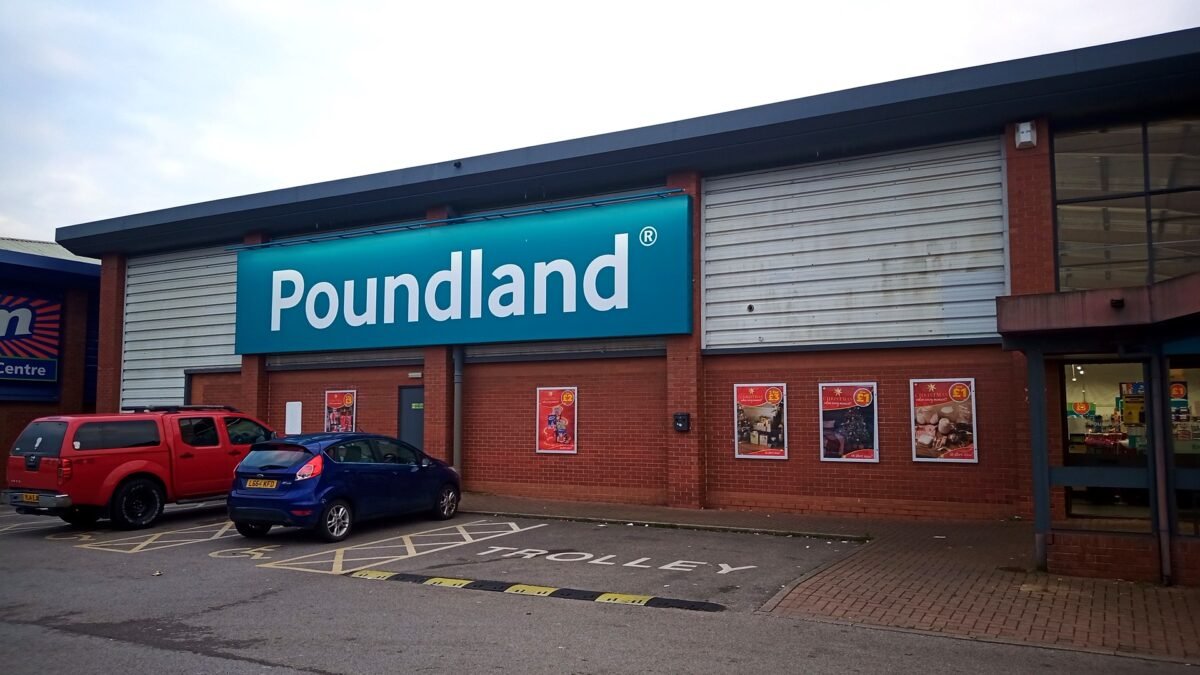
Poundland, the discount chain that put a pound price tag on the British high street, has won ten more working days to find a buyer and save itself from administration, after its board filed a second legal notice on Thursday that shields the business from its creditors while rescue talks continue. The reprieve keeps about 600 shops open and roughly 12,000 jobs in play, but it arrives wrapped in a bitter public row over whether the chain’s American owner deliberately starved a trading business of cash in the weeks before Christmas.
The board of Poundland resolved on Thursday 12 November to make an application for a second notice of intention to appoint administrators, according to Reuters, giving the company and its owner, the United States investment firm Gordon Brothers, another ten working days of legal protection from creditor claims. The chain’s stores remain open as usual, the board said in a statement, adding that a sale process was under way and that funding had been agreed to keep the business trading for now.
The extra time matters because the first notice, filed on 29 October, was about to expire. Without the extension, the business would probably have had to call in administrators, with the advisory firm AlixPartners already lined up to take over, according to The Guardian. The new deadline runs to late November, leaving barely a fortnight to settle the future of a retailer that serves some of the poorest communities in Britain at the busiest trading period of the year.
At the centre of the dispute is around £50 million of Poundland’s own money that its owner stopped it from touching. The BBC understands that Gordon Brothers froze about £50 million held in the chain’s bank accounts, leaving managers unable to pay for new stock, wages or rent as the Christmas season approached. On Tuesday, the firm released £10 million, and it has since agreed to release a further £10 million to £11 million, according to the BBC, on top of £11 million announced earlier. People close to the talks described the sums as small next to the scale of the problem, but enough, for now, to keep the shops trading.
Gordon Brothers, which bought Poundland for a nominal £1 last year, has denied claims that it hoped to profit by selling off the chain’s shops and stock piece by piece, according to the BBC. But a committee of MPs questioned its representatives about exactly that accusation this week, and the committee’s chairman did not hide his anger. Liam Byrne, who chairs the Commons business and trade committee, told the BBC that the firm’s behaviour was much like a wolf on Wall Street operating on the British high street. He said Gordon Brothers had refused to put protecting jobs and stores ahead of its own financial returns, and that it was clear the firm had taken millions out of Poundland at a time when it said the business was on a knife edge.
The committee heard the firm’s European head, Mark Newton-Jones, give evidence behind closed doors for almost two hours on Wednesday. After the session, MPs accused the owner of taking millions of pounds out of the discount retailer over the past 17 months while the business was fighting to stay alive, according to The Guardian. The MPs had already called on the government last week to protect Poundland and other high street retailers from what they described as predatory capitalism and the stripping of assets from struggling businesses.
Prime Minister Andy Burnham said last month that he wanted to see a rescue deal which would protect jobs at the retailer, according to Reuters. Gordon Brothers did not respond to a Reuters request for comment.
The rescue clock is ticking
The ten working days bought on Thursday are the second such breathing space Poundland has taken in a fortnight. The first notice of intention, filed on 29 October, gave the chain a short window to find a buyer before creditors could move against it. That window ran out on Thursday morning, and without an extension the business was likely to have to call in administrators, The Guardian reported.
The board’s statement, quoted by Reuters, said the directors had resolved to make an application for a second notice “with a view to identifying the best available prospects for shareholders, creditors and our people”. The phrasing matters. Under British insolvency law, a notice of intention does not itself put a company into administration; it buys time. But it also signals, unmistakably, that administration is the alternative if no deal is found.
Gordon Brothers said it was in talks with three parties about a sale of the whole business, according to the BBC, and that it had received several offers from established high street retailers for significant parts of it. The identity of the bidder whose offer was rejected has not been made public, but reporting in The Guardian and The Times has filled in much of the picture.
One offer came from Martin Property Group, the Northern Irish family firm behind the NCP car parks business, which is backing a management-led rescue bid that would include the Dealz chain in Ireland. The bid had the support of Poundland’s own management team, led by managing director Barry Williams, but Gordon Brothers rejected it. According to The Guardian, the first offer amounted to no more than half of what the owner is seeking, with less than £7 million paid up front.
Another bidder, the little-known finance company Xyra Group, is thought to have offered around £12 million up front and close to £30 million in total, although it has no previous involvement in retail, according to The Guardian. The bids on the table are understood to be worth less than the £30 million of debt taken on by shareholders when Gordon Brothers bought the business, The Guardian reported.
Rival chains have also shown interest in taking on individual stores. Poundstretcher, Tesco and B&M have all looked at parcels of Poundland shops, according to the BBC and The Guardian, and CDS Superstores, which already owns The Range, Wilko and Homebase, is also in the mix, according to reporting in October. A piecemeal sale could keep some shops trading under new owners, but it would end Poundland as a single national chain.
That is the central question the next ten days must answer: whether a buyer for the whole business can be found, or whether the chain will be broken up. The court extension gives the parties time to test it. For the chain’s staff, the wait continues, with Christmas trading and their own livelihoods hanging on the outcome.
A profitable shop, or a business on the edge?
The most striking feature of the Poundland row is that the two sides cannot even agree on whether the business is doing well. Poundland’s boss, Barry Williams, told staff last week that like-for-like sales, which exclude the effect of new store openings, were up 11.4 per cent, and that sales were £1.5 million ahead of budget over a period that included Halloween, according to the BBC and The Guardian. Williams also said the business made an operating profit of £18.1 million in the year to September, which he described as a strong recovery from the previous year, when there were losses of £68 million.
Internal documents seen by The Times tell a similar story on trading, if not quite as strong: sales in stores rose by 8.4 per cent in the three weeks to 18 October, and reports suggested the chain was profitable on an earnings before interest, tax, depreciation and amortisation basis in the year to September. On that reading, the chain is trading well and deserves the chance to keep going as a single national business.
Gordon Brothers paints a different picture. It says the chain remains challenged and vulnerable to any downturn in future trading, and has argued that the best way of securing jobs may be to split up the business and sell chunks of its 600 sites to other retailers, according to the BBC. The firm has also pointed to the wider accounts: The Times reported that the company made a pre-tax loss of around £80 million over the year to September 2025, and more recent accounts are not yet available.
The gap between an £18.1 million operating profit and an £80 million pre-tax loss is not a contradiction so much as a measure of what sits between the two figures: interest on debt, restructuring costs and the price of the turnaround itself. But it is the gap that has made the argument so bitter. If the shops are trading profitably, why would their owner cut off their cash? If the business is genuinely fragile, why would its managers insist it is recovering?
The Times reported that Gordon Brothers was understood to have cut off management’s access to finance in late October, effectively paralysing the company in the lead-up to the administration notice. The firm is also understood to have required approval for every payment the company makes, leaving some suppliers facing losses despite the fact that the business is still turning over millions of pounds every day, according to The Times.
What is not in dispute is the effect on the shop floor. Polly Toynbee, writing in The Guardian after visiting a Poundland store, described staff who were dejected as the shelves emptied because the owners had withheld £50 million needed for new stock and paying wages. The manager she spoke to said the outsourced security staff had vanished during the week because their pay was stopped, and that shoplifting had become very bad. “Look, the high-end stuff has gone first,” he told her: the well-known brands, not the cheaper makes. Despite everything, he was proud of the shop, and of how much cheaper its brands were than in Sainsbury’s. “But no one is telling us anything,” he said.
Bought for a pound, now worth the argument
Poundland was founded on 25 April 1990 by Dave Dodd and Steven Smith, working with Smith’s father Keith, with starting capital of just £50,000 and an office in Sedgley. The first store opened in Burton upon Trent on 13 December 1990, selling everything for £1. The idea, conceived by Smith, a former market trader, was simple: toys, toiletries, confectionery and household goods, all at a single price. It worked. The chain grew to hundreds of stores, bought rival 99p Stores in 2015, listed on the London Stock Exchange, and at its peak in 2014 was worth more than £1 billion.
Its fortunes faded as inflation squeezed margins and competition intensified from rivals such as B&M, Aldi and Lidl, and the chain was forced to abandon its “Everything’s £1” pledge. In August 2016, the South African company Steinhoff International bought Poundland for £610 million. The chain later sat inside Pepco Group, the Warsaw-listed retailer, which in March 2025 appointed advisers at Teneo to handle a sale of the struggling company for a nominal one pound.
On 12 June 2025, Gordon Brothers bought the business for that nominal £1 and pledged up to £80 million in financing to support a restructuring and turnaround plan. The new owner said Poundland would go back to its pre-Pepco formula, discontinuing its Poundland Perks scheme, its home delivery service and its frozen food offer, and changing its clothing offer. Many stores and two distribution centres would close. The Dealz stores in Ireland, also part of the sale, were unaffected.
The restructuring plan was sanctioned by the High Court in 2025, and around 170 to 200 of the chain’s roughly 800 shops have closed since the takeover, with more than 2,000 jobs cut, according to reporting by The Times and others. The estate now stands at about 600 stores in Britain and Ireland, employing around 12,000 people, according to Reuters and The Guardian. The BBC puts the workforce at 11,000. The difference between the two figures is a measure of how fast the numbers have been moving.
The £1 price tag has become the shorthand for the whole affair, but the original deal had more structure than the headline suggests. Gordon Brothers acquired the business through a company called 1903 Peach Bidco Limited, with Pepco Group keeping a minority stake. The firm also took on debt. The £30 million shareholder loan at the heart of the current argument is part of that structure, and it is where the money argument turns sharpest.
The debt that decides who gets paid
Gordon Brothers is not just Poundland’s owner. It is also its lender, and that dual role is the heart of the dispute over what happens if the chain fails. The firm controls 75 per cent of a £30 million loan secured over the company’s assets, which it inherited in the £1 deal, according to The Times. It also extended a £95 million asset-based loan and a £20 million revolving credit facility, although it is unclear to what extent those loans have been drawn.
Pepco still holds £7.5 million of the shareholder debt, and is prepared to wait for repayment in the hope of saving the business, according to The Guardian. But the structure means that, in administration, Gordon Brothers would stand near the front of the queue. Through what Polly Toynbee described as complex financing, it would make more by breaking Poundland up. It has £30 million of debt to recover but, as it is both the owner and the creditor, it comes top of the list for repayment in administration: after paying tax, it gets paid before any staff who are owed wages. If there is no money left, redundancy is paid by the taxpayer.
That is why MPs have focused on the money Gordon Brothers has already taken out. The Guardian reported that MPs accused the owner of taking millions of pounds out of the discount retailer over the past 17 months while the business was fighting to stay alive. Liam Byrne said it was clear the firm had taken millions out of Poundland at a time when it said the business was on a knife edge, and he urged it to do what is right to save jobs and stores, and to do it now.
The firm has denied that it is trying to force a break-up for profit. But the accusation has stuck because the arithmetic, on its face, points that way. The bids on the table for the whole business are understood to be worth less than the £30 million shareholder loan. Gordon Brothers is reportedly demanding that any buyer repays that loan in full, a loan it acquired for just £1 as part of the original deal, according to reporting in October. A piecemeal sale of shops and stock to rival retailers could raise more, and the firm would be first in line to collect.
None of this is a finding by a court or a regulator. The accusations are the words of MPs and of reporting based on sources close to the talks, and Gordon Brothers has denied the central claim. But the structure of the deal is a matter of public record, and it is the structure that has made politicians so angry: an owner that is also the biggest creditor has little financial reason to prefer a rescue that keeps the chain whole over a break-up that pays it first.
An owner with a history of liquidations
Gordon Brothers has a long history of liquidating beloved, if distressed, British brands, according to The Times, and its record is now being held up as a warning of what could happen to Poundland. The firm was founded in 1903 in Boston, Massachusetts, by Jacob Gordon, and has expanded to more than 30 offices internationally, including one in Soho in central London. As well as investing in distressed companies, it runs a stock liquidation business, generating cash from the assets of insolvent retailers.
The firm was run for decades by the Frieze family. Michael Frieze, the third generation of the family to have an active role, expanded its services beyond retail liquidation into valuations, disposals, financing and investment around the world over a near 60-year tenure, according to The Times. It is now led by Norma Kuntz, the chief executive, a former chief financial officer of global private equity at Carlyle Group, and it is controlled by the external private equity investor Stone Point Capital. Detailed financial information such as profits and directors’ pay is not disclosed publicly, because it is a private firm registered in the United States.
Over the years, Gordon Brothers has acquired many well-known British high street businesses, including Blockbuster, Laura Ashley, LK Bennett and Radley, according to The Times. The firm has adopted a fairly consistent playbook, The Times reported, opting either to dissolve the struggling businesses or to hollow out their brands into licensing shells.
The Blockbuster case is the one MPs keep returning to. Gordon Brothers bought the British arm of the video rental chain out of administration in March 2013, only to place it back into insolvency the following November, putting about 2,000 jobs at risk shortly before Christmas. It bought the Irish department store Clerys in 2012. It bought Laura Ashley, the British lifestyle brand founded in the 1950s, out of administration during the pandemic, and later sold the brand on. The firm also owns brands including Laura Ashley through its brand investment arm, and its British retail history includes names that have vanished from the high street altogether.
None of that proves what will happen to Poundland. Gordon Brothers says the business is recovering, and that it has returned to like-for-like sales growth. But the record is why the political pressure has been so intense, and why the firm’s European head was called before MPs in the first place. As one restructuring source told The Times, the firm finds itself in “unique territory”: an opaque American investment firm that generally keeps out of the limelight, now at the centre of a political storm over a household name, weeks before Christmas.
A high street running out of anchors
Poundland’s fate matters beyond its own shops because of what its stores do for the streets they sit on. Toynbee, in her Guardian column, called them “anchor stores” drawing people to high streets, and warned that they could join the great voids of boarded-up shops just weeks before Christmas. Woolworths’ 807 stores closed after the chain was taken over, losing 27,000 jobs and lifetimes of local history, she wrote. BHS, sold for £1, is gone. Debenhams, WHSmith, Toys R Us, Maplin and TM Lewin have all been adversely transformed or taken over by private equity for what she called unkindly “restructuring” that usually ends in closures.
The pattern is familiar enough to have its own grim arithmetic. Homebase was bought for £1 in 2018 after Wesfarmers wrote it off, survived six years, then fell into administration again and was carved up. Wilko imploded in 2023 in what The Times called the worst retail collapse since, until now. Poundland’s looming administration threatens to be the worst retail collapse since Wilko, The Times reported, and it comes as the prime minister is trying to revive the fortunes of the high street.
The human scale of the risk goes beyond the shops themselves. Toynbee put 30,000 jobs at risk in the supply chains that feed Poundland’s shelves, on top of the roughly 12,000 people directly employed. The retail trade union Usdaw has warned that the chain could fall into administration, putting those jobs at risk, and has watched, in the words of the Guardian column, as private equity and venture capital buyouts bring down viable retailers time and again.
There is also the question of who shops at Poundland. Its customers are disproportionately people on low incomes, in towns where the discount store is often the cheapest place to buy the basics. A store manager told Toynbee that he could increase sales if he were allowed to be the buyer, because he knew his customers and the centre did not. A customer, told there were no packs of Boost in the cold drinks cabinet, looked shocked. “No! You can’t close down! I’m always in here.” For communities in the middle of a cost of living crisis, the BBC noted, the kind of stores Poundland runs are the ones they rely on.
The timing sharpens everything. Christmas is the busiest trading period of the year, when a large share of annual sales is made, according to the BBC. Shelves that cannot be restocked in November cannot be sold in December. The £10 million released on Tuesday, and the further £10 million to £11 million agreed since, may keep the shops trading, but people close to the talks have described the sums as modest next to the £50 million frozen, and as a delay rather than a solution.
Analysis: Why It Matters
The law protects the business, not the jobs
The most important thing to understand about the ten days Poundland has just won is what they do and do not do. A notice of intention to appoint administrators is a shield against creditors, not a rescue. It stops landlords and suppliers from seizing stock or forcing the company into insolvency while a deal is negotiated. It does not oblige anyone to keep the shops open, to pay the staff, or to accept a bid. It buys time, and time is only useful if someone uses it.
That is why the political argument has moved so fast from the court to the committee room. Parliament cannot order Gordon Brothers to release cash, and it cannot order a buyer to pay £30 million for a loan the seller acquired for £1. What MPs can do is what Liam Byrne is doing: make the cost of a break-up visible, and try to shame a private firm into choosing the outcome that protects the most jobs. Shame is a weak instrument against a balance sheet, and Toynbee was blunt about it: “But there’s nothing anyone can do if pressure and shame fails. Why should a company, especially a foreign one, care what anyone thinks when the bottom line says close it down?”
The deeper problem is the one Byrne is now campaigning to fix. Company law, as it stands, gives shareholders primacy above all else. An owner that is also the biggest creditor can, within the law, prefer the outcome that pays it first. Byrne wants changes that would stop pension funds making the maximisation of short-term gains their sole obligation, and stress tests to stop asset strippers overloading a business with debt and then taking the lion’s share when it is broken up. Those are arguments for the next parliament, not the next ten days. For Poundland’s staff, a future change in the law is essential, Toynbee wrote, but it will probably be too late for them.
A profitable shop can still be killed by its owner
The second lesson of this affair is the one that should worry every other retailer in a similar position. Poundland, on its own managers’ figures, is trading well. Like-for-like sales are up, the chain made an operating profit in the year to September, and its shops are turning over millions of pounds every day. Yet it came within hours of administration, not because customers stopped coming, but because its owner stopped it from spending its own money.
That is a different kind of failure from the familiar story of a chain that lost its customers. Woolworths, BHS and Wilko all had trading problems of their own. Poundland’s trading problem, on the evidence presented by its managers, is that it was not allowed to trade. Shelves empty because stock cannot be bought. Security staff vanish because their pay is stopped. Shoplifting rises because there is nobody watching the door. Each of those is a consequence of a cash decision made far from the shop floor, and each of them then becomes evidence, in the owner’s telling, that the business is fragile.
This is the mechanism that makes the “predatory capitalism” charge resonate. It does not require a conspiracy, or even bad faith. It requires only a structure in which the owner’s financial interest in a break-up is stronger than its interest in a rescue, and a legal system that lets the owner act on that interest. Gordon Brothers denies that this is what is happening. But the fact that the charge is plausible, and that MPs from across the political spectrum have made it, is itself a measure of how far trust in this model has fallen.
The £1 deal was never just £1
The third point worth holding on to is that the £1 price tag, which has dominated every headline, was never the real price of Poundland. The real price was the debt, the financing commitments and the restructuring plan that came with it. Gordon Brothers pledged up to £80 million to fund the turnaround, took on a £30 million shareholder loan, extended a £95 million asset-based loan and a £20 million revolving credit facility, and put the business through a court-approved restructuring that closed around 170 to 200 shops and cut more than 2,000 jobs.
That is a serious investment, and it is fair to say so. The firm did not buy a shop for a pound and walk away. It bought a troubled business and paid, in commitments and in cash, a great deal more than a pound to try to fix it. The question is not whether the £1 was a trick. The question is whether, a year and a half later, the firm has decided that the fix is not worth finishing, and that the money is better recovered by breaking the business up than by keeping it whole.
The bids on the table suggest the market has already answered part of that question. No bidder has yet offered the £30 million that would repay the shareholder loan in full. The management-backed bid was rejected as too low. The finance company’s offer is close to £30 million in total but only £12 million up front. If the whole-business bids stay below the debt, then the owner faces a choice: accept less than the loan is worth, or take the break-up value instead. The next ten days are, in the end, a negotiation about who bears that gap.
Christmas is the deadline that actually matters
The legal deadline runs to late November. The real deadline is Christmas. Poundland’s busiest weeks are the ones immediately ahead, and the damage of an empty shelf is not recoverable in January. A customer who finds no Christmas stock in Poundland this week will buy it somewhere else, and may not come back. A supplier who is not paid this month may not deliver next month. The £10 million released on Tuesday was, in the words of people close to the talks, enough to delay a collapse, not to prevent one.
This is why the timing of the cash freeze has been so damaging, and so politically toxic. To cut off a retailer’s money in late October, on the eve of its biggest trading period, is to make the worst possible outcome more likely, whatever the intention. If the shops cannot stock up for Christmas, their Christmas sales will be poor, and poor Christmas sales will then be cited as evidence that the business is not viable. It is a circle, and the people at the bottom of it are the shop staff who have no say in any of it.
There is also a practical point. Administration before Christmas would be a disaster for the staff, the suppliers and the towns, but it would also be a disaster for the value of the business itself. A chain in administration at Christmas is worth less than a chain trading at Christmas. Every party to this negotiation, including Gordon Brothers, has a reason to want the shops open and stocked for the next six weeks. That shared interest is the best hope the rescue talks have.
Britain still has no answer for the £1 club
The final lesson is the widest one, and the one that will outlast Poundland whatever happens in the next ten days. Britain has developed a small club of firms that buy broken high street names for £1, and a long list of names that did not survive the experience. Hilco Capital, the former owner of HMV, bought Homebase for £1 in 2018. CDS Superstores later picked up Homebase’s brand and stores when it collapsed again in 2024. Gordon Brothers bought Laura Ashley’s brand out of administration in 2020 and sold it on four years later. The pattern is now familiar enough that it has a name in the trade press: the £1 club.
Each deal is different, and each can be defended on its own terms. A £1 sale is usually the alternative to an immediate collapse, and the buyer takes on real risk. But the pattern as a whole raises a question that no government has yet answered: what happens when the business of rescuing retailers becomes, for the rescuer, more profitable when the rescue fails? The answer, so far, has been nothing. No law stops an owner-creditor from preferring a break-up. No regulator examines whether a solvent, trading business was pushed towards administration by its own owner’s cash decisions. Parliament can hold a hearing, and a committee chairman can call a firm a wolf on Wall Street, but the firm can, within the law, carry on regardless.
That is the argument Liam Byrne is now making, and it is the argument that will matter long after the Poundland signs come down or stay up. He wants company law changed so that shareholders do not have primacy above all else, and he wants stress tests to stop asset strippers overloading a business with debt and then taking the lion’s share when it is broken up. Germany, he points out, does it differently. Whether Britain follows is a question for the next session of parliament. For the 12,000 people who work at Poundland, and the 30,000 more in its supply chains, the answer will come too late either way. What they need is not a new law. It is a buyer, in the next ten days, willing to pay enough to keep the chain whole.
What to Watch Next
- The second notice of intention expires in ten working days, in late November. Watch for a third notice, a sale announcement, or the appointment of administrators, most likely AlixPartners.
- Whether Gordon Brothers releases more of the frozen £50 million. The £10 million released on Tuesday and the further £10 million to £11 million agreed since are described as modest next to the sum frozen; more releases would signal that the shops will be stocked for Christmas.
- Whether any of the three parties in talks for the whole business raises its bid towards the £30 million shareholder loan, or whether Gordon Brothers accepts less than the loan is worth to keep the chain whole.
- The management-backed bid from Martin Property Group, including the Dealz chain in Ireland. Its first offer was rejected, but a revised offer, with more money up front, remains the most likely whole-business rescue.
- Whether Poundstretcher, Tesco, B&M or CDS Superstores move from interest in individual stores to firm offers, which would signal that a break-up is becoming the favoured outcome.
- What the Commons business and trade committee does next, and whether Liam Byrne’s campaign for changes to company law gains support in parliament.
- Christmas trading itself. If shelves stay empty through November, the chain’s December sales will suffer, and the case for a break-up will grow stronger. If stock returns, the managers’ claim that this is a profitable business will be harder to dismiss.
Sources
- Reuters — UK retailer Poundland buys more time as rescue efforts continue
- BBC News — Poundland wins ten days to find a buyer
- The Guardian — Poundland fights for time as MPs question owner’s withdrawals
- The Guardian (Polly Toynbee) — Look at the Poundland scandal and see a crisis that goes beyond Britain’s high streets
- The Times — Gordon Brothers: Poundland owners have a history of liquidations
- Wikipedia — Poundland (company history and ownership)

About the Author — Abdul Mannan
Related Articles

India’s Inflation Breaches the Reserve Bank’s 6% Ceiling for the First Time in Two Years as Food Prices Surge
India's retail inflation rose to 6.09 per cent in October, breaching the Reserve Bank of India's 6 per…
Nvidia Plunges to a 52-Week Low as Huang’s Exit Shakes Wall Street While Oil Surges on Trump’s Iran Remarks
Nvidia shares plunged to a 52-week low on Thursday after Jensen Huang's resignation, while Brent crude jumped 3.3…

Jensen Huang Resigns as Nvidia Chief Executive After 33 Years as Affair Scandal Engulfs the AI Giant
Jensen Huang has resigned as Nvidia's chief executive after 33 years, with finance chief Colette Kress named interim…