
WHO Warns Violence Threatens to Undo Six Months of Progress as DR Congo Ebola Outbreak Passes 11,000 Cases

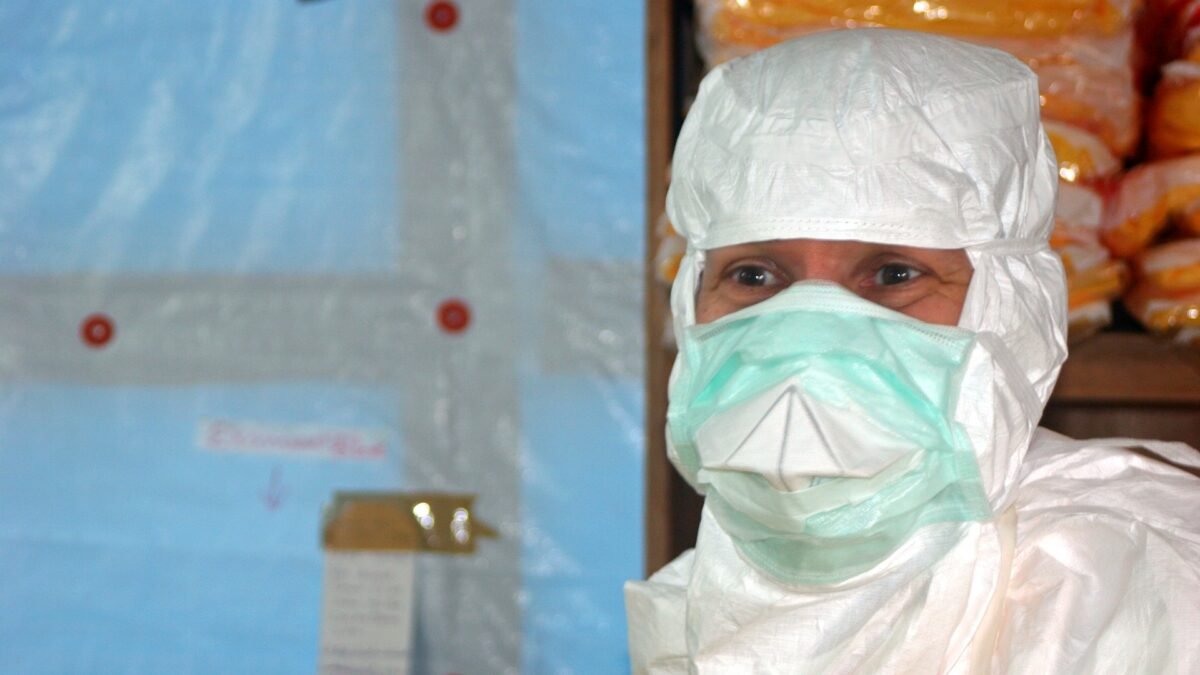
Six months into the deadliest Ebola outbreak the Democratic Republic of the Congo has ever faced, the World Health Organization has delivered a warning that reframes the entire crisis: the virus is no longer the hardest problem. The violence is.
Speaking at an online press briefing on Thursday, the WHO’s regional emergency director for Africa, Marie Roseline Belizaire, said the “overall picture remains concerning”, with the outbreak still producing around 400 to 500 new cases every week and transmission spreading into new areas even as it falls in some of the original epicentres. A day later, in Geneva, the head of the WHO’s Health Emergencies Programme, Chikwe Ihekweazu, struck the same note, telling reporters that the “biggest challenge the response faces right now is the rising insecurity”.
According to the latest situation report from the Congolese health authorities, the country had recorded 11,114 confirmed cases, including 5,433 deaths, as of Tuesday, with a case fatality rate of 48.9 per cent. The outbreak, driven by the rare Bundibugyo species of the virus, is the largest ever recorded in the DRC and the second-largest Ebola outbreak ever recorded anywhere in the world. It was declared on 15 May, and the WHO declared it a Public Health Emergency of International Concern two days later.
Behind the headline figures sits a response that is being attacked as often as it is deployed. The WHO has verified more than 80 attacks on health facilities and workers since the epidemic began in May. Africa’s top public health agency, the Africa Centres for Disease Control and Prevention, said on Thursday that the attacks included four armed assaults, 16 assaults on responders and 11 health facilities burned or otherwise targeted, and that the attacks had become increasingly deadly since late September.
The single worst incident came on 5 November, when gunmen attacked Cantine-Aloya, in the Beni territory of North Kivu province, killing 66 civilians, including three health workers, and looting and burning three health facilities. The attack, which the Africa CDC attributed to the Allied Democratic Forces, an armed group linked to Islamic State, disrupted Ebola response operations so badly that more than 1,000 contacts of confirmed cases were lost to follow-up and three confirmed patients remain unaccounted for.
“We need an urgent halt in hostilities and violence,” Belizaire said. “Health workers and humanitarian teams must be able to reach affected communities safely, and patients must be able to seek care without fear.”
Her warning was echoed by the WHO’s director-general, Tedros Adhanom Ghebreyesus, who said on Wednesday that insecurity was now “one of the greatest obstacles” to the Ebola response, restricting humanitarian access, disrupting operations and making it harder to reach communities quickly.
The numbers behind the warning
The scale of the outbreak is difficult to overstate. The 11,114 confirmed cases recorded by Tuesday already exceed the combined total of every previous Ebola outbreak in the DRC’s history, and the death toll of 5,433 has passed the 5,300 mark that the WHO was citing only last week. Nearly 3,000 people have recovered, according to the latest figures, but the weekly flow of new infections has not stopped: 400 to 500 new cases a week, six months after the outbreak was declared.
The burden is falling unevenly. Children account for more than a quarter of confirmed cases and about a third of deaths, Belizaire said, a pattern that reflects both the demography of the affected communities and the difficulty of getting the youngest patients into care in time. Too many patients, she added, are still dying before they receive adequate medical care. “Too many people are still not being reached quickly enough,” she said.
The response itself has grown enormously. Diagnostic capacity has increased from just two laboratories at the start of the outbreak to more than two dozen, capable of processing over 600 samples a day, while around 2,000 beds are available across 109 transit and treatment centres. Contact tracing, safe burials, isolation and community engagement — the unglamorous machinery that actually stops Ebola — have been built up across five provinces and beyond the DRC’s borders.
Yet the geography of the outbreak is shifting in the wrong direction. Cases are falling in former hotspots such as Bunia, in the east of the country, which Ihekweazu described as an encouraging sign. But, he added, “what we have seen now is the emergence of cases in more rural and more difficult-to-reach areas”. The outbreak has spread to parts of east, central and west Africa: nine cases have been reported in Kenya, including two deaths, and one case has been confirmed in Nigeria. Kenya discharged its last patient on 11 November and has begun the 42-day countdown to being declared Ebola-free, while South Africa has stepped up health screening at its ports of entry ahead of the festive-season travel period.
A British healthcare worker infected with Ebola is being evacuated from the DRC to the United Kingdom for specialist treatment, a UK government spokesperson said. The patient is in a stable condition and was expected to arrive in the UK by Thursday, before being transferred to a high-consequence infectious disease unit. The risk to the UK public from Ebola remains low, the government said.
A week of attacks on the response
The Cantine-Aloya attack was not an isolated incident. It was the sharp end of a pattern that has been building for weeks. The Africa CDC’s Wessam Mankoula told a press briefing on Thursday that attacks on health workers and facilities were “increasingly hindering efforts” to contain the outbreak, and that the violence had grown deadlier since late September.
The WHO’s count of more than 80 verified attacks on health sites and workers since May covers a wide range of incidents: armed assaults on treatment centres, attacks on responders in the field, and the burning and looting of facilities. Each one does damage that goes beyond the immediate casualties. A burned clinic cannot treat patients. A threatened vaccination team cannot enter a village. A contact tracer who fears for her life cannot knock on doors.
That is what happened at Cantine-Aloya. The attack killed 66 civilians and three health workers, destroyed three health facilities, and — in epidemiological terms — did something worse: it broke the chain of surveillance. More than 1,000 contacts of confirmed cases were lost to follow-up, meaning that more than a thousand people who may have been exposed to the virus can no longer be monitored, isolated or treated early. Three confirmed patients are unaccounted for. In an outbreak where early care is the difference between life and death, and where every missed contact is a potential new chain of transmission, that is a serious setback.
Belizaire warned that continued violence risked reversing the progress of the past six months, adding that displacement, worsening humanitarian needs and high population mobility were making communities harder to reach and increasing the risk of further transmission, particularly along major transport routes such as the Congo River.
The French medical charity Médecins Sans Frontières has been more downbeat than the UN agencies about the state of the response, saying that supplies are missing and the virus is still spreading out of control. Julien Harneis, the UN’s special Ebola coordinator, responded that the area of operation was “vast, just unimaginably vast”, but that “80% of the time, and across this vast area, we’re able to operate”. The disagreement is itself revealing: even the organisations running the response disagree about how much of it is actually working.
The virus the medicine cabinet was not built for
Part of the difficulty is the virus itself. The current outbreak is caused by the Bundibugyo species of Ebola virus, a rare strain for which there are no approved treatments or vaccines. The only licensed Ebola vaccine, Ervebo, was designed for the Zaire species, which caused the West African epidemic of 2014 to 2016 and the DRC’s own Kivu outbreak of 2018 to 2020. It is not designed for Bundibugyo.
That gap is now the subject of urgent research. On Monday, expert groups convened by the WHO recommended adding two vaccine trials designed specifically to fight the Bundibugyo strain. One candidate was developed by the University of Oxford with the Serum Institute of India, and the other by Moderna. The trials are being led by the DRC’s National Institute for Biomedical Research, backed by the WHO and other partners, and results are expected in early 2027.
A trial that began last month is testing whether Ervebo offers any protection against Bundibugyo at all. According to the WHO, 6,300 healthcare workers in the DRC have received the vaccine as part of that clinical trial. The hope is that some cross-protection exists; the fear is that it does not, and that frontline workers — who account for more than seven per cent of confirmed cases in the DRC — are working without the shield that protected their colleagues in earlier outbreaks.
Tedros has been careful to manage expectations. “Vaccines are powerful tools, but they are not substitutes for the proven measures that can save lives now: early care, contact tracing, isolation, safe and dignified burials and trusted engagement with communities,” he said. It is a reminder that the tools which will decide this outbreak in the coming weeks are not the ones in the laboratory, but the ones on the ground: the ability of a nurse to reach a village, of a contact tracer to find a family, of a burial team to work without fear.
Bundibugyo is not a new virus. It was first identified in 2007, during an outbreak in Bundibugyo district in western Uganda that produced 149 reported cases and 37 deaths, a case fatality rate of roughly 25 to 36 per cent — lower than the Zaire species, which kills 60 to 90 per cent of those it infects, but still devastating. A second outbreak followed in 2012 in the Isiro region of north-eastern DRC, with 36 confirmed cases and 34 deaths. The current outbreak, which resurfaced in Ituri province in April and May of this year, had already grown to 4,566 laboratory-confirmed cases and 2,128 deaths by 11 August, making it the largest and fastest-growing Bundibugyo epidemic on record — and it has more than doubled since then.
The virus’s basic reproduction number has been estimated at between 1.4 and 2.1, meaning that each infected person passes the virus to roughly one or two others on average. That is low enough to be controllable with rigorous contact tracing and isolation, and high enough to explode if those systems break down. Which is precisely what the violence is doing.
Analysis: Why It Matters
1. The enemy is no longer just the virus
Ebola outbreaks are usually fought as medical emergencies: find the cases, isolate them, trace their contacts, bury the dead safely, and wait for the chain of transmission to break. The DRC outbreak has become something else — a medical emergency inside a security emergency, in a region where armed groups have operated for decades and where the state’s authority is contested village by village.
The WHO’s language this week marks a shift in how the agencies talk about the crisis. For months, the emphasis was on the scale of the outbreak and the search for vaccines. Now the emphasis is on access: whether health workers can physically reach the people who need them. When the WHO’s director-general calls insecurity “one of the greatest obstacles” to the response, and when the head of its emergencies programme names it the “biggest challenge”, they are saying something that goes beyond a request for more funding or more beds. They are saying that the response has the tools, the staff and the expertise, and is being prevented from using them.
Belizaire put it bluntly: “We have the tools and the expertise, but they cannot stop transmission if people cannot access them or do not trust the response.” That sentence should be read as the central diagnosis of this outbreak. The failure, if it comes, will not be a failure of science. It will be a failure of security, of trust, and of the international community’s willingness to protect the people doing the work.
2. The arithmetic of lost contacts
To understand why the Cantine-Aloya attack matters so much, it helps to understand how Ebola is actually stopped. There is no mass treatment, no drug that can be handed out to a population. The response works by finding every person who has been in contact with a confirmed case, monitoring them for 21 days, and isolating them the moment symptoms appear, so that they cannot infect anyone else. It is painstaking, person-by-person work, and it depends entirely on knowing who the contacts are and where they are.
Losing more than 1,000 contacts in a single attack is therefore not a footnote. It is the equivalent of losing the map in the middle of a search. Each of those 1,000 people may or may not have been infected. If even a small number were, and if they develop symptoms in a community where no one is watching, the virus will seed new chains of transmission that the response will only discover days later, when the new patients arrive at a clinic — or when they die at home and infect their families during burial preparations, which is how Ebola has historically spread fastest.
The three confirmed patients who remain unaccounted for after Cantine-Aloya are the sharpest edge of the same problem. A confirmed patient outside the care system is a person who is both dying without treatment and, potentially, transmitting the virus to everyone around them. Finding them matters more than almost anything else the response is doing this week.
3. A strain the medicine cabinet was not built for
The Bundibugyo story is, in its own way, a story about how global health prepares for the last war. After the West African epidemic of 2014 to 2016 killed more than 11,000 people, the world invested heavily in vaccines and treatments for the Zaire species of Ebola. That investment paid off: Ervebo was licensed, and it has been used to protect health workers in subsequent Zaire outbreaks, including in the DRC itself. But Bundibugyo, the rarer cousin, was left behind. No vaccine was licensed for it. No treatment was designed for it.
The result is that the second-largest Ebola outbreak in history is being fought with a medicine cabinet built for a different virus. The two new vaccine trials recommended this week are a genuine step forward, but their results are not expected until early 2027, and the outbreak is killing hundreds of people a week now. The Ervebo cross-protection trial may offer something sooner, but it is a gamble, not a guarantee.
There is a broader lesson here for the way the world funds epidemic preparedness. The viruses that cause the next emergency are rarely the ones that caused the last one. Bundibugyo was known to science since 2007. It had caused two outbreaks. The fact that no vaccine existed for it when the third, vastly larger outbreak began is a failure of anticipation that the global health system will have to answer for — and the people paying for it are the health workers and villagers of eastern DRC.
4. Children are paying the highest price
The statistic that should haunt every reader of this week’s briefings is the one about children. More than a quarter of confirmed cases, and about a third of deaths, are children. In an outbreak with a case fatality rate of nearly 49 per cent, that means that roughly one in three of the dead is a child.
Children are harder to protect against Ebola for reasons that have little to do with biology and everything to do with circumstance. They are more likely to be cared for at home when they fall ill, more likely to be exposed through the intimate contact of family care, and more likely to be missed by a surveillance system that depends on adults reporting symptoms. In a conflict zone, they are also more likely to be displaced, separated from their families, and cut off from the health facilities that might save them.
The high proportion of child deaths is also a measure of how late patients are reaching care. Ebola is survivable with early supportive treatment — fluids, electrolytes, treatment of secondary infections — and the survival rate improves dramatically when patients arrive early. The fact that so many are dying, and that so many of the dead are children, suggests that the system is still finding people too late. That, again, is a problem of access and trust, not of medicine.
5. The world is watching the wrong clock
There is a temptation, six months into an outbreak, to treat it as a long-running story that will eventually burn itself out. The numbers argue otherwise. Four hundred to 500 new cases a week is not a fire going out; it is a fire spreading into new territory. The shift from urban hotspots such as Bunia into more rural and remote areas is the pattern that epidemiologists fear most, because rural spread is harder to detect, harder to reach, and harder to stop.
The 42-day countdown that Kenya began after discharging its last patient is a reminder of how the end of an Ebola outbreak is measured: 42 days — two full incubation periods — without a new case. For the DRC, that clock has not even started. Every week that passes with 400 to 500 new cases pushes the end further away, and every attack on the response pushes it further still.
The other clock that matters is the vaccine clock. Results from the two new Bundibugyo vaccine trials are expected in early 2027. Between now and then, the outbreak will be fought with the tools that already exist: contact tracing, isolation, safe burials, community trust, and the courage of health workers who keep going back into villages where their colleagues have been killed. Whether those tools are enough will depend less on what happens in a laboratory in Oxford or Massachusetts than on what happens on the roads of North Kivu and Ituri in the coming weeks.
The international response has, to its credit, built something remarkable in six months: two dozen laboratories, 109 treatment centres, thousands of trained staff, a trial programme for vaccines that did not exist a year ago. The question now is whether the world will protect that achievement, or watch it be dismantled one attack at a time.
What to Watch Next
- The search for the missing patients: whether the three confirmed Ebola patients unaccounted for after the Cantine-Aloya attack are found, and whether the more than 1,000 lost contacts can be traced again.
- The weekly case count: whether new infections stay at 400 to 500 a week, fall as the Bunia decline spreads, or rise as the virus moves into rural areas.
- Further attacks on health workers: whether the pattern of increasingly deadly attacks since late September continues, and whether the UN and the Congolese government can provide security for response teams.
- The vaccine trials: whether the two new Bundibugyo vaccine candidates recommended by the WHO this week receive national approval quickly, and whether the Ervebo cross-protection trial in 6,300 health workers shows any sign of working.
- Kenya’s 42-day countdown: whether Kenya, which discharged its last patient on 11 November, reaches 42 days without a new case and is declared Ebola-free.
- Cross-border spread: whether new cases appear in countries neighbouring the DRC, and whether screening measures such as South Africa’s port-of-entry checks detect imported cases.
- The British healthcare worker: the condition of the patient evacuated to the UK for specialist treatment, and what their case reveals about the risks faced by international responders.
Sources
- Reuters — “UN hails progress in Ebola response, cites insecurity as biggest challenge”, 13 November 2026
- Reuters — “Attacks on health workers hamper Congo Ebola fight, Africa CDC warns”, 12 November 2026
- Al Jazeera — “WHO approves trials for two new Ebola vaccines”, 13 November 2026
- Medical Dialogues (IANS/Xinhua) — “WHO warns DR Congo Ebola outbreak remains ‘concerning’ as violence disrupts response”, 13 November 2026
- Cape Times — “South Africa steps up Ebola screening as festive-season travel approaches”, 13 November 2026
- ANRS — “Ebola disease caused by Bundibugyo virus” (background on the strain’s history)

About the Author — Abdul Mannan
Related Articles

Nottingham Wrist Device Offers New Hope for Teenagers Living with Tourette Syndrome
A wrist-worn device developed at the University of Nottingham that delivers gentle pulses to the median nerve is…

Escitalopram Tops Major Analysis of Antidepressants for Keeping Depression at Bay, Lancet Psychiatry Study Finds
A major Lancet Psychiatry analysis of 115 trials finds escitalopram the most effective antidepressant at preventing depression relapse…
FDA Approves Sunharbo, the First Factor XIa Blood Thinner, to Cut the Risk of Repeat Strokes
The FDA has approved Sunharbo (asundexian), the first Factor XIa inhibitor, to cut the risk of a second…