
US Loses Measles Elimination Status After 26 Years as Cases Top 5,400 in Worst Outbreak Since 1991

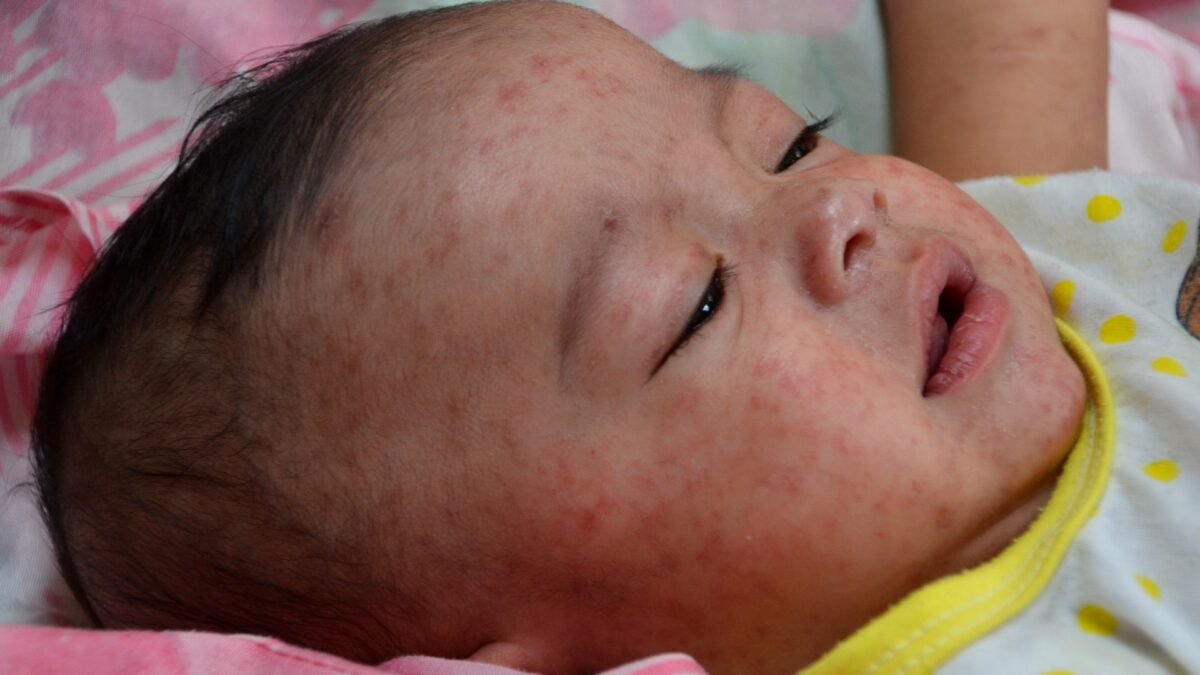
The United States has lost its measles elimination status after 26 years, according to reports published on Friday, ending a public health achievement the country has held since 2000 and confirming what doctors and epidemiologists have warned about for months: measles is once again spreading continuously inside the country.
An independent commission of experts reporting to the director of the Pan American Health Organization (PAHO) determined that the United States no longer qualifies as having eliminated measles, a source close to the process told CNN on Friday. The Wall Street Journal first reported the decision, and Reuters also reported it, citing people familiar with the matter. The formal public announcement from PAHO is expected on Tuesday, 17 November, according to NBC News and CIDRAP, and PAHO itself had not publicly announced the decision when the reports appeared.
The decision follows the worst measles year in the United States in 35 years. According to the Centers for Disease Control and Prevention (CDC), 5,412 confirmed measles cases had been reported in the United States in 2026 as of 12 November, across 47 jurisdictions, with 43 new outbreaks recorded this year. That is the highest annual total since 1991, and more than double the 2,289 cases recorded in the whole of 2025, according to the CDC.
Elimination status does not mean a country has no measles cases at all. A country is considered to have eliminated measles when no single strain of the virus keeps spreading from person to person, without interruption, for 12 months or more. The United States lost the status because the evidence showed that one strain had done exactly that. Scientists with Utah’s public health laboratory published a preprint study in August showing that the same strain of measles had been circulating in Utah for more than a year, accounting for more than 95 per cent of cases there and causing more than 600 cases between June 2025 and June 2026, according to CNN. Sustained outbreaks have also been recorded in South Carolina, Pennsylvania, Wisconsin and New York.
“Measles elimination is a vital sign for our public health system. It shows cracks in our foundation. Losing elimination status means that we are less prepared as a nation to address infectious and noninfectious disease challenges,” Dr Demetre Daskalakis, the former director of the National Center for Immunization and Respiratory Diseases at the CDC, told CNN.
Dr Peter Hotez, co-director of the Center for Vaccine Development at Texas Children’s Hospital in Houston, called the loss of the status “incredibly embarrassing” but said it pointed to a more important message. “Basically, measles is back,” he told CNN.
How the decision was made
The decision was taken by the Measles and Rubella Elimination Regional Monitoring and Re-Verification Commission, a panel of eight independent experts that advises PAHO, the Americas branch of the World Health Organization. The panel reviewed epidemiological and laboratory evidence submitted by the CDC during its annual meeting in Washington, which ran from 10 to 13 November, according to Reuters.
To reach its conclusion, the panel examined the genetic code of viruses sampled from patients. Every time a virus copies itself, it makes tiny changes in its genetic code, and by studying those genomes scientists can determine how closely infections are related and whether they belong to the same chains of transmission, according to CNN. The panel’s task was to decide whether the same strain had been passed from person to person for at least a year inside the United States. The evidence, including the Utah data, left little room for doubt.
“It’s not clear what data the committee relied on to make its decision, but it wasn’t exactly a tough call,” Dr Angela Rasmussen, a virologist at the University of Saskatchewan in Canada and editor-in-chief of the journal Vaccine, told CNN. “The Utah data alone would have been enough to make the case,” she said.
Noel Brewer, a public health professor at the University of North Carolina who chairs an independent US advisory panel on measles, presented the CDC’s measles status report, along with his group’s assessment of that information, to the PAHO experts on Tuesday, according to Reuters. “Whether or not the US loses its measles elimination status, we have a huge problem with measles,” Brewer said.
PAHO Director Jarbas Barbosa makes the final call on each country’s status and communicates it to the relevant authorities, a PAHO spokesperson said, according to Reuters. The formal announcement is expected early next week. The United States left the World Health Organization but remains a member of PAHO, which is the body that grants and removes elimination status in the Americas.
The numbers behind the verdict
The CDC’s own data, updated on 13 November, set out the scale of the resurgence. As of 12 November 2026, 5,412 confirmed measles cases had been reported in the United States in 2026, according to the CDC. Of those, 5,394 were reported by 47 jurisdictions, and 18 were among international visitors. Ninety-six per cent of confirmed cases — 5,216 of 5,412 — were linked to outbreaks, with 3,831 from outbreaks that began in 2026 and 1,385 from outbreaks that began in 2025, according to the CDC.
For comparison, the full year of 2025 produced 2,289 confirmed cases across 45 jurisdictions, with 48 outbreaks reported, according to the CDC. In 2024 there were only 285 cases and 16 outbreaks. The 2026 total of 5,412 was up by 230 cases in a single week, the 14th straight week of a triple-digit increase, according to CIDRAP.
Nearly all of this year’s cases have been in people who had not received the measles, mumps and rubella (MMR) vaccine or whose vaccination status is unknown, according to CNN. People have been hospitalised in roughly one in nine reported cases, according to the CDC, and at least 10 people have died after catching measles, according to state reports cited by CNN.
The death toll itself has become a point of dispute. The CDC’s official tally lists six deaths for 2026, according to the CDC’s data page, and the agency says the figure is subject to change as reviews are completed. The gap exists because the CDC counts deaths differently from the states: under a policy shift this year, the agency relies on mortality data from the National Center for Health Statistics rather than automatically adding state-confirmed deaths, and it is working with the Council of State and Territorial Epidemiologists to develop a standardised case definition for deaths due to measles, according to the CDC. Al Jazeera reported that Health Secretary Robert F. Kennedy Jr. asked CDC Director Dr Erica Schwartz not to count the deaths in the official tally, saying there was no evidence they were measles-associated.
The state-reported toll includes deaths that have already been covered in detail: six in Pennsylvania, a child in Lewis County, New York, whose death in early November was the first measles-related death in New York in more than 30 years, and an infant in southwestern Wisconsin whose death was the first measles death in that state in 36 years.
The outbreaks have reached almost every corner of the country. Florida, for example, had reported 163 cases as of 7 November, compared with just 90 cases in the whole period from 2000 to 2025, an average of about 3.5 cases a year, according to the Palm Beach Post.
A disease that was beaten, then allowed back
Measles was declared eliminated in the United States in 2000, after decades of vaccination had driven the virus out of continuous circulation. The country had set its first goal to eliminate measles transmission in 1978, and the achievement was the result of one of the most successful vaccination programmes in history. Before the measles vaccine was introduced, an estimated 48,000 people were hospitalised and 400 to 500 people died in the United States each year, according to the CDC.
Elimination never meant zero cases. Every year since 2000, travellers have brought measles back into the country, and small outbreaks have followed. But because vaccination rates were high, those outbreaks were usually small and short-lived, and the virus could not keep a foothold. In 2016, PAHO and the World Health Organization declared all 35 countries in the Americas region free of ongoing measles transmission.
That position has now unravelled across the region. Canada lost its measles elimination status last year after a lengthy outbreak spanning several provinces, according to CNN. The United Kingdom and Spain have also recently lost their measles elimination status after review by World Health Organization experts, according to Reuters. Mexico, which has had several large measles outbreaks of its own, is also in danger of losing its elimination status, according to CNN.
The reason is the same in each case: vaccination coverage has fallen below the level needed to stop the virus. Measles is one of the most contagious viruses known to science. A single infected person typically spreads it to 12 to 18 others, according to CNN. The virus is airborne and can float in a room for hours after a sick person leaves it.
Two doses of the MMR vaccine are 97 per cent effective at preventing measles, and one dose is 93 per cent effective, according to the CDC. When more than 95 per cent of people in a community are vaccinated, most people are protected through community immunity, according to the CDC. But vaccination coverage among US kindergarteners has decreased from 95.2 per cent in the 2019-2020 school year to 92.4 per cent in the 2025-2026 school year, leaving approximately 280,000 kindergarteners at risk during the 2025-2026 school year, according to the CDC.
Most people who get measles will recover after a fever and a rash and several miserable days, Dr William Moss, a professor and measles expert at the Johns Hopkins Bloomberg School of Public Health, told CNN. But the infection is far from benign. Measles can wipe out a person’s immune memory, so the immune system forgets infections it has already fought off, leaving the person vulnerable to pneumonia or diarrhoea. If a pregnant woman catches measles, she can pass it to her baby in the womb. In rare cases, people who have had measles can develop serious neurological complications years later, the most serious being subacute sclerosing panencephalitis, or SSPE, which is progressive and fatal, according to CNN. All of these complications can be prevented by vaccination.
The politics of a lost status
The decision arrives as a new test for the Trump administration and its top health official, Robert F. Kennedy Jr., who has for years spread doubts, without scientific evidence, about the safety of measles vaccines, according to Reuters. Public health experts say his actions as health secretary to reduce the number of childhood immunisations have increased vaccine hesitancy and fuelled the country’s highest infection rate in more than three decades, according to Reuters.
Kennedy initially downplayed the 2025 measles outbreaks and has been inconsistent and contradictory in his support of the MMR vaccine, according to The 74. In August, President Donald Trump criticised the combined MMR vaccine as more dangerous than the illnesses it prevents, without evidence, and called for the vaccine to be split into three separate shots, according to the Palm Beach Post. The same month, Trump signed an executive order reviewing the childhood vaccine schedule, including spacing out shots.
A Department of Health and Human Services spokesperson said: “Whatever PAHO determines, our mission does not change. HHS and CDC will continue working to stop transmission, close vaccination gaps, strengthen outbreak response, and protect Americans from measles. Secretary Kennedy and CDC Director Dr. Erica Schwartz continue to recommend MMR vaccination as the most effective way to prevent measles,” according to The 74.
Dr Schwartz told Reuters in an interview before the decision that if the United States lost measles elimination, the agency would be doing “the same exact thing,” which includes re-emphasising that the number one way to prevent measles is the MMR vaccine. She also rejected reports suggesting that Kennedy and his senior deputies had pressured her or the agency, confirming that she communicates with the health secretary daily.
The HHS said in a statement that national vaccination rates had declined before Kennedy took office, according to Reuters. Public health experts dispute that framing, arguing that his moves to reduce childhood immunisations have increased vaccine hesitancy, according to Reuters.
The political fallout is already building. Senator Bernie Sanders of Vermont, the likely incoming chair of the Senate health committee, said on CNN’s “State of the Union” on 8 November that he was “absolutely open” to a second impeachment attempt against Kennedy, calling him “the most dangerous secretary of HHS in history” and saying “he’s got to be held accountable,” according to The 74. The HHS spokesperson described Kennedy as overseeing “the most sweeping public health reforms in modern history,” adding: “Threats of impeachment will not distract him from delivering for the American people.”
Paul Offit, director of the Vaccine Education Center at Children’s Hospital of Philadelphia and co-inventor of the rotavirus vaccine, told The 74 before the decision: “I think we will lose measles elimination status (and) I think we should.”
What losing the status actually means
Losing elimination status does not change the law, and it does not change the medical advice. The CDC’s guidance stays the same: two doses of MMR vaccine, the first at 12 to 15 months and the second at four to six years, remain the protection. But the practical consequences are real, and they fall hardest on the people who cannot be vaccinated at all.
Babies too young for their first dose, and people whose immune systems are lowered by organ transplants, cancer treatment or other conditions, are now at higher risk in areas with outbreaks than they were two years ago, according to CNN. “This just kind of points towards the direction of really reversing a generation of public health progress,” Dr Nuwan Gunawardhana, an infectious disease epidemiologist at Columbia University Irving Medical Center in New York, told CNN. “This is just so devastating and so sad that we are where we are today,” he said.
The loss of status also carries international consequences. “Loss of measles elimination status in the US signals to the world that we are not up to this task and may diminish their own aspirations to achieve and sustain measles elimination,” one expert told the Palm Beach Post. Measles is one of 30 diseases targeted for elimination by 2030 by PAHO, and the United States was once the example other countries followed. The country that led the world in ridding the planet of smallpox — the only human disease ever wiped out worldwide — now joins the list of countries where measles circulates on its own again, according to CNN.
Regaining the status will not be quick. To win it back, the United States must halt the continuing spread of the virus and stay free of an outbreak for at least 12 months, according to the Wall Street Journal. “That’s not easy, particularly in the current environment with diminished public trust in vaccines, the increasing nonmedical exemptions that we’re seeing in schools, and declines in measles, mumps and rubella vaccination among our kindergarten students, and the undermining of vaccine policy,” Moss told CNN. “So it’s not going to be a trivial task for the United States to regain its measles elimination status.”
For now, the virus is doing what it has always done when vaccination coverage slips: finding the gaps. The 2026 outbreaks have been concentrated in communities where immunisation has trended lower for decades, according to Reuters, and the CDC says that at local levels, vaccination coverage can vary considerably, with pockets of unvaccinated people existing even in states with high overall coverage. When measles gets into one of those pockets, it spreads fast.
Analysis: Why It Matters
A 26-year achievement was not lost in a week
The striking thing about this decision is how long it was coming. The United States did not lose its measles elimination status because of a single bad month. It lost it because the same strain of the virus circulated, unbroken, for more than a year — and that requires a long chain of missed opportunities. A case imported from abroad finds an unvaccinated child. That child infects a dozen more. Each of those infects a dozen more. At every link in the chain there was a vaccine that could have broken it, and at every link the vaccine was missing. The panel’s verdict is therefore not really a verdict about the virus. It is a verdict about the slow, year-by-year erosion of the protection that made elimination possible in the first place, from 95.2 per cent kindergarten coverage down to 92.4 per cent, with roughly 280,000 kindergarteners now unprotected. The decision was, as several experts said before it was announced, widely expected. What makes it a landmark is not surprise but finality: a quarter-century of work has been formally undone.
The numbers tell two different stories, and both are true
There are two death tolls in this story — at least 10, according to state reports, and six, according to the CDC — and the gap between them matters more than either number alone. It is not a clerical error. It is the result of a deliberate policy change under which the CDC stopped counting state-confirmed deaths automatically and switched to a different mortality-data method, while working on a new standardised definition. When a health agency and the states it serves cannot agree on how many children have died of a preventable disease, public trust takes a second hit on top of the first. The case counts are not in dispute — 5,412 is the CDC’s own figure, and it is the worst in 35 years — but the argument over deaths shows how even basic facts have become contested ground. For the public, the lesson is to read the attribution: state reports say one thing, the CDC’s official tally says another, and the difference is a policy choice, not a mystery.
This is a test of leadership, not just of medicine
Every country that has lost measles elimination status in recent years has lost it the same way: vaccination fell, the virus returned. But the United States is the first to lose it while its own health secretary has spent years questioning the vaccine that prevents the disease, and while its president has publicly attacked the combined MMR shot. That is what makes this decision political in a way the equivalent decisions in Canada, Britain and Spain were not. The administration’s answer — that its mission does not change, and that Kennedy and the CDC director still recommend the MMR vaccine — is worth recording, because it is the official position. But it sits awkwardly beside the record: the downplaying of the 2025 outbreaks, the executive order to review the childhood schedule, the pressure over the death count. The experts quoted in this story are not neutral observers; several have resigned from, or been pushed out of, the system they are criticising. Even so, their central claim is hard to dismiss, because it is the CDC’s own data that proves it.
The people who pay are the ones who never had a choice
The debate about elimination status can sound abstract — a designation, a committee, a 12-month rule. It is not abstract for the families in the CDC’s own figures. Roughly one in nine people who caught measles this year ended up in hospital. At least 10 people died, including a child in New York and an infant in Wisconsin. And the people at greatest risk now are the ones who could not choose vaccination at all: babies too young for their first dose, and patients whose immune systems are suppressed by cancer treatment or transplants. They depend entirely on the people around them being vaccinated. That is what herd immunity means in practice — it is not a statistic, it is a shield held up by other people’s arms. When coverage falls below 95 per cent, the shield develops holes, and the virus walks through them. The 280,000 kindergarteners the CDC counts as at risk are not just a number either; each one is a child whose parents, school or community did not get them protected in time.
Getting the status back will be harder than losing it
Losing elimination status took a year of continuous transmission. Regaining it will take at least a year of none — and that year cannot even begin until the current outbreaks are stopped. With 43 new outbreaks in 2026, hundreds of new cases still being reported every week, and vaccination rates still falling among kindergarteners, the clock has not started yet. The path back runs through the hardest parts of American public health: rebuilding trust in vaccines, closing the exemption gap in schools, and reaching the communities where immunisation has been low for decades. None of that is a matter of a single announcement or a single campaign. It is the work of years, and it will have to be done in a political environment where the country’s top health official is himself a focus of the controversy. The formal announcement expected on Tuesday will close one chapter. The next one — the attempt to earn the status back — has no deadline, and no guarantee.
What to Watch Next
- The formal PAHO announcement, expected on Tuesday, 17 November: whether the organisation confirms the reports in its own name, what it says about the evidence, and whether it sets out any conditions or recommendations for the United States.
- The CDC’s next weekly update: whether the case total keeps climbing by triple digits each week, and whether the 14-week run of triple-digit weekly increases continues into December.
- The state outbreaks in Pennsylvania, South Carolina, Wisconsin, New York and Utah: whether the sustained chains of transmission are broken, and whether new states join the list.
- The death-count dispute: whether the CDC and the states converge on a single toll, and whether the standardised death definition being developed with the Council of State and Territorial Epidemiologists is published.
- Kindergarten vaccination data for the next school year: whether MMR coverage recovers towards the 95 per cent threshold or falls further from 92.4 per cent.
- The political response in Washington: whether the Senate health committee pursues hearings or an impeachment effort against Secretary Kennedy, and whether the administration changes any element of its vaccine policy.
- Measles activity abroad: whether other countries in the Americas, including Mexico, lose their own elimination status, and whether imported cases continue to seed new American outbreaks.
Sources
- Centers for Disease Control and Prevention — Measles Cases and Outbreaks (data updated 13 November 2026)
- CNN — After 26 years, the US has lost its measles elimination status (13 November 2026)
- Reuters — US faces loss of measles-free status as experts meet for review (11 November 2026)
- The 74 — U.S. Likely to Lose Measles Elimination Status Amid Multiple, Fatal Outbreaks
- Palm Beach Post — Florida measles cases hit 163 as US nears losing elimination status (12 November 2026)
- Devdiscourse (Reuters) — US loses measles-free status after continued spread of the disease, WSJ reports (14 November 2026)

About the Author — Abdul Mannan
Related Articles
WHO Warns Violence Threatens to Undo Six Months of Progress as DR Congo Ebola Outbreak Passes 11,000 Cases
Six months into the DR Congo's deadliest Ebola outbreak, the WHO warns that attacks on health workers —…

Nottingham Wrist Device Offers New Hope for Teenagers Living with Tourette Syndrome
A wrist-worn device developed at the University of Nottingham that delivers gentle pulses to the median nerve is…

Escitalopram Tops Major Analysis of Antidepressants for Keeping Depression at Bay, Lancet Psychiatry Study Finds
A major Lancet Psychiatry analysis of 115 trials finds escitalopram the most effective antidepressant at preventing depression relapse…