
Netanyahu Renews Call for Unity Government as Eisenkot Dismisses It as a Trick

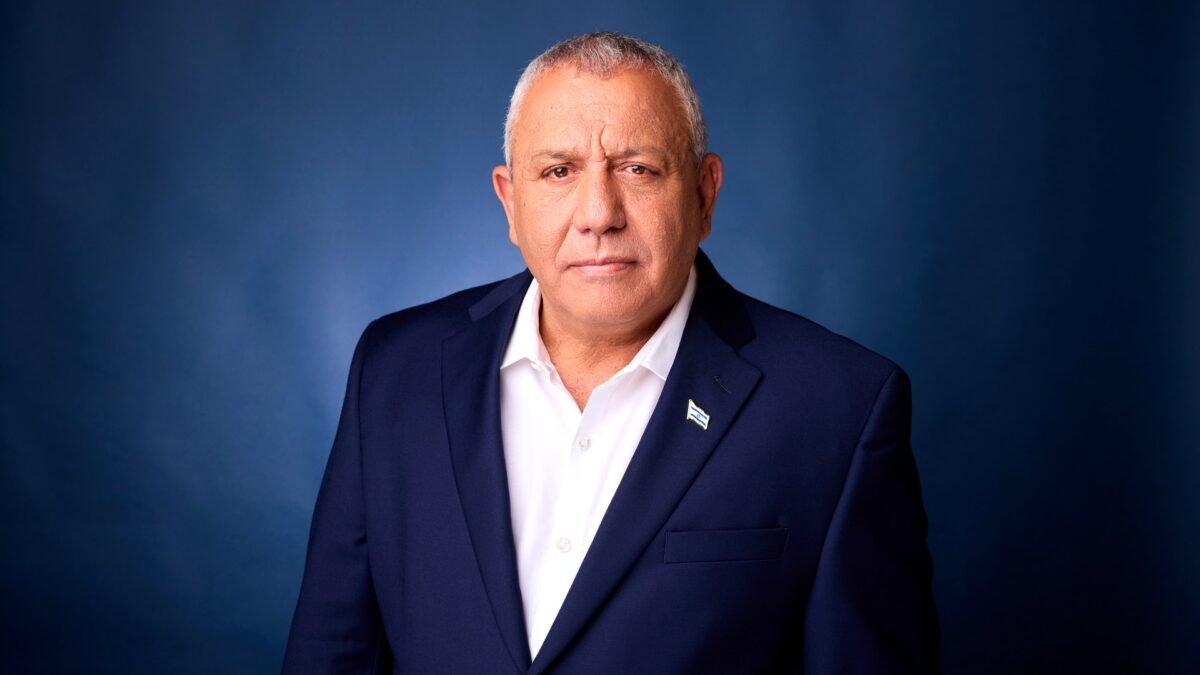
Israel’s caretaker prime minister, Benjamin Netanyahu, renewed his call on Saturday for a national unity government with his rival Gadi Eisenkot, saying only such a government could guarantee the country’s security. Within minutes, Eisenkot, the former army chief who holds the presidential mandate to form the next government, dismissed the appeal as a political trick.
The exchange, carried out in public statements hours apart, laid bare the central tension of Israel’s unfinished election: the man who lost the vote still holds the office, and the man who won the right to replace him cannot yet command a majority. Netanyahu framed his appeal as a matter of national survival, pointing to the threat from Iran. Eisenkot framed it as a manoeuvre by a leader who knows he has lost, and he made clear he intends to form a government of his own.
In a video statement released by his Likud party on Saturday, Netanyahu said a meeting with Eisenkot on Thursday had “only strengthened the conviction that it is essential to form a national unity government”. He said such a government could “eliminate the Iranian threat once and for all”, claiming Tehran “would not hesitate to use nuclear weapons against us”. “Let’s meet in one room, without preconditions,” he said, according to Al Jazeera.
Eisenkot’s reply came within minutes. In a written statement, he said Netanyahu “knows he lost the election”. “Netanyahu is calling for negotiations while they are already underway,” he said. “These tricks don’t work on me.” He called the appeal “another spin”, and said he was working to establish a national emergency government as quickly as possible.
The speed of the rejection mattered as much as its wording. Netanyahu’s appeal was not treated as an opening offer to be considered, but as a tactic to be answered on the spot. That is how the two men have spoken about each other for weeks, and it is why the question of who governs Israel — at a moment when the country is still at war with Iran and its allies are pressing Washington not to resume bombing — remains unresolved more than two weeks after Israelis voted.
What Netanyahu proposed
Netanyahu’s proposal, as he described it on Saturday, was for a broad government of Jewish parties from the centre and the right, formed without preconditions and without boycotts. He presented it as the only arrangement capable of meeting what he called an existential threat from Iran, and he warned that the alternative — the minority government Eisenkot is trying to build — would be weak and dangerous. He has said such a government would lead to Israel’s “collapse”, according to Al Jazeera.
The prime minister pointed to the two-hour security briefing he gave Eisenkot on Thursday as the reason for his appeal. The briefing, he said, had deepened his conviction that unity was essential. He did not say what the briefing contained, and Eisenkot has not described it either. What is known is that the two men left the meeting with opposite conclusions: Netanyahu emerged calling for them to govern together, while Eisenkot emerged more determined to govern without him.
Netanyahu’s version of unity would exclude Arab-led parties entirely. He and his allies have made unsubstantiated claims that Arab-led parties “stole” the election, a charge for which they have offered no evidence, according to Al Jazeera. On Friday, Eisenkot called that campaign against Arab parties “racist”. The exclusion matters because the Arab-led parties hold 19 seats in the 120-seat Knesset, a record, and because their votes — whether cast in favour, or withheld through abstention — are the arithmetic on which Eisenkot’s own plan depends.
Finance Minister Bezalel Smotrich, the leader of the Religious Zionism party and one of Netanyahu’s closest allies, backed the appeal on X, writing: “Gadi, the time has come.” Smotrich’s support underlined the shape of the government Netanyahu has in mind: a coalition anchored on the right, in which his own Likud and the far-right parties would sit alongside centrist defectors, with the Arab parties kept outside.
This was not Netanyahu’s first appeal. He made the same call at the swearing-in of the new Knesset on 10 November, when Eisenkot responded by calling him “unfit to remain in office”. The security cabinet’s order on 11 November for the military to step up preparations for a possible strike on Iran, reported by Israel’s public broadcaster KAN, added urgency to the second appeal: Netanyahu has been arguing, in effect, that decisions of war and peace cannot be left to a caretaker government, and that only a unity government would have the authority to make them.
Eisenkot’s answer, within minutes
Eisenkot’s rejection was not only fast; it was specific. He pointed out that negotiators from Likud and his Yashar party were already due to meet on Sunday, and that Netanyahu knew it. The appeal for talks, in his telling, was theatre: a public call for negotiations that were already scheduled, issued by a man who had already lost the election and was trying to change the subject.
“Netanyahu continues to divide and incite as if there were no tomorrow,” Eisenkot said, according to reports of his statement. “Netanyahu knows he lost the elections.” He said that even at that moment he was working to establish a national emergency government as quickly as possible, and he has insisted that Likud could join only a government he leads, with “recognition of the principles I have laid out and a break with the extremists”.
That last condition is the heart of the disagreement. Eisenkot has said he could work with members of Netanyahu’s Likud party, and with Smotrich’s Religious Zionism, if their commitment to unity is “sincere”. But he has demanded a break with what he calls extremists, notably supporters of the far-right minister Itamar Ben-Gvir, whose Otzma Yehudit party sits in Netanyahu’s bloc. Netanyahu has not accepted that condition, and his allies have treated it as an attempt to dictate the composition of his camp.
Eisenkot has also ruled out including Arab-led parties in his government, a position he shares with Netanyahu. His plan does not need their votes: it needs their abstention, and the abstention of some ultra-Orthodox lawmakers, to pass. That distinction — between governing with Arab parties and governing with their silent acquiescence — is the narrow path on which his entire project rests, and it is also the reason Netanyahu’s allies have attacked it as illegitimate.
Who has the numbers
Neither side won a majority in the election of 27 October. Netanyahu’s right-wing and religious bloc took 53 seats in the 120-seat Knesset. Eisenkot’s four-party bloc won 48 seats. Arab-led parties won a record 19. Sixty-one seats are needed for a majority, which means Netanyahu is eight short and Eisenkot thirteen short, according to the Central Elections Committee’s final count, as reported by Al Jazeera.
President Isaac Herzog gave Eisenkot the first chance to build a coalition on 8 November, after 67 lawmakers recommended him for the mandate, compared with 46 who backed Netanyahu. Eisenkot has 28 days to form a government, with a possible 14-day extension, which puts his deadline in early December. The mandate itself was a political defeat for Netanyahu: a sitting prime minister, even a caretaker one, is rarely passed over for the first attempt at forming a government.
The two blocs are themselves coalitions. Netanyahu’s camp spans Likud, which emerged as the largest single party with 26 seats, the ultra-Orthodox parties Shas and United Torah Judaism, and the far-right Religious Zionism and Otzma Yehudit. Eisenkot’s bloc brings together his own Yashar party — the name means “straight” or “honest” — the Together list associated with former prime ministers Naftali Bennett and Yair Lapid, Avigdor Liberman’s Yisrael Beytenu and Yair Golan’s Democrats.
Under Eisenkot’s plan for a minority “national emergency government”, his bloc’s 48 lawmakers would vote in favour, the 46 who support Netanyahu would vote against, and 26 lawmakers from Arab and ultra-Orthodox parties would abstain. That would allow his government to take office without an absolute majority in the Knesset, according to France 24 and Al Jazeera. It is an unusual arrangement, and it is the reason the coming week’s parliamentary votes matter so much: the Knesset will elect its speaker on Tuesday, a post currently held by Netanyahu ally Amir Ohana, with the opposition putting forward Matan Kahana, a former military officer, in his place. Committee appointments are set for Monday. The speaker’s chair is the first test of whether Eisenkot’s arithmetic holds when lawmakers actually have to vote.
The negotiating teams from Likud and Yashar are due to meet on Sunday, the day after Netanyahu’s appeal. Eisenkot has said the meeting was fixed before Netanyahu spoke, which is why he treated the appeal as redundant. But the meeting itself is real, and it is the channel through which any deal — whether a unity government on Eisenkot’s terms, or Likud participation in his emergency government — would have to be struck.
The war in the background
The argument about who governs is inseparable from the argument about what Israel does next in its war with Iran. The war began on 28 February 2026, when the United States and Israel launched strikes on Iran, and it is now in its ninth month. President Donald Trump declared the war “effectively over” on 10 November, but the fighting and the threats have not stopped, and the question of whether the bombing resumes is still open.
On Saturday, Reuters reported that Mr Trump had told senior advisers in recent days that he may hold off on attacking Iran if the United States faces no new provocations from Tehran or the Iran-backed Houthis in Yemen, according to three people familiar with the matter. The report said Mr Trump had spoken by telephone with Saudi Crown Prince Mohammed bin Salman and Turkish President Tayyip Erdogan, who both urged him not to resume attacks on Iran, and that American intelligence agencies had assessed that the naval blockade and economic sanctions were hurting the Iranian economy and would continue to put pressure on Tehran.
The report also said Mr Trump had told Prince Mohammed on 31 October that he was planning to attack after the American elections, but that the crown prince had pleaded with him to hold off, arguing that sanctions were working. Mr Trump has alternated between threats of escalating the war and language suggesting he wants to wind it down, and current and former officials told Reuters he does not appear to have made up his mind. The war has pushed global fuel prices higher and has proved unpopular with American voters, who handed control of Congress to the Democrats in the elections of 3 November.
Netanyahu’s government, meanwhile, has been moving in the other direction. The security cabinet’s order on 11 November for the military to increase its readiness for a possible attack on Iran was reported by KAN, and the prime minister’s language on Saturday — that Iran “will not hesitate to use nuclear weapons against us” — was the language of a leader preparing the public for a decision, not of one winding a war down. That gap, between Washington’s hesitation and Jerusalem’s urgency, is one reason the identity of Israel’s next government matters beyond its borders: a caretaker prime minister ordering preparations for war, and a prime minister-designate warning against major military decisions during the transition, cannot both be in charge of the same decision.
The wider region has not stood still while Israel argues about its government. On Saturday, Iran said three oil tankers had caught fire after striking naval mines in and around the Strait of Hormuz, in claims reported by Iranian state media that Reuters said it could not immediately verify, and that the United States Central Command dismissed as false. No vessel names, flags or casualty figures were given, and the British maritime monitoring centre had not confirmed the incidents. The claims themselves, verified or not, are part of the pressure campaign around the strait, through which about a fifth of the world’s seaborne oil has historically moved, and through which traffic has fallen by roughly 70 per cent from pre-war levels, according to reports citing shipping data.
In Gaza, the ceasefire that took hold in October 2025 is still formally in place, but more than 1,600 Palestinians have been killed since it began, according to Gaza’s Health Ministry, cited by the Associated Press. An Israeli strike on the Nasser Medical Complex in Khan Younis on 11 November killed six people, including a surgeon, and drew condemnation on Saturday from Saudi Arabia and 17 Arab and Islamic countries. The European Union also urged Israel on Saturday to reopen the Gaza crossings and allow unimpeded humanitarian aid, after the United Nations said the deadly winter flooding in Gaza had been preventable.
A history of working together — and walking away
Netanyahu and Eisenkot have governed together before, and the memory of how that ended is part of why Saturday’s appeal was rejected so quickly. Eisenkot, 66, served as chief of staff of the Israel Defense Forces from 2015 to 2019, appointed by Netanyahu himself. He entered politics in 2022 alongside Benny Gantz, and after the Hamas attack of 7 October 2023, he joined Netanyahu’s emergency war cabinet as a minister without portfolio and an observer in the small wartime decision-making forum.
He resigned on 9 June 2024, alongside Gantz, saying the cabinet was being prevented from making the key decisions needed to realise the war’s aims and improve Israel’s strategic position, and accusing Netanyahu of allowing political considerations to take precedence over the country’s security and the return of hostages. Gantz had warned that he would leave unless the government adopted a plan covering the return of hostages, the end of Hamas rule, the demilitarisation of Gaza and an international administration for the territory. Netanyahu dissolved the war cabinet days later.
The personal cost of that war for Eisenkot is part of his public standing. His son, Sergeant Gal Meir Eisenkot, was killed during operations in northern Gaza in December 2023, and two of his nephews were killed in the months that followed. He has spoken of the commitment he made after his son’s death, and his campaign for the premiership has been built openly on his four-decade military career and on criticism of Netanyahu’s handling of the war and of the government’s response to the 7 October attack, in which about 1,200 people were killed and some 250 hostages were taken into Gaza.
Israel has a long history of unity governments, and Netanyahu has been part of several of them. In 1984, after an inconclusive election, Shimon Peres and Yitzhak Shamir formed a national unity government with a rotation of the premiership. In 2020, after three inconclusive elections, Netanyahu and Gantz signed a rotation deal that promised Gantz the premiership in November 2021; the deal collapsed before it was honoured. In October 2023, days after the Hamas attack, Gantz’s party joined Netanyahu in an emergency coalition. Each of those arrangements was born of crisis, and each of them ended in recrimination. Eisenkot’s answer on Saturday suggested he has learned that history: unity, in his telling, is what Netanyahu offers when he cannot govern alone, and what he abandons when he can.
Netanyahu, 77, is Israel’s longest-serving prime minister, with 19 years in office across three stints. He has survived elections, indictments, a corruption trial and the loss of his parliamentary majority before. His argument now is that the country cannot afford a narrow government at a moment of war. Eisenkot’s argument is that the country cannot afford the prime minister who led it into that war. Both men are, in their own way, asking Israelis to choose between security and accountability, and to decide whether those two things can still be had from the same government.
Analysis: Why It Matters
The appeal is the admission
Netanyahu’s call for a unity government is, on its face, an offer of partnership. Read against the arithmetic, it is something else: an admission that he cannot form a government on his own. A prime minister with 53 seats in a 120-seat parliament, who was passed over for the mandate in favour of his rival, does not offer unity from strength. He offers it because the alternative is the opposition benches, and because a unity government is the only arrangement in which he would remain prime minister without winning the election. Eisenkot understood that instantly, which is why his answer took minutes rather than days. The speed was the message: this was not a negotiation, it was a verdict on who holds the power.
The minority government is a test of the system, not just of Eisenkot
Eisenkot’s plan — a government approved by 48 votes in favour, 46 against and 26 abstentions — is lawful, but it is not normal. Israeli governments have always been built on majorities, and the idea of a prime minister taking office without one will be attacked as illegitimate from the day it is sworn in, if it is sworn in. That is precisely why the speaker’s vote on Tuesday matters so much: it is the first time the numbers will be tested in a real division, and if the opposition cannot elect Matan Kahana over Amir Ohana, the claim that 26 lawmakers will abstain for Eisenkot’s government will look shakier than it does on paper. The minority government is a gamble that the Knesset’s rules are stronger than its conventions, and the gamble will be settled in the chamber before it is settled in the coalition talks.
Iran is the reason, and the excuse
Both men are using the war with Iran, and both are using it honestly, as far as their own beliefs go. Netanyahu genuinely believes that only a broad government can take the decisions a new round of war would require, and that a narrow government would lack the legitimacy to order strikes that could kill thousands. Eisenkot genuinely believes that a caretaker prime minister should not be making those decisions at all, and that a government formed by a man who has lost an election cannot claim a mandate for war. The trouble is that both positions cannot be true at the same time, and the country is left with a government that is preparing for a war it may not be authorised to fight, and a government-in-waiting that is warning against a war it may inherit within weeks. The war does not wait for coalition talks, and the coalition talks do not wait for the war.
Washington is watching, and waiting
The Reuters report that Mr Trump may hold off on new strikes against Iran changes the context of the Israeli argument, even if it does not settle it. If the United States is not going to bomb Iran in the near future, then the urgency Netanyahu cites is reduced, and Eisenkot’s case for a careful, deliberate transition is strengthened. But Mr Trump has not made up his mind, according to the same report, and the men around him are divided: the intelligence agencies say sanctions are working, the military has the assets in place, and the allies are split between those urging restraint and those urging action. Israel’s next government will have to manage that uncertainty, and it will have to do so while Mr Trump prepares to meet the Russian and Chinese presidents in Shenzhen on Thursday. A government that cannot decide who leads it will struggle to decide what to ask of Washington, and Washington will notice.
The Arab parties are the question neither man will answer
The 19 seats held by Arab-led parties are the largest bloc that neither Netanyahu nor Eisenkot will govern with, and the unspoken condition on which Eisenkot’s government depends. Netanyahu’s allies have called the election result stolen without evidence, and Eisenkot has called that campaign racist, but neither man has offered a vision of Arab citizens as full participants in the government of the country. Eisenkot needs their abstention; Netanyahu needs their exclusion. Both are, in different ways, treating a fifth of the Knesset as a problem to be managed rather than as voters to be represented. That is the deepest unresolved question in this election, and it will not be resolved by a unity government or a minority government, because neither of the men offering those governments is willing to answer it.
What to Watch Next
- The Likud–Yashar negotiating teams meet on Sunday 15 November. Watch whether the meeting produces a date for a second round, or a public statement from either side: silence after the meeting would suggest the talks are real, while competing briefings would suggest they are not.
- The Knesset elects its speaker on Tuesday 17 November. If Matan Kahana defeats Amir Ohana, Eisenkot’s arithmetic is real. If Ohana holds the chair, the minority-government plan is in trouble before it has begun.
- Committee appointments on Monday will show whether the opposition can actually run the Knesset’s machinery, or whether Netanyahu’s camp can still block it from inside the parliament.
- Eisenkot’s 28-day mandate runs to early December, with a possible 14-day extension. Watch for the first signs of a deadline being used as leverage: either Netanyahu offering concessions as the clock runs down, or Eisenkot threatening to let the mandate pass to someone else.
- The security cabinet’s order to prepare for a possible strike on Iran remains in force. Watch whether the military’s preparations become visible — call-ups, deployments, public statements by the chief of staff — and whether Eisenkot repeats his warning against major decisions during the transition.
- Mr Trump’s trilateral meeting with the Russian and Chinese presidents is expected on Thursday 19 November in Shenzhen, with nuclear arms on the agenda. Watch whether Iran is discussed there, and whether anything said in Shenzhen changes the calculations in Jerusalem.
- The claims about tankers striking mines in the Strait of Hormuz remain unverified. Watch for confirmation from the British maritime monitoring centre, from shipowners or from insurers: if the incidents are confirmed, the pressure on Washington to act will rise sharply; if they are not, the episode will stand as a reminder that in this war, information is itself a weapon.
Sources
- Al Jazeera (via Barbados Gazette), “Netanyahu says only a unity government can guarantee Israel’s security”
- The Time News, “Netanyahu Push for Israel National Unity Government Rejected”
- Globe TV, “Eisenkot rejects Netanyahu unity offer as he negotiates a minority government”
- Silent Dossier, “Netanyahu Unity Government: Why Did Eisenkot Say No?”
- Reuters, “Trump tells advisers he may hold off on Iran attacks barring new provocations, sources say”
- TBS News, “Who is Gadi Eisenkot, the former Israeli army chief challenging Netanyahu?”

About the Author — Abdul Mannan
Related Articles

UN Says Gaza’s Deadly Winter Flooding Was Preventable as 226,000 Displaced People Face a Fourth Winter in Tents
The United Nations says the deadly impact of Gaza's first winter storm was preventable, as flooding damaged more…
Iran Warns of ‘Immediate’ Retaliation at the UN as Gulf States Demand Compensation for War Damage
At a tense UN Security Council session, Iran warned any renewed US-Israeli attack would bring an 'immediate and…
Netanyahu Publicly Rebukes Trump’s Gaza Executive Board as Phase Two of the Peace Plan Begins
Benjamin Netanyahu has publicly objected to the make-up of Donald Trump's new Gaza Executive Board, saying it was…