
Russell Brand Accuser Mia Latter Waives Anonymity in Campaign to Stagger the Age of Consent

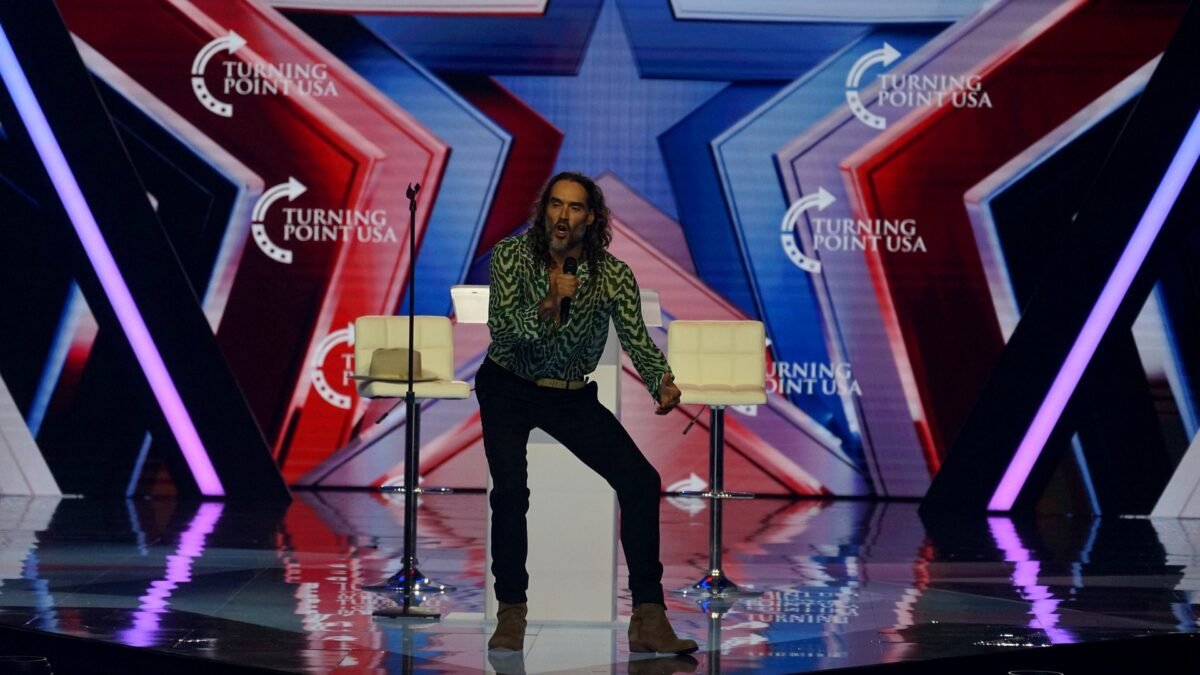
A woman who alleges she was raped by Russell Brand when she was 16 years old has given up her right to anonymity and put her name to a campaign to change British law, in the most significant new development since the comedian was jailed last week. Mia Latter, now 37, told The Sunday Times that she wants the age of consent staggered so that adults can no longer legally have sexual relationships with 16- and 17-year-olds, and the government has said it will consider the proposal.
Latter is the first of the women who accused Brand of rape to reveal her identity in public. Until this weekend she was known only as Alice, the pseudonym The Sunday Times gave her when she first spoke to the paper in its 2023 investigation into Brand, conducted with The Times and Channel 4’s Dispatches. She waived the lifelong anonymity that the law gives to people who allege sexual offences, telling the paper that “shame must change sides” and that she wants the law changed so that today’s teenagers are protected from being groomed by older men and women in the way she says she was.
Her decision has already moved the politics. Louise Haigh, the de facto deputy prime minister, told the newspaper that Latter’s “heart-breaking story” meant a change in the law deserved consideration, and the government said it would look at the calls. The Guardian reported that ministers will consider the proposal, and that MPs outside Labour may support a bill, with Jess Brown-Fuller, the Liberal Democrat justice spokesperson, coming out in favour of reviewing the law. The question now is whether a campaign that began with one woman’s account in 2023, and was taken up this year by a dedicated campaign group, can become law.
Brand, 51, was sentenced on Monday 9 November to ten and a half years in prison after being convicted of one count of rape and three counts of sexual assault against four women, in offences dating from 2004 to 2009. None of the six women who made allegations against him in the 2023 media investigation were complainants in that trial. Brand has denied all allegations of non-consensual sexual activity. The allegation made by Latter is the subject of a separate Metropolitan Police investigation, launched in January 2026, which the force says remains ongoing.
Who Mia Latter is and what she alleges
Latter says she was 16 when she met Brand, who was 30 at the time, in Leicester Square in central London while she was on her way home from a shopping trip. According to the Press Association, he took her number, later messaged her and asked if she wanted to go for dinner, and still asked her to meet after she had told him her age. She says the relationship lasted about three months and alleges that Brand raped her towards the end of it. She was studying for her AS-level exams at the time and, according to The Times, never found out her results, because the relationship derailed her education and left her struggling with depression.
She first spoke to The Sunday Times in February 2021 and appeared in silhouette in the Dispatches documentary in 2023. In that investigation she initially described what happened as a sexual assault, and that is how the paper reported it. The BBC reported that she “now calls this allegation rape”. She spoke to the Metropolitan Police after the documentary, was interviewed by officers in March this year, and Brand was interviewed under caution about her allegations earlier this year. The Crown Prosecution Service decided not to include her case in the trial at Southwark Crown Court that ended with Brand’s conviction on 5 November.
She told The Sunday Times that the police had wanted her to be part of a subsequent trial, but that she was told she would not make it to the October trial because officers did not want the case to become, in her words, “the Alice show”. “I was devastated by it,” she said, according to the Press Association. She has now said she has decided not to continue with the criminal process so that she can focus on her campaign. “I just don’t know what capacity I have to give years more of my life to this, for my head to be occupied with these awful crimes,” she told the paper.
The Metropolitan Police said its investigation remains open. “Officers launched an investigation in January 2026 after receiving an allegation of rape,” a spokesperson said, according to the Press Association. “Detectives sought advice from the Crown Prosecution Service to determine how best to proceed, and officers were advised that further information was needed before a charging decision could be made. This investigation remains ongoing. We understand the delay has been distressing for this victim-survivor. However, our focus has been on putting forward the best possible evidence.” The Crown Prosecution Service said it would “continue to work closely with investigators to provide advice and make sure cases progress as quickly as possible”.
Latter has also alleged that cars were sent to collect her from school, including cars paid for by the BBC because Brand was a presenter on BBC Radio 6 Music at the time. She worked at Channel 4 herself between 2013 and 2014 and has said she is angry with the media organisations that employed Brand, as well as with his agents. Brand has denied all of the allegations made against him by Latter since they were first reported in 2023.
“Shame must change sides”: the decision to go public
Waiving anonymity is not a step any complainant in a sexual offence case takes lightly. The right to lifelong anonymity exists precisely so that people who allege sexual offences can report them without their name becoming public. Latter has given that protection up, in her own words, so that the shame moves from the person who says she was harmed to the person she says harmed her, and so that her experience can be used to change a law she believes leaves teenagers exposed.
She is now married and has a daughter. Her argument, as she put it to The Sunday Times, is that the law should protect teenagers from being groomed by older men or women, as she says she was. “I don’t want to criminalise teenagers having sex with each other,” she said, according to The Times. “If you’re between the ages of 16 and 18, it seems reasonable that you can have relationships with each other, and [teenagers] are always going to. But … if you’re in your thirties, forties and fifties and you’re trying to have a relationship with someone under the age of 18, it [should be] a criminal offence.”
She has been making this argument for more than three years. In 2023, in an interview on BBC Radio 4’s Woman’s Hour in which her words were read by an actor, she called for a conversation about changing the age of consent, and said her mother had had no legal framework to intervene in her relationship with Brand. “You’re allowed to make mistakes as a teenager, they should be with other people your own age,” she said at the time. She also wrote in The Times that year that 16- and 17-year-olds should be allowed to explore their sexuality “but without undue influence from much older people”, and that there had been nothing her parents could do to stop the relationship because there was no legal recourse.
What has changed is the audience. In 2023, as The Times noted this weekend, almost nobody in Britain was talking about the age of consent. Now there is a campaign, a victims’ commissioner and Labour MPs calling for a review, a deputy prime minister saying the proposal deserves scrutiny, and a second set of allegations, against the comedian David Walliams, reported last week after a joint investigation by The Guardian and ITV News. Latter’s decision to put her name to the campaign is the moment the argument acquired a public face.
What a staggered age of consent would mean
Under the law in England and Wales, and across the rest of the United Kingdom, the age of consent is 16. That means a 16- or 17-year-old can legally have sex with a person of any age, unless the older person is in a position of trust, such as a teacher, a coach or a religious leader, in which case the protected age rises to 18. There is no limit on the age gap between the partners. A 30-year-old, a 40-year-old or a 50-year-old can legally have a sexual relationship with a 16-year-old, provided the older person is not in a position of trust over them.
A staggered, or graduated, age of consent would change that by taking the age difference between the partners into account. The campaign group Close the Consent Gap, founded in April this year by Layla Stone, proposes making it a criminal offence for a 16- or 17-year-old to have sexual activity with anyone more than three years older than them. A relationship between two teenagers close in age would remain lawful. Sexual activity between a 16-year-old and a 35-year-old would be prohibited. “For example, a consensual relationship between two teenagers close in age would remain lawful, whereas sexual activity between a 16-year-old and a 35-year-old would be prohibited,” Stone said.
The barrister Charlotte Proudman, who specialises in law on violence against women and girls, described the idea in similar terms: “Staggered, or graduated, age of consent means that the law takes account of the age difference between sexual partners, rather than treating 16 as the point at which a child can legally consent to sexual activity with someone of any age.” Stone’s central claim is that the current law creates a loophole that can be exploited deliberately. “We see so many predators grooming a child and then waiting for that moment of her 16th birthday when ‘she’s legal’. That’s so sinister but that person is quite right and that’s the point,” she said.
Stone told The Times that the catalyst for founding the campaign came earlier this year, when Brand described his relationship with a 16-year-old girl, Latter, as “awful but not unlawful”. “That inspired us to act,” she said. Her wider argument is about consistency in the law. “Every other framework of the law recognises 16- and 17-year-olds as children. We want the law to recognise children, 16 and 17 years old, as children who need to be protected in all frameworks of the law.” A 16-year-old cannot vote, buy alcohol, get a tattoo or leave school without education or training, yet can legally consent to sex with an adult of any age. That contradiction is the campaign’s core case.
The model already exists elsewhere. In Florida, where Brand was living before he was sent to prison, the age of consent is 18, but it is lowered to 16 if the partner is not older than 23. In North Dakota the age of consent is also 18, with an exemption for partners close in age. In Canada, a 14- or 15-year-old can consent if the partner is less than five years older. In Italy there is an exception for over-13s if the age gap is not more than three years. These are usually called close-in-age exemptions, or “Romeo and Juliet” laws, and they are designed to do exactly what the campaign proposes: protect teenagers from much older partners without criminalising relationships between teenagers themselves.
The government’s answer, so far
The government has not committed to changing the law, but its most senior voices are no longer dismissing the idea outright. Haigh, the de facto deputy prime minister, told The Sunday Times that Latter’s story meant the proposal deserved a proper hearing. “We need to listen to Mia and other victims like her who have been through these experiences, because it’s really important that as lawmakers their experience is at the heart of what we consider,” she said. “It clearly would be a massive step to change the age of consent, but it deserves proper consideration and scrutiny. I can absolutely understand why she is calling for it.” She also said it was “unthinkable” that a 30-year-old adult would have a relationship with someone 14 years younger.
That is a careful position: sympathy and a promise of consideration, but no commitment. It is also, notably, a different tone from the one Downing Street struck only days earlier, when it said there were no plans to change the age of consent. The two statements are not formally contradictory, since considering a proposal is not the same as adopting it, but the gap between them is the space in which this campaign will now operate. Haigh’s words give the campaigners a ministerial audience. Downing Street’s words give the government room to say no.
Other voices in the debate have been clearer. Claire Waxman, the victims’ commissioner for England and Wales, has called for “serious conversations” about changing the law to protect teenagers from exploitation where there is a significant age gap in a sexual relationship. Labour MPs have called for the law to be reviewed. Lucy Beaumont, the comedian who helped expose the allegations against David Walliams, has called for a staggered age of consent that would prevent adults from having sexual relationships with significantly younger teenagers. The Guardian reported that MPs outside Labour may support a bill, with the Liberal Democrats’ justice spokesperson, Jess Brown-Fuller, coming out in favour of reviewing the law.
The campaign has also drawn support from commentators. Ash Sarkar, the Novara Media commentator, has called for a staggered age of consent, arguing that a 16- or 17-year-old is vulnerable to manipulation and to consent-warping imbalances of power that the law should protect them from. The debate is no longer confined to campaigners and lawyers. It now has a parliamentary dimension, a ministerial audience and a named victim willing to speak in public.
The trial, the investigation and what Brand has said
The campaign’s new prominence cannot be separated from what happened in court last week. Brand was convicted on 5 November of one count of rape and three counts of sexual assault, after a four-week trial at Southwark Crown Court. The offences were against four women and dated from 2004 to 2009. On Monday 9 November, Judge Joel Bennathan sentenced him to ten years and six months in prison. The judge described him as a “sexual predator” and said his status had protected him until 2023. Brand will serve two-thirds of the sentence, seven years, before release on licence, and will remain on the sex offenders register for life.
Latter’s allegation was not part of that trial. She was one of six women who made allegations against Brand in the 2023 investigation, and none of those six were complainants in the criminal case. That distinction matters, and it is one the reporting has been careful to preserve. Brand’s conviction is for offences against four other women. What Latter alleges about her own experience has not been tested in court, and the police investigation into her allegation is still open. Brand has denied all of the allegations made against him by Latter since they were first reported in 2023, and he has denied all allegations of non-consensual sexual activity.
At the same time, Brand has spoken publicly about the relationship with a 16-year-old. In an interview with the conservative podcaster Megyn Kelly earlier this year, he said: “The plain fact of it is, in Europe and in the United Kingdom, where I’m from, the age of consent is 16. And I did sleep with a 16-year-old when I was 30.” He added that he had been “a very different person” and “an immature 30-year-old”, and that fame and addiction had given him “opportunity for endless consent”, which had led him to be “a hedonist and a fool and an exploiter of women”. In the same period he described the relationship as “awful but not unlawful”, and, according to The Times, admitted on Kelly’s channel that his relationship with Latter had been “exploitative” and that he had “manipulated” consent.
That admission is the hinge of the campaign. Brand’s own account concedes that the relationship was exploitative while insisting that it was lawful. The campaign’s answer is that the law should not leave that gap open. If a 30-year-old can describe a relationship with a 16-year-old as exploitative and still be right that it was legal, the campaigners argue, then the law is failing the people it is supposed to protect.
The Walliams allegations and the wider moment
Latter’s campaign has been given fresh impetus by a second set of allegations, reported last week, against the comedian David Walliams. A joint investigation by The Guardian and ITV News reported a series of “serious” sex offence allegations against Walliams, and the Metropolitan Police announced that the allegations are being probed. One woman described her alleged encounter with Walliams when she was 15 as “sexual assault”. Walliams, 55, has been accused of sexually assaulting a 15-year-old schoolgirl and abusing his celebrity to groom teenage girls for sex. He denies any wrongdoing.
The two cases are separate, and Walliams has not been charged with any offence. But they have landed in the same week, involve two comedians who were once friends, and both concern the same question: what protection does the law give a teenager when the adult pursuing them is famous, wealthy and decades older? Lucy Beaumont, who helped expose the allegations against Walliams, has joined the call for a staggered age of consent. The Times reported that the campaign has been given fresh impetus by the Walliams allegations, and the Guardian’s reporting on the case is part of the same wave of scrutiny of relationships between powerful men in entertainment and teenage girls.
The pattern is familiar from earlier moments in the reckoning over sexual abuse in Britain: a criminal conviction, a set of allegations against a second public figure, a victim willing to speak on the record, and a campaign that turns a personal account into a proposal for legal change. What is different this time is that the proposal already exists, in a drafted form, with a named campaign, a specific age-gap rule and international examples to point to. The campaigners are not asking for a debate in the abstract. They are asking for a specific change to a specific statute.
A law unchanged since 1885
The age of consent in Britain has stood at 16 for 141 years. It was first set in England in 1275, at the age of 12, under the Statute of Westminster. In 1875 the Offences Against the Person Act raised it to 13. Ten years later, the Criminal Law Amendment Act 1885 raised it to 16, after the investigative journalist W. T. Stead published a series of exposés in the Pall Mall Gazette, “The Maiden Tribute of Modern Babylon”, revealing child prostitution in London. The public outcry forced the government to act, and the age of 16 has remained ever since.
It has been challenged. In 1917 a bill to raise the age of consent from 16 to 17 was defeated by a single vote. Northern Ireland raised its age of consent to 17 in 1950, but the change was reversed in 2008, bringing the age back to 16 to align it with the rest of the United Kingdom. The Sexual Offences Act 2003, which governs the law in England and Wales, kept the age at 16 while adding the positions-of-trust protection that raises the age to 18 for teachers, coaches, religious leaders and others in authority over a young person. Scotland and Northern Ireland have equivalent legislation, each setting the age at 16.
That history cuts both ways in the current debate. Campaigners can point out that the age of 16 was set in 1885, in a different world, and has not been revisited since, even as the law around children has changed beyond recognition. A 16-year-old today is a child in almost every other area of the law, and the state treats them as one. Critics of change can point out that the line has survived for more than a century precisely because Parliament has repeatedly decided, or declined to decide, that it should stay where it is. The 1917 vote, lost by a single vote, is a reminder that the question has been argued before, and that the argument has never been settled by a wide margin.
The positions-of-trust exception is also relevant, because it shows that Parliament already accepts the principle behind staggered consent. The law already says that a 16-year-old cannot meaningfully consent to sex with a teacher, a coach or a religious leader, because the power imbalance is too great. The campaign’s argument is that a large age gap creates a similar imbalance, even without a formal position of authority. A 30-year-old with money, fame and independence and a 16-year-old still living at home and studying for exams are not, in the campaign’s view, equals who can bargain over consent on level terms.
Analysis: Why It Matters
A name changes the argument
For three years this debate had a pseudonym at its centre. “Alice” was a powerful witness, but she was also an abstraction, a voice read by an actor on the radio, a silhouette in a documentary. Mia Latter has now put her name, her face and her history to the campaign, and that changes its political weight. A named person who says “this happened to me, and I want the law changed so it cannot happen to someone else” is harder to ignore than an anonymous account, and harder to dismiss as a theoretical exercise. The risk she has taken is also part of the argument: she has given up a legal protection designed to shield her, because she believes the campaign matters more than her privacy. That is a serious claim on the public’s attention, and the government’s response so far suggests it has been heard.
The 1885 line and why it has lasted so long
There is a reason the age of 16 has survived for 141 years, and it is not that nobody has questioned it. The age of consent is one of those lines in the law that looks simple from a distance and becomes complicated the closer you get to it. Sixteen is the age at which a young person can leave school, join the armed forces with parental consent, and consent to medical treatment. It is the age the state has chosen, across many different laws, as the point at which a young person begins to make their own decisions. Moving the line, even partially, means deciding that a 16-year-old is old enough to make some decisions and not others, and drawing that distinction in a way that the police, the courts and teenagers themselves can understand. That is not a reason to refuse the change. It is a reason to expect the debate to be difficult, and to expect the drafting to matter as much as the principle.
The three-year rule: simple to state, hard to draft
The campaign’s proposal has an appealing clarity: sex between a 16- or 17-year-old and someone more than three years older becomes a criminal offence, while relationships between teenagers close in age stay lawful. But the simplicity of the rule is also its vulnerability. Parliament would have to decide what counts as the age gap, how it is measured, what happens when a relationship begins lawfully and one partner turns 18, and how the law treats cases where the younger person insists the relationship was consensual. It would have to decide whether the offence should apply to all sexual activity or only to intercourse, and what the penalty should be. It would have to decide how the new offence interacts with the existing grooming and child sexual exploitation laws, which already criminalise much of the behaviour the campaign is concerned about. None of these questions is unanswerable, and the international examples show that other countries have answered them. But they are the questions on which a bill succeeds or fails, and the campaign will need answers to all of them before a minister can safely commit.
The government’s two voices
The most revealing feature of the government’s response so far is that it has spoken in two voices. Downing Street said there were no plans to change the age of consent. The de facto deputy prime minister said the proposal deserved proper consideration and scrutiny. The difference is not a contradiction, but it is a signal. It suggests that the government has not yet settled its position, and that the debate inside it is live. Haigh’s intervention matters because it came from a senior minister, in response to a named victim, and because it framed the question as one of listening to victims rather than of legal technicality. Downing Street’s statement matters because it is the formal position, and because no government changes a law of this sensitivity without a long process of consultation. The campaign’s task now is to turn Haigh’s openness into a commitment, and the government’s task is to decide whether it can do that without opening a debate it cannot control.
The critics have a point too
Not everyone who works with young people supports the change, and their objections deserve to be taken seriously rather than dismissed. Some argue that the law already criminalises non-consensual sex and the grooming of children, and that a new age-gap offence would add complexity without adding protection. Others warn of unintended consequences: under the Crime and Policing Act, teachers, nurses and doctors will soon have a legal duty to report child sexual abuse, and a teenager who confides in a nurse about an older partner could trigger a police referral whether or not they wanted one. That could deter teenagers from seeking contraception, health advice or help. There is also a concern that the law would be used in ways the campaigners do not intend, against young adults only a few years older than their partners, or in cases where the relationship is genuinely consensual. These are not arguments for doing nothing. They are arguments for drafting carefully, for consulting widely, and for testing the proposal against real cases before it becomes law. A campaign that ignores them will find them raised by its opponents in Parliament.
What to Watch Next
- The government’s formal response: whether ministers move from saying the proposal deserves consideration to announcing a review, a consultation or draft legislation, and how quickly that happens.
- The Metropolitan Police investigation: whether the force reaches a charging decision on Latter’s allegation, and what the Crown Prosecution Service advises. The investigation has been open since January 2026.
- The Walliams investigation: what the Metropolitan Police does with the “serious” sex offence allegations reported by The Guardian and ITV News, and whether any charges follow.
- Parliamentary support: whether MPs from more than one party back a bill to stagger the age of consent, and whether the Liberal Democrats’ support for a review becomes a formal proposal.
- The victims’ commissioner: whether Claire Waxman’s call for “serious conversations” about the law leads to a formal recommendation, and whether her separate work on rape myths in jury directions advances.
- The Close the Consent Gap campaign: whether the group publishes draft legislation, how it answers the questions about drafting and unintended consequences, and how much public support it gathers.
- The wider debate: whether the discussion spreads beyond the Brand and Walliams cases into a broader review of how the law protects 16- and 17-year-olds, and whether other public figures and institutions are drawn into it.
Sources
- BBC News: “Russell Brand: Alleged rape victim wants age of consent law changed”
- The Guardian: “UK government to consider changing age of consent after allegations against Russell Brand”
- The Times: “Russell Brand was 30. I was 16. He called me ‘the child’”
- The Times: “Age of consent could be staggered after Russell Brand outcry”
- Press Association via Bury Times: “Government faces calls to stagger age of consent after Russell Brand allegations”
- Wikipedia: “Age-of-consent reform in the United Kingdom”

About the Author — Abdul Mannan
Related Articles

Suspected Drones Over RAF Lakenheath Force US Air Force to Sound Shelter Alarm at Britain’s Largest American Base
US Air Force security forces responded to suspected unauthorised drone activity over RAF Lakenheath on Friday evening, sounding…

Milburn Calls for Legal Guarantee of a Job or Training for Every Young Person in Radical Welfare Overhaul
Alan Milburn has called for a legal 'opportunity guarantee' for young people, alongside a sweeping overhaul that would…

Sirens Sound at RAF Lakenheath as US Forces Respond to Suspected Drone Activity
US Air Force security forces responded to suspected unauthorised drone activity over RAF Lakenheath on Friday evening, sounding…