
Musk’s Tesla–SpaceX Merger Talks Could Put SpaceX in the S&P 500 and Unlock $100 Billion of Index Buying

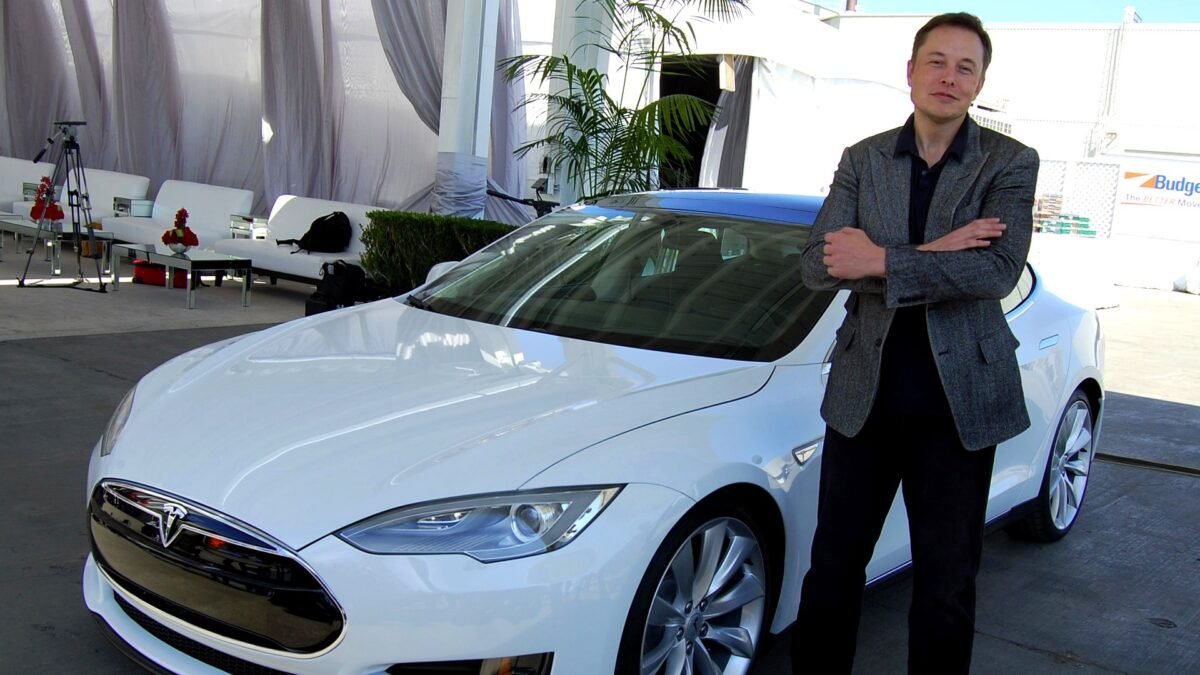
Talks between Tesla and SpaceX are progressing toward a merger that could be announced as soon as December, according to Bloomberg, in a deal that would combine Elon Musk’s two biggest companies into a single business worth about $3.5 trillion and give SpaceX a back door into the S&P 500. The report, published on Saturday 14 November, said people familiar with the matter described the discussions as advancing, and that the tie-up could generate about $100 billion of buying from the index funds that track America’s benchmark stock market.
The proposed combination would be one of the largest corporate mergers in history. Based on Friday’s share prices, Tesla was valued at about $1.55 trillion and SpaceX at about $1.9 trillion, according to Bloomberg, making the merged company the fifth-largest business in the S&P 500. It would bring together electric cars, rockets, satellites, artificial intelligence and robotics under a single corporate roof, and it would put SpaceX — which was denied a fast-track entry into the index only months after its record-breaking stock market listing in June — inside the world’s most widely followed benchmark without waiting for the index provider to change its rules.
Neither company has confirmed the talks. A spokesperson for S&P Dow Jones Indices declined to comment, citing a policy against discussing market speculation, and Tesla and SpaceX did not reply to emails seeking comment, according to Bloomberg. Musk himself has cautioned that a deal is far from certain. But the report, coming two days after Reuters reported that discussions were progressing and that an announcement could come as early as December, is the clearest sign yet that the biggest merger of the decade is moving from speculation toward a formal proposal.
The $100 billion prize
The most concrete number attached to the merger is not the value of the combined company but the money that would be forced to follow it. About $16 trillion is invested in funds designed to track the S&P 500, according to S&P Dow Jones Indices, and those funds are compelled to hold every stock in the index in proportion to its weight. If the combined Tesla-SpaceX company kept Tesla’s place in the index, every one of those funds would have to own it.
Reid Noch of TD Securities estimated that the inclusion of the combined company could generate about $100 billion of demand from passive index funds, according to Bloomberg. Steve Sosnick, the chief strategist at Interactive Brokers, explained the mechanics to Bloomberg in plain terms: “If you hold an S&P index fund or ETF in your 401(k) or investment account, the manager of that fund is compelled to buy every stock in the index in proportion to its weight.”
That is why the merger matters far beyond Musk’s own empire. A $100 billion forced purchase would be one of the largest single flows of index money ever attached to one corporate event, and it would arrive in a market already nervous about how much of its value is concentrated in a handful of giant technology companies. The combined company, at about $3.5 trillion, would be the fifth-largest constituent of the index, behind only the very biggest American businesses, and every American retirement account that holds an S&P 500 fund would automatically own a piece of it.
The figure is an estimate, not a promise. The actual buying would depend on the structure of the transaction, on the final weighting of the combined business, and on the index provider’s decision. And the reverse is also true: if the combined company were excluded from the index, the passive funds that currently hold Tesla would have to sell the shares they received in the merger, according to Bloomberg. The stakes, in other words, run in both directions.
Why SpaceX was locked out of the index
SpaceX’s problem is not its size. The company, which listed on the stock market in June 2026 in what was then the largest initial public offering in history — raising about $75 billion at a valuation of about $1.75 trillion, with the order book about twice covered — commanded a market value of as much as $2.6 trillion soon after its debut, according to Bloomberg. Its revenue over the 12 months through September was $32 billion, and in October it reported its first quarter of positive earnings.
Its problem is the rulebook. The S&P 500 generally requires a newly listed company to have traded publicly for at least 12 months and to have reported positive earnings over the previous four consecutive quarters before it can be considered for inclusion. SpaceX, which listed only in June, does not yet meet those tests. Analyst estimates cited by Bloomberg suggested it could clear the profitability bar by the middle of next year, but the calendar alone keeps it out until June 2027 at the earliest.
When SpaceX asked for a faster route, S&P Dow Jones Indices declined to change its rules to accommodate megacap initial public offerings. Nasdaq took the opposite approach, revising its own rules to speed SpaceX into the Nasdaq-100, an index tracked by about $800 billion in assets. The contrast left SpaceX in an unusual position: one of the most valuable companies in the world, listed on a public exchange, and locked out of the index that matters most to American savers.
A merger with Tesla would solve that problem without anyone having to change a rule. Tesla has been a member of the S&P 500 since late 2020 and accounts for about 2 per cent of the benchmark. If the transaction were structured so that the combined company succeeded Tesla as the existing index constituent, it could potentially preserve that place. Analysts cited by Bloomberg argued there was a case for letting the new company keep Tesla’s slot even if Tesla were the one being acquired, to preserve index continuity and limit turnover. JPMorgan’s global market strategy team has estimated that the index committee might grant an eligibility exception on that basis, generating passive buying equivalent to roughly 10 per cent of the free float, according to a report by Longbridge.
A merger months in the making
The idea is not new. Musk publicly supported exploring a merger during SpaceX’s third-quarter earnings call on 20 October 2026, when he was asked about a possible combination with Tesla. “Do I think it would be a good idea? Yes,” he said, according to CNBC. “But at the end of the day, the shareholders have to be supportive of this.”
On the same call, Musk confirmed that the boards of both companies had each formed special committees of independent directors to examine a possible combination. The committees were created at the request of shareholders, according to Musk, and he said he could not take part in their discussions because he is a conflicted party — he is the chief executive and the largest individual shareholder of both companies. “Because I’m a conflicted party, I can’t actually be in the discussions of the special committees,” he said, according to TechCrunch.
Both companies filed Form 8-K disclosures with the US Securities and Exchange Commission on 21 October confirming that their boards had formed the committees. SpaceX shares rose as much as 10 per cent in premarket trading the following morning, according to Business Insider. Since then, the committees have been working without any agreed terms. Musk has been careful to manage expectations. “I think some people out there assume that a SpaceX and Tesla merger is a certainty, and I think that would be overstating it,” he said on the call, according to TechCrunch.
His stated rationale is convergence. “I do think there’s a lot of merit to combining the companies as we are pretty much in the superintelligence singularity, and there’s a lot to be gained from cooperating,” he said, according to CNBC. The two companies already share work on artificial intelligence software, robotics and chips, and they are jointly developing projects including Starmind, SpaceX’s orbital artificial intelligence data centre, and Terafab, a joint chip manufacturing project. Tesla also already holds SpaceX shares through a roughly $2 billion investment in xAI, completed on 12 March 2026.
The timing is also significant. SpaceX has just had its most visible week in years: on Saturday 14 November, it caught a Starship spacecraft returning from orbit with the mechanical arms of its launch tower for the first time, a feat that brought it closer to the reusable spacecraft NASA needs for its Artemis programme to return astronauts to the Moon. Tesla, meanwhile, has been remaking itself. On 6 November, Musk announced that Tesla would wind down production of the Cybertruck, its steel-clad pickup, around the middle of 2027 to make room for increased production of the Cybercab, its two-seat driverless taxi. Production of the Model S and Model X ended in the spring. The company that would merge with SpaceX is no longer primarily a carmaker: it is a robotics and autonomy business that happens to sell cars.
The governance problem at the heart of the deal
Any merger between Tesla and SpaceX would be negotiated by two boards whose most important shareholder is the same man, and that is the deal’s central difficulty. Musk beneficially owned 19.8 per cent of Tesla as of 30 September, according to the company’s proxy statement, and about 48 per cent of SpaceX, with supervoting shares giving him about 82 per cent of SpaceX’s voting power. Barclays has calculated that he would hold roughly 37 per cent of the combined company’s equity and 56 per cent of its voting power.
The special committees are meant to solve that problem. They are bodies of independent directors empowered to evaluate a proposal, hire their own advisers and — crucially — say no. Tesla has seven independent directors under Nasdaq’s listing standards, including chair Robyn Denholm, former chief technology officer JB Straubel, James Murdoch and Joe Gebbia. SpaceX lists six independent directors, including Ira Ehrenpreis, who has sat on Tesla’s board since 2007 and on SpaceX’s since February 2026. The overlap between the two boards is itself a complication the committees will have to manage.
The voting arithmetic is lopsided. On the Tesla side, Musk said a deal would need the support of 50 per cent of all outstanding shares — not merely a majority of the votes actually cast, but half of every share in existence. Tesla’s shareholder base is famously broad and retail-heavy, and getting half of every share to vote in favour would be a campaign in itself. A warning sign sits in Tesla’s own recent history: the company’s 2025 proposal to drop its supermajority voting rules won about 39.4 per cent of outstanding shares and failed.
On the SpaceX side, the vote would be far easier. Musk holds more than 50 per cent of the voting power following SpaceX’s initial public offering, which means the outcome there is, practically speaking, his to decide — even though he cannot sit in on the committee discussions. The imbalance means the real negotiation is not between the two companies but between Musk and Tesla’s independent shareholders, and the price they demand will decide whether a deal happens at all.
There is also a precedent that will weigh on the committees. In 2016, Tesla bought SolarCity, another Musk company, in a deal that was challenged in Delaware’s courts for years. The court eventually cleared the transaction, but only after saying the company should have formed an independent committee to evaluate it. The special committees now in place are, in part, the lesson of that litigation applied in advance.
Barclays has mapped the share-swap arithmetic for a potential all-stock deal, suggesting Tesla shareholders could receive about 0.7 SpaceX shares for each Tesla share before any acquisition premium, and putting the combined market value at roughly $3.6 trillion — slightly above Bloomberg’s $3.5 trillion figure based on Friday’s prices. The difference is a reminder that every number in this story moves with the share price, and that the final exchange ratio, if one is ever agreed, will be argued over for weeks.
Antitrust and national-security questions
A merger of this size would face regulatory scrutiny on several fronts at once. A former US Department of Justice official told Semafor that the risk of antitrust concerns arising from a combination of Tesla and SpaceX was real. Nathan Johnson, the Texas attorney-general elect, has said a SpaceX-Tesla combination would receive close state-level antitrust review, telling Bloomberg that any deal between two companies of such scale demands heavy scrutiny.
The national-security questions may be harder still. SpaceX holds significant US government and defence-related contracts, including the launch services and satellite networks on which the American military increasingly depends, and it is developing the spacecraft NASA has chosen to land astronauts on the Moon. Tesla, meanwhile, has extensive manufacturing and commercial relationships in China, including its Shanghai factory, which is one of the company’s largest production sites. Combining the two businesses would put defence contracting and a major Chinese manufacturing footprint under the same corporate roof, and regulators in Washington are likely to examine that combination closely.
The companies would also need to agree a valuation and an exchange ratio for shareholders, and to decide which company formally acquires which. The easiest theoretical route into the index would be for Tesla to acquire SpaceX, allowing the combined entity to retain Tesla’s existing index position. But analysts have suggested that is not necessarily the most likely structure, and the reverse — SpaceX acquiring Tesla — would raise the question of whether the combined company could still keep the slot. Neither outcome has been confirmed, and the structure chosen will shape both the regulatory review and the index decision.
There is also the question of money. Both companies are burning through billions of dollars in cash, according to Bloomberg. SpaceX is spending heavily on Starship, on its Starlink satellite network of more than 11,000 satellites, and on orbital data centres. Tesla is spending on robotaxis, on its Optimus humanoid robot, and on the factories it is converting to build them. A merger would not, by itself, generate cash. It would combine two very large cash-burning businesses into one even larger one, and investors will want to know how the combined company intends to fund ambitions that include robotic assistants, orbital data centres and colonies on Mars.
What the market makes of it
The market’s first reaction to the idea came on 21 October, when SpaceX shares rose as much as 10 per cent in premarket trading after Musk confirmed the committees. Tesla’s shares have had a harder year: the stock has slipped 13 per cent in 2026, according to Bloomberg, even as the company trades at more than 180 times expected earnings, against 18 times for the overall S&P 500. That valuation gap is itself part of the story. Tesla is priced as a bet on a future that has not yet arrived — driverless cars, humanoid robots, artificial intelligence — while SpaceX, which only just reported its first profitable quarter, is priced on the promise of a satellite and launch business that is still scaling.
The broader market is also in a nervous mood. The artificial intelligence trade that drove Wall Street for two years has been unwinding for a month: Nvidia, the chipmaker at the centre of the boom, has fallen more than a quarter from its October peak after its chief executive, Jensen Huang, resigned on 12 November, and the Philadelphia Semiconductor Index has dropped more than 13 per cent in the same period. In that climate, a $3.5 trillion merger that deepens the index’s dependence on a single charismatic founder and a single set of speculative technologies will attract sceptics as well as admirers.
Yet the index logic is hard to argue with. Campbell Harvey, a finance professor at Duke University, told Bloomberg that the merged entity “could soon be the largest company in the world, and it’s difficult to make the case for it to be excluded from the most important index in the world.” Brent Leadbetter, head of RAFI distribution at TMX Group’s VettaFi, warned that the direction of travel was already clear: “Our large cap indexes are moving a little bit more down the road of becoming effectively AI investment instruments,” he said. “You’re becoming more concentrated and that concentration brings risk.”
That concentration is the context in which the merger would land. The technology sector already carries a heavier weighting in the S&P 500 than it did at the height of the dot-com boom, according to Bloomberg, and the pipeline of giant listings is still growing: Anthropic, the artificial intelligence company behind Claude, is in the middle of a roadshow for what could be the biggest listing ever, with pricing expected on Wednesday 18 November, and OpenAI is expected to list next year. The index that was once a broad measure of American business is becoming, in the words of one analyst quoted by Bloomberg, an artificial intelligence investment instrument. A combined Tesla-SpaceX, worth about $3.5 trillion, would accelerate that transformation.
Analysis: Why It Matters
The index is the deal
The most important thing to understand about this merger is that it is not, at its heart, a deal about cars or rockets. It is a deal about an index. SpaceX does not need Tesla’s factories, and Tesla does not need SpaceX’s launch pads. What SpaceX needs is Tesla’s membership of the S&P 500, and what Tesla’s shareholders would get in return is a share of a company whose value has roughly doubled since its listing five months ago. The $100 billion of index demand is not a side effect of the merger. It is, arguably, the merger’s entire point: a guaranteed buyer, created by rule, for a company that has just turned profitable and wants the cheapest possible capital.
The governance test is real, and it is the right test
Sceptics will note that Musk is on both sides of this negotiation, and they are right to. But the structure built around the deal — independent committees, a 50 per cent-of-all-shares threshold on the Tesla side, and the memory of the SolarCity litigation — is the system working as it is supposed to. The committees have the power to say no, and the history of Musk’s deals suggests they should use it if the price is wrong. The interesting question is not whether Musk wants the merger. It is whether Tesla’s independent directors, who answer to a retail-heavy shareholder base that has watched the stock fall 13 per cent this year, believe the exchange ratio fairly values a car company trading at 180 times earnings against a rocket company that has just turned its first profit.
A $3.5 trillion company changes what the index means
If the deal goes through, the S&P 500 will contain a company that makes cars, launches rockets, sells satellite internet, builds robots and is developing orbital data centres and a Mars colony. No index committee designed the benchmark to hold such a business, because no such business existed when the rules were written. That is the deeper story here: the rules of the world’s most important index were built for an economy of separate industries, and the economy is now producing companies that refuse to stay in one industry. The index will either adapt — by granting the exception JPMorgan’s strategists expect — or it will exclude one of the largest companies on Earth, and thereby become a less accurate picture of the economy it claims to measure.
The concentration risk is no longer theoretical
Every American with a retirement account already owns the largest technology companies through index funds, whether they chose to or not. A combined Tesla-SpaceX would deepen that exposure further, and it would do so at a moment when the artificial intelligence trade is already showing its fragility: Nvidia has lost more than a quarter of its value in a month, and the chip sector has fallen sharply. The merger would tie the retirement savings of millions of people more tightly to the fortunes of one man and two companies that are both burning billions in cash. That is not an argument against the deal. It is an argument for understanding exactly what index membership means — not a judgement on a company’s quality, but a mechanical decision with mechanical consequences for everyone who owns the index.
December is the deadline that matters
The most useful date in this story is the one Bloomberg and Reuters both reported: a deal could be announced as soon as December. That is weeks, not months, away, and it means the special committees are not conducting a leisurely review. They are working toward a decision. If December passes without an announcement, the market will read it as a delay, and the slip into early 2027 that Bloomberg also flagged will become the base case. If an announcement does come, the questions will shift immediately to the exchange ratio, the structure, and the index committee’s response. Either way, the next few weeks will settle whether the biggest merger in history is a real negotiation or an idea whose moment has passed.
What to Watch Next
- A formal announcement in December. Bloomberg and Reuters both reported that a deal could be announced as soon as next month. Watch for a joint statement from the two companies, and for the terms — especially the exchange ratio and which company formally acquires which.
- The special committees’ verdict. The independent directors at Tesla and SpaceX have the power to reject a deal. Any sign that the committees have hired advisers, or that they have pushed back on price, will be the first real test of the governance process.
- The Tesla shareholder vote. A deal would need the support of 50 per cent of all outstanding Tesla shares, not just those that vote. Tesla’s retail-heavy base makes that a genuinely high bar, and the 2025 failure of a voting-reform proposal shows how hard it is to clear.
- S&P Dow Jones Indices’ decision. The index provider declined to comment on market speculation. Its ruling on whether the combined company keeps Tesla’s place — or whether another firm is chosen to replace it — will determine whether the estimated $100 billion of index buying materialises.
- Regulatory scrutiny. Watch for the antitrust review promised by the Texas attorney-general elect, and for any national-security review arising from the combination of SpaceX’s defence contracts with Tesla’s manufacturing footprint in China.
- SpaceX’s first earnings as a public company. The company reported its first profitable quarter in October. Its next set of results will show whether that profit was the start of a trend or a one-off, and it will shape the valuation argument in the merger talks.
- Nvidia’s results on Tuesday 17 November. The chipmaker reports its first quarterly results without Jensen Huang the same week the merger talks are expected to advance. The market’s reaction will set the mood for every large technology deal that follows, including this one.
Sources
- Lapaas Voice — “SpaceX’s S&P 500 Bid Gets New Life as Elon Musk Pitches Tesla Merger” (Bloomberg reporting, 15 November 2026)
- HeadlinesBriefing — “SpaceX’s S&P 500 Bid Revived by Musk’s Tesla Merger Pitch” (Bloomberg Markets, 14 November 2026)
- TheStreet — “Barclays maps Tesla-SpaceX merger impact on 401(k)s” (29 October 2026)
- The Local Report — “S&P 500 investors face new risks as SpaceX-Tesla merger, Anthropic IPO plans emerge” (CNBC reporting, 27 October 2026)
- Superhero — “SpaceX Tesla merger: what it could mean for shareholders” (CNBC reporting, October 2026)
- Pivot News — “Tesla-SpaceX merger could be Musk’s backdoor into the S&P 500” (Bloomberg via Livemint, 15 November 2026)

About the Author — Abdul Mannan
Related Articles
US Diesel Falls Below $6 a Gallon for the First Time in Two Months as Fuel Costs Ease
American diesel has fallen below $6 a gallon for the first time in two months, easing pressure on…
Italy Fines Meta €805 Million for Reading Android Users’ Photo Galleries Without Consent
Italy's data protection authority has fined Meta €805 million after finding the Facebook app accessed the photo galleries…
US Wholesale Inflation Hits 6.5%, the Highest in Nearly Four Years, as the Fed Faces a December Rate Hike
US wholesale prices rose 6.5% over the year to October, the fastest in nearly four years, leaving the…