
Arab and Muslim States Condemn Israel Over Nasser Hospital Strike as Katz Vows Gaza Offensive Will Continue

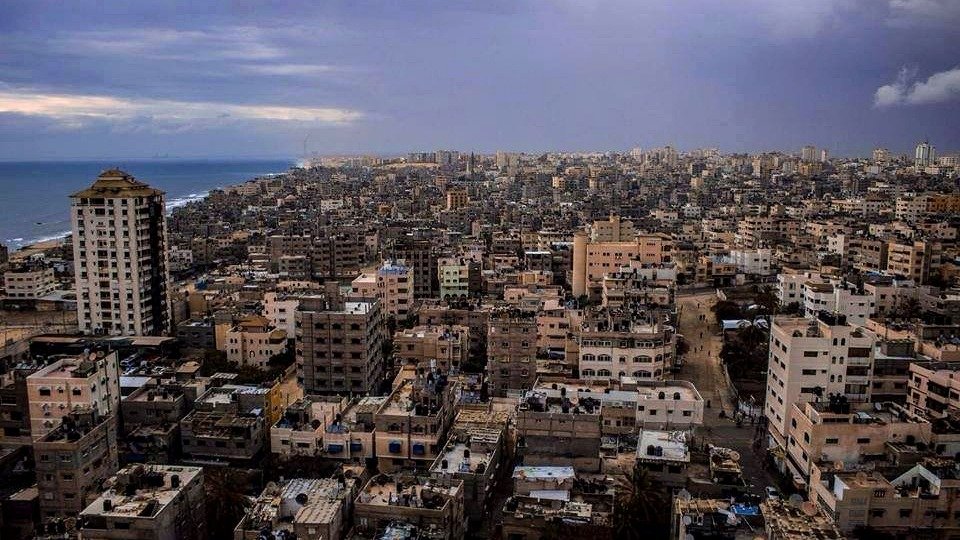
Foreign ministers from 18 Arab and Muslim countries have condemned Israel in the strongest terms over an airstrike on Gaza’s Nasser Medical Complex, warning that continued attacks on civilians and restrictions on aid are putting the year-old ceasefire at risk. Within hours of the statement, Israel’s defence minister vowed that the military offensive in Gaza would continue until the territory is demilitarised and Hamas is gone, and Israel confirmed it had killed a senior Hamas commander in a strike on a tent sheltering displaced people.
The joint statement, issued on Saturday 14 November, was signed by the foreign ministers of the United Arab Emirates, Saudi Arabia, Oman, Qatar, Kuwait, Jordan, Lebanon, Egypt, Algeria, Palestine, Libya, Mauritania, Djibouti, Somalia, Türkiye, Pakistan, Indonesia and Sudan, according to the text published by the United Arab Emirates’ foreign ministry. The version issued by Pakistan’s Foreign Office counted 17 signatories, omitting Palestine from its list; the text published in Abu Dhabi lists 18 names, including Palestine.
The ministers condemned “in the strongest terms the Israeli airstrike on the Nasser Medical Complex in Khan Younis, which caused casualties among patients and medical personnel, in violation of international humanitarian law, which affords special protection to medical facilities and healthcare workers,” according to the statement. They also condemned continued Israeli attacks on Palestinian civilians, “including strikes on tents and other sites sheltering displaced persons”, and warned that the attacks “undermine the ceasefire and efforts to restore security and stability in Gaza and are inconsistent with President Trump’s Comprehensive Plan”.
The strike on the hospital came in the early hours of Thursday 12 November, when an Israeli airstrike hit the surgery department of the Nasser Medical Complex in Khan Younis, in southern Gaza. At least six people were killed, including a surgeon, Rezik Abushira, and a 13-year-old boy, and about 20 others were wounded, according to Gaza’s civil defence service, as reported by Reuters. The strike was described by one regional outlet as the deadliest single Israeli strike in Gaza since Israel’s general election last month.
The ministers expressed grave concern that continued Israeli restrictions on humanitarian aid, including shelter materials such as tents, caravans and mobile homes, as well as medical supplies, are deepening Gaza’s humanitarian catastrophe as winter approaches. “Inadequate shelter and deteriorating water, sanitation and healthcare services put civilian lives at grave risk, particularly those of children and infants, who could once again die from exposure to freezing temperatures,” the statement said.
The statement called on Israel to heed appeals from the international community and the Board of Peace for increased aid, and to fulfil immediately and in full its obligations under the Sharm El-Sheikh Agreement, President Trump’s Comprehensive Plan and United Nations Security Council Resolution 2803 (2025). Israel “must uphold the ceasefire, protect civilians and medical facilities, and ensure the safe, sustained and unimpeded delivery of humanitarian aid in sufficient quantities, including shelter and early recovery supplies and equipment to restore essential infrastructure,” the ministers said. They also called for United Nations agencies and humanitarian organisations to be allowed to carry out their mandates without obstruction.
The ministers stressed that the first-phase commitments were due to take effect upon signature, and that Israel “must implement them without further delay or additional conditions, including political and security conditions that impede humanitarian access”. They called on the United States and the Board of Peace to intensify their efforts to ensure Israel’s full implementation of those commitments and the lifting of all restrictions on the entry of humanitarian aid, “thereby preserving the credibility of the agreements and consolidating the ceasefire”.
Israel vows the offensive will continue
Israel’s answer to the statement came quickly, and it pointed in the opposite direction. Defence Minister Israel Katz said on Sunday 15 November that the government would continue its “offensive policy” in Gaza until the territory “is demilitarized and there is no Hamas”, according to Al Jazeera’s live coverage. Katz issued the pledge even though the government of Prime Minister Benjamin Netanyahu is operating in a caretaker capacity after losing its parliamentary majority in Israel’s general election on 27 October.
Hours earlier, Israel’s military and the Shin Bet security agency announced that they had killed a senior Hamas commander in a strike in southern Gaza. Hamas’s armed wing, the Al-Qassam Brigades, confirmed on Sunday that Samir Abu Younis, 53, the commander of its Rafah Brigade, had been killed in a strike on Saturday in the al-Mawasi area of Khan Younis, according to Reuters. The strike hit a tent being used to shelter displaced people and left two others wounded, according to Al Jazeera, and the casualties were taken to the Nasser Medical Complex in Khan Younis.
Abu Younis had led the Rafah Brigade since his predecessor, Nael Abu Obeid, was killed on 15 September, according to the Israeli military. Hamas said he had joined its armed wing in 1991 and had held several senior operational roles in Rafah, and that he played a key role in planning the 7 October 2023 attack on Israel, in which Hamas-led fighters killed about 1,200 people in southern Israel. His funeral was held on Sunday afternoon in Khan Younis, Hamas said.
The Israeli military said it would keep targeting Hamas leaders, and Katz said the offensive would continue until Hamas is disarmed and no longer present in Gaza.
A ceasefire measured in casualties
The ceasefire that took effect in October 2025 halted the major fighting in the war in Gaza, but it has not stopped the killing. Gaza’s health ministry said in its latest update on Saturday that Israeli attacks had killed 16 people and injured 68 others over the previous 48 hours, and that at least 1,643 Palestinians had been killed and 5,964 injured since the ceasefire began on 11 October 2025, according to Al Jazeera. Reuters, citing Gaza health authorities, put the number killed since the ceasefire at at least 1,600, and said five Israeli soldiers had been killed in the same period.
Health officials also reported the death of a baby from hypothermia, according to Al Jazeera, a reminder that the danger in Gaza is no longer only from the air. The winter rains that began on 6 November have flooded the tents in which most of Gaza’s displaced people are living. According to the United Nations humanitarian office, OCHA, more than 46,000 families, about 226,000 people, were affected by flooding in the first days of the rains, and more than 40,000 shelters were damaged and more than 9,000 destroyed. The United Nations has said the impact of the storm was preventable, because more than 150,000 tents are ready outside Gaza, most of them at Al-Arish in Egypt, about 50 kilometres from Khan Younis, and cannot get in.
The ministers’ statement was issued against that background. Its warning about children dying from exposure to freezing temperatures was not a figure of speech. It was a description of what is already happening in the camps, where families who survived two years of war are now facing a fourth winter in tents that cannot keep out the rain.
The European Union issued its own statement on Saturday urging immediate and unrestricted humanitarian access to Gaza and the reopening of all crossings, adding to the diplomatic pressure. But neither the European statement nor the Arab and Muslim ministers’ joint statement carries any enforcement mechanism. Both depend on the United States, and on the Board of Peace created under President Trump’s plan, to press Israel to comply.
A government without a majority, still at war
The statement also landed in the middle of an unresolved political transition in Israel. The general election on 27 October stripped Netanyahu’s right-wing and religious bloc of its parliamentary majority. His Likud-led alliance won 53 of the 120 seats in the Knesset, short of the 61 needed to govern. The four-party opposition alliance led by former military chief Gadi Eisenkot won 48 seats, and Arab-led parties won a record 19 seats, holding the balance of power.
President Isaac Herzog gave Eisenkot the mandate to form the next government on 8 November, after Eisenkot received the backing of 67 lawmakers, including support from Arab-led parties, against 46 for Netanyahu. Eisenkot has 28 days to build a coalition, until 6 December, with the possibility of a 14-day extension. If he fails, and Netanyahu also fails to assemble a majority, Israel could face another election. Netanyahu remains prime minister in a caretaker capacity, and he has alleged voter fraud involving Arab voters, claims that the Central Elections Committee has not upheld; the results were certified with no irregularities found that affected the outcome.
Netanyahu has appealed to Eisenkot to join a unity government, according to Al Jazeera, but Eisenkot has so far pressed ahead with forming his own coalition. The Knesset convened on 10 November without a new government in place, and the political deadlock has not interrupted the war. Katz’s pledge on Sunday made that explicit: a caretaker government, he said, will keep fighting until its war aims are met.
The ministers’ statement was addressed, in part, to that reality. It asked the United States and the Board of Peace to act, rather than Israel alone, because the governments that signed it have concluded that appeals to Israel are not enough on their own. Whether Washington acts is now the central question. The Trump administration brokered the ceasefire and the Sharm El-Sheikh Agreement, and it chairs the Board of Peace that is supposed to oversee Gaza’s reconstruction. The ministers’ appeal is, in effect, a test of whether the administration will use the leverage it holds as the broker of the deal to enforce it.
What the statement does and does not do
The joint statement is the strongest collective diplomatic response from Arab and Muslim governments since the hospital strike, and its signatories include the countries that matter most to Gaza’s future: Egypt, which controls the Rafah crossing; Qatar, which has mediated between Israel and Hamas; Saudi Arabia, whose normalisation with Israel remains the largest diplomatic prize in the region; and Türkiye, which has positioned itself as a champion of the Palestinian cause. Their joint condemnation carries weight precisely because it is collective. A single government can be dismissed. Eighteen, speaking with one voice, are harder to ignore.
But the statement sets no deadline, names no consequence and creates no mechanism. It asks Israel to comply, asks the United States and the Board of Peace to push for compliance, and reaffirms the signatories’ determination to work with partners to consolidate the ceasefire. It does not threaten sanctions, does not suspend diplomatic relations, and does not propose any action that would force a change in Israeli policy. Its power is the power of a public record: it puts on paper, in the names of 18 governments, the charge that Israel is violating the agreement it signed.
That record matters because the agreement itself is fraying. The first phase of President Trump’s plan, which was supposed to take effect on signature, has not been fully implemented. Aid is still restricted. Shelter materials are still blocked. The second phase, which was supposed to bring unrestricted aid from January 2026, has not materialised. The ministers’ insistence that urgent humanitarian assistance “must proceed independently of progress on subsequent phases” is a direct response to that failure: they are saying that aid cannot be held hostage to the politics of the later phases of the plan.
The killing of Abu Younis adds a further complication. Israel presents targeted killings as enforcement of the ceasefire, removing commanders who it says are rebuilding Hamas’s fighting capacity and were involved in the 7 October attack. Hamas and its supporters present them as violations of the ceasefire, carried out against a movement that has, for the most part, stopped firing rockets and is negotiating the next phases of the deal. Both sides accuse each other of breaking the agreement, and each new killing or strike becomes evidence for the other side’s case.
Analysis: Why It Matters
A statement is not a sanction, and the gap is the story
The joint statement is the most significant collective Arab and Muslim diplomatic action on Gaza since the ceasefire began, and it is also, on its own terms, powerless. That contradiction is the story. Eighteen governments can agree that a hospital strike violates international humanitarian law, that aid restrictions are deepening a catastrophe, and that the ceasefire is at risk, and still have no instrument between them to change what happens on the ground. The statement’s own language gives this away: it “calls on” Israel, it “calls on” the United States and the Board of Peace, it “reaffirms determination”. Every verb is an appeal, not an act. The ministers know this, which is why the statement is addressed as much to Washington as to Jerusalem. It is a public request for the United States to do what the signatories cannot do themselves: enforce the deal America brokered. If Washington does not act, the statement will be remembered as the moment 18 governments put their names to a warning that was ignored, and the next statement will carry less weight than this one.
The hospital is the argument
Nasser Medical Complex is the largest hospital still functioning in southern Gaza, and it has been struck repeatedly during the war. That is why it keeps appearing at the centre of these diplomatic crises. A strike on a hospital is not only a military event; it is a legal one, because international humanitarian law gives medical facilities special protection, and it is a moral one, because a hospital is where the wounded from every other strike are taken. When the casualties from the Abu Younis strike were carried to Nasser, they were taken to the same hospital that had been hit two days earlier. That is the reality the ministers are describing when they talk about the collapse of Gaza’s healthcare system. The hospital is also, for Israel, a target it has repeatedly associated with Hamas, and the strike on 12 November followed that pattern of contested claims about what is inside Gaza’s hospitals and who is using them. The argument over Nasser is therefore an argument over the rules of the war itself: whether a hospital can ever be a legitimate target, and who decides. The ministers have answered that question in the clearest terms available to them. Israel’s answer, delivered through its continued operations, is that it will decide for itself.
A caretaker government still makes war
The most striking fact in this story is not that Israel’s defence minister vowed to continue the offensive. It is that he did so on behalf of a government that has lost its majority and is waiting to be replaced. In most democracies, a caretaker government avoids major decisions. In Israel, the caretaker government is ordering targeted killings, striking hospitals and setting the terms for the next phase of a war. That is possible because the war has become the one area where the political transition changes nothing: the military, the security services and the defence ministry operate on institutional continuity, not on the parliamentary arithmetic. Katz’s statement was a message to two audiences. To the ministers who signed the joint statement, it said that no amount of diplomatic pressure from Arab capitals will change Israeli military policy. To Eisenkot, who is trying to form the next government, it said that the war will still be running when he takes office, and that he will inherit its terms. The transition may change who sits in the prime minister’s office. It has not changed, and may not change, what happens in Gaza.
The ceasefire is now measured in body counts
A ceasefire is supposed to be measured by what does not happen. This one is increasingly measured by what does: 16 people killed in 48 hours, 1,643 since the ceasefire began, five Israeli soldiers dead in the same period. Those numbers are small compared with the more than 74,000 Palestinians killed during the war itself, according to Palestinian authorities, but they are the numbers that will decide whether the ceasefire survives. Every death since 11 October 2025 is a data point in an argument about whether the agreement is holding or collapsing, and both sides are keeping count. Israel counts the deaths of Hamas commanders as proof that it is enforcing the deal. Hamas counts the deaths of civilians as proof that Israel is breaking it. The ministers’ statement is an attempt to impose a single reading: that the deaths are violations, not enforcement. But as long as the agreement has no agreed mechanism for deciding which deaths count as violations, the body count will keep rising and the argument will keep going in circles. A ceasefire without an enforcement mechanism is a pause that either side can end by reinterpreting it.
Winter is the deadline nobody controls
The ministers’ warning about children dying from exposure to freezing temperatures is the part of the statement that will age worst if it is ignored. The war in Gaza is now a humanitarian crisis governed by the weather. The rains that began on 6 November have already damaged tens of thousands of shelters, and the winter has barely started. More than 150,000 tents are sitting outside Gaza, ready to be delivered, and the argument over whether they can enter is now a matter of life and death in the most literal sense. The ministers understand this, which is why their statement spends as much time on shelter materials and medical supplies as it does on the hospital strike. A tent is not a political concession. It is a roof. The failure to deliver tents is not a diplomatic disagreement. It is a decision, taken day after day, that leaves families in the rain. If the winter kills children who survived the war, the question will not be who signed which statement. It will be who blocked the tents, and why.
What to Watch Next
- The American response: Whether the United States and the Board of Peace answer the ministers’ appeal, and whether Washington presses Israel on aid access or treats the statement as a matter for the signatories alone.
- Aid and shelter deliveries: Whether tents, caravans, mobile homes and medical supplies begin entering Gaza in larger numbers in the coming days, and whether the crossings are reopened as the European Union has urged.
- Israel’s coalition talks: Whether Gadi Eisenkot can build a governing coalition before his mandate expires on 6 December, and whether a new government changes Israel’s approach to the ceasefire or continues the current policy.
- The disarmament question: Whether Hamas agrees to disarm under President Trump’s plan, which Israel has set as the condition for ending its offensive, and what happens to the ceasefire if it refuses.
- Further targeted killings: Whether Israel continues to strike Hamas commanders, and whether each new killing draws a further response from Hamas or from the governments that signed the joint statement.
- The casualty count: Whether the number of Palestinians killed since the ceasefire continues to rise at its current rate, and whether the United Nations or the Security Council takes up the question of enforcement.
- The winter in Gaza: Whether the rains and the cold produce a further wave of deaths from exposure and flooding, and whether the shelter materials now waiting outside Gaza are allowed in before the worst of the winter arrives.
Sources
- Joint Statement by the Foreign Ministers of Several Arab and Islamic Countries, UAE Ministry of Foreign Affairs, 14 November 2026
- 17 foreign ministers condemn Israeli strike on Khan Younis Hospital, warn ceasefire at risk, Islamabad Post, 14 November 2026
- Senior Hamas commander killed in Israeli strike in Gaza, Reuters via SRN News, 15 November 2026
- Iran war live: Israel vows Gaza ‘offensive policy’ despite caretaker status, Al Jazeera via St Lucia Chronicle, 15 November 2026
- Global Outcry as 17 Countries Denounce Israeli Strike on Southern Gaza Hospital, Shafaqna, 15 November 2026
- Hamas says senior commander killed in Israeli airstrike, Sky News via Q Radio, 15 November 2026

About the Author — Abdul Mannan
Related Articles
Netanyahu Renews Call for Unity Government as Eisenkot Dismisses It as a Trick
Israel's caretaker prime minister renewed his appeal for a national unity government on Saturday, and the man tasked…
UN Says Gaza’s Deadly Winter Flooding Was Preventable as 226,000 Displaced People Face a Fourth Winter in Tents
The United Nations says the deadly impact of Gaza's first winter storm was preventable, as flooding damaged more…
Iran Warns of ‘Immediate’ Retaliation at the UN as Gulf States Demand Compensation for War Damage
At a tense UN Security Council session, Iran warned any renewed US-Israeli attack would bring an 'immediate and…