
WHO Extends Global Polio Emergency as Afghanistan Cases Climb and Vaccine-Derived Outbreaks Reach 20 Countries

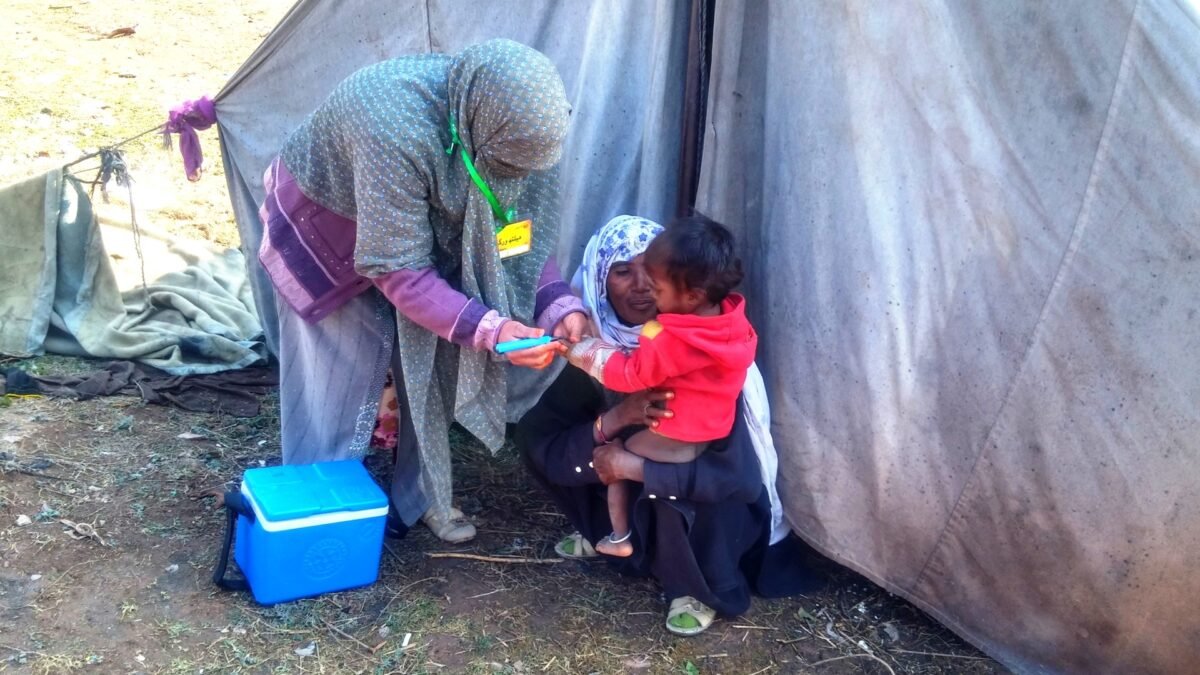
The World Health Organization has extended the highest level of global health alert for polio for another three months, warning that the virus is still spreading across borders and that the final push to wipe it out is being held back by war, insecurity and children who remain out of reach of vaccinators.
According to the WHO, Director-General Dr Tedros Adhanom Ghebreyesus accepted the unanimous recommendation of the organisation’s polio emergency committee on 12 November 2026, and the decision was announced the following day. The international spread of poliovirus will remain a Public Health Emergency of International Concern, known as a PHEIC, with the temporary recommendations that go with that status extended for a further three months.
The committee, which met by video conference on 30 September 2026, also concluded that the polio situation does not amount to a pandemic emergency, a separate and higher category created under the amended International Health Regulations. That distinction matters: the WHO is saying the threat is serious and international, but it is not a pandemic.
The decision is the latest renewal of an emergency first declared on 5 May 2014, when the WHO warned that the global eradication of polio was at risk from the international spread of the virus. More than twelve years later, the emergency is still in force, and the committee’s 46th meeting made clear why.
The wild virus: confined to two countries, but far from beaten
Wild poliovirus type 1, the only wild strain still in circulation after types 2 and 3 were declared eradicated in 2015 and 2019, remains endemic in just two countries: Afghanistan and Pakistan. According to the WHO, 29 cases of wild poliovirus type 1 had been recorded worldwide in 2026 at the time of the data reviewed by the committee, 25 of them in Afghanistan and four in Pakistan.
That headline figure is already out of date, and the WHO’s own later data show the situation getting worse rather than better. According to the WHO’s Eastern Mediterranean regional polio bulletin for the week ending 18 October 2026, the 2026 total had already risen to 48 wild poliovirus cases, 42 in Afghanistan and six in Pakistan. According to the WHO’s weekly global polio update for the reporting week of 4 November, the total stood at 58 cases by 3 November, compared with 39 at the same point in 2025 and 52 for the whole of 2025.
Afghanistan is driving the increase. According to the WHO’s emergency committee, the country recorded 25 wild poliovirus cases in 2026 against 21 in the whole of 2025, and the committee described the south of the country as the area of greatest concern, with intense transmission fuelled by low population immunity. According to figures cited by the Pan American Health Organization, Afghanistan had recorded 42 cases by 20 October 2026, twice its total for 2025, while Pakistan had recorded six.
Pakistan’s National Emergency Operations Centre announced a seventh case on 19 October, involving a child in Karachi, according to Asia Daily. The WHO committee had already flagged Karachi as a place where local transmission persists in some areas despite a significant fall in positive environmental samples, a sign that pockets of children with low immunity remain in the city.
The committee identified three critical geographies where transmission is concentrated: the south of Afghanistan, south Khyber Pakhtunkhwa in Pakistan, and Karachi. It also warned that gains elsewhere are fragile. In the northern cross-border corridor, covering Peshawar in Pakistan and the east of Afghanistan, programme quality has improved, but a recent slight rise in detections in Peshawar and an upward trend in the east of Afghanistan over the past six months suggest the progress could easily be lost. In the Quetta Block, positive environmental samples have fallen, but the committee said the gains remain fragile because of intense transmission in the adjoining south of Afghanistan, uneven campaign quality and low routine immunisation coverage.
Environmental surveillance tells the same story. According to the WHO, 204 wild poliovirus positive sewage and environmental samples had been reported in 2026 at the time of the committee’s data cut-off, 76 from Afghanistan and 128 from Pakistan, against 747 in 2025. Sewage testing matters because most polio infections cause no symptoms at all, so a positive sample in wastewater can reveal silent circulation long before a paralysed child appears.
Afghanistan: the house-to-house ban that will not lift
The committee’s sharpest concern was reserved for Afghanistan, where the way vaccines are delivered has changed in a way that leaves children unreached. House-to-house vaccination campaigns have not been carried out since October 2024, because of security concerns, according to the WHO. Instead, campaigns use a site-to-site approach, in which families are expected to bring their children to fixed vaccination points.
The committee said plainly that this does not work well enough. In its words, site-to-site campaigns often fail to reach all children, particularly younger children, which could contribute to further geographic spread within Afghanistan and beyond. The committee called on Afghanistan’s polio programme to find ways to restore house-to-house vaccination across the country.
The problem is compounded by the very low participation of women as vaccination health workers, particularly in the south of the country. In Afghan households, mothers are often the only adults who can bring a young child to a vaccinator, and women vaccinators are often the only workers who can enter a home. Without them, the committee warned, whole families fall through the gaps.
According to the WHO, Afghanistan carried out two nationwide and five sub-national campaigns in 2025, and two sub-national and one nationwide campaign in 2026 so far, along with targeted fractional-dose inactivated polio vaccine campaigns in high-risk areas. But the committee’s message was that the number of campaigns matters less than whether they reach every child, and in the south they do not.
Reporting on the WHO statement, the Kabul Tribune noted that the WHO has urged the Taliban administration to restore house-to-house vaccination, and that Afghanistan’s 25 cases in 2026 already exceed the 21 recorded in the whole of last year. The WHO statement itself did not name the Taliban, saying only that house-to-house campaigns had been suspended because of security concerns.
Pakistan: progress at the top, gaps at the district level
Pakistan’s picture is more mixed, and the committee’s assessment reflected that. It praised the strong leadership and high-level commitment to polio eradication in Pakistan at all levels, including the engagement of the Prime Minister’s Office, and it acknowledged consistently high reported coverage and strong results in lot quality assurance sampling at national and provincial level.
But it also warned that quality at district level remains variable and inconsistent, including in several critical areas such as the Quetta Block, south Khyber Pakhtunkhwa and the central Pakistan bloc, because of operational challenges, vaccine hesitancy in certain communities and prevailing insecurity, particularly in Khyber Pakhtunkhwa and Balochistan.
South Khyber Pakhtunkhwa is currently experiencing the most intense wild poliovirus transmission in Pakistan, according to the WHO, and the programme continues to face substantial challenges in consistently reaching all target children there. The committee was encouraged by a reduction in the number of children left unvaccinated after the two most recent campaigns in south Khyber Pakhtunkhwa, and it stressed the need to ensure consistent and full access to all children in the coming rounds.
According to the WHO, Pakistan carried out five nationwide and one sub-national campaign in 2025, and two nationwide and two sub-national campaigns in 2026 so far, with targeted fractional-dose inactivated polio vaccine campaigns in Karachi, the Quetta Block and Lahore. The committee also noted the continued implementation of all-age vaccination at border crossing points between Afghanistan and Pakistan, and it stressed that both countries should keep vaccinating people moving across the border, including undocumented migrants returning from Pakistan to Afghanistan, whose movement continues to complicate the programme.
The committee reinforced a point it has made for years: Afghanistan and Pakistan constitute a single epidemiological bloc for the purposes of polio eradication. The virus does not respect the border between them, and the evidence of shared cross-border transmission was documented as recently as mid-2026, according to the WHO. The two programmes must therefore stay synchronised, particularly in border areas, or neither will finish the job.
The second front: vaccine-derived outbreaks in 20 countries
Wild poliovirus is only half the story. The other half is circulating vaccine-derived poliovirus, a mutated form of the weakened live virus used in oral polio vaccine. When the vaccine virus circulates for months among under-immunised children, it can regain the ability to cause paralysis. The result is an outbreak that looks exactly like wild polio but has a different origin, and it can only be stopped by raising immunisation coverage.
According to the WHO, 155 cases of circulating vaccine-derived poliovirus had been reported globally in 2026 as of 15 September, across 20 countries, along with 61 positive environmental detections. Of the 155 cases, 118 were type 2, 24 were type 1 and 13 were type 3.
Type 2 dominates, and two countries account for most of it. According to the WHO, the Democratic Republic of the Congo and Nigeria together reported 88 of the type 2 cases, 52 and 36 respectively, about 75 per cent of the global type 2 total by mid-September. The committee noted with concern that transmission of type 2 poliovirus is intensifying in the Democratic Republic of the Congo, including in provinces bordering Angola, and that it continues in the Lake Chad Basin, particularly in high-risk areas of Nigeria.
Type 1 and type 3 cases are fewer, but the committee flagged their rising trend with concern. According to the WHO, 24 type 1 cases had been reported in 2026 as of 15 September, ten from South Sudan, nine from Ethiopia, three from Laos and two from Madagascar, against just three in the whole of 2025. Thirteen type 3 cases had been reported, eleven of them from Nigeria, against 15 in 2025. The committee said the rise points to low population immunity, especially among vulnerable groups, because of low routine immunisation and a lack of preventive oral polio vaccine campaigns caused by a lack of resources.
The geography of risk is wide. The committee listed the Horn of Africa, including Somalia, Ethiopia and Yemen, where overlapping humanitarian and health emergencies make it hard to run high-quality campaigns on time. In the northern governorates of Yemen, it said, there is a large pool of unimmunised and susceptible children, more than 4.5 million under the age of five, where a proper oral polio vaccine response to the ongoing type 2 outbreak has not yet been implemented because of insecurity and lack of access.
Eighteen countries, including some in the African region, have yet to introduce a second dose of inactivated polio vaccine into their routine immunisation schedules, according to the WHO, while coverage with the first dose remains low in several African countries. The committee also noted a widening gap in intestinal immunity among young children since the global withdrawal of the type 2 component from oral polio vaccine in 2016, and high concentrations of children who have never received a single vaccine dose in certain areas.
The temporary recommendations list 24 countries with type 2 detections, including the United Kingdom, where the most recent detection was on 3 March 2026, Germany, where the most recent detection was on 6 October 2025, and Australia, where the most recent detection was on 13 April 2026. None of those detections involved local transmission, but they show how far the virus can travel in a world of constant movement.
Syria: a third case in a war-damaged health system
The fragility of routine immunisation in conflict zones was underlined in Syria, where health authorities confirmed a third case of polio in the Mayadin district of Deir Ezzor governorate in the east of the country, according to the Syrian Arab News Agency, followed by international coverage from Arab News on 14 November.
The cluster first came to public attention on 8 November, when Syria’s health minister announced two confirmed cases during a briefing with WHO and UNICEF officials. A joint statement from the Ministry of Health, the WHO and UNICEF on 9 November verified that both children, aged between six and 13 months, had developed paralysis caused by vaccine-derived poliovirus type 1.
The third case was reported by SANA on 13 November, citing Ministry of Health officials. Independent international verification of the third case is still pending, and specific clinical details, such as the child’s age, vaccination history, the severity of the paralysis and the laboratory strain classification, have not yet been publicly released. The first two cases, by contrast, are confirmed by the joint WHO and UNICEF statement.
Syrian health teams launched a rapid emergency vaccination drive on 18 October, after early alerts of suspected infections on 11 October. According to the joint statement, the initial response reached more than 34,000 children under the age of five across affected parts of Deir Ezzor. SANA reported on 12 November that health teams would conduct focused immunisation drives across five towns around the initial cluster before rolling out a province-wide campaign.
The Syrian response also shows what rebuilding looks like after years of war. Years of conflict severely damaged medical facilities across eastern Syria, interrupting routine health services and displacing families. Efforts to restore access have raised the number of operational primary healthcare centres in Deir Ezzor from 40 to 87, with health authorities aiming to reach 124 functioning centres to anchor long-term routine immunisation.
What the emergency rules actually require
A Public Health Emergency of International Concern is not a slogan. Under the International Health Regulations, it triggers temporary recommendations that countries are expected to follow, and the WHO reviews them every three months. The polio recommendations have been in force, in evolving form, for more than a decade.
For countries with wild poliovirus or type 1 or type 3 vaccine-derived poliovirus, with or without local transmission, the recommendations include declaring at the level of head of state or government that the risk of poliovirus transmission is a national public health emergency, intensifying surveillance, and raising routine immunisation coverage. Countries that have not yet introduced a second dose of inactivated polio vaccine should do so urgently, and should consider the hexavalent vaccine now approved by Gavi, the Vaccine Alliance, without letting that delay the second inactivated dose.
For countries where the virus is spreading locally, there are also travel rules. All residents and long-term visitors should receive a dose of bivalent oral polio vaccine or inactivated polio vaccine between four weeks and 12 months before international travel, and should carry an International Certificate of Vaccination or Prophylaxis as proof. Countries should restrict the international travel of any resident who lacks documentation of appropriate polio vaccination.
Countries with type 2 vaccine-derived poliovirus face a similar set of requirements, with preparedness to request vaccines from the global stockpile of novel oral polio vaccine type 2, known as nOPV2. That vaccine was designed to be genetically more stable than its predecessor, and the committee said it continues to demonstrate significantly greater genetic stability and a substantially lower risk of reverting to a form that can cause paralysis.
According to the WHO, more than two billion doses of nOPV2 have been given since its introduction in 2021, and 53 type 2 emergences have been associated with it. More than 80 per cent of countries affected by type 2 outbreaks have interrupted them with three or fewer supplementary immunisation activities using nOPV2. But the committee warned that the risk of new emergences rises when the gap between outbreak response campaigns exceeds four weeks or when vaccination quality is poor.
A country is only considered no longer infected when 12 months have passed since the most recent case, plus a month for detection, investigation, laboratory testing and reporting, or when all acute flaccid paralysis cases in that period have been tested and cleared and environmental samples have tested negative, whichever is longer. Even then, it stays on a watch list for a further 12 months of heightened monitoring.
A 38-year campaign, and the last mile that will not close
The scale of what has already been achieved is extraordinary, and it is worth stating plainly, because it explains why the WHO refuses to let the emergency lapse. When the Global Polio Eradication Initiative was launched in 1988, wild poliovirus was paralysing an estimated 350,000 children a year across more than 125 countries. Since then, cases have fallen by more than 99 per cent. Two of the three wild strains are gone. Nigeria, once the third endemic country, stopped endemic transmission a decade ago.
Polio itself is a disease that mostly spares its victims and then, without warning, does not. It is highly contagious, spread mainly through the faecal-oral route, through water or food contaminated with infected faeces. Most infections cause no symptoms, or a mild illness that looks like any other virus. But roughly one infection in 200 leads to irreversible paralysis, usually in the legs, which can strike within hours. Among those who develop paralysis, between five and ten per cent die when the virus immobilises the muscles needed for breathing. There is no cure once the nerve damage is done. Prevention through timely vaccination is the only defence.
The global targets set out in the committee’s review are ambitious: interrupt endemic wild poliovirus transmission in 2026, and stop type 2 vaccine-derived outbreaks by 2028, with certification of wild poliovirus eradication and type 2 elimination to follow. The committee’s own data suggest the first of those targets is already slipping. Afghanistan’s caseload has doubled year on year, and the total for 2026 had passed 50 by early November, well above the 52 recorded in the whole of 2025, with two months of the year still to run.
The committee also flagged the resource problem in unusually direct terms. It said the current resource-constrained environment further challenges the full and effective implementation of critical eradication activities, and it linked the rising type 1 and type 3 cases to a lack of preventive oral polio vaccine campaigns caused by a lack of resources. In other words, some of the outbreaks now being counted were preventable, and the reason they were not prevented was money.
That is the quiet crisis inside the emergency. Polio eradication has always depended on a partnership of governments, the WHO, UNICEF, Rotary International, the US Centers for Disease Control and Prevention and the Gates Foundation, and on the willingness of donors to keep paying for a campaign that has been running for 38 years. As the endgame drags on, the funding does not always follow, and the gaps show up first in the places that can least afford them: northern Yemen, the Lake Chad Basin, the Democratic Republic of the Congo, the south of Afghanistan.
Analysis: Why It Matters
The emergency is twelve years old, and that is the point
It is tempting to read the renewal of a health emergency as routine, a bureaucratic tick-box repeated every three months since 2014. That would be a mistake. The emergency exists because the virus keeps finding a way across borders, and the committee’s statement is a catalogue of the ways it does so: returning migrants, sewage in Hamburg, a child in Karachi, a clinic in Deir Ezzor. A disease that was supposed to be gone by the year 2000 is still a global emergency in 2026, and the reason is not the biology of the virus. It is the politics of reaching children.
Afghanistan is now the centre of the story
For years, Pakistan reported more wild polio cases than Afghanistan. That has reversed, sharply. Afghanistan now accounts for the overwhelming majority of the world’s wild polio cases, and its caseload has doubled in a year. The cause is not mysterious: house-to-house vaccination has been suspended for two years, women vaccinators are largely absent from the south, and the site-to-site model that replaced door-to-door delivery misses the youngest children, the very children most at risk. The WHO has asked, politely and repeatedly, for house-to-house campaigns to be restored. Until that happens, Afghanistan will keep exporting the virus, to Pakistan and beyond, and the global target of interrupting transmission in 2026 will keep receding.
The vaccine-derived problem is a symptom of under-immunisation, not of vaccination
It is important to be clear about what vaccine-derived poliovirus is, because it is easily misunderstood. It is not a sign that polio vaccines are unsafe. It is a sign that too few children are vaccinated. The weakened virus in oral polio vaccine can only mutate back into a dangerous form when it circulates for months among children who have never been immunised. Where coverage is high, the vaccine virus hits a dead end and dies out. Where coverage is low, it finds fuel. The 155 vaccine-derived cases recorded in 2026 are therefore not an argument against vaccination. They are a measure of the children the system has failed to reach, in the Democratic Republic of the Congo, in Nigeria, in South Sudan, in Yemen, in Syria.
The money gap is now a medical fact
The committee’s statement is a technical document, and technical documents rarely accuse anyone of anything. But its language on resources is unusually blunt: preventive campaigns have not happened because of a lack of resources, and the resource-constrained environment is making it harder to carry out critical eradication activities. When a type 1 outbreak in South Sudan or a type 3 outbreak in Nigeria goes unanswered because the money for a campaign was not there, the result is paralysed children. That is not a budget line. It is a choice, made somewhere far from the villages where the cases are counted, and it is a choice the WHO has now put on the record.
What to watch next is a list of doors
Whether this emergency ends in the next year depends on a series of doors, literal and figurative. Will house-to-house vaccination return in Afghanistan? Will the next campaigns in south Khyber Pakhtunkhwa reach the children the last ones missed? Will the type 2 outbreak in the Democratic Republic of the Congo be contained before it crosses into Angola? Will the emergency drive in Deir Ezzor hold the Syrian cluster to three cases? Will donors fund the preventive campaigns the committee says are missing? Each of these is a small, specific, answerable question. Together they decide whether a disease that has been beaten almost everywhere is beaten everywhere, or whether the last mile stretches into another decade.
What to Watch Next
- The next meeting of the polio emergency committee, due in about three months, and whether the 2026 target of interrupting wild poliovirus transmission is formally abandoned or kept.
- Afghanistan’s next nationwide vaccination campaign, and any sign that house-to-house delivery is being restored in the south of the country.
- Pakistan’s next case tally, and whether transmission in south Khyber Pakhtunkhwa and Karachi is falling or holding steady.
- The Democratic Republic of the Congo’s type 2 outbreak, and whether it spreads into neighbouring Angola.
- The Syrian cluster in Deir Ezzor, and whether independent verification confirms the third reported case.
- The WHO’s weekly global polio updates, and whether the 2026 wild poliovirus total keeps climbing past the 2025 figure of 52.
- Funding announcements for the Global Polio Eradication Initiative, and whether preventive oral polio vaccine campaigns resume in the countries where the committee says they are missing.
Sources
- World Health Organization — Statement of the Forty-sixth Meeting of the Polio IHR Emergency Committee, 13 November 2026
- WHO Regional Office for the Eastern Mediterranean — EMR Polio Bulletin, Issue 1463, week 41 (ending 18 October 2026)
- Health and Family — WHO Extends Global Polio Emergency Status as Cross-Border Risks and Vaccine-Derived Outbreaks Persist, 15 November 2026
- Shafaqna English — WHO Calls on Taliban to Restore House-to-House Polio Vaccinations, 14 November 2026
- Health and Family — Syria Confirms Third Polio Case in Deir Ezzor, Intensifies Vaccination Campaigns to Prevent Further Spread, 15 November 2026
- Asia Daily — Why Polio Persists in Pakistan and Afghanistan Despite Millions of Vaccinations, October 2026

About the Author — Abdul Mannan
Related Articles
US Loses Measles Elimination Status After 26 Years as Cases Top 5,400 in Worst Outbreak Since 1991
After 26 years, the United States has lost its measles elimination status, with more than 5,400 cases in…
WHO Warns Violence Threatens to Undo Six Months of Progress as DR Congo Ebola Outbreak Passes 11,000 Cases
Six months into the DR Congo's deadliest Ebola outbreak, the WHO warns that attacks on health workers —…

Nottingham Wrist Device Offers New Hope for Teenagers Living with Tourette Syndrome
A wrist-worn device developed at the University of Nottingham that delivers gentle pulses to the median nerve is…