
Imran Khan Included in 2027’s 500 Most Influential Muslims as Honourable Mention in Politics

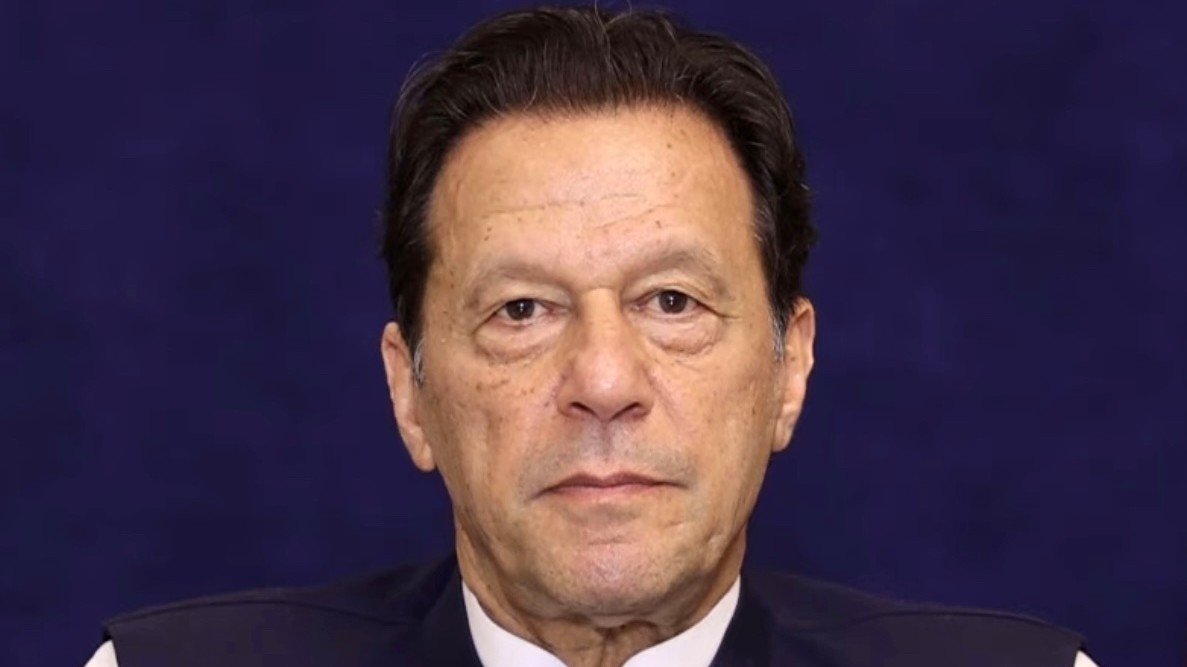
Imran Khan, Pakistan’s imprisoned former prime minister, has been included in the 2027 edition of The Muslim 500: The World’s 500 Most Influential Muslims, the annual ranking compiled by Jordan’s Royal Islamic Strategic Studies Centre (RISSC). The news spread quickly across Pakistani social media over the weekend after the 18th edition of the list was released in early November 2026, with graphics and posts celebrating the former premier’s inclusion. But the precise nature of his place on the list deserves a closer look, because it is not quite what some of the viral posts suggest.
Khan does not appear in the ranking’s Top 50. He is listed among the honourable mentions in politics, alongside Hamas official Khalil Al-Hayya, London Mayor Sadiq Khan and American Senator-elect Abdul El-Sayed, according to multiple reports of the publication reviewed by NEXA. That distinction matters, and it is the difference between being ranked among the fifty most influential Muslims in the world and being recognised in the wider, unranked body of five hundred names the publication surveys each year.
The distinction does not diminish the fact of his inclusion. The Muslim 500 is one of the most widely cited surveys of influence in the Muslim world, published every year since 2009, and to feature in it at all, while in prison and out of office for more than three years, is itself a measure of the former prime minister’s enduring public standing. But accuracy about where he sits on the list is part of the story, and it is the part that some of the celebratory posts circulating online have left out.
What an honourable mention means
The Muslim 500 is built in two tiers. Fifty individuals are ranked numerically at the top of the publication. The remaining 450 names are listed without numerical rankings, organised across thirteen categories of influence that cover scholarship, politics, preaching, business, arts and culture, media, sports and more. Alongside those categories, the editors name honourable mentions, figures they consider worthy of recognition but who do not sit in the ranked fifty.
Khan’s name appears in that company, in the political category. The reports that have examined the 2027 edition are consistent on this point: the former prime minister is named among the honourable mentions in politics, not among the fifty ranked names. A small number of social media posts have described his placement differently, but the published reports reviewed by NEXA place him among the honourable mentions, and that is the version of events this report follows.
The editors of The Muslim 500 have long stressed that inclusion in the ranking does not amount to an endorsement of a person’s views or actions. Influence, as the publication measures it, can be positive or negative. What it records is the capacity to shape the lives of Muslim communities around the world, whether through religious scholarship, political authority, philanthropy or cultural reach.
Khan’s long presence on the list
Khan is not a newcomer to The Muslim 500. He has appeared in previous editions, including the 2025 edition, when he was again named among the world’s most influential Muslims for his leadership, his philanthropic work and his humanitarian record. His continued presence in the 2027 edition extends a run that began in his years as prime minister and has now outlasted his time in office.
That record is worth recalling. Khan led Pakistan as prime minister from 2018 until his removal in a parliamentary vote of no confidence in April 2022. Before politics, he captained Pakistan to victory in the 1992 Cricket World Cup, and he founded the Shaukat Khanum Memorial Cancer Hospital, which has become one of the country’s best-known charitable institutions. It is that combination, sporting fame, charitable work and a mass political movement, that has kept his name in front of the compilers of lists like this one.
He has been in prison since August 2023, convicted in a series of cases his supporters describe as politically motivated, a characterisation the government rejects. His party, the Pakistan Tehreek-e-Insaf (PTI), has faced sustained pressure from the state, including restrictions on its rallies, the detention of its leaders and workers, and curbs on its participation in elections. His sisters were themselves detained for 53 days before being released from Kot Lakhpat Jail in Lahore in November 2026. Against that background, his continued inclusion in an international ranking is, for his supporters, evidence that his influence has not faded with his imprisonment. For his critics, it is a reminder that influence and popularity are not the same as endorsement.
Why his name still travels
What keeps a jailed former prime minister on a list of the world’s most influential Muslims? Part of the answer is the sheer scale of his following at home. Khan remains, by most measures, Pakistan’s most popular politician, and his party’s support has proved durable through years of arrests, bans and media restrictions. His social media presence, maintained by his party and his family in his absence, continues to reach millions, and his name still dominates Pakistan’s political conversation in a way no other opposition figure’s does.
Part of the answer is also the story he represents. Khan’s journey from cricket hero to charity founder to prime minister to prisoner is one of the most dramatic arcs in modern Muslim politics, and it is followed well beyond Pakistan. For the compilers of The Muslim 500, who weigh lifetime achievement and lasting public standing alongside current office, that arc is exactly the kind of influence the list exists to record.
There is a paradox at the heart of it. The same state that removed Khan from office and has kept him in prison for more than three years has not been able to remove him from the public imagination, at home or abroad. His inclusion in the 2027 edition, in whatever tier, is a small, formal recognition of that fact.
What The Muslim 500 is
The Muslim 500 is published by the Royal Islamic Strategic Studies Centre, an independent research institute based in Amman, Jordan. The first edition appeared in 2009, and the 2027 edition is the eighteenth in the series. Its stated purpose is to identify the individuals whose influence most shapes the lives of Muslim communities worldwide, judged across cultural, ideological, financial and political power.
The publication estimates the global Muslim population at approximately 2.2 billion, and its list is drawn from across that world: rulers and politicians, scholars and preachers, businesspeople, artists, sportspeople and media figures. The top fifty are ranked; the other 450 are listed by category without numerical ranking. The full ranking is published on the official The Muslim 500 website.
Because the list is compiled in Amman and draws on a wide network of contributors, it is watched closely in Muslim-majority countries, where a high placing is treated as a matter of national prestige. In Pakistan, the release of each year’s edition is a news event in itself, and the 2027 edition has been no exception.
Why it matters
Khan’s honourable mention belongs to a story about persistence: a political figure who has been out of power and in prison for years, yet remains one of the most recognised Muslim political figures in the world. Whether that recognition translates into political power at home is a separate question, and it is one that no ranking can answer. What the list records is that, for the compilers in Amman, his name still belongs in the conversation.
For his supporters, the inclusion is vindication, proof that the attempt to erase him from public life has failed. For his critics, it is a reminder that the list measures influence, not approval, and that a name on a list is not a verdict on a career. Both readings can be true at once. The list itself takes no side; it records that Imran Khan, three years after losing office and more than three years into imprisonment, is still someone the Muslim world is watching.
That, in the end, is what an honourable mention means. It is not a rank and not a prize. It is a note, made by an independent institute in Amman, that a man in a prison cell in Pakistan continues to shape the conversation of the world’s two billion Muslims. Whatever happens next in his case, and in Pakistani politics, that fact will remain part of the record of 2027.
A note on verification: this report is based on the published 2027 edition of The Muslim 500 and on reporting of the list by multiple news outlets. Social media graphics celebrating Imran Khan’s inclusion circulated widely in Pakistan after the list’s release; NEXA verified the claim against the publication itself and the reporting cited below before publishing. His placement is as an honourable mention in politics, not in the ranked Top 50.
Sources and references
- The Muslim 500 — The World’s 500 Most Influential Muslims (official website)
- YeJahan — Pakistan PM and Army Chief top Muslim leaders
- Around.pk — Shehbaz Sharif, Asim Munir Top 2027 Most Influential Muslims List
- Islamonweb — The Muslim 500 Releases 2027 Edition
- Centreline — Shehbaz Sharif, Asim Munir Share Top Spot in World’s 500
- Verified Pakistan — Muslim 500 2027: Shehbaz, Munir Confirmed at Top
- Indonesia Now — King Salman and President Prabowo Named Among World’s Most Influential Muslims
