
Bilawal Calls for ‘Political Reset’ and Warns Forced Division of Sindh Would Spill Blood

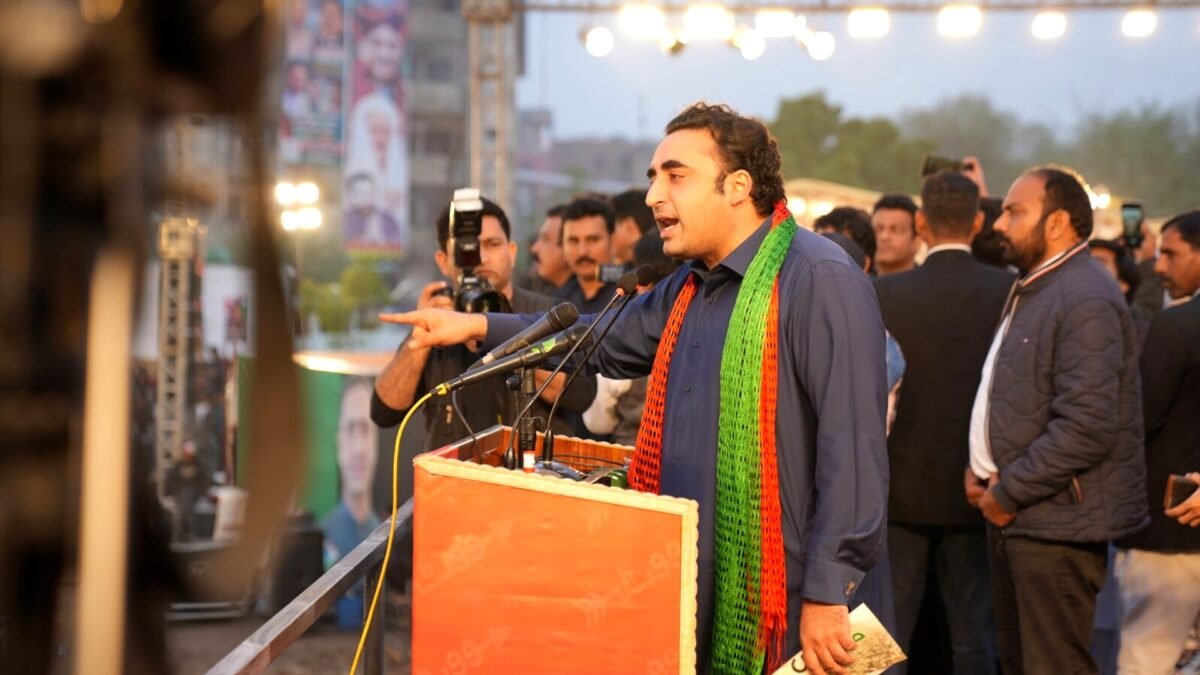
Pakistan Peoples Party (PPP) chairman Bilawal Bhutto-Zardari has called for a “political reset” of Pakistan’s system, telling a Karachi audience on Tuesday that the country’s governance had not collapsed on its own but had been deliberately destroyed — and warning that any attempt to divide Sindh by force would spill blood on the streets of Karachi and Hyderabad.
Speaking at the Karachi Press Club, Bilawal said the system needed a reset but insisted the process had to be political, not imposed from outside politics. “I believe the system has not collapsed; it has been deliberately destroyed,” he said, according to The News. He also accepted a share of the blame himself, saying he too was at fault for the state the country was in.
The speech, delivered on 17 November 2026, was the most direct intervention yet by the PPP chairman in a debate that has dominated Pakistan’s politics for months: whether the country’s administrative map should be redrawn, who gets to decide, and whether the system itself needs to be rebuilt. It also put the PPP, the largest party in the governing coalition’s parliamentary support, publicly at odds with senior figures in the government it keeps in power.
“This system needs a reset, but the reset will not be non-political; it will be political,” Bilawal said, according to The News. He argued that politicians, as the elected representatives of the people, had to lead the process, because without them the country’s fundamental problems would not be resolved.
Bilawal said he would try to convene a round-table conference or an all-parties conference, with the collapse of the system and its reset as the agenda. “I would like a round-table conference to be held on the topic of the destroyed system and the system reset,” he said. The aim, he added, was to enable all political parties to build a consensus so that inflation and poverty could be ended.
He also stressed the need to restore public confidence in the country’s institutions, saying trust in all of them — including parliament and the media — would have to be rebuilt. State institutions, he said, had “lost their legitimacy”, according to Dawn.
“Pakistan’s people have never faced difficulties like those they are experiencing today,” Bilawal said, according to The News, adding that poverty, unemployment and inflation were rising rapidly. “I am frightened about what will happen to the people under these circumstances,” he said, voicing particular concern for people from poorer and disadvantaged backgrounds.
“Brother will kill brother in Sindh”
The sharpest passage of the speech concerned Sindh. Asked about the creation of new provinces, Bilawal warned that if Sindh were divided by force, questions would be asked about the blood spilt on Karachi’s streets.
“If the province is divided by force, society will be divided; it will lead to enmity, ordinary people will take up arms, and the bloodshed will not be limited to a single death,” he said, according to The News.
To another question on the same subject, he was blunter still: “If they use force, brother will kill brother in Sindh. I cannot see bloodshed.”
Bilawal said the PPP supported the creation of provinces in line with the wishes of the people, the Constitution and the law. “Where we are opposing, it is over force and coercion. We do not want division through force,” he said.
He rejected the idea of a referendum to decide the question, saying the Constitution already laid down a procedure for creating provinces and that suggesting a referendum amounted to looking for an unconstitutional method. “If you are looking for an unconstitutional method, how can the PPP be with you?” he asked. He added that referendums in Pakistan’s history had been held for undemocratic purposes. “It is not about a referendum, it is about intent,” he said.
Referring to a provincial minister’s call for a referendum, he said: “Hold a referendum in your own assembly first.” He added that the Sindh Assembly had stated its position on the division of Sindh “not once, but ten times”.
Bilawal said he had not been consulted on the creation of provinces. “As far as making provinces is concerned, I have not been spoken to,” he said, adding that the constitutional, democratic and legal procedure had not been followed. “I do not know what Mohsin bhai is trying to do,” he said, referring to Interior Minister Mohsin Naqvi.
He said neither Prime Minister Shehbaz Sharif nor the federal cabinet had said anything about the provinces, and that the matter had not even been debated in the cabinet, let alone in parliament. “When such things are done through back doors, they do not last forever,” he said.
He also said that neither he nor President Asif Ali Zardari had been consulted on new provinces, and that this was giving rise to doubts.
Reaching back into history, Bilawal said One Unit — the scheme under which Pakistan’s western provinces were merged into a single unit in the 1950s — had also been imposed by force, but the people of Sindh did not step back from their struggle. He added that the decision to make Karachi the capital had likewise been taken by force in the past, and recalled that “Quaid-e-Awam” — his grandfather Zulfikar Ali Bhutto — had restored the status of all provinces, including Sindh and Balochistan, through the 1973 Constitution.
On the demand for a referendum, he said the Constitution already provided a procedure. “We are ready to resist any unconstitutional method firmly,” he said, according to The News.
The money argument: 18th Amendment and Rs1.7 trillion
Bilawal also turned to finances, arguing that the provinces had been short-changed for years. He said 16 years had passed since the 18th Amendment was approved, yet the provinces had still not received their financial resources.
He said the provinces’ share of the petroleum levy came to about Rs1.7 trillion, and that all provinces were contributing from their own shares for national interest and security. The federal government, not the provinces, was responsible for money not being spent on the public, he said.
He also noted that authority over rare minerals lay with provincial governments, and that the federation and provinces must work together to attract global investment.
Bilawal said some of those proposing new provinces had never won an election, and that their political future did not depend on the public vote. “I am a politician who has done politics for generations, and I will not take any step against the will of the people,” he said.
“Imran Khan is a political prisoner”
Bilawal also spoke directly about the jailed founder of Pakistan Tehreek-e-Insaf (PTI), Imran Khan, describing him as a “political prisoner” and saying he wanted to see the day when no prime minister was jailed after leaving office.
“Should I believe that all the prime ministers were thieves, or is this political vendetta?” he asked, according to The News. “I want to see the day when someone becomes prime minister and does not have to go to jail afterwards,” he said, adding that consensus would have to be built for that to happen.
On PTI’s troubles, Bilawal said they were partly the result of politics and partly of the party’s own mistakes and actions. He also said the country could not function without PTI, calling the party “a political stakeholder and a political reality in this country”.
The remarks came a day after Khan wrote to Pakistan’s chief justices seeking urgent medical care, saying he feared he might not return alive — a letter that was itself the subject of a separate report on this site on 16 November. Bilawal’s description of Khan as a political prisoner, coming from the chairman of a party that governs Sindh and props up the federal government, was one of the most striking passages of the speech.
Defending Fazlur Rehman — and the opposition’s right to criticise
Bilawal also came to the defence of Jamiat Ulema-e-Islam-Fazl (JUI-F) chief Maulana Fazlur Rehman, as tensions between the religious party’s leader and the government have flared in recent weeks.
According to Dawn, Bilawal said it was the opposition’s role in parliament to criticise the government. “It is the opposition’s right to criticise you, and however he [Fazl] does it, it is their right,” he said.
He described the opposition as having the “most patriotic” role in parliament. “For any government to question the patriotism of an opposition member, it is not only an injustice to that parliament or to the system, but the biggest injustice to the country,” he said, according to Dawn.
He said the difference of opinion within parliament was “the beauty and strength of democracy”, and noted that the opposition had lost trust in the system. “They genuinely have reasons to have lost confidence in the working of the parliament, and we all have to regain this trust,” he said.
“The government cannot expect the opposition to clap along with every one of the government’s decisions,” he said.
Bilawal pointed to the treatment of Fazl in particular. “When someone from the opposition makes a speech, then all of a sudden, you set the National Accountability Bureau [NAB] on them, arrest their sons; there was no such realisation before,” he said, according to Dawn. “Now, all of a sudden, there is encroachment [around their house],” he added, in an apparent reference to a recent notice by the Capital Development Authority on alleged “unauthorised construction” at the JUI-F chief’s residence.
“This is why the system has collapsed,” he said, adding: “You are making it collapse”, as he called on the government to respond to Fazl’s criticism.
He urged the government to end political victimisation and take practical steps to restore the confidence of opposition parties, particularly PTI and JUI-F, including by releasing political prisoners so that parliament could function effectively.
Separately, Bilawal said in a telephone conversation with Fazl earlier this week that he condemned the government’s actions against the religious party, according to Dawn, whose reporting was carried by other outlets. JUI-F has responded to the federal government’s actions with street protests, including in Khyber Pakhtunkhwa, where the party has defied restrictions on public gatherings.
“We made Shehbaz the prime minister”
For all the criticism, Bilawal was careful to say he wanted the government to succeed. He said he had backed Shehbaz Sharif for prime minister and wanted him to succeed.
“We made Shehbaz the prime minister; I would like him to be successful,” he said, according to The News. He added that the prime minister should have enough authority to control his ministers.
Bilawal said he had invited the prime minister to sit down with the Sindh government so that they could solve the people’s problems together.
The remark about the prime minister controlling his own ministers was widely read as a reference to Interior Minister Mohsin Naqvi, whose campaign for new administrative units has driven the debate. Bilawal’s complaint — that a minister was advancing a major constitutional change without the prime minister, the cabinet or parliament having debated it — was the institutional heart of the speech.
“If the system is to be reset, it must be done politically, and public confidence in state institutions must be restored,” he said, according to other reports of the address.
He said he would first seek agreement within his own party on an agenda to restore the political and democratic systems, and then raise the matter at a meeting of the PPP’s Central Executive Committee.
The government’s reply: “Isn’t that a blatant contradiction?”
The government’s response came within hours. Information Minister Attaullah Tarar, reacting to Bilawal’s speech, asked: “Isn’t enjoying the power and doing opposition at the same time a blatant contradiction?”
Tarar said no agenda could be imposed without the will of the people, describing a referendum as the best way to ascertain public opinion. “A referendum is part of the Constitution and it is a constitutional procedure,” he said, adding that the best interest of the people should be kept in view when it came to a referendum.
He said everyone had been part of the system for decades, and no one could now separate themselves from its flaws. He added that it was beyond understanding that NAB reforms had been carried out by the same people who were now blaming the institution.
On the issue of provinces, the information minister said the debate could not be stopped. “It is a democratic and legal requirement that this debate should continue,” he said. He added that good governance and reforms were the agenda of all governments.
The exchange laid bare the central disagreement: Bilawal says the Constitution already prescribes how provinces are created, and a referendum is an unconstitutional shortcut; the government’s information minister says a referendum is itself a constitutional procedure and the fairest way to test public opinion. Neither side has produced a draft constitutional amendment, and no agreed number of provinces or timetable has been made public.
Other reactions underlined how the debate is splitting along familiar lines. Senate Opposition Leader Allama Raja Nasir Abbas, of the Majlis Wahdatul Muslimeen, said the opposition was ready to sit for talks on rolling back the 26th and 27th constitutional amendments through parliament, calling for the restoration of trust. He said all political parties were responsible for the prevailing crisis. “The solution at this time is that the 26th and 27th amendments be withdrawn through parliament,” he said.
A spokesperson for the Muttahida Qaumi Movement-Pakistan (MQM-P) said the establishment of new provinces was a constitutional requirement, questioning why any discussion on the issue triggered such a strong reaction. The spokesperson said a majority of residents in Sindh’s urban areas, as well as people across the country, supported the creation of new provinces.
JUI-F spokesperson Aslam Ghauri described Bilawal’s statement as realistic, saying the party viewed it with appreciation. He said the PPP leader had endorsed JUI-F’s stance by exposing what he called the government’s mandate. He said the PPP’s position on the division of provinces had now become clear, adding that JUI-F shared the same stance on the issue. Ghauri said the experience of holding referendums had always been tainted, arguing that there was no need for one if the Constitution already provided a mechanism to resolve an issue. He warned that a referendum could be misused under the cover of the Constitution, just like the imposition of an emergency and governor’s rule.
How the provinces debate reached this point
The argument Bilawal joined on Tuesday did not begin with him. It was set in motion months ago by Interior Minister Mohsin Naqvi, who said at an economic summit in Islamabad on 30 July 2026 that Pakistan needed new administrative units to improve governance, and that the current system had “collapsed” and needed a “reset”.
Naqvi, widely seen as close to the military leadership, has since described a referendum as the “best solution” to the issue, and has said the creation of new provinces is inevitable, regardless of who approves or disapproves.
The idea has gathered momentum in recent weeks. Planning Minister Ahsan Iqbal has spoken of 12 to 15 provinces being created through consensus. A proposal to reorganise Pakistan into 12 provinces is under consideration, under which Punjab would be divided into four provinces, Khyber Pakhtunkhwa and Balochistan into three each, and Sindh into two. No final decision has been taken on the proposed boundaries, the administrative structures or the constitutional process.
Defence Minister Khawaja Asif added fuel to the debate over the weekend, telling Geo News programme “Naya Pakistan” on Sunday that efforts were under way to build consensus on the creation of new provinces and that an agreement would not take long.
“My personal view is that the New Year will see this new system as well, God willing,” Asif said, according to the Islamabad Post and other outlets. Asked whether the proposed changes would materialise in 2026, he said some shape of the new system would emerge before the year ended, noting that around six weeks remained in the year.
Asif said all political parties were being taken on board and expressed hope that a solution would emerge. He said the leadership of all four provinces should be taken on board to reach an agreement, regardless of whether their parties were currently represented in parliament. He said former president Asif Ali Zardari, PML-N president Nawaz Sharif and other political leaders were making efforts to build consensus on the issue.
Asif also suggested that the expected political developments could offer an opportunity for Imran Khan to return to mainstream politics. He was careful, however, to stress that he was offering his own assessment. “I have no inside information at this time,” he said, according to Pakistan Archive’s account of his remarks.
Other ministers have kept the timetable tight. MQM-P leader and Federal Health Minister Mustafa Kamal has said a referendum would be held on the creation of new provinces, describing December as a crucial month for the proposed move. The government has also initiated preparations to grant Islamabad a special administrative status, while a proposal to expand the geographical boundaries of the federal capital is under consideration.
The backdrop to the debate is a tense one. Governor’s rule has been in force in Khyber Pakhtunkhwa — the province governed by PTI — since October, now a month old, with the elected chief minister detained. The Human Rights Commission of Pakistan has criticised the emergency and governor’s rule, the detention of the elected chief executive, and mass arrests of PTI workers. JUI-F has organised street protests against the government’s actions, and the opposition has urged the judiciary to take notice.
The 26th and 27th constitutional amendments, which the opposition says weakened judicial independence, remain a live grievance. So does the treatment of Khan, whose letter to the chief justices last week — saying he feared he might not return alive without urgent medical care — has become a symbol of the opposition’s case that the system is being used as a weapon.
President Zardari, the PPP’s co-chairman, met Prime Minister Shehbaz Sharif in Lahore on Saturday 14 November, as the debate intensified. Senate elections are due early next year, followed by the federal budget — a calendar that gives the government only a narrow window if it wants to move before the upper house changes hands.
Analysis: Why It Matters
1. The PPP has stopped whispering and started drawing lines
The most important fact about this speech is not what Bilawal said. It is who said it, and from where. The PPP is not an opposition party. It governs Sindh, its co-chairman is the president, and its parliamentary support keeps Shehbaz Sharif in office. When the chairman of that party stands at the Karachi Press Club and says the system has been “deliberately destroyed”, warns of bloodshed in his own province, calls the jailed opposition leader a political prisoner and demands a reset run by politicians through parliament, he is not making a speech. He is drawing a line — in public, on the record, and in language that cannot be walked back quietly.
For months, the PPP’s unhappiness has been expressed in leaks, in background briefings and in carefully worded statements by second-tier leaders. Bilawal has now put his own name and voice to it. That changes the politics of the provinces debate, because the debate can no longer be presented as a quarrel between the government and its opponents. It is now a quarrel inside the coalition itself, between the party that runs the government and the party that makes the government possible.
The warning about Sindh matters most of all. Bilawal did not speak in abstractions. He spoke of “brother will kill brother”, of ordinary people taking up arms, of bloodshed “not limited to a single death”. That is the language of a politician who believes the stakes are existential for his party’s home province — and who is telling the country, in advance, that he will not be blamed for what follows if the plan goes ahead over his objections.
2. “Deliberately destroyed” is a different charge from “collapsed”
Naqvi’s original claim was that the system had collapsed. Collapse is an accident of history: a structure that failed under its own weight. Bilawal’s answer — that the system was “made to collapse”, “deliberately destroyed” — is a different charge entirely. It implies agency. Somebody did this. Somebody chose it.
Bilawal did not name who he blames, and that restraint is deliberate. He acknowledged his own role, said he too was at fault, and spread the responsibility across “everyone” who has been part of the system for decades. But the charge itself reframes the whole debate. If the system collapsed on its own, the remedy is technical: redraw the map, create new units, improve administration. If it was deliberately destroyed, the remedy is political: find out who broke it, stop them from breaking it further, and rebuild trust. That is why Bilawal insists the reset must be political and must begin in parliament — and why he rejects new provinces as a remedy that “was not an actual remedy to the illness due to which we suffered a system collapse”.
The distinction also explains the curious coalition of people now agreeing with Bilawal from opposite directions. The JUI-F spokesperson called his statement “realistic”. The Senate opposition leader wants the 26th and 27th amendments rolled back. These are not natural allies of the PPP. What they share is a belief that the problem is not the shape of the map but the way power is being exercised — and that a new map drawn by the same hands will not fix it.
3. The referendum is the real constitutional fight
The most consequential disagreement in this story is not about whether Sindh should be divided. It is about how such a decision could ever be taken. Bilawal says the Constitution already lays down a procedure and a referendum is an unconstitutional method. Tarar says a referendum is part of the Constitution and the best way to ascertain public opinion. Both cannot be right about what the Constitution means, and the question will not be settled by press conferences.
The fight matters because it is about who decides. A referendum, if it were held, would be organised by the federal government and framed by whoever writes the question. A constitutional process, by contrast, runs through the provincial assembly and parliament — bodies where the PPP, in Sindh, holds the cards. Bilawal’s insistence on the constitutional route is not legal pedantry. It is a claim about power: the people of Sindh, through their elected assembly, get to decide the fate of Sindh. His taunt — “Hold a referendum in your own assembly first” — makes the point bluntly: the Sindh Assembly has already spoken, ten times, and it has said no.
The history Bilawal invoked is also doing real work. Referendums in Pakistan, he noted, have been held for undemocratic purposes — a reference to the plebiscites used by military rulers to legitimise themselves. “It is not about a referendum, it is about intent.” That is a warning that a democratic-looking device can be used for undemocratic ends, and it puts the government on notice that the PPP will treat a referendum on provinces as a constitutional crisis, not a consultation.
4. The prime minister is being squeezed from both sides
Shehbaz Sharif is the most squeezed figure in this story, and Bilawal’s speech made the squeeze public. On one side, Bilawal says the prime minister should have enough authority to control his own ministers — a polite way of saying that a minister is running a constitutional revolution without the prime minister’s say-so. On the other side, the ministers in question are not freelancing in a vacuum: Naqvi is widely seen as close to the military leadership, and Asif has said the leadership of all four provinces is being consulted and that Zardari and Nawaz Sharif are involved in building consensus.
Bilawal’s claim that neither the prime minister nor the cabinet has debated the provinces, and that he and the president were not consulted, is therefore a direct challenge to the government’s account of how the plan is being made. If the plan is being built by consensus, as Asif says, then the PPP chairman is saying he is not part of that consensus. If it is not, then the prime minister is being bypassed on a question that could redraw the country. Either way, Shehbaz Sharif is left with a problem: he cannot endorse the plan without losing the PPP, and he cannot stop it without confronting the ministers advancing it.
Bilawal’s insistence that he wants Shehbaz to succeed — “We made Shehbaz the prime minister; I would like him to be successful” — is both a reassurance and a warning. It says the PPP is not walking away from the government. It also says the government’s survival depends on the prime minister asserting authority over his own cabinet. The invitation to sit down with the Sindh government is the offer of a way out. The speech is the price of refusing it.
5. December is the month that will decide whether this is a speech or a crisis
The calendar is what turns this speech from rhetoric into a deadline. Mustafa Kamal has described December as a crucial month for the proposed referendum. Asif has said some shape of the new system will emerge before the year ends. Senate elections are due early next year, and the federal budget follows in June — so whatever is to happen has to happen before the upper house changes hands.
That timetable is why Bilawal moved now. A round-table conference or an all-parties conference, a meeting of the PPP’s Central Executive Committee, a debate in parliament: these are slow instruments, and they need time. By staking out his position in November, Bilawal has given himself the weeks he needs to build a coalition against the plan — or, if the plan goes ahead anyway, to be able to say he warned the country first.
The risk for everyone is that the debate is being conducted in the open while the decisions are being made elsewhere. No draft amendment has been published. No agreed number of provinces exists. No timetable has been announced. The public knows the plan is coming, but not what it is. In that vacuum, speeches like Bilawal’s are both a substitute for a debate and a warning that the real debate, when it comes, will be fought on the streets as well as in parliament. His warning about bloodshed in Karachi and Hyderabad was not a prediction he made lightly. It was a statement of what he believes will happen if the country’s most sensitive question is answered by force rather than by consent.
What to Watch Next
- The PPP Central Executive Committee: Bilawal said he would first seek agreement within his own party, then raise the matter at the CEC. Watch for the date of that meeting and for whether the committee endorses the round-table or all-parties conference he proposed.
- The round-table or APC: Bilawal said he would try to convene a conference of all parties on the destroyed system and the reset. Watch who accepts the invitation — and, more tellingly, who declines.
- December and the referendum: Federal Health Minister Mustafa Kamal has described December as a crucial month for a referendum on new provinces. Watch for any formal announcement of a referendum, a draft question, or a date.
- President Zardari’s position: Bilawal said neither he nor the president had been consulted. Zardari met Shehbaz Sharif in Lahore on 14 November. Watch for any public statement from the president, whose silence so far is itself significant.
- The prime minister’s response: Bilawal invited Shehbaz Sharif to sit down with the Sindh government. Watch whether the prime minister accepts, and whether he publicly asserts authority over the provinces debate in his own cabinet.
- Parliament: The Senate opposition leader has said the opposition is ready for talks on rolling back the 26th and 27th amendments through parliament. Watch for any move to put the provinces question — or the amendments — on the parliamentary agenda.
- Khyber Pakhtunkhwa and JUI-F: Governor’s rule in KP is now a month old, JUI-F is protesting, and the party’s chief has been the target of administrative action. Watch whether the federal government eases or escalates its pressure on the opposition — Bilawal has made that treatment a central part of his case.
Sources
- The News — “Forced division of Sindh will spill blood in Karachi, Hyderabad, warns Bilawal”
- Dawn — “In hard-hitting speech, Bilawal says system was ‘made to collapse’ amid debate on governance ‘reset’”
- Pakistan Chronicle — “Bilawal Bhutto Calls for Political Reset in Pakistan”
- Daily Destination — “Bilawal Calls for Political Reset, Warns Against Forced Division of Sindh”
- Islamabad Post — “Minister Khawaja Asif hints at major political developments by New Year”
- Pakistan Archive — “Khawaja Asif Says New Provinces Consensus Nearing New Year”

About the Author — Abdul Mannan
Related Articles
Pakistan Cuts Petrol and Diesel by Rs2 in Tenth Straight Reduction as Daily Pricing Draws Fire From Pump Owners
Petrol falls to Rs328 a litre and diesel to Rs358 in the tenth consecutive reduction, as petrol pump…
Imran Khan Tells Top Judges He ‘May Not Return Alive’ in Plea for Medical Treatment
Jailed former prime minister Imran Khan has warned Pakistan's top judges that he 'may not return alive' without…
Pakistan Takes the ECO Chair as Dar Hosts Regional Foreign Ministers in Islamabad
Pakistan has assumed the chairmanship of the Economic Cooperation Organization for 2026–27 as Deputy Prime Minister and Foreign…