
Three PTI Leaders Arrested Outside Peshawar High Court Hours After Judges Granted Them Bail

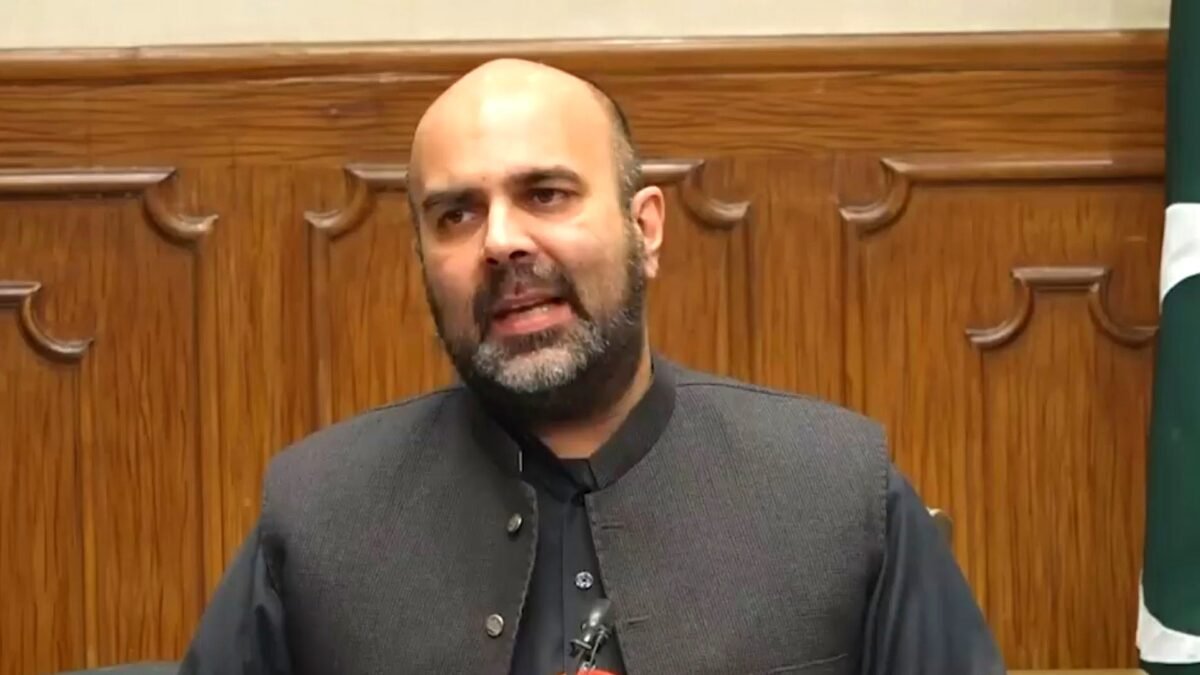
Police in Peshawar arrested three senior leaders of Pakistan Tehreek-e-Insaf (PTI) outside the Peshawar High Court on Tuesday, hours after the same court had granted them interim bail in the case over the May 9, 2023 attack on the Radio Pakistan building. The arrests, made at the main entrance of the high court in full view of lawyers and onlookers, turned a routine bail hearing into a confrontation between the police and the judiciary — and handed the opposition a fresh argument that the law is being used as a political weapon in a province already under governor’s rule.
Taimur Saleem Jhagra, Kamran Bangash and Irfan Saleem — all former ministers in the Khyber Pakhtunkhwa government — were taken into custody on Tuesday, 17 November 2026, according to Geo News and The Express Tribune. The three men had gone to the high court that morning to seek interim bail after an anti-terrorism court dismissed their bail applications in the Radio Pakistan attack case earlier in the day. The high court granted them interim pre-arrest bail against surety bonds of Rs1 million each and adjourned further proceedings until 23 November. Police were waiting at the court’s main entrance when the leaders came out.
What happened next is the part of the story on which the published accounts differ — and the difference matters. Geo News reported that police arrested all three men in the Radio Pakistan case itself. The Express Tribune reported that Jhagra and Bangash were arrested under separate detention orders issued under Section 3 of the Maintenance of Public Order (MPO) Ordinance, a preventive-detention power that allows the authorities to hold a person to preserve public order. The Daily Pakistan account said all three were detained under the MPO. The available accounts do not specify the legal basis on which Irfan Saleem was held after the bail order. What is not in dispute is the sequence: bail granted, then arrest at the court gate.
The two leaders said afterwards that they had no connection with the May 9 incidents or the attack on Radio Pakistan, and that they had been willing to surrender and had voluntarily presented themselves for arrest. PTI’s central information secretary, Sheikh Waqas Akram, condemned the arrests as a “grave assault” on constitutional rights, describing them as a disregard for judicial authority, the rule of law and citizens’ fundamental constitutional rights. The party’s Khyber Pakhtunkhwa chapter said it would file a contempt of court petition.
What happened at the two courts
The day began at the Peshawar district courts, where an anti-terrorism court heard the bail applications of the three leaders in the Radio Pakistan attack case. Lawyers for the PTI leaders argued that the case had been revived nearly three years after the incident, and questioned the authenticity and timing of the video footage on which the prosecution relies. They told the court that cases had been registered against the leaders in connection with protests on the opposite side of the road on the day of the attack, and that the same leaders had been acquitted in a separate case relating to a protest on GT Road. They asked why no separate case had been registered over the Radio Pakistan incident at the time, and how footage that formed the basis of the case had surfaced years later. They argued further that even if the footage were authentic, merely being present at the scene did not amount to a criminal offence.
Radio Pakistan’s counsel told the court that the broadcaster’s current director, Tufail Ahmed, had been serving as programme manager at the time of the May 9 incident. The counsel said the National Database and Registration Authority (NADRA) and the Punjab Forensic Science Agency had verified the identities of the suspects in the video footage, after which police nominated them in the charge sheet. Videos showing the leaders’ presence during the protest were still available on social media, the counsel said. Footage of the May 9 protest and the incident was played in court. The defence maintained that the videos did not show the accused engaging in any act of vandalism. Radio Pakistan’s counsel argued that the leaders had incited people to take to the streets and create unrest, adding that mobilising people was part of their role as political leaders. After hearing arguments from both sides, the anti-terrorism court reserved its verdict and then dismissed the bail applications.
What followed was, by every account, chaotic. Police personnel arrived to arrest the three leaders. Jhagra managed to evade the police, while Bangash and Saleem were briefly detained. Lawyers intervened and secured their release from police custody. Police then closed all the gates of the district courts. Lawyers broke through the gates of the district courts and the high court to enter the Peshawar High Court premises, and the three PTI leaders reached the high court, where they approached Chief Justice S.M. Attique Shah for relief. Lawyers from the Insaf Lawyers Forum brought their applications before the chief justice after the prescribed filing time had passed. During the hearing, the chief justice sought the case file in his chamber and questioned whether the applicants had previously been nominated in the case. The petitioners’ counsel told the court that their clients had been nominated in the case in 2026, and that their bail applications had been rejected by the anti-terrorism court earlier in the day.
The high court granted all three interim pre-arrest bail against surety bonds of Rs1 million each and adjourned further proceedings until 23 November. In its written order, the court said the case had been registered at the East Police Station on 10 May 2023, with provisions of the Anti-Terrorism Act and other relevant sections. The petitioners’ counsel had argued that the case was politically motivated and based on mala fide intentions because of their political affiliations. The court directed the applicants to join the investigation and appear before the investigating officer.
Then came the arrests. According to police, Superintendent of Police (Operations) Farhan Khan was present at the high court’s main entrance with a contingent when the arrests were made. The leaders had been in the high court’s bar room before being taken into custody. One account says SSP Farhan Khan confirmed the action and said he held detention orders under Section 3 of the Maintenance of Public Order Ordinance. The Express Tribune reported that the Peshawar senior superintendent of police carried out the arrests of Jhagra and Bangash, saying he had warrants for their detention under the MPO. Geo News, by contrast, reported the arrests as having been made in the Radio Pakistan case. The discrepancy has not been resolved in the public reporting, and it is the central factual question the next court hearing will have to answer: were three men arrested in a case in which they had just been granted bail, or were they detained under a separate preventive order that the bail did not cover?
The case against them
The case stems from 9 May 2023, the day Imran Khan was arrested by Punjab Rangers at the Islamabad High Court to comply with a National Accountability Bureau arrest warrant in the Al-Qadir Trust case. His arrest set off protests in cities across the country. In Peshawar, protesters stormed the historic Radio Pakistan building and went on a vandalising rampage that ended with the building being set on fire. Angry protesters not only set fire to the building but plundered it, and the resulting inferno consumed irreplaceable records and other invaluable items, causing significant losses, according to the Islamabad Post. Protesters in other cities damaged public and private property, including military installations.
The Radio Pakistan case was registered at the East Police Station in Peshawar on 10 May 2023, the day after the attack, with provisions of the Anti-Terrorism Act and other relevant sections. More than 80 PTI leaders and workers were initially named in cases linked to the violence in the city. But the three former ministers were not nominated in the Radio Pakistan case at the time. According to their counsel, they were nominated in the case in 2026 — nearly three years after the first information report was registered and the trial had begun. That timing is the heart of the defence case, and it is also the fact that makes the arrests politically explosive: the men say they were added to a three-year-old case only this year, and then arrested at the door of the court that had just granted them bail in it.
The case has moved quickly in recent weeks. On 28 October, the anti-terrorism court issued warrants for five men — suspended Chief Minister Sohail Afridi, the three former ministers and Aamir Khan Chamkani — after the prosecution submitted a challan formally identifying them as suspects. On 11 November, Judge Wali Muhammad reissued non-bailable arrest warrants for Afridi in the Radio Pakistan case, and extended the interim bail of the three former ministers until 17 November. Proceedings resumed on 17 November, the day the bail applications were dismissed and the arrests followed.
The forensic evidence — and its limits
The prosecution’s case rests heavily on video. A report by the Punjab Forensic Science Laboratory, sought by an anti-terrorism court in the Radio Pakistan attack case, examined 16 videos provided on a USB device at the request of Peshawar police. The examination was conducted between 19 and 23 December 2025 and was restricted to visual evidence. Its analysis found similarities between the leaders’ profile photographs and individuals appearing in the footage. The report also identified evidence of clip splicing in two videos linked to the suspended chief minister, Sohail Afridi, and to Irfan Saleem.
That finding cuts both ways, and both sides have seized on it. For the prosecution, the laboratory’s conclusion that the footage shows the leaders is the link between them and the events of 9 May 2023. For the defence, the finding that two of the clips were spliced is a reason to doubt the evidence, and their lawyers have cited it in court to question the footage’s authenticity. The laboratory’s own description of its work matters here: the examination was restricted to visual evidence. It established that people in the footage resemble the leaders; it did not, on the published accounts, establish what those people did. The defence’s argument in court was precisely that point — that the videos do not show the accused engaging in any act of vandalism, and that presence at a protest is not itself a crime. Radio Pakistan’s counsel countered that the leaders had incited people to take to the streets, and that mobilising people was part of their role as political leaders. That exchange, between presence and incitement, is where the case will be fought.
There is a second, quieter question hanging over the evidence. The footage was examined in December 2025, more than two and a half years after the events it depicts. The defence has asked how video that formed the basis of the case surfaced years later, and why no separate case was registered over the Radio Pakistan incident at the time. Those are fair questions for a court to answer, and they are the reason the forensic report, rather than the arrest itself, may turn out to be the most important document in the case.
A case revived three years on
The timing of the nominations is what gives this story its political charge. The three leaders say they were nominated in the Radio Pakistan attack case nearly three years after the first information report was registered. Their counsel told the high court that the case was politically motivated and based on mala fide intentions because of their political affiliations. In a statement after their arrest, the two leaders said they had no connection with the May 9 incidents or the attack on Radio Pakistan, and that they had been willing to surrender and had voluntarily presented themselves for arrest.
That claim — that the case is political — is the one the authorities will have to answer, and it is the one that will be hardest to answer in public. The Radio Pakistan building was genuinely attacked, genuinely vandalised and genuinely burned, and the destruction of its archives was a real loss. Nobody in the published reporting disputes that. The question is not whether a crime happened, but whether these three men committed it, and whether the process used to pursue them is fair. A case registered in May 2023, in which suspects are named in 2026 on the basis of video examined in December 2025, invites exactly the suspicion the defence has voiced. The prosecution’s answer is that the forensic verification took time, and that the challan naming the suspects was only submitted in October. Both accounts are, on the published record, plausible. Only the trial can settle which one is true — and a trial is precisely what the arrests, and the bail order that preceded them, are meant to lead to.
The party’s response
PTI’s reaction was swift and unsparing. In a statement posted on X, central information secretary Sheikh Waqas Akram described the arrests as a disregard for judicial authority, the rule of law and citizens’ fundamental constitutional rights. “Arresting individuals despite judicial protection raises serious questions about the intentions and conduct of the provincial government and its police force,” he said. He demanded the immediate release of Bangash, Jhagra and Saleem, and urged the provincial police to stop facilitating what he described as politically motivated arrests and intimidation.
Akram went further, and his further argument is the one with the widest implications. He said an order by the Federal Constitutional Court restraining the Peshawar High Court from hearing such matters had effectively deprived citizens of access to judicial remedies, leaving them vulnerable to arbitrary executive action. “This situation creates a dangerous precedent in which the executive can exercise detention powers with little or no effective judicial oversight,” he said. He criticised the use of MPO orders against political opponents, saying such actions were incompatible with constitutional democracy. “No government has the authority to place itself above the Constitution, the courts or the fundamental rights of citizens,” he said. He warned that the erosion of personal liberty, judicial protection and constitutional safeguards in Khyber Pakhtunkhwa was alarming. “If such actions are allowed to continue unchecked, no citizen will be secure against arbitrary detention,” he said. “The Constitution guarantees the liberty of citizens; it does not grant the executive an unrestricted licence to take it away.”
The party’s Khyber Pakhtunkhwa chapter struck a harder note. Provincial deputy information secretary Akram Khattana condemned the arrests, alleging that martial law was effectively in force in the province. He said neither the courts nor the police appeared to be functioning independently, and accused the authorities of taking unlawful measures. Khattana said the party would exercise its constitutional and legal rights against the arrests, that consultations with lawyers were underway, and that the party would soon file a contempt of court petition. PTI’s Khyber Pakhtunkhwa leaders also said they would seek legal remedies including contempt proceedings, and the case now looks set for further courtroom fights when the Peshawar High Court resumes hearings on 23 November.
The wider context
The arrests did not happen in a political vacuum. They happened in a province under governor’s rule. On 11 October 2026, the federal government imposed emergency rule in Khyber Pakhtunkhwa under Articles 232 and 234 of the Constitution, suspending the provincial government run by PTI, the party of the jailed former prime minister Imran Khan. The provincial governor took charge with an advisory council, and Law Minister Azam Nazeer Tarar said the arrangement would initially be in place for six months. The prime minister’s office said the move followed the provincial government’s “deliberate disengagement from the fight against terrorism”. PTI has rejected the emergency as unlawful and promised a legal challenge. The suspended chief minister, Sohail Afridi, is himself the subject of reissued non-bailable arrest warrants in the same Radio Pakistan case.
They also happened on the same day that another opposition voice was making the same argument from a different platform. On Tuesday, PPP chairman Bilawal Bhutto-Zardari told the Karachi Press Club that Pakistan’s political system needed a “political reset”, that it had “not collapsed; it has been deliberately destroyed”, and that the reset must begin from parliament. He urged an end to political victimisation and the release of political prisoners, called Imran Khan a “political prisoner”, and said he would convene a round-table conference or an all-parties conference on the destroyed system. He also warned that any forced division of Sindh would spill blood. The two events — a PPP chairman calling for an end to victimisation in Karachi, and three PTI leaders being arrested at a court gate in Peshawar — belong to the same political moment, and they point in opposite directions.
The arrests also sit inside a longer argument about the new provinces. The federal government and its allies are at odds over the constitutional mechanism for creating new provinces, with the PPP insisting that any change follow the Constitution and the wishes of the people, and the government pressing ahead with proposals for as many as 12 provinces. Bilawal said on Tuesday that neither he nor President Asif Ali Zardari had been consulted on new provinces, and that neither the prime minister nor the cabinet had debated the matter. The opposition has said it is ready for talks on rolling back the 26th and 27th constitutional amendments through parliament. Against that background, the arrest of three former provincial ministers under a preventive-detention law reads, to the opposition, as part of a single pattern: a centre that is tightening its grip on the provinces while arguing about redrawing them.
Analysis: Why It Matters
The bail order is the story, not the arrest
Arrests of opposition politicians in Pakistan are not new, and the arrest of three PTI leaders would by itself be a significant but familiar story. What makes this one different is the sequence. The Peshawar High Court granted the three men interim pre-arrest bail. They walked out of the court. Police were waiting at the main entrance. Whatever the legal basis of the detention turns out to be — the Radio Pakistan case or a separate MPO order — the optics are the same: a court granted protection, and the executive took the men anyway. That is why PTI’s statement reaches for the language of constitutional crisis rather than the language of a legal dispute, and why the phrase “despite bail” appears in almost every account of the day. A government that arrests men at the door of the court that has just freed them is making an argument about who is in charge, whether it intends to or not. The question the next hearing must answer is whether the detention orders were issued before the bail order or after it, and whether the police were acting on a lawful order that the bail did not touch. Until that is established, the impression left by Tuesday is the one the opposition wants the public to keep: that bail in Peshawar no longer guarantees liberty.
The MPO is the government’s quiet weapon
Section 3 of the Maintenance of Public Order Ordinance is a preventive-detention power. It allows the authorities to detain a person to preserve public order, and it operates outside the ordinary criminal process. That is precisely why it is useful to a government that wants to hold political opponents, and precisely why it alarms the opposition. A bail order in a criminal case does not, as a matter of law, stop a separate preventive-detention order. But the use of the MPO against men who had just obtained bail, in a case in which they had just been granted protection, looks like a device for getting around a court order rather than a separate legal process. Waqas Akram’s warning — that the executive can exercise detention powers “with little or no effective judicial oversight” — is aimed at exactly this gap. The MPO has been used against political workers in Pakistan for decades, under governments of every stripe. Its use here, against former ministers and in the shadow of governor’s rule, is a reminder that the law’s most consequential powers are often the ones that attract the least public scrutiny. If the detention orders are challenged, the courts will have to decide whether preventive detention can be used to hold men who have just been bailed, and that decision will matter far beyond these three cases.
The three-year gap is the defence’s strongest card
The prosecution’s case depends on video examined in December 2025, in a case registered in May 2023, in which the accused were nominated in 2026. That timeline is the defence’s strongest argument, and it is the one the government will find hardest to explain away. It is not, by itself, proof of bad faith. Forensic examination takes time, and the Punjab Forensic Science Laboratory’s report was only one step in a process that also involved NADRA verification and the submission of a challan in October. But the gap creates a problem of credibility that no amount of procedural explanation can fully remove. Why were these men not named in 2023, when more than 80 other people were? Why did the footage that identifies them surface years after the event? And why, if the evidence was ready in December 2025, were the warrants only issued in October 2026? The defence has already asked these questions in court, and it will keep asking them. The answers will determine whether the public sees this as a prosecution or a persecution — and in a province under governor’s rule, that distinction is the whole political argument.
Governor’s rule makes everything look political
Context is not an excuse, but it is a fact. Khyber Pakhtunkhwa has been under governor’s rule since 11 October, its elected government suspended, its chief minister the subject of arrest warrants, its administration run by a governor and an advisory council. In that setting, every action by the police and the administration is read through a political lens, because the administration itself is a political act. The federal government says the emergency was imposed because the provincial government had disengaged from the fight against terrorism. PTI says it was imposed to remove a government the centre could not control. Neither claim can be proved by the events of a single Tuesday. But the arrests will be read, by PTI supporters and by many neutral observers, as confirmation of the second claim — not because the arrests are necessarily unlawful, but because they happened under a system in which the normal checks on executive power have been suspended along with the provincial government. That is the cost of governor’s rule: it makes even lawful acts look political, and it leaves the government with no easy way to prove otherwise.
The opposition is converging on a single argument
Perhaps the most significant feature of Tuesday is not what happened in Peshawar but what happened in Karachi on the same day. Bilawal Bhutto-Zardari, the chairman of the PPP — a party that is part of the governing coalition — stood at the Karachi Press Club and called for a “political reset”, an end to political victimisation and the release of political prisoners. He called Imran Khan a “political prisoner”. He said he would convene a round-table conference or an all-parties conference. Hours later, three PTI leaders were arrested at the door of a high court. The two events do not prove a conspiracy, and they do not need to. They show that the opposition, across party lines, is converging on a single argument: that the political system is being deliberately dismantled, and that the courts, the Constitution and the ordinary rules of politics are being set aside. Bilawal’s speech and the Peshawar arrests will be quoted together in the coming days, and the government will have to answer both at once. Its answer, so far, has been that the law is taking its course. That answer will be tested in court on 23 November, and in public long before that.
What to Watch Next
- The Peshawar High Court hearing on 23 November: the court will resume proceedings in the Radio Pakistan case, and the detention orders will be the first question. Whether the judges treat the arrests as a contempt of their bail order will set the tone for everything that follows.
- PTI’s contempt petition: the party says consultations with lawyers are underway and a petition will be filed soon. A contempt finding against the police or the administration would be a serious rebuke, and the government will fight it hard.
- The legal basis of the detentions: the published accounts still disagree on whether the three men were held in the Radio Pakistan case or under Section 3 of the MPO, and on what basis Irfan Saleem was held at all. The detention orders themselves, when produced in court, will settle the question.
- Sohail Afridi’s warrants: the suspended chief minister faces reissued non-bailable arrest warrants in the same case. Whether the police move against him next will show how far the authorities intend to take the Radio Pakistan prosecutions.
- The Federal Constitutional Court question: PTI says an order restraining the Peshawar High Court from hearing such matters has left citizens without judicial remedies. Whether that order is challenged, and how the constitutional court responds, will shape the legal landscape for every similar case.
- Bilawal’s round-table conference: the PPP chairman says he will first seek consensus inside his party and then convene a grand dialogue or all-parties conference on the political reset. Whether the Peshawar arrests push that process forward or make it impossible is an open question.
- The governor’s rule clock: the emergency in Khyber Pakhtunkhwa was imposed for six months from 11 October. The arrests, the advisory council and the new-provinces debate are all part of the same struggle over who governs the province — and that struggle will intensify as the six months run down.
Sources
- Islamabad Post — “PTI’s Taimur Jhagra, Kamran Bangash, Irfan Saleem arrested in Radio Pakistan attack case”
- Pakistan10 — “Peshawar PTI leaders arrested after bail in Radio Pakistan case” (drawing on Geo News and The Express Tribune)
- Native World News — “PTI’s Taimur Jhagra, Kamran Bangash arrested after PHC grants bail in Radio Pakistan attack case”
- Particle — “PTI Leaders Arrested After High Court Grants Interim Bail”
- The News — “Constitutional mechanism: Govt, allies at odds over process for new provinces”
- Wikimedia Commons — “File:Taimur Khan Jhaghra.jpg” (photograph source and licence)

About the Author — Abdul Mannan
Related Articles
Bilawal Calls for ‘Political Reset’ and Warns Forced Division of Sindh Would Spill Blood
PPP chairman Bilawal Bhutto-Zardari has called for a 'political reset' of Pakistan's system, saying it was 'deliberately destroyed'…
Pakistan Cuts Petrol and Diesel by Rs2 in Tenth Straight Reduction as Daily Pricing Draws Fire From Pump Owners
Petrol falls to Rs328 a litre and diesel to Rs358 in the tenth consecutive reduction, as petrol pump…
Imran Khan Tells Top Judges He ‘May Not Return Alive’ in Plea for Medical Treatment
Jailed former prime minister Imran Khan has warned Pakistan's top judges that he 'may not return alive' without…