
Bilawal Hints PPP Could Move to Opposition Benches as Coalition Row Over New Provinces Deepens

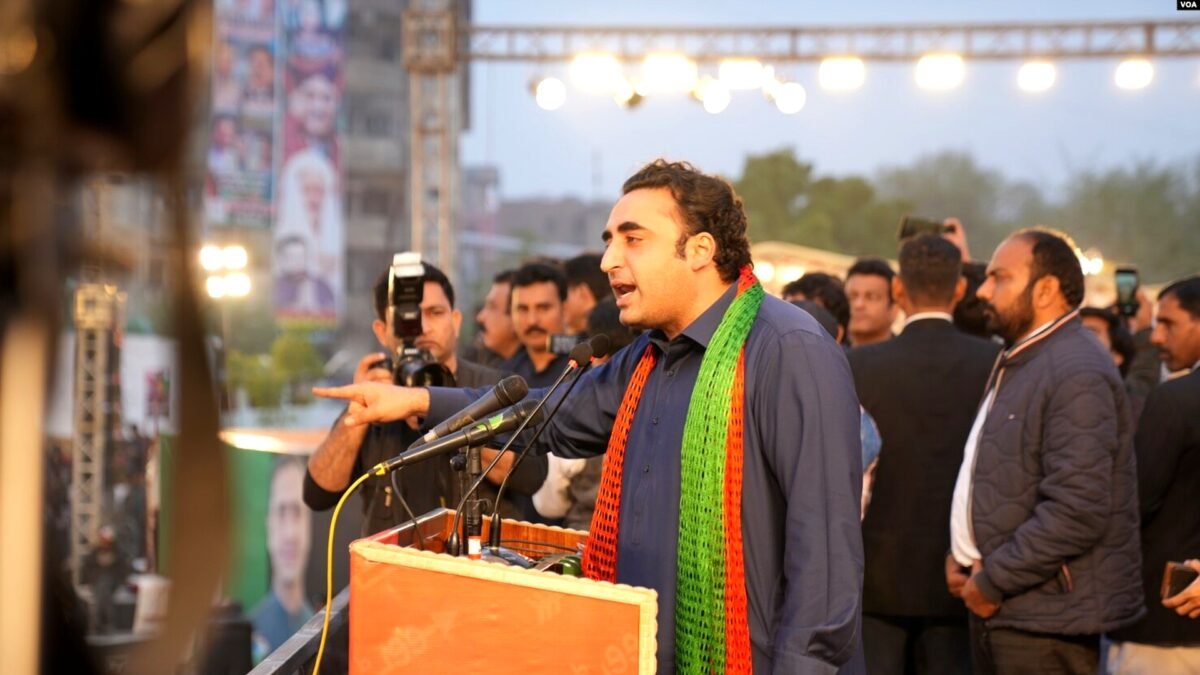
Pakistan Peoples Party (PPP) Chairman Bilawal Bhutto-Zardari has raised the stakes in his party’s row with the federal government, hinting in a television interview on Wednesday that the PPP could leave the treasury benches and sit on the opposition benches if the Pakistan Muslim League-Nawaz (PML-N) led government refuses to listen to its coalition partners. The warning, delivered a day after his blistering speech at the Karachi Press Club, turns a war of words over new provinces and a so-called “political reset” into the most serious test yet of a coalition that has governed together since 2022.
Speaking on Hum News programme Faisla Aap Ka on Wednesday, 18 November 2026, Bilawal defended his recent remarks on the country’s political situation, insisting that he had spoken the truth and urging government representatives to have the courage to listen to differing opinions, according to Dawn. “You may disagree with my suggestions, but at least listen. You should have the courage to listen to the truth,” he said. Business Recorder reported that the PPP chairman indicated his party could leave the treasury benches and sit on the opposition benches if the government was unwilling to listen to the views and concerns of its coalition partners.
The interview was Bilawal’s second major intervention in two days, and it was sharper than the first. On Tuesday he had called for a “political reset” and warned that any forced division of Sindh would spill blood. On Wednesday he went further, questioning the government’s judgement, its choice of enemies and even who in Islamabad is entitled to propose remaking the country’s political map. “Because I am a stakeholder, I am saying: come to your senses,” he said, according to Dawn.
The timing matters. The PPP is not an opposition party sniping from the outside. It sustains the government of Prime Minister Shehbaz Sharif in parliament, and Bilawal’s father, Asif Ali Zardari, is the president. A threat from inside the coalition to walk to the other side of the aisle is therefore not routine criticism. It is a reminder that the government’s parliamentary arithmetic, and its political legitimacy, depend on a partner that now says it is not being heard.
“They have decided they must fight me too”
Bilawal’s central complaint in the interview was that the government is opening political fronts faster than it is closing them. “The government has been deciding that we will fight the PTI; now the new decision is that they will also fight JUI, and it seems that after my truth, they have also decided they must fight me too,” he said, according to Business Recorder. He was referring to the Pakistan Tehreek-e-Insaf (PTI) of jailed former prime minister Imran Khan and to Jamiat Ulema-e-Islam-Fazl (JUI-F), led by Maulana Fazlur Rehman.
“If you are going to fight everyone, and fight everyone internally as well, then who will lead Pakistan and its people out of this economic crisis?” he asked. The question was aimed at a government that is simultaneously confronting the PTI, trading blows with JUI-F, and now exchanging public insults with its own coalition partner, all while the economy strains under the knock-on effects of the war between the United States and Iran.
Bilawal said his remarks had been made against the backdrop of that war, which has affected economies worldwide through rising energy costs. “Elites do not have the idea of what kind of difficulties Pakistanis are facing,” he said, urging politicians to set aside their political differences and work together to fix the system. He argued that the country’s geopolitical and security challenges required political unity, pointing to tensions with India, the near-war situation with Afghanistan and the ongoing fight against terrorism.
He also questioned why the debate over governance and a possible political reset had not been brought to parliament, saying it had instead been initiated in front of business representatives. That was a reference to Interior Minister Mohsin Naqvi, who first floated the idea of a “reset” at an economic summit on 30 July 2026, telling business leaders that the system had “collapsed” and needed resetting, that a referendum was the “best solution” and that new provinces were “inevitable”.
Bilawal said he did not know what had prompted the debate over creating new provinces, claiming that neither the prime minister, any federal minister nor another political stakeholder had discussed the proposal with him or President Asif Ali Zardari. He said the country was facing a historic economic crisis, but little attention was being paid to resolving it.
He also took aim at Naqvi’s dual role. Bilawal questioned the role of the interior minister in initiating discussions about a political reset, referring to his additional position as chairman of the Pakistan Cricket Board (PCB). He asked whether the PCB chairman had been given the authority to determine how the country’s political system should be restructured, including whether provinces should be divided.
On Sindh, Bilawal repeated his warning in softer language but with the same substance. He said the PPP was not a party that resorted to violence but warned that forcibly dividing the province could trigger serious consequences. Referring to Sindh’s political history since the 1980s, he said attempts to create divisions in the province’s politics had previously been orchestrated rather than emerging organically, and he warned that any forced division could aggravate the law and order situation, making it difficult for authorities to contain the resulting unrest.
Asked whether his remarks signalled that the PPP would adopt a confrontational approach, Bilawal said he had not issued any protest call but was presenting the concerns of his party’s voters. He said a political and democratic reset was needed to bring politicians together rather than have them fight among themselves while the public struggled with economic hardship.
He also criticised the government’s response to JUI-F chief Maulana Fazlur Rehman’s criticism, describing it as irresponsible. He alleged that the government’s response to political dissent included demolishing houses, arresting political leaders’ family members and pressuring party workers.
The ministers hit back
The government’s response was swift, coordinated and personal. Defence Minister Khawaja Asif led the counter-attack on Wednesday with a post on X, invoking the legal maxim that a person seeking equity must come with clean hands. “Are your own hands clean? Do you have the right to lecture others or issue threats?” he asked Bilawal, according to reports of the post.
Asif pointed to the PPP’s 18-year rule in Sindh, sarcastically describing the province as a “paradise” and saying Karachi’s condition was something the world viewed with envy. He also questioned the PPP’s role in the federal coalition, noting that the party had been working with the PML-N in government since 2022. In a separate intervention, Asif said no system could be reset without public support, adding that politicians should not describe consultation with the people as a “backdoor” process, and that parliament could debate the issue while also taking public opinion into account.
Information Minister Attaullah Tarar, who had replied to Bilawal’s Tuesday speech within hours, insisted that a referendum on creating new provinces was “legal and constitutional”, and part of the Constitution. “Look, we are part of the same government. Come and sit down [with us] so we can make decision for the betterment of the people and the country,” he told Bilawal.
Federal Health Minister Mustafa Kamal, who is also a leader of the Muttahida Qaumi Movement-Pakistan (MQM-P), described the creation of smaller provinces as inevitable, saying Pakistan could not function without them. Speaking at a press conference in Karachi, he expressed regret over Bilawal’s remarks about Sindh and said the PPP chairman would be responsible if even a single drop of blood was shed in the province. Kamal also noted that federal ministers Asif, Ishaq Dar, Tarar and Talal Chaudhry had openly spoken about a referendum.
Minister of State for Interior Talal Chaudhry criticised Bilawal’s opposition to a referendum, questioning why the PPP chairman would fear a public vote if he believed political decisions should be made through the ballot rather than the bullet. He also challenged Bilawal’s criticism of the circumstances surrounding the passage of the 27th Constitutional Amendment, recalling the PPP chairman’s earlier public support for the legislation.
Adviser to the Prime Minister on Political Affairs Rana Sanaullah went further, saying Bilawal’s remarks about the 27th Amendment being passed under pressure could raise questions about his position as a lawmaker, a warning widely read as a reference to the risk of disqualification.
The PPP did not leave its chairman undefended. Sindh Minister Saeed Ghani said the PML-N and Mustafa Kamal had no standing in Sindh, challenged opponents to hold a referendum in Punjab if they wished, and advised Khawaja Asif to listen to Bilawal. On the opposition side, JUI-F spokesperson Aslam Ghauri welcomed Bilawal’s remarks, saying they reflected the party’s position that a referendum was unnecessary where the Constitution already provided a mechanism. The Tehreek-e-Tahafuz-e-Ain Pakistan, the opposition alliance, also welcomed the speech in principle but pointed to what it described as a gap between the PPP’s statements and its record.
What Bilawal said on Tuesday
The interview was a deliberate doubling down on Tuesday’s speech at the Karachi Press Club, where Bilawal had addressed a “Meet the Press” programme and then taken questions. There he called for a “political reset”, saying the system had “not collapsed; it has been deliberately destroyed” and “made to collapse”, and acknowledged his own share of responsibility for the state of politics.
He insisted the reset must be political and begin from parliament. He warned that forced division of Sindh would spill blood, saying: “If the province is divided by force, society will be divided… ordinary people will take up arms, and the bloodshed will not be limited to a single death,” and that “brother will kill brother in Sindh. I cannot see bloodshed.” He said the consequences would be felt not only in Karachi but in Hyderabad, Mirpurkhas, Tando Allahyar and Nawabshah.
He rejected a referendum as an unconstitutional method of creating new provinces, noting that the Sindh Assembly had stated its position “not once, but ten times”, and challenged those advocating a referendum to first seek a similar exercise in their own provincial assembly. He invoked One Unit, the forced merger of the provinces imposed in the 1950s, and the 1973 Constitution, under which the provinces were restored. He said the Constitution already laid down a procedure for creating new provinces, and that process had to be followed.
Bilawal clarified that the PPP was not opposed to the creation of new provinces elsewhere in the country. If the Punjab Assembly adopted a resolution in accordance with public aspirations for a South Punjab province, his party would support it. He also reiterated support for the constitutional and democratic rights of the people of Gilgit-Baltistan.
He also used the speech to take up several opposition demands. He called Imran Khan a “political prisoner” and urged an end to political victimisation and the release of political prisoners. He proposed returning the reserved seats to the opposition parties that had won them as a “confidence-building measure”, calling what had happened with the reserved seats “a joke”, and said the opposition had not only been deprived of those seats but that “those in the treasury benches also put them in their pockets”. He referred to the revocation of the PTI’s election symbol ahead of the 2024 general elections as an “injustice”, recalling that the PPP’s own symbol had been revoked in 1988.
He defended Fazlur Rehman’s right to criticise, saying the opposition had the “most patriotic” role, and complained that the National Accountability Bureau had been set on critics and that a Capital Development Authority notice of “unauthorised construction” had been served at Fazl’s residence. He said he would convene a round-table conference or an all-parties conference on the destroyed system and the reset, and he said of the prime minister: “We made Shehbaz the prime minister; I would like him to be successful,” adding that the prime minister should have enough authority to control his ministers.
He also questioned the new face of the judiciary after the 27th Amendment, a striking turn given that he had strongly advocated for the amendment at the time of its passage a year ago, and said he was open to fixing his own mistakes. And he complained that 16 years after the 18th Amendment, the provinces still lacked their due resources, citing the petroleum levy share of about Rs1.7 trillion.
Where the provinces debate came from
The row did not begin this week. It began in July, when Naqvi told business leaders at an economic summit that the system had collapsed and needed a reset, that a referendum was the best solution and that new provinces were inevitable. The remarks sat largely unanswered for months. Then, on Sunday 15 November, Khawaja Asif told Geo News programme Naya Pakistan that, in his personal view, “the New Year will see this new system as well, God willing”, and that some shape of it could appear before the year ends.
Planning Minister Ahsan Iqbal has spoken of 12 to 15 provinces, and a 12-province proposal is reported to be under consideration, with four new provinces in Punjab, three in Khyber Pakhtunkhwa, three in Balochistan and two in Sindh, though no final decision has been taken. Mustafa Kamal has called December a crucial month for a referendum. The timetable is what gives Bilawal’s intervention its urgency: if a decision is coming before the year ends, the PPP chairman is signalling that he intends to be part of making it, or to be counted against it.
The constitutional argument at the heart of the dispute is unresolved. The government says a referendum is a constitutional and legal way of seeking public opinion, and Tarar has insisted it is part of the Constitution. Bilawal says the Constitution already provides a procedure for creating new provinces, through the provincial assemblies and parliament, and that a referendum is an unconstitutional method. Constitutional experts cited in reporting on the dispute have said a referendum is not possible while the national and provincial assemblies are in place, and have advised the government to consult its constitutional team and the Law Ministry first. The disagreement is therefore not only political but legal, and neither side has yet produced a ruling that settles it.
The debate is also inseparable from the judiciary. On Wednesday, the International Commission of Jurists (ICJ) published a report, Judicial Capture: Independence of the Judiciary in Pakistan after the 26th and 27th Constitutional Amendments, concluding that the systemic undermining of judicial independence through the two amendments had effectively resulted in judicial capture by the political branches of the state, and had gravely impaired the judiciary’s capacity to act as a check on the government. “The 26th and 27th amendments have done exactly what we feared: they have placed Pakistan’s highest courts under the control of the executive,” the ICJ’s Secretary-General, Santiago Canton, said, according to the ICJ.
The 26th Amendment, passed in October 2024, changed the Judicial Commission, the body involved in selecting judges, so that judges no longer held a majority. The 27th Amendment, passed in November 2025, created the Federal Constitutional Court and transferred constitutional litigation from the Supreme Court to the new institution. Two of the Supreme Court’s most senior judges, Syed Mansoor Ali Shah and Athar Minallah, resigned in protest on the day the 27th Amendment became law. The ICJ report, published a year after the 27th Amendment was passed, recommends revision or repeal of provisions inconsistent with international law, and the Human Rights Commission of Pakistan has separately called for both amendments to be reviewed. Bilawal’s complaint about the “new face of the judiciary” sits directly on this fault line, and his own role in championing the 27th Amendment a year ago is the reason his critics keep throwing it back at him.
The third strand of the crisis is Khyber Pakhtunkhwa. The federal government imposed emergency rule in the province on 12 October 2026, under Articles 232 and 234 of the Constitution, suspending the provincial government run by the PTI, the party of Imran Khan. President Zardari approved the move on the prime minister’s advice, and the provincial governor took charge with an advisory council, initially for six months. The prime minister’s office said the move followed the provincial government’s “deliberate disengagement from the fight against terrorism”. The province’s chief minister, Sohail Afridi, was detained, and PTI leaders and workers have faced arrests since. The PTI had been preparing a march on Islamabad to demand Khan’s release, originally scheduled for 27 September and postponed to 4 October to allow talks. On 5 November, the Federal Constitutional Court suspended Peshawar High Court proceedings in cases brought under Article 199 on or after 12 October, a decision that deepened the sense among the opposition that the courts are no longer available to them.
Khan himself remains at the centre of the politics. His letter, published by his lawyer Salman Safdar, appealed for urgent medical treatment, warning that his health and that of his wife, Bushra Bibi, were deteriorating, and that at 74 he was being taken “to a place from which I may not return alive”. He said doctors had told him he was highly vulnerable to a brain haemorrhage and cardiac arrest, and described being held in solitary confinement for up to 22 hours a day, denied visits from his family and access to books and television. The government has rejected his account, saying he is seen weekly by doctors, and the parliamentary affairs minister, Tariq Fazal Chaudhry, disputed the claims. The Islamabad High Court has ordered that all possible medical facilities be provided to Bushra Bibi in the £190 million case, and eight members of the Pakistan Bar Council have called on the judiciary to enforce a Supreme Court order moving Khan to a private hospital, warning that the government and its agencies alone will be responsible for imperilling the lives of Khan and his wife.
The economic backdrop is bleak. The federal government cut petrol and diesel prices by Rs3 a litre late on Wednesday, bringing petrol to Rs322 and diesel to Rs355 from Thursday, under an Oil and Gas Regulatory Authority notification. The cut is small comfort against the wider picture: mango exports have fallen 36 percent this year, to 78,000 tonnes from 123,000 tonnes last year, as shipping disruptions and soaring freight costs linked to the US-Iran war hit trade, according to the exporters’ association. The war has pushed energy costs up worldwide, and Bilawal’s argument is that a country facing that kind of pressure cannot afford a political class at war with itself.
Behind the public exchanges, the personal diplomacy continues. President Zardari met Prime Minister Shehbaz Sharif in Lahore on Saturday 14 November. The prime minister is due in Karachi on Friday 20 November, a visit that now carries far more weight than a routine trip. Senate elections are due early next year. And the PPP has its own internal calendar to manage: a party that threatens to sit on the opposition benches must eventually decide whether the threat is a negotiating tactic or a destination.
Analysis: Why It Matters
The opposition-benches hint is the real escalation
Tuesday’s speech was a warning. Wednesday’s interview was a threat, and the difference matters. A coalition partner that criticises the government is doing politics as usual. A coalition partner that publicly floats leaving the treasury benches is putting the government’s survival on the table. Bilawal was careful to frame it conditionally, as something that could happen if the government refuses to listen, and he stressed that he had issued no protest call. But the conditional form is precisely what makes it effective: it gives the government a way to climb down by listening, and it gives Bilawal a way to escalate by saying he was not heard. The question now is whether either side treats the hint as a bargaining chip or as a promise. Coalitions in Pakistan have broken over less, and they have also survived worse, but no government can afford to treat a public threat from its largest partner as mere rhetoric.
“Fight everyone” is a description of a real strategic failure
Bilawal’s sharpest line was not about provinces at all. It was his catalogue of the government’s enemies: first the PTI, then JUI-F, and now, he said, him. The line works because it is verifiable. The government is confronting the PTI in Khyber Pakhtunkhwa under emergency rule, it is trading accusations with Fazlur Rehman’s party, and it is now exchanging insults with the PPP. A government that fights on three political fronts at once, while also managing tensions with India, a near-war situation with Afghanistan, a war-driven energy shock and a terrorism campaign, is a government that has chosen confrontation as a habit rather than a strategy. Bilawal’s question, who will lead Pakistan out of the economic crisis if the government is fighting everyone, is the one the prime minister has not yet answered, and it is the one that will define the next month.
The PCB chairman jab lands because it is about who decides
The oddest moment of the interview may prove the most damaging. By asking whether the chairman of the Pakistan Cricket Board had been given the authority to determine how the country’s political system should be restructured, Bilawal was not really talking about cricket. He was talking about how decisions are made. Naqvi holds two powerful jobs at once, interior minister and PCB chairman, and he launched the reset debate not in parliament or cabinet but at a business summit. Bilawal’s point is that the country’s most consequential political argument in years was started by a minister speaking to businessmen, without the prime minister, the cabinet, the president or parliament having discussed it. That is a charge about process, and process charges are harder to answer than policy ones, because they do not require the accuser to be right about the substance. They only require the public to notice that nobody was consulted.
The referendum is the constitutional fight underneath the shouting
Strip away the insults and the real dispute is narrow and technical: can Pakistan create new provinces by referendum, or only through the procedure the Constitution already lays down? The government says a referendum is constitutional and a legitimate way to consult the people. Bilawal says it is an unconstitutional method, and that the Sindh Assembly has already spoken ten times. Constitutional experts have warned that a referendum is not possible while the assemblies are in place. The ICJ’s report on judicial capture, published the same day, makes the stakes higher still: if the courts that would arbitrate such a dispute are themselves seen as captured, then neither side will accept an adverse ruling, and the argument will be settled by politics rather than law. That is why the referendum question matters more than the rhetoric around it. It is the one issue in this row that cannot be resolved by a handshake in Karachi.
December is the deadline both sides are really talking about
Every actor in this story is watching the same calendar. Khawaja Asif has said the new system could appear before the year ends. Mustafa Kamal has called December a crucial month for a referendum. The prime minister visits Karachi on Friday. Senate elections follow early next year. Bilawal’s intervention is timed to that calendar: he is trying to shape a decision before it is taken, not to protest one after it is made. That is why his language mixes warning with an open door, the round-table conference, the invitation to sit down, the insistence that he wants Shehbaz Sharif to succeed. He is not trying to bring the government down this week. He is trying to make sure that when December arrives, the PPP is at the table rather than on the receiving end of a decision made without it. Whether that works depends on whether the prime minister treats the Karachi visit as a chance to listen, or as a routine trip.
What to Watch Next
- The Karachi visit on Friday. Prime Minister Shehbaz Sharif is due in Karachi on 20 November. Whether he meets Bilawal and President Zardari, and what he says about the provinces debate, will show whether the government intends to negotiate or to ride out the row.
- The PPP’s next formal step. A threat to sit on the opposition benches needs a decision-making forum. Watch for a meeting of the PPP’s central executive committee or parliamentary party, and for whether the party sets a deadline or conditions for staying in the coalition.
- Any referendum timetable. Watch for a formal announcement from the government or the Law Ministry on whether a referendum will be held, when, and under what legal authority, and for the constitutional challenge that would almost certainly follow.
- The prime minister’s own words. So far the counter-attack has come from ministers. Shehbaz Sharif has not yet responded directly to Bilawal. His first public comment will set the tone for the rest of the row.
- The opposition’s coordination. Bilawal has proposed a round-table conference or an all-parties conference, and has defended both the PTI and JUI-F. Watch whether the PPP, PTI and JUI-F begin coordinating, and whether the reserved-seats proposal becomes a joint opposition demand.
- The fallout from the ICJ report. The “judicial capture” report gives Bilawal’s complaints about the judiciary an international echo. Watch for the government’s response, for the Human Rights Commission of Pakistan’s position, and for any reaction from the Federal Constitutional Court.
- Khyber Pakhtunkhwa. Emergency rule in the province is now more than a month old. Watch for court proceedings, for the fate of detained PTI leaders, and for whether the PTI revives its march on Islamabad.
Sources
- Dawn: ‘Have the courage to listen to the debate you started’: Bilawal sticks to his guns after speaking his ‘truth’ (via Newshunt)
- Business Recorder: Bilawal hints PPP may move to opposition if govt refuses to hear allies (via Newshunt)
- The News: Constitutional mechanism: Govt, allies at odds over process for new provinces
- Pakistan Digital: ‘Public opinion must prevail’: Ministers hit back at Bilawal over new provinces debate
- International Commission of Jurists: New report finds effective “judicial capture” in Pakistan after the 26th and 27th Constitutional Amendments
- NAM News: ‘He Who Claims Equity Must Come with Clean Hands’: Asif Hits Back at Bilawal

About the Author — Abdul Mannan
Related Articles

Pakistan Test-Fires Fatah-3 Supersonic Cruise Missile in Third Fatah Launch in Six Weeks
Pakistan has successfully test-fired its Fatah-3 supersonic cruise missile, the military said on Wednesday, the third launch in…
Three PTI Leaders Arrested Outside Peshawar High Court Hours After Judges Granted Them Bail
Police arrested three PTI leaders outside the Peshawar High Court on Tuesday, hours after judges granted them interim…
Bilawal Calls for ‘Political Reset’ and Warns Forced Division of Sindh Would Spill Blood
PPP chairman Bilawal Bhutto-Zardari has called for a 'political reset' of Pakistan's system, saying it was 'deliberately destroyed'…