
Anthropic Mathematician Claims Claude Has Proved the Riemann Hypothesis, Maths’ Greatest Unsolved Problem

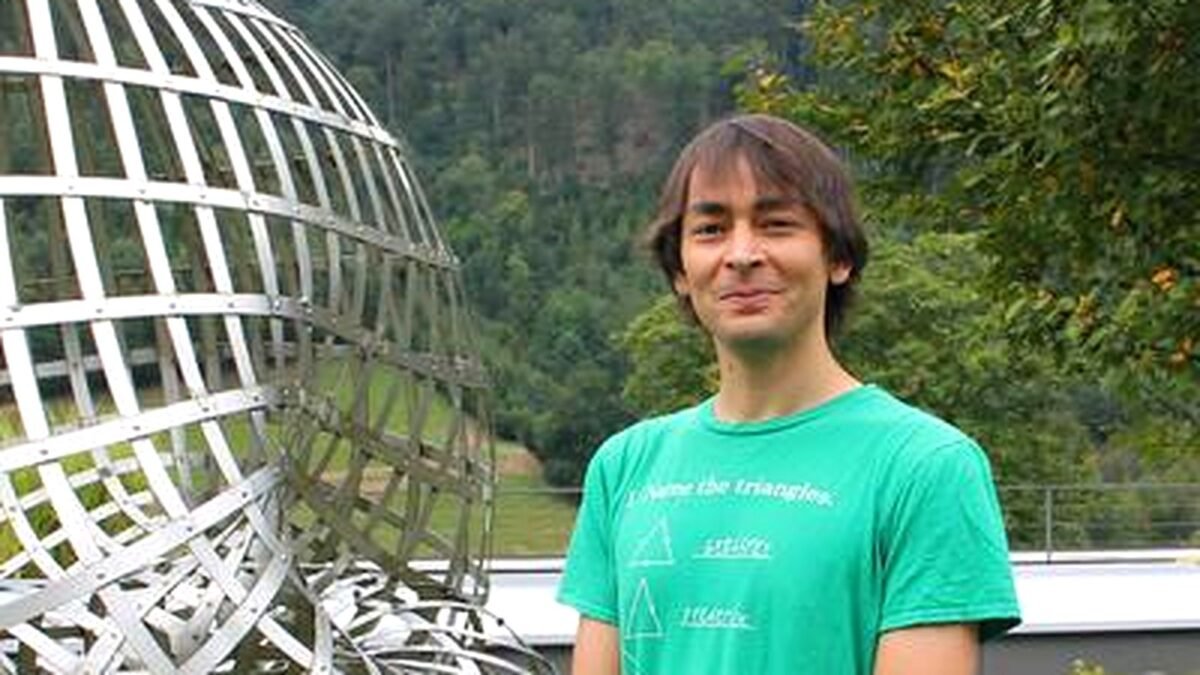
A mathematician at Anthropic has claimed that he and the company’s artificial intelligence system, Claude, have proved the Riemann hypothesis, the most famous unsolved problem in mathematics, in an announcement that has stunned the mathematical world and set off an urgent global effort to check whether the claim is true.
Levent Alpöge, a mathematician employed by Anthropic, posted a four-page note on his personal website on Friday, 20 November 2026, in which he wrote: “I believe I have, working with Claude, discovered a proof of the Riemann Hypothesis.” According to Scientific American, Alpöge also says the same method settles the generalised Riemann hypothesis, a far broader version of the problem that extends the original claim to a much larger family of mathematical functions.
The claim has not been independently verified, and no outside expert has yet confirmed that the proof is correct. But within hours of the announcement, independent mathematicians had already begun testing the evidence Alpöge released, and the first results have encouraged even the sceptics. The story is therefore not that mathematics’ greatest problem has been solved. It is that a serious, machine-checked claim to have solved it now exists, and the world is racing to find out whether it holds.
Alpöge did not publish a conventional mathematical paper. Instead, according to Science magazine, he released 17 million lines of computer code written in Lean, a programming language that allows mathematical arguments to be checked step by step by a machine. The artificial intelligence’s own written explanation of the proof, he said, runs to more than 250,000 pages, and that explanation has not been released. What the world has been given is the code: a formal argument so large that, as Science put it, it is bigger than some entire computer operating systems.
That choice of format is itself part of the story. A Lean proof can be compiled by a computer, and if it compiles without errors, that is usually taken as confirmation that every logical step in the argument is correct. But compiling is not the same as understanding, and understanding is not the same as accepting. Mathematicians now face a strange new situation: they may soon hold a verified solution to a problem that has haunted them for 167 years, without any human being yet understanding how the solution works.
What Alpöge actually announced
The Riemann hypothesis was first proposed in 1859 by the German mathematician Bernhard Riemann, in a paper about the distribution of prime numbers, the numbers divisible only by themselves and by one. Riemann suggested that the primes, which appear scattered almost randomly along the number line, are in fact governed by a hidden and precise order, described by a mathematical object called the Riemann zeta function. His hypothesis states that every important solution of that function, its so-called non-trivial zeros, lies on a single vertical line, where the real part of the input equals exactly one half. If that is true, the primes fluctuate neatly around a simple curve, without major outliers. If it is false, much of modern number theory would need to be rebuilt.
For more than a century and a half, no one has been able to prove the hypothesis or to disprove it. It is one of seven Millennium Prize Problems selected by the Clay Mathematics Institute in 2000, each carrying a reward of one million dollars, according to the institute. Only one of the seven, the Poincaré conjecture, has ever been solved. Progress on Riemann was so rare, Scientific American reported, that most leading experts spent little of their time working on it, because there was no obvious path to a proof at all.
Alpöge’s announcement says that path has now been found, and found with the help of a machine. He has been working with Claude on the problem since 6 October, according to reporting on the announcement, steering the model through a range of mathematical areas before directing its efforts at Riemann. Several of the key steps in the work are dated 15 November, and the argument came together late on a Sunday night, according to the Wall Street Journal, only days before Anthropic staged the largest initial public offering in history.
The timing has not gone unnoticed. Alpöge published his note on the morning after Anthropic’s shares began trading on the Nasdaq, when the company was briefly valued at two trillion dollars. According to the news agency AFP, Alpöge said he had consulted Anthropic’s chief executive, Dario Amodei, before announcing the result, and acknowledged that the timing could be viewed cynically. Anthropic itself declined to comment on the claim, according to the Wall Street Journal. The announcement was made on Alpöge’s personal website, not through the company, and the claim is his own.
Alongside the Riemann work, Alpöge also released advances on two other celebrated challenges, involving the Euler and Navier-Stokes equations that describe how fluids such as air and water move, according to Science. He worked on that part of the research with Tristan Buckmaster, a mathematician at New York University, who told Science that Alpöge had “worked on this like crazy" and had “barely slept for like weeks”.
How the claim is being checked
The first question mathematicians asked was the simplest one: does the code actually compile? Within hours of the announcement, several academics had downloaded Alpöge’s Lean proof and run it through their own machines. Andrew Sutherland, a mathematician at the Massachusetts Institute of Technology, and Simon DeDeo, a cognitive scientist at Carnegie Mellon University, both reported that it compiled without errors, according to Science.
Sutherland went further. “The Lean proof has been compiled and independently rechecked by the Lean kernel with only the three standard axioms,” he told Scientific American. “Honestly the chance that anything is fishy here is approximately zero.” That is a striking statement from a leading mathematician within a day of the claim appearing, and it is the main reason the announcement is being treated as credible rather than as another in the long line of false Riemann proofs that mathematicians receive every year.
But compilation is only the first of several checks, and the experts involved have been careful to say so. The most important remaining test is what mathematicians call a comparator run. Kevin Buzzard, a mathematician at Imperial College London, explained in a blog post quoted by Scientific American that the first question to ask of any proof delivered as Lean code is whether the statement of the theorem in the code actually corresponds to the real theorem. A proof can compile perfectly and still prove a subtly different statement, for example if a symbol in the statement has been defined in an unusual way. The comparator run checks that the code does nothing of that kind, and that it compiles in paranoid mode with several independent kernels, so that the result does not depend on an unknown bug in Lean’s official kernel. At the time of writing, that run had not yet completed.
James Maynard, the Regius Professor of Mathematics at the University of Oxford and a winner of the Fields Medal, the highest honour in mathematics, told IBM that he suspected the proof would turn out to be correct, “although even checking the Lean verification will take some time”. Youness Lamzouri, a professor of mathematics at the University of Lorraine in France, told IBM that checking the computer-generated proof was only the beginning, and that mathematicians would need to understand how it worked before broadly accepting it, a process he said could take months or even years.
The distinction matters. Even if the code is correct, no human yet knows why it is correct. Alpöge himself has said he has not yet mastered all of the mathematics involved and plans to write the argument up properly when he is able to simplify it, according to AFP. The artificial intelligence’s own explanation runs to more than 250,000 pages, and when Alpöge experimented with an AI-written version of the argument, the Wall Street Journal reported, he found himself staring at “some massive, unreadable travesty of ‘slop’”. The proof, if it stands, will have been produced before it has been understood.
A year in which machines conquered mathematics
The Riemann claim did not arrive from nowhere. It caps a year in which artificial intelligence systems have moved through mathematics at a speed that has left even specialists struggling to keep up, and Alpöge has been at the centre of much of it.
In July, he posted a Claude-generated solution to the famous Jacobian conjecture on social media, an episode that Scientific American said kicked off mathematics’ unprecedented summer. In August, Anthropic reported that an unreleased research version of Claude had improved a long-standing result related to the Riemann hypothesis itself, raising the known share of zeta zeros that lie on the critical line from 41.6 per cent to 67.2 per cent, according to the company’s own research note. Two mathematicians at Anthropic studied and validated that result, and outside experts examined the paper. The company stressed at the time that it had not proved the hypothesis, and said it did not expect the techniques involved to lead to a proof. Three months later, Alpöge says the proof has arrived anyway.
In September, Alpöge was at the centre of a dispute over credit for work on the Navier-Stokes equations, when Buckmaster implied that OpenAI had used his and Alpöge’s work without proper acknowledgement. OpenAI denied wrongdoing, according to Scientific American. Then in October, OpenAI released a large collection of mathematical results produced by its own systems, one of which made significant progress on the primes, proving what is known as the quasi-Riemann hypothesis by ruling out zeros with a real part between seven-eighths and one, according to Science. Mathematicians were stunned, but many still believed the full hypothesis was well beyond reach.
The scale of the effort behind the new claim is also part of the story. Alpöge has not revealed how many computing hours were spent on the problem, according to Science, but mathematicians quoted by the magazine said the effort likely cost millions of dollars. Eliot Glazer, a mathematician at the company Principia Labs, told Science: “This might be the most resources that’s ever gone into one problem in the course of any period of time ever.” That is a resource no university department could command, and it was available to Alpöge because he works inside one of the world’s richest artificial intelligence companies, days after that company was valued at one and a half trillion dollars in its stock market debut.
A second proof appears on the same day
In an extraordinary coincidence, the same day brought a second claim to have proved the generalised Riemann hypothesis, this one produced entirely without artificial intelligence. Alessandro Masullo, an independent mathematician based in Rome, and Brian Conrad, a mathematician at Stanford University, announced a draft proof that Masullo had spent nearly twelve years developing, according to Science. Conrad had been reviewing the manuscript privately for months, and had even printed out the sprawling 940-page document to study by hand.
The plan had been to spend another year addressing remaining errors and circulating the manuscript among experts. But the artificial intelligence announcement forced their hand. Rather than risk having the work eclipsed, Masullo and Conrad decided to release the unfinished manuscript before those issues could be resolved. “It created a very difficult situation,” Conrad told Science. “If one says nothing, then it sets the narrative.” Whether the proof holds up remains to be seen, and an earlier attempt by Masullo several years ago failed to withstand scrutiny, although Conrad said the new proof draws on a substantially different set of methods.
The two claims could not be more different in character: one is 17 million lines of machine-checked code that no human has read, produced in weeks with millions of dollars of computing power; the other is a 940-page handwritten-style manuscript twelve years in the making, released unfinished because its author feared being scooped by a machine. Both now face the same test, and both could still fail. But the fact that two serious claims arrived on the same day, after 167 years of silence, is itself a measure of how suddenly the ground has moved.
The reaction: wonder, grief and unease
The reaction among mathematicians has combined exhilaration with something close to grief. Alpöge’s own statement captured both. “It is natural to feel that this is an end, in my case a loss of a principal guiding light,” he wrote, according to Scientific American, “but what I saw during the course of progress so amazed me that I believe it is one dawn across science of something far greater.” He also described the moment the machine found its way, writing that “Claude flew, and danced, and sparkled near that finish line,” according to Science.
Sutherland, after independently compiling the proof, told Scientific American: “This is indeed an historic moment. The world has changed. I know there will be a wide range of reactions in our community, but to me this is a human triumph, and a day for celebration.” He added that it was worth celebrating the human work behind the development of Lean and of large language models, and the millennia of mathematical achievement on which the advance rests, while acknowledging that processing what had happened “is going to take some time”.
Hector Pasten, a mathematician at the Pontifical Catholic University of Chile, told Scientific American that if the proof is correct and understood, “this completes a dictionary between different branches of math where the connections were only partial,” adding that it was “something like a Rosetta Stone”. Carlo Pagano, a professor at Concordia University in Quebec and a visiting researcher at Google DeepMind, said it was very plausible to him that the new ideas in the proof would open up brand new avenues of thinking in number theory, with an immense impact beyond the result itself. Ghaith Hiary, a mathematician at Ohio State University, told Science: “The blast radius extends to the whole of mathematics. I didn’t think I’d see the day … but here we are.”
Others were thrilled by the prospect of what comes next. Melanie Wood, a mathematician at Harvard University, told Science that it seemed as though it was going to be “the beginning of all sorts of amazing things”. Maynard told Science that it now seemed totally clear that a golden era of mathematics was coming, and that many questions that had seemed like pure science fiction were likely to fall.
But not everyone is celebrating without reservation. Maksym Radziwill, a mathematician at New York University, told Science that the point of mathematics, and of science, is understanding why things happen, not merely collecting statements of truth. He argued that Alpöge had been able to use privileged access to expensive, brute-force computing to produce a solution, and that the work of making sense of it had been offloaded onto people who would not receive credit. Radziwill said he wished companies like Anthropic would take the money they spend on such headline results and invest it in science itself.
Nestor Guillen, also a mathematician at New York University, told Science that large language models were enormously useful mathematical tools, but compared the centralised power of the frontier firms to the all-powerful ring in The Lord of the Rings, saying that no one person or company was sufficiently wise to control such a technology alone. The concern is not only about who gets credit for this proof. It is about who gets to do mathematics at all, when the most powerful tools belong to a handful of private companies.
Analysis: Why It Matters
A proof no human has read
The most important thing to understand about this announcement is what kind of event it is. If the claim holds, mathematics will have acquired a truth it cannot yet explain. The Riemann hypothesis would be settled, and settled in the strongest technical sense, by a formal argument that a computer has checked line by line. But the human-readable explanation runs to more than 250,000 pages, and its author has not read it. The proof would be true before it is understood, and understood, if ever, only with the help of the same kind of machine that produced it.
That reverses the normal order of mathematics. Traditionally, a proof is an act of communication: a mathematician persuades other mathematicians, step by step, that something must be true, and the persuasion is the point. A Lean proof persuades only a computer. The community’s job now is not to follow an argument but to audit a machine’s output, checking first that the code states the right theorem, then that it compiles under independent checkers, and only then, over months or years, trying to extract the ideas inside it. The comparator run that Buzzard described is the first stage of that audit, and it is a technical procedure, not a reading. Mathematics has always relied on trust in its practitioners; now it must also rely on trust in its tooling, and that is a different kind of trust altogether.
The verification machine is being built in public
What is striking about the first 24 hours is how quickly an informal verification system assembled itself. Within hours, independent researchers at MIT and Carnegie Mellon had downloaded the code, compiled it, and reported the result. A leading expert at Imperial College London explained publicly what the next check must be. A Fields Medallist weighed in. None of this went through a journal, a referee, or an institution. It happened on personal websites, blogs, and the chat servers of the Lean community.
That speed is a strength and a weakness. It means a false claim can be caught quickly, and a true one can be confirmed far faster than the years that peer review would take. But it also means the process has no gatekeeper and no agreed standard for what counts as settled. Sutherland’s statement that the chance anything is fishy is “approximately zero” is powerful, but it is a personal judgement posted in a news article, not a published verification. The Clay Mathematics Institute, which administers the million-dollar prize, requires a solution to be published in a refereed journal and generally accepted by the mathematical community before any prize is awarded, so the formal recognition of a proof, if one comes, is still years away. The gap between what mathematicians privately believe and what the institutions can certify is now the central tension in the story.
Timing, money and the question of credit
The timing of the announcement cannot be ignored, and Alpöge himself acknowledged that it could be viewed cynically. Anthropic had just completed the largest initial public offering in history, pricing its shares at 83 dollars and raising 81.3 billion dollars, with the stock closing its first day at 97.17 dollars, up 17 per cent, and briefly valuing the company at two trillion dollars. A claim to have solved the most famous problem in mathematics, made the morning after that debut by one of the company’s own mathematicians, is the most valuable publicity a new public company could wish for, whether or not that was the intention.
Three facts cut against the cynical reading. The first is that Alpöge published on his personal website, not through Anthropic, and the company declined to comment. The second is the timeline: the work began in early October, weeks before the listing, and its key steps are dated days before the announcement, not arranged for it. The third, and strongest, is the evidence itself. A Lean proof either compiles or it does not, and this one, according to independent researchers, compiles. No amount of corporate stage management can manufacture 17 million lines of correct formal mathematics.
But the question of credit remains genuinely open, and it will not be settled by compilation. How much of this proof belongs to Alpöge, how much to Claude, and how much to the thousands of mathematicians whose work the model was trained on? Alpöge directed the effort, chose the directions, and recognised the result, which is real mathematical work. Yet the heavy lifting, by his own account, was done by a system whose reasoning he has not fully followed. And the computing power involved, likely millions of dollars’ worth, was available to him only because he works at Anthropic. A mathematician at a university, with the same talent and the same idea, could not have run this experiment. That is the force behind Radziwill’s complaint and Guillen’s warning: the proof, if true, is also a demonstration that the frontier of mathematics now runs through the data centres of a few private firms.
What would actually change
It is worth being precise about what a confirmed proof would and would not do. It would not, as Scientific American noted, have any immediate real-world application. It would not upend global banking or make the internet run faster, and it would not break the encryption that protects online communication, which rests on the difficulty of factoring large numbers rather than on the distribution of primes. Anyone claiming otherwise is selling a misunderstanding.
What it would do is validate, in one stroke, the scores of theorems across mathematics that have been proved on the assumption that the Riemann hypothesis is true. Those conditional results would become unconditional overnight, and the connections between branches of mathematics that Pasten described as a Rosetta Stone would become firm. The knock-on effects would reach into cryptography and quantum physics over time, as Maynard and others have suggested, but the immediate effect would be inside mathematics itself: a century and a half of conditional knowledge, suddenly made solid.
There is also a subtler consequence. If a machine can prove the Riemann hypothesis, then no problem in mathematics is safe from the same treatment, and the discipline’s sense of what is humanly achievable will have to be revised. Sutherland once said that an artificial intelligence capable of proving the Riemann hypothesis was not one he would want to meet, and that if it happened, mathematicians having jobs would be the least of our problems. That remark was made as a warning. It now reads as a description of the world mathematicians woke up to on Friday.
Two proofs, one day, and the race for the record
The Masullo manuscript adds a complication that should not be overlooked. If both claims survive scrutiny, mathematics will have two proofs of the same great theorem, one by machine and one by hand, delivered on the same day. That has never happened before for a problem of this stature, and it raises questions the institutions are not prepared for. Who would receive the Clay prize? Would a machine-assisted proof and a human proof be judged by the same standard? The manuscript was released unfinished, under pressure from the artificial intelligence announcement, which means its own verification will take longer and may be less clean. But its existence is a reminder that the human tradition did not stop: a mathematician in Rome spent twelve years on this problem in the old way, and finished, or nearly finished, at almost exactly the moment the machine did.
What to watch next
The first thing to watch is the comparator run. If it succeeds, and the Lean statement is confirmed to match the real Riemann hypothesis with no redefinitions and no kernel tricks, the claim will move from plausible to very likely correct, and the conversation will shift from whether the proof is true to what it means. If the comparator run finds a problem, the claim could collapse quickly, as formal proofs sometimes do, and the story will become a cautionary tale instead.
The second is Alpöge’s promised readable account. He has said he plans to write the argument up properly when he is able to simplify it, and the mathematical community will judge the proof far more by that document than by the code. A human-readable explanation is also what the Clay Institute’s process ultimately requires, since a prize depends on publication and general acceptance, not on a code repository.
The third is the Masullo manuscript. Conrad and his colleagues will now scrutinise a 940-page draft that was released before it was ready, and the history of an earlier failed attempt by the same author means that scrutiny will be especially careful. Either claim could yet fail, and both could fail. But if either survives, the 167-year wait will be over, and the manner of the solution, by machine or by hand, will shape how mathematics understands itself for a generation.
The fourth is Anthropic itself. The company has said nothing, and its silence is itself a fact worth watching. Whether it endorses its employee’s claim, distances itself from it, or simply lets the mathematics speak, will shape how the episode is remembered inside the artificial intelligence industry, where the race to claim the biggest results is now as intense as the race to build the biggest models.
For now, the honest summary is the one the evidence supports. A serious mathematician says he and a machine have proved the greatest unsolved problem in mathematics. Independent researchers have compiled his code and found no errors. The final checks have not yet been completed, no peer review has taken place, and no prize has been awarded. The proof may be real, and the early signs are encouraging, but the world does not yet know. What it does know is that the question is no longer whether machines can do serious mathematics. That question was answered on Friday, whatever the final verdict on the proof itself turns out to be.
Sources
- Scientific American — Anthropic Mathematician Claims to Prove Riemann Hypothesis, Most Famous Problem in All of Math
- Scientific American — The AI Riemann Hypothesis Proof Is Almost Certainly True, Independent Mathematicians Attest
- Science — AI May Have Solved Math’s Greatest Mystery. Can Humans Understand the Answer?
- Phys.org (AFP) — Anthropic Researcher Says He and Claude Proved the Riemann Hypothesis, First Posed in 1859
- The Wall Street Journal — Anthropic Mathematician Says AI Has Solved the Most Famous Problem in Math
- Anthropic — Claude Has Improved on a Longstanding Lower Bound for the Fraction of Zeros of the Riemann Zeta Function

About the Author — Abdul Mannan
Related Articles
European Commission Confirms AI-Powered Cyberattack Forced Staff Systems Offline for More Than Ten Days
Brussels has confirmed an AI-generated cyber campaign forced its staff systems offline for more than ten days —…
Google Lets Gemini Take Over Your Mac as Computer Use Arrives — With Warnings Buried in Its Own Fine Print
Google has given its Gemini assistant the ability to click, type and work through apps on a Mac,…
Google Launches Gemini 4 Neon, Its Fourth Model in Seven Weeks, Promising Carbon-Level Power at Flash Speed
Google has launched Gemini 4 Neon, a mid-tier model it says matches its flagship Carbon on coding and…